
Two Commanders in Six Weeks — Why the Leadership Crisis of the U.S. Army Undermines the Eastern Flank Guarantee
 Dr. Klaus Weber
Two Commanders in Six Weeks — Why the Leadership Crisis of the U.S. Army Undermines the Eastern Flank Guarantee
On August 10, the U.S. Army confirmed the removal of Lieutenant General Charles Costanza from command of the V Corps — without a date, without explanation. The only official note: The matter was "handed over to the appropriate authority in accordance with Army regulations." Six weeks earlier, in early July, General Christopher Donahue had already unexpectedly relinquished command of U.S. Army Europe and Africa (USAREUR-AF) — also without a public statement. During his tenure, Secretary of Defense Pete Hegseth has exchanged or dismissed at least a dozen high-ranking leaders.
This leaves the two most important Army commands of the U.S. Army in Europe without their former leadership within six weeks. Brigadier General John B. Mountford is currently serving as the acting commander of the V Corps; Major General Thomas M. Feltey is expected to take over the corps from Fort Knox, Kentucky, following his recent promotion to lieutenant general (according to Army Times and Defense News, August 10, 2026). What sounds like a routine leadership change is, upon closer inspection, an institutional problem — one that directly affects the European security architecture.
The V Corps as the Backbone of American Ground Forces in Europe
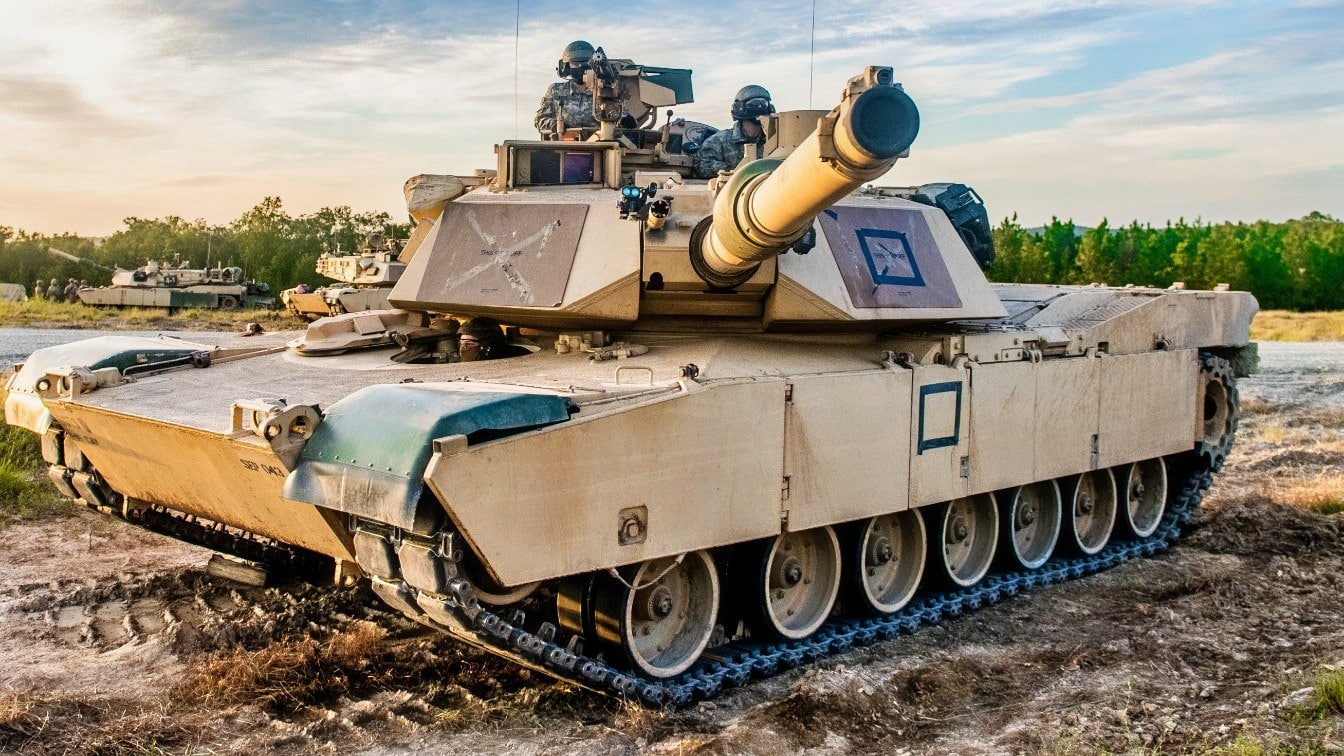
The V Corps was reactivated in October 2020 — the first reactivation of a U.S. corps headquarters since the Cold War. Its main task: to lead American ground forces in Europe, particularly along the NATO eastern flank. With a forward command element in Poznań, Poland, the V Corps coordinates the integration of allied defense, the deployment of drone defense systems, and the planning of long-range fire support. It serves as the operational command level between the rotating brigades on the eastern flank and the USAREUR-AF headquarters in Wiesbaden.
Lieutenant General Costanza was the second commander of the corps since its reactivation. He took command in April 2024, having previously served as the deputy commander of USAREUR-AF and commander of the 3rd U.S. Infantry Division. On June 25, 2026 — less than seven weeks ago — he delivered a speech at the transfer ceremony of the V Corps units in Bolesławiec, Poland (according to DVIDS). The fact that Brigadier General Mountford is now leading on an interim basis and Major General Feltey — after his farewell from command of the 1st Cavalry Division on August 4 at Fort Hood — is only expected to take over from Fort Knox raises questions about the continuity of command. This is not only a concern within the U.S. Army but for the entire eastern flank architecture.
From Donahue to Costanza — The Quiet Rotation at the Top
The removal of Costanza is not an isolated incident. In early July, General Christopher Donahue — one of the most experienced commanders in the U.S. Army, previously the leader of the XVIII Airborne Corps and the 82nd Airborne Division — relinquished command of USAREUR-AF. Again: no date, no explanation. A spokesperson for the U.S. Army told Military Times that Costanza's removal was "not political" and had nothing to do with Secretary of Defense Hegseth. At the same time, the same report acknowledged that Hegseth has filled or eliminated at least a dozen top positions since taking office.
The pattern is striking. One general departs without comment, which is one thing. Two generals — the highest Army commanders of the U.S. Army on the European continent — within six weeks without public explanation is an institutional statement. Army regulations may provide for discreet handling of leadership changes. But in an alliance whose credibility relies on the predictability of American decision-making processes, unexplained removals are not merely personnel decisions. They are a signal — to allies as well as adversaries.
At the Same Time, the Strategic Framework is Retreating
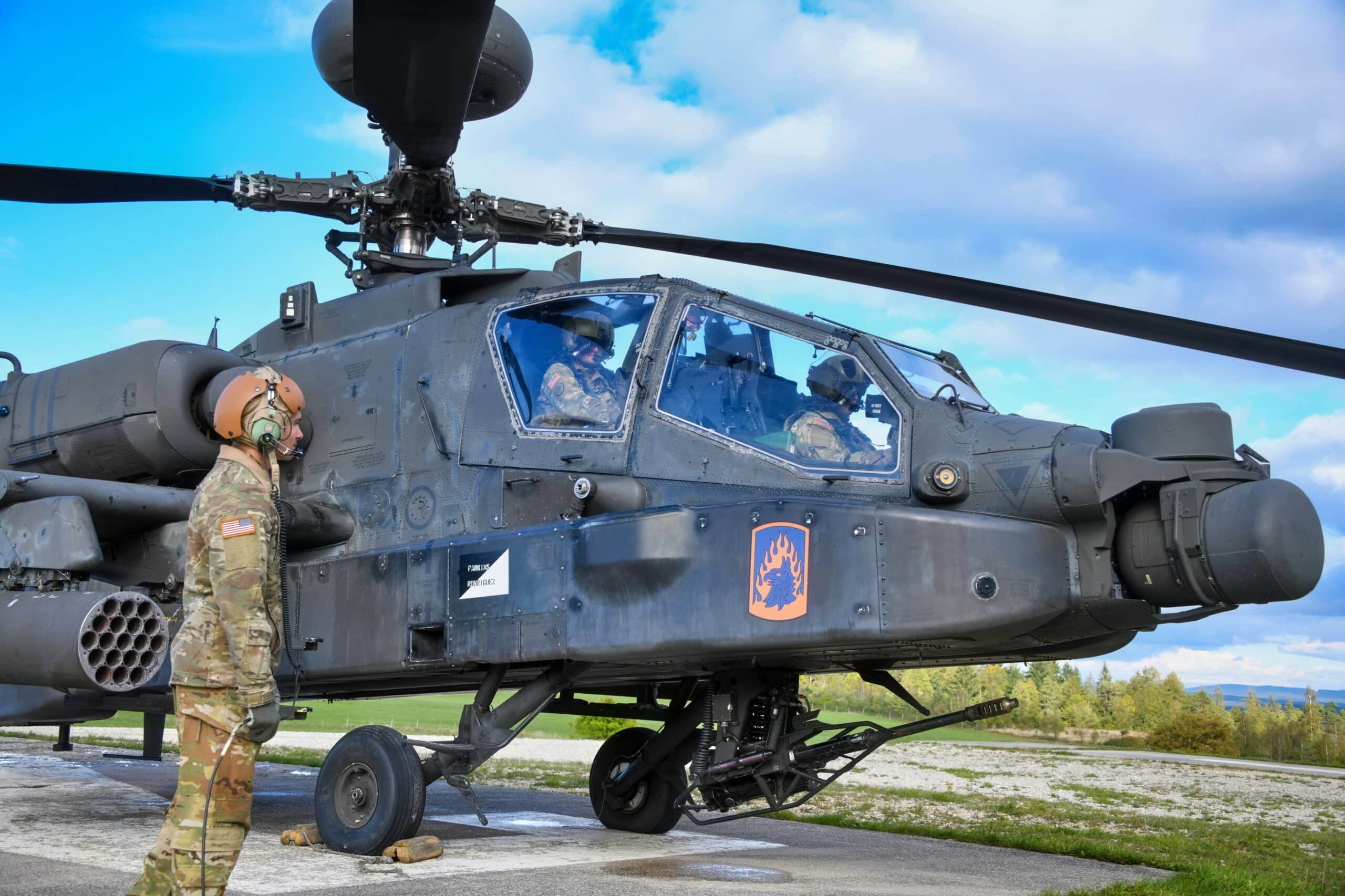
The leadership changes occur during a phase of strategic realignment of Washington's approach to Europe. On July 28, Under Secretary of Defense for Policy Elbridge Colby announced on X that the Pentagon had "formally initiated" the review of the U.S. troop presence in Europe that Hegseth announced on June 18 at the NATO Defense Ministers' meeting in Brussels. The goal, according to Colby: to ensure that NATO is "moving quickly and irreversibly" toward Europe taking "primary responsibility for its conventional defense." The review is expected to take up to six months. Whether and how many of the approximately 80,000 to 90,000 U.S. soldiers in Europe will be withdrawn remains open.
Just three days later, on July 31, Politico reported that the Pentagon is relinquishing command of the U.S.-led NATO command that coordinates military assistance for Ukraine — the NATO Security Assistance and Training for Ukraine (NSATU). On August 3, SACEUR General Alexus Grynkewich welcomed the new NSATU commander in Wiesbaden (according to NATO). The strategic message of both developments is the same: Washington is structurally withdrawing from the operational leadership of the European security architecture.
Deterrence is Not a Rotating Asset
Here lies the contradiction that Washington seems unable to resolve. Colby demands that Europe must take "primary responsibility" for conventional defense. At the same time, the command structure on which this responsibility must rely during the transition phase — the V Corps as the backbone of the eastern flank, USAREUR-AF as the operational hub — is in personnel turmoil. The question is not whether the successors are qualified. The question is: Can a deterrence architecture, whose institutional predictability is marked by unexplained leadership changes, remain credible?
Deterrence is an institutional asset. It arises not only from troop strength and material but from the expectation that the command structure, which decides in a crisis, acts reliably and predictably. For Warsaw and the Baltic capitals, every unexplained removal at the highest command level means: Who leads the eastern flank today may be gone without warning tomorrow. This is not a basis of trust for alliance partners who must align their own defense planning with American corps structures.
The warning from the Wall Street Journal on August 6 — that U.S. intelligence agencies consider a Russian test of Article 5 through a limited attack on NATO territory possible between fall 2026 and 2029 — makes the timing of the leadership turbulence particularly precarious. The eastern flank is preparing for the worst-case scenario. At the same time, its operational backbone is changing commanders for the second time in six weeks. For Moscow, such institutional turbulence is strategic information. They read it as a signal of weakness — regardless of whether Washington intended it as such.
What Europe Must Learn
An alliance that does not explain its own generals should not be surprised when partners begin to calculate their own security guarantees.
For the European NATO partners — particularly Poland, the Baltics, and the Nordic countries — an uncomfortable lesson is emerging. The American security guarantee has never been solely a matter of troop presence. It has been a matter of institutional reliability: The U.S. Army in Europe has built commanders over decades with multi-year tenures who maintained relationships with allied general staffs and developed regional expertise. If this continuity is sacrificed in favor of short-term rotations and unexplained removals, the guarantee loses its political and operational clarity.
The argument that Europe must take on more responsibility is factually correct. But it overlooks that the transition to a European-led defense will take at least a decade — and that during this transition phase, American leadership stability remains the central variable. A U.S. Army that recalls its top commanders without explanation does not accelerate the development of European capabilities. It undermines trust in the structure that secures that development.
The removal of a corps commander is a military routine decision. Two unexplained removals of the highest Army commanders in Europe within six weeks are an institutional message. The problem is not that Washington sends messages. The problem is that it cannot control them.
General Charles Costanza was relieved of command of the U.S. Army V Corps in August 2026, following the earlier resignation of General Christopher Donahue from USAREUR-AF. Brigadier General John B. Mountford is currently acting commander, while Major General Thomas M. Feltey is expected to take over. These leadership changes, occurring within six weeks, raise concerns about the stability and continuity of U.S. military command in Europe, impacting NATO's eastern flank.
- General Charles Costanza was relieved of command of the V Corps without public explanation.
- General Christopher Donahue also relinquished command of USAREUR-AF without a stated reason.
- Brigadier General John B. Mountford is currently acting commander of the V Corps.
- Major General Thomas M. Feltey is set to take command of the V Corps from Fort Knox.
- The leadership changes raise concerns about the continuity of command in the European security architecture.