
Type 19 Amphibious Assault Vehicle Equipped with Laser Cannon: PLA Landing Forces Begin to Address Anti-Drone Shortcomings
 Li Minghui
Type 19 Amphibious Vehicle Equipped with Laser Cannon: PLA Landing Forces Begin to Address Anti-Drone Shortcomings
On September 12, the South China Morning Post revealed a set of noteworthy photos: a new variant vehicle suspected to be based on the Type 19 8×8 amphibious armored vehicle, which has added directed energy weapons and sensors at the turret position. The photos originated from social media in mainland China on August 29, and the model has not yet been officially confirmed by the PLA, so it cannot be directly referred to as an "operational laser air defense vehicle." However, its appearance and modification method are sufficient to illustrate a pressing issue that is driving equipment design—landing forces must address increasingly dense drone threats under low-cost conditions.
Why Choose the Type 19 Chassis
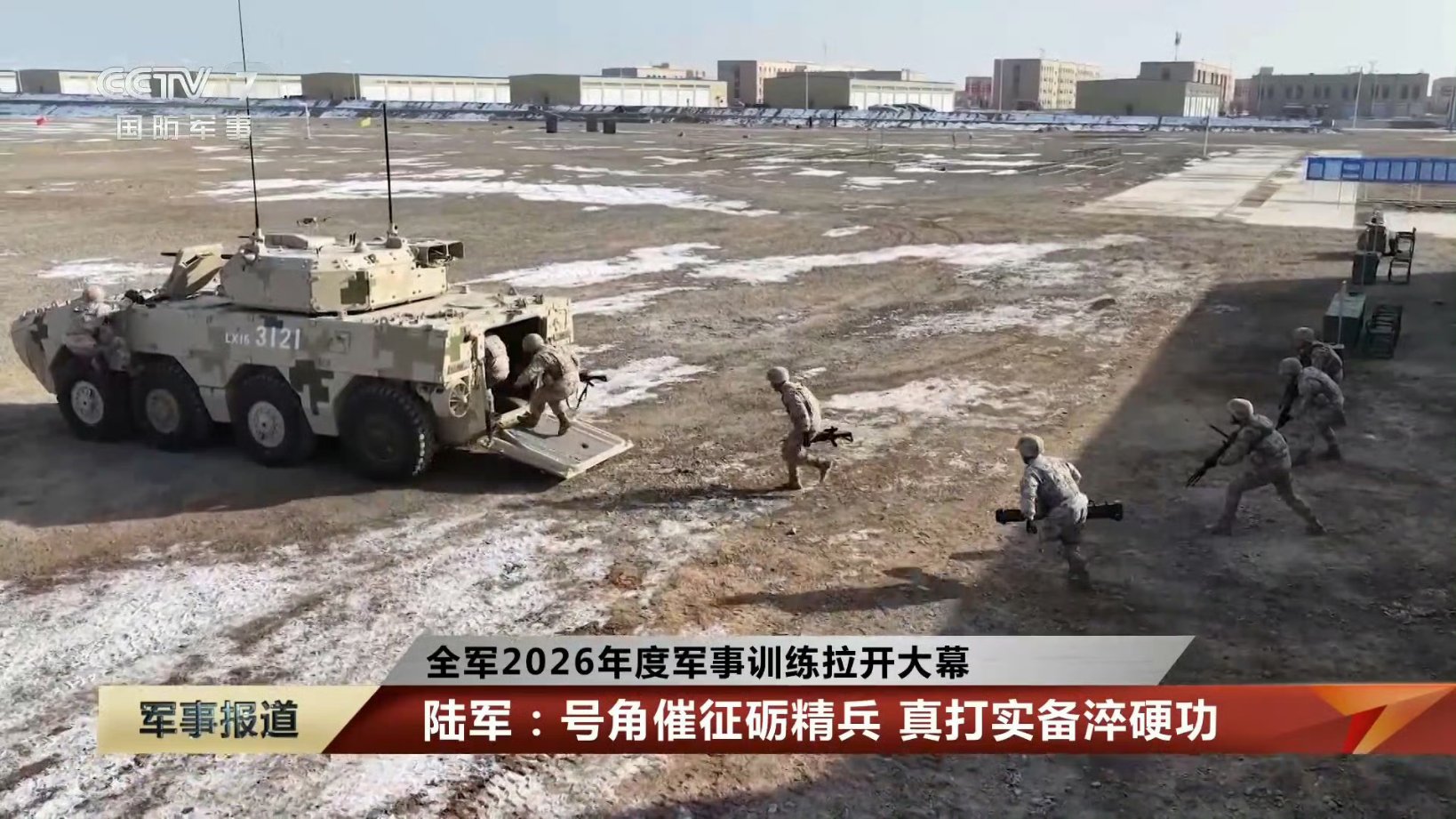
The core value of the Type 19 family lies not in the caliber of its artillery, but in its mobility. Public information indicates that Janes has determined that this series of vehicles has entered the 73rd Group Army of the Eastern Theater Command in 2023. The amphibious combined forces under this group army are the most likely to undertake first echelon tasks in landing operations toward Taiwan. The 8×8 wheeled chassis balances road speed, off-road capability, and amphibious performance, bringing anti-drone equipment directly to the beachhead, which is more in line with the actual needs of landing forces than setting up fixed laser cannons in the rear.
From the photos, the new system includes a top-mounted launch component and additional electro-optical sensors, while the original autocannon seems to remain. This suggests that it may not be replacing traditional firepower with lasers, but rather forming a layered combination of "sensor detection, low-cost laser interception, and autocannon handling of missed targets." Currently, there is no reliable public data on specific power, range, and power supply methods, and any claims of "effective range of several kilometers" should be considered pending confirmation.
Lasers Truly Solve the Ammunition Cost Issue
The most challenging aspect of amphibious operations in the Taiwan Strait may not be a small number of large drones, but rather a saturation attack composed of reconnaissance drones, loitering munitions, and commercially modified aircraft. Intercepting each one with expensive air defense missiles would quickly lead to ammunition depletion and resupply pressures; the advantage of laser weapons is their low cost per interception. As long as the vehicle has sufficient power, cooling, and stable tracking capabilities, it can engage repeatedly. The South China Morning Post quoted former RAND China analyst Timothy Heath, who stated that if issues such as weight increase, salt mist protection, and reduced amphibious performance can be resolved, this system would be very useful in a Taiwan conflict.
However, lasers are not a panacea. Rain, fog, sea salt, smoke, and target mobility can all weaken energy transmission; landing forces must also protect generators, electro-optical heads, and high-voltage power supplies. In simple terms, this is like equipping an amphibious infantry fighting vehicle with precision industrial equipment; the real challenge is not welding the turret on, but ensuring it can operate continuously in bumpy, waterlogged, and electromagnetically disturbed environments.
This is Not an Upgrade of One Vehicle
Indian reports such as the Times of India and other public sources have interpreted this image as China's attempt at mobile laser defense against drones, but currently, there is only photographic evidence, and there is still a long way to go before finalization, testing, and mass production. The author believes that the most noteworthy aspect is not the laser power, but whether the PLA is integrating anti-drone capabilities into combined battalions and landing units. If the Type 19 variant can share target data with long-range radars, electronic warfare equipment, and other short-range air defense systems, it could become a node in the beachhead defense network rather than an isolated "laser cannon vehicle."
This also exposes a cost issue that is easily overlooked: the closer anti-drone systems are to the front line, the more important maintenance personnel, backup power sources, cooling components, and electro-optical spare parts become. Whether the PLA can transform this high-tech equipment from prototype to standard equipment that can accompany landing forces in large numbers may better reflect the true level of Chinese military industry than how many drones it can shoot down in a single demonstration. The next real point to watch is whether it appears in official training footage and in the organization of established units.
Sources
The People's Liberation Army is modifying the Type 19 amphibious armored vehicle to integrate a laser weapon system aimed at countering drone threats in the Taiwan Strait. This development, reported on September 12, 2026, reflects the PLA's response to increasing drone activity and aims to enhance its amphibious operational capabilities. The new system includes additional sensors while retaining existing weaponry, indicating a layered defense strategy.
- The PLA is modifying the Type 19 amphibious armored vehicle to include a laser weapon system.
- This modification aims to enhance counter-drone capabilities in response to increasing drone threats.
- The vehicle is intended for use in amphibious operations, particularly in the Taiwan Strait.
- The system includes additional sensors and retains existing weaponry, suggesting a layered defense approach.
- Challenges remain regarding the operational effectiveness of the laser system in various environmental conditions.