

Summary and Key Points: The U.S. Army’s deployment of the Typhon missile system to the Philippines is a massive geopolitical shift.
-By placing Tomahawk and SM-6 missiles right in China’s backyard, the U.S. is transforming the “first island chain” from a defensive shield into an offensive launchpad.
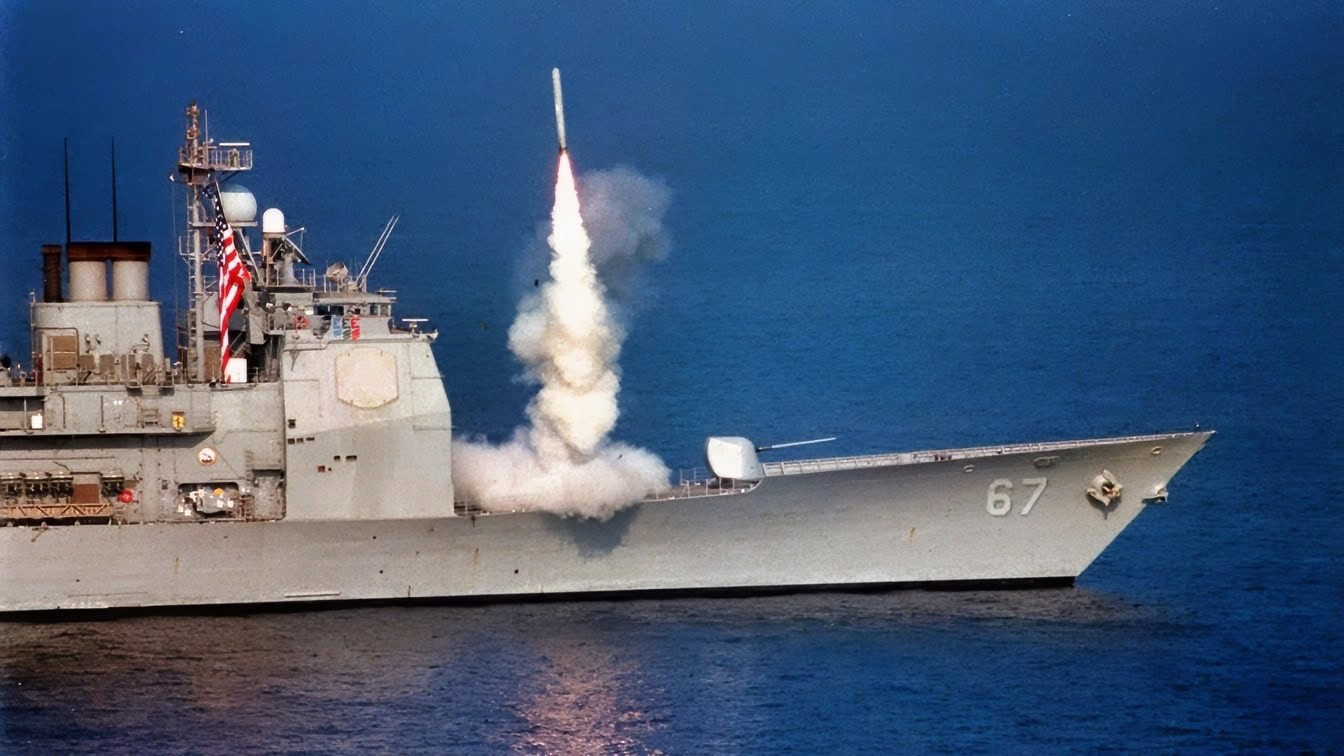
A Tomahawk cruise missile launches from the forward vertical launch system of the USS Shiloh (CG 67) to attack selected air defense targets south of the 33rd parallel in Iraq on Sept. 3, 1996, as part of Operation Desert Strike. The attacks are designed to reduce risks to the pilots who will enforce the expanded no-fly zone. President Clinton announced an expanded no-fly zone in response to an Iraqi attack against a Kurdish faction. The larger no-fly zone in Southern Iraq will make it easier for U.S. and coalition partners to contain Saddam Hussein’s aggression. The U.S. Navy Ticonderoga Class cruiser launched the missiles as it operated in the Persian Gulf.
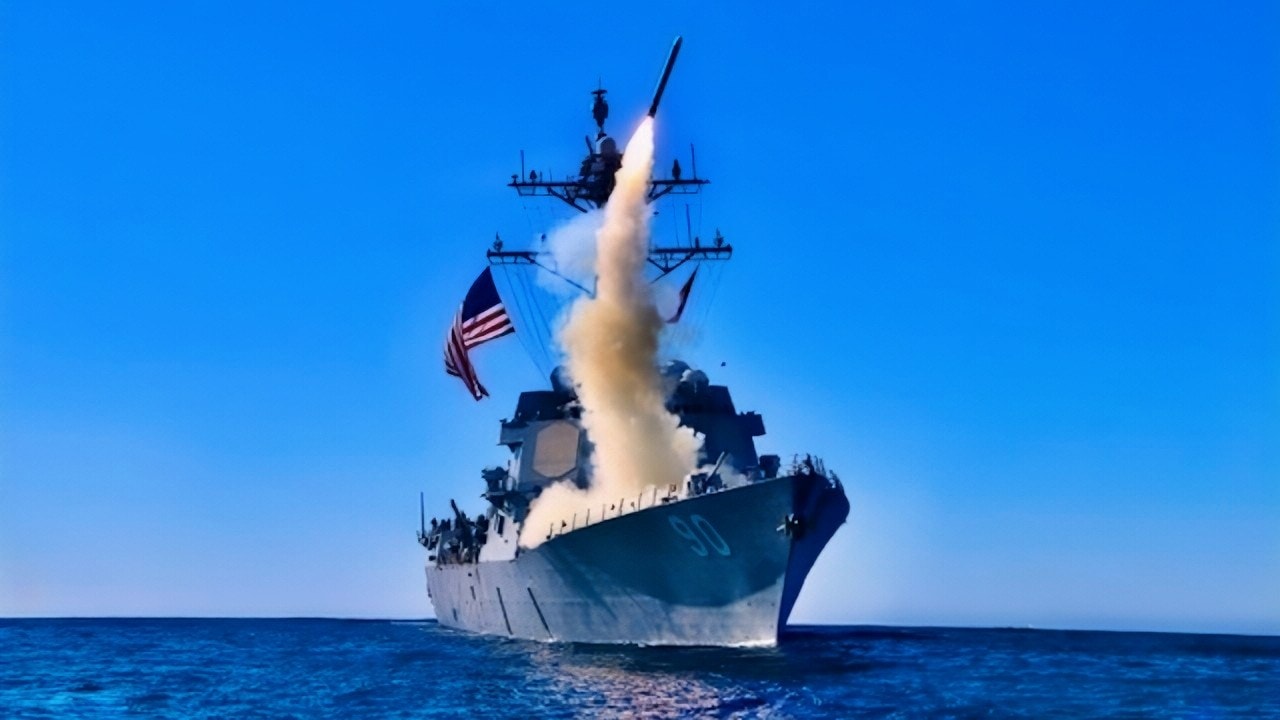
(Dec. 01, 2020) – The guided-missile destroyer USS Chafee (DDG 90) launches a Block V Tomahawk, the weapon’s newest variant, during a missile exercise. This event marked the first time a Block V Tomahawk missile was operationally tested, marking the Navy’s transition to a more advanced capability for the fleet. Block V includes an upgrade that will enhance navigation performance and provide robust and reliable communications. Chafee is currently assigned to Carrier Strike Group ONE and is homeported in Pearl Harbor. (U.S. Navy photo by Ens. Sean Ianno/Released)
-This move not only directly counters Beijing’s strategy in the South China Sea but also takes the pressure off American naval ships that are increasingly vulnerable to long-range threats.
The Typhon Missile: Why the U.S. is Turning the Philippines into a Launchpad
The U.S. Army in April 2024 deployed its Typhon Mid-Range Capability (MRC) missile to northern Luzon in the Philippines. The missile was deployed as part of Exercise Salaknib, under the direction of U.S. Indo-Pacific Command, and in coordination with Manila. The Typhon is capable of launching Tomahawk cruise missiles and Standard Missile (SM)-6 multirole missiles. It was introduced as part of an effort to improve alliance interoperability amid rising tensions with China.
Although initially sent as a temporary deployment for the exercise, the system has remained in the Philippines well beyond its original timeline, and U.S. officials have indicated that future rotations or additional deployments are under consideration—including in Japan.
The deployment represents a shift in how the United States deploys these missiles. It now has forward-positioned, land-based strike capabilities inside the first island chain.
Why the U.S. Deployed Typhoon to the Philippines
The decision to deploy Typhon to the Philippines was driven by geopolitical pressure and operational planning.
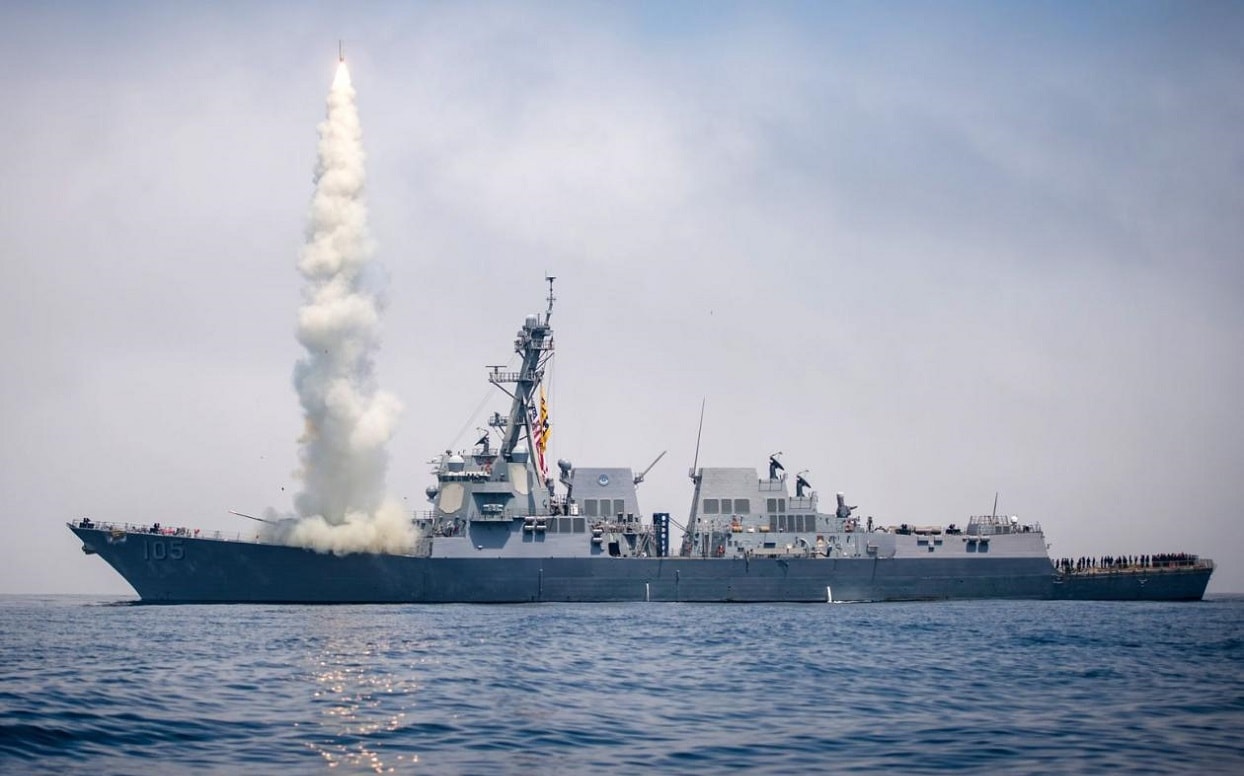
Tomahawk Cruise Missile. Image Credit: US Navy.
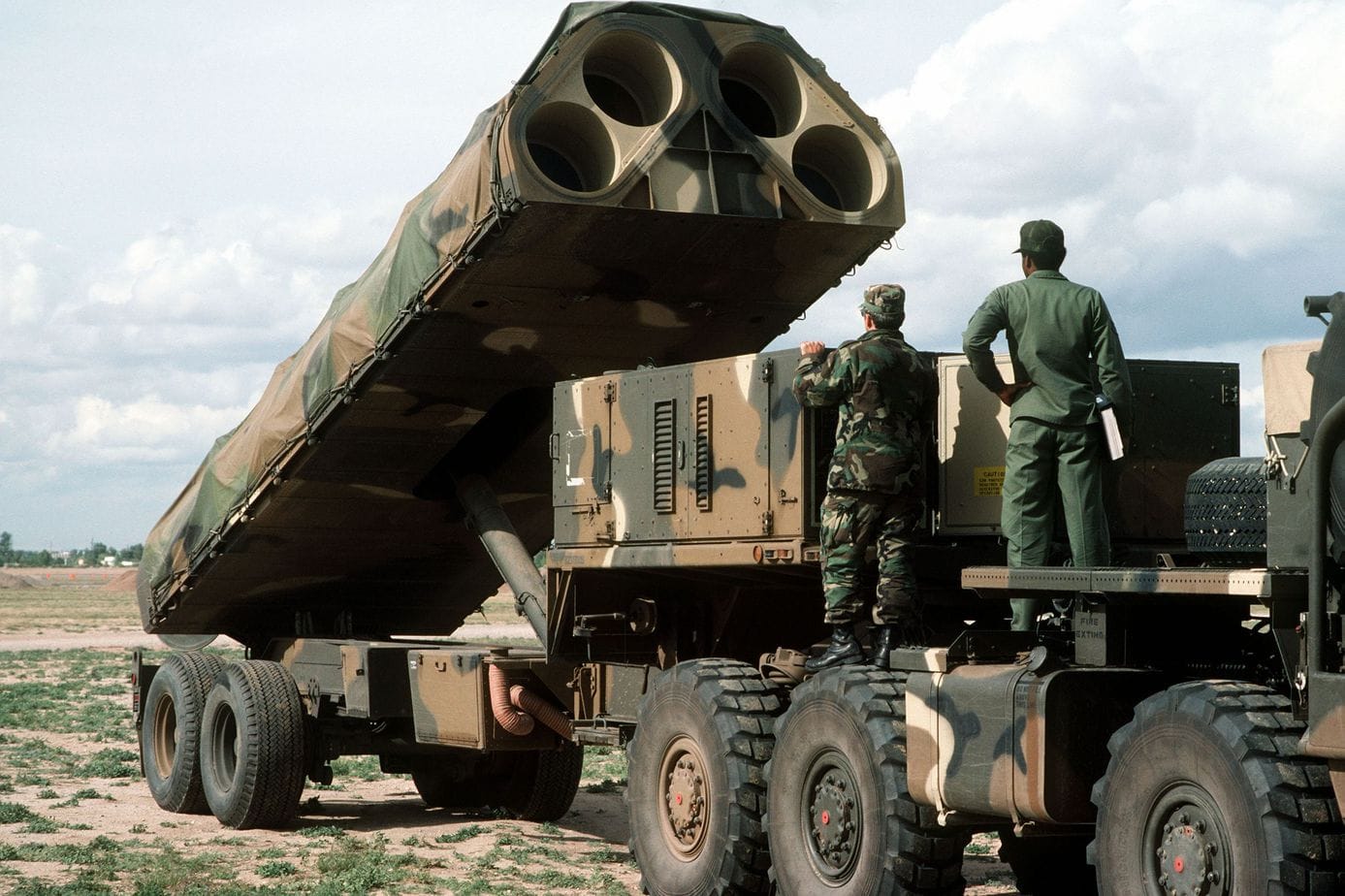
Image of land-based Tomahawk missile from the 1980s.
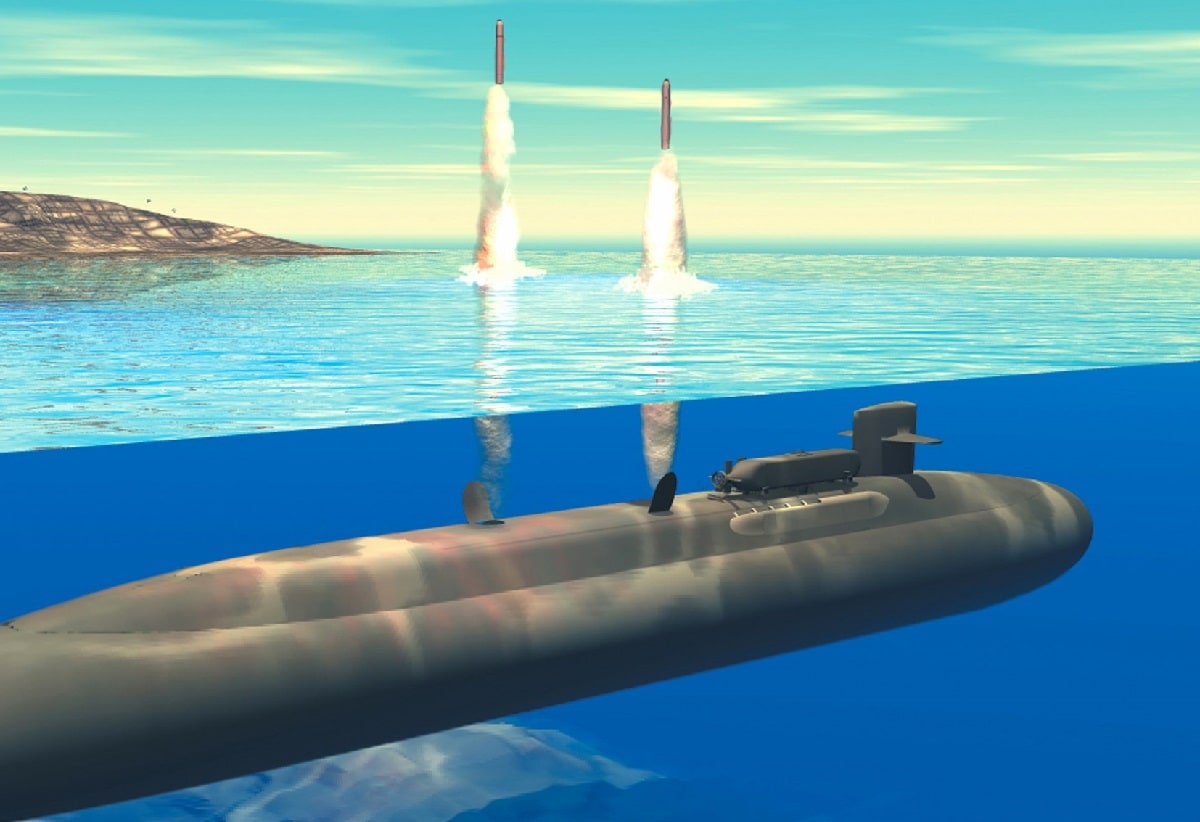
Image: Artist’s concept of an Ohio-class SSGN launching Tomahawk Land Attack Missiles.
The system arrived during joint U.S.-Philippine exercises, including Salaknib and Balikatan, that have expanded significantly in recent years as ties between Washington and Manila deepen.
At the simplest level, the deployment is a deterrence effort. The South China Sea is a persistent and increasingly important flashpoint, with Chinese naval forces now regularly confronting Philippine vessels in the disputed waters. Meanwhile, U.S. planners are increasingly focused on potential conflict around Taiwan.
By forward-deploying the Typhon, the United States is positioning long-range strike capability within immediate reach of key land- and sea-based targets. And unlike systems based in Hawaii and Guam, launchers based in northern Luzon can directly cover the Luzon Strait between Taiwan and the Philippines. The United States effectively placed strike capability right within reach of China.
What Typhon Can Do
The Typhon is built around a mobile, ground-based launcher derived from the Navy’s Mk 41 vertical launch system. Its ability to fire Tomahawks and SM-6s gives the Army a flexible, long-range strike capability.
The Tomahawk missile, especially the newer Block IV and Block V variants, can strike targets at distances approaching 1,000 miles and can be retargeted during flight. The SM-6 also adds a multi-role capability that allows it to engage aircraft and ships, and, in some configurations, also contribute to missile defense.
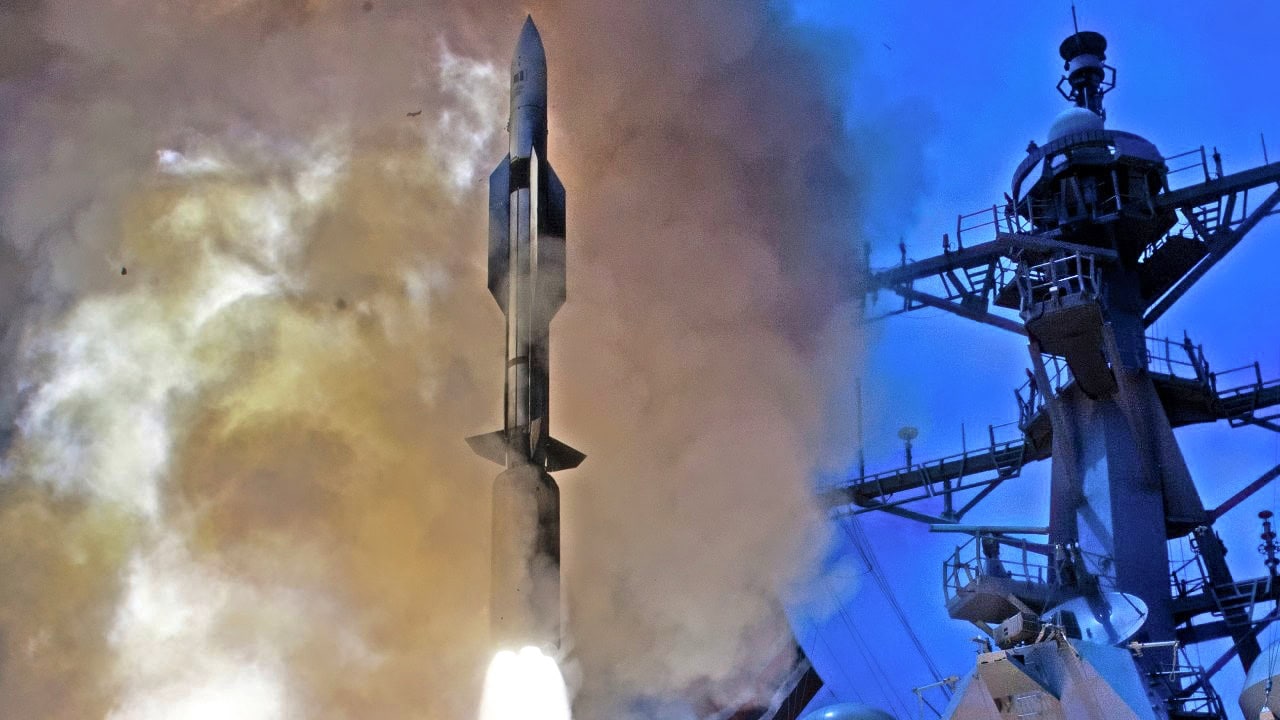
A Falcon Heavy rocket launches into the sky, surrounded by smoke and fire during takeoff.
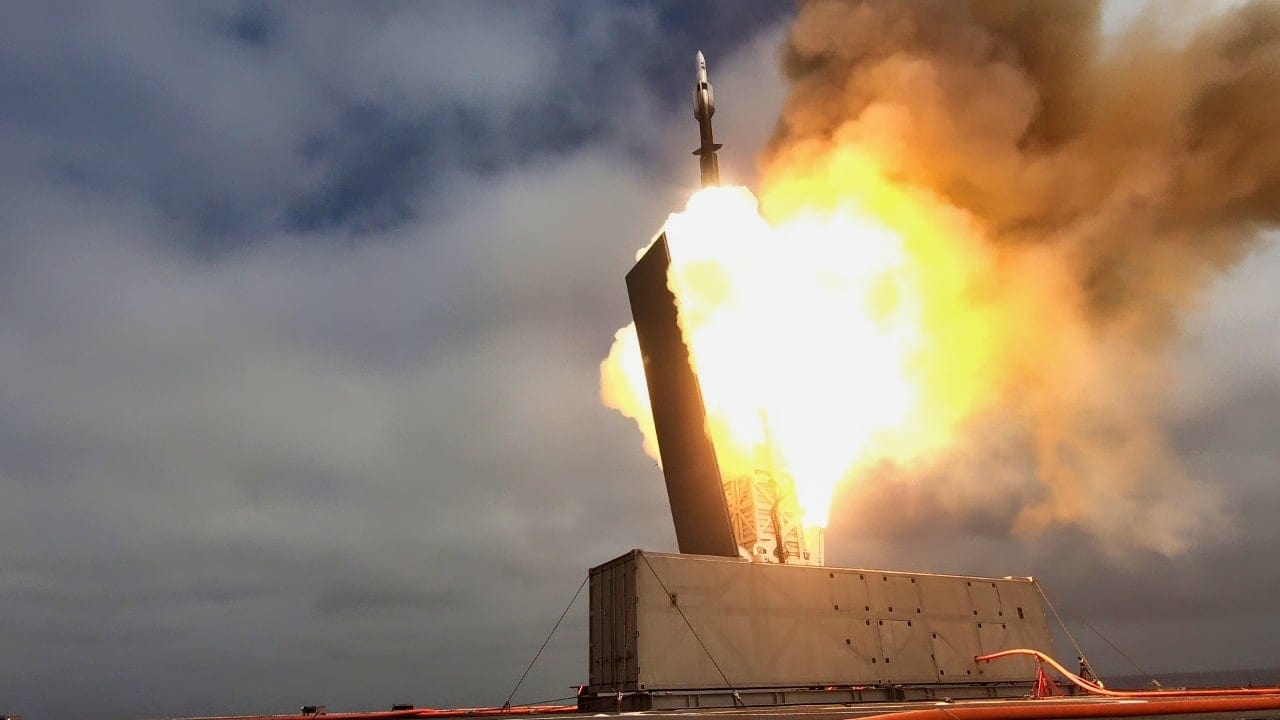
USS Savannah (LCS 28) conducts a live-fire demonstration in the Eastern Pacific Ocean utilizing a containerized launching system that fired an SM-6 missile from the ship at a designated target. The exercise demonstrated the modularity and lethality of Littoral Combat Ships and the ability to successfully integrate a containerized weapons system to engage a surface target. The exercise will inform continued testing, evaluation and integration of containerized weapons systems on afloat platforms.
But it’s not just the fact that the Typhon can fire Tomahawks that makes its deployment so interesting. It’s also what it can do now that it’s positioned in the Philippines. A Typhon battery in that region can reach deep into the South China Sea, and the emplacement of that capability was made possible in part by the collapse in 2019 of the Intermediate-Range Nuclear Forces Treaty. The result is a system that allows the Army to conduct long-range precision strikes against ships or land targets without relying on aircraft or naval platforms.
The First Island Chain Matters
The placement of Typhon in the Philippines and its potential expansion to Japan mean the first island chain will become less of a defensive line and more of a new offensive strike capability. Stretching from Japan and through Taiwan into the Philippines, the chain has long been central to U.S. and allied planning to contain Chinese naval expansion.
Now, though, it is becoming a distributed launch platform. From northern Luzon alone, U.S. forces can reach beyond the Luzon Strait to the northern South China Sea and parts of the East China Sea. It is effectively a mirror of China’s anti-access/area denial (A2/AD) strategy, which relies on land-based missile systems and other assets to keep adversaries away from its coastline as Beijing focuses on establishing a true blue-water navy.
For China, this development complicates planning. Instead of focusing on its naval task forces or air bases, Chinese forces must now account for mobile missile launchers spread across multiple islands, capable of striking from multiple directions.
Offloading Responsibility from Naval Assets
As U.S. naval forces continue operations against Iran, reports that Chinese ships are forming “geometric” patterns near Taiwan have raised concerns that Beijing may be looking to take advantage of the distraction. But the Typhon shifts the risk balance for U.S. naval forces. Traditionally, long-range strike missions—particularly Tomahawk launches—have been carried out by submarines and destroyers. These platforms are becoming increasingly vulnerable to Chinese anti-ship ballistic missiles such as the DF-21D and DF-26, which are designed to target high-value assets at long range.
By moving some of that strike capability onto land-based systems, the United States is reducing its reliance on ships operating in contested waters. Mobile launchers can disperse and operate from concealed positions, making them harder to target than surface vessels.
The Typhon is redistributing U.S. strike capability across the Pacific, reducing naval vulnerability at just the right time.
About the Author: Jack Buckby
Jack Buckby is a British researcher and analyst specialising in defence and national security, based in New York. His work focuses on military capability, procurement, and strategic competition, producing and editing analysis for policy and defence audiences. He brings extensive editorial experience, with a career output spanning over 1,000 articles at 19FortyFive and National Security Journal, and has previously authored books and papers on extremism and deradicalisation.