
Ukraine Builds Military Satellite Network After New Starlink Restrictions
 Dmitri Volkov
Ukraine Builds Military Satellite Network After New Starlink Restrictions
The first Ukrainian communication satellite, Obria Nano, weighs less than most military terminals, but its political significance is noticeably greater than its technical size. Kyiv began the transition from dependence on a single commercial entity to its own military communication architecture precisely after Starlink's speed restrictions and Starshield once again disrupted the operations of Ukrainian units on the front. This is not a story about an immediate replacement for Starlink. It is an acknowledgment that private infrastructure, governed by political decisions in Washington and the personal mood of the company's owner, cannot be the sole nerve of the army.
Starlink Proved Strong, but Not Sovereign
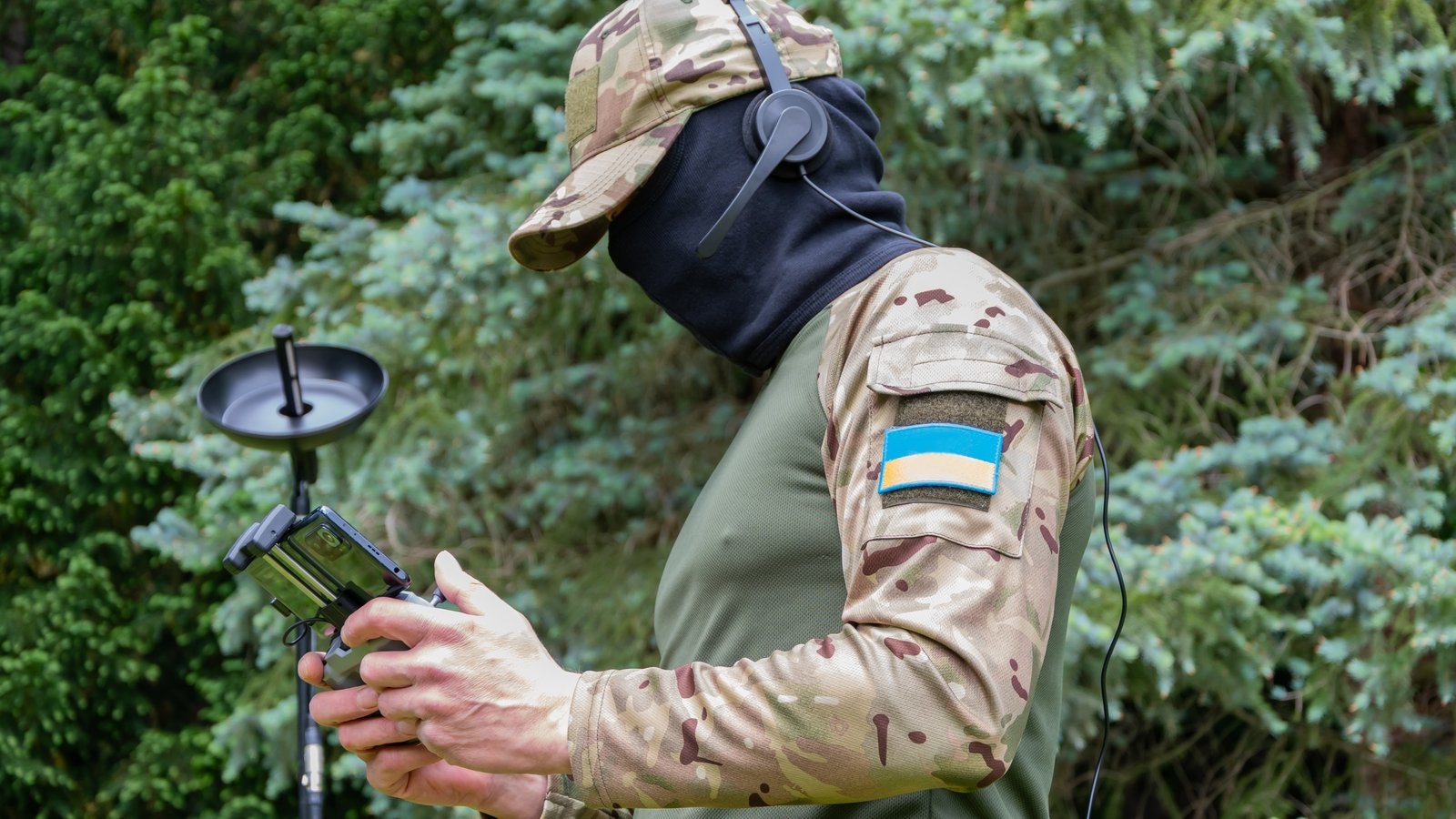
According to Al Jazeera on November 14, 2026, the Ukrainian company Himera, in collaboration with the Danish company GomSpace, launched the first Obria Nano satellite into orbit. The project is seen as the beginning of a future national constellation. In mid-October, Kyiv engaged Nokia and Finnish ICEYE, specializing in high-resolution radar imaging, to develop a military satellite network. The practical reason is crystal clear: Starlink has over 10,000 low-orbit satellites and provides the Ukrainian army with mass, cheap, and convenient communication, but Ukraine itself does not control either the orbital constellation or the access rules to it.
In October and November 2026, Ukrainian authorities reported repeated speed restrictions on Starlink and the military component Starshield. As a result, drones and interceptors moving faster than 60 km/h lost connection with the operator. According to reports from Kyiv, the failures affected operations along the front line. The question here is not whether Elon Musk is right in yet another dispute with the Pentagon. The question is why the decision of one corporate center can change the tactical situation across hundreds of kilometers of the front.
What Exactly Kyiv is Trying to Build
Ukraine is currently opting for not just one "replacement for Starlink," but a layered system. Obria Nano is intended to be the first element of communication and control, while ICEYE can add radar reconnaissance that operates independently of cloud cover and time of day. At the same time, Kyiv may utilize commercial partner groups. However, their parameters significantly lag behind Starlink in coverage density: the American Iridium has about 66 satellites at an altitude of approximately 800 km, while OneWeb has up to 650 satellites at an altitude of about 1200 km. In comparison, the Ukrainian Starlink terminal sees dozens of satellites simultaneously, while the OneWeb terminal sees only about 11. Meanwhile, the price of a lightweight Starlink terminal is estimated at around $500, while the heavier OneWeb terminal costs up to $9,000.
This leads to an unpleasant conclusion. A domestic constellation will not become a cheap reserve that can be activated on a Monday morning. Kyiv will have to simultaneously finance the launch, orbit management, secure terminals, ground stations, and replacement of devices whose lifespan is limited by atmospheric drag. If Ukraine chooses hundreds of small satellites in low orbit, it will gain flexibility but also a constant need for replenishment. If it opts for large geostationary satellites, it will benefit from longer lifespans but become vulnerable to costly and politically significant single losses.
The Russian Response Exists More on Paper
Russia is attempting to create its own analogue of Starlink through the Kremlin-controlled company Bureau 1440 and the group "Rassvet." The stated plan envisions around 900 satellites by 2035. However, initial results show a gap between political announcements and engineering reality. Al Jazeera, citing assessments from the Institute for the Study of War and publications from Defence Express, reports that more than a third of the first "Rassvet" satellites did not reach stable operational orbits; of the 32 launched over seven months, two "Rassvet-3" satellites were already lost by early November. This does not prove the program's failure but highlights its main risk—dependence on foreign components and limited serial production capabilities.
The Russian model differs from the Ukrainian one. Ukraine is trying to connect state demand with private and European companies while maintaining access to Western commercial systems as a transitional solution. Russia is building a vertically managed system closely tied to the military-industrial complex and political control. This approach is convenient for mobilizing the budget but is less resilient to technological failures: when one element of the chain fails, replacing it within a closed system is more challenging.
The Military Significance Goes Beyond Communication
A satellite network is needed not only for conversations and transmitting coordinates. It connects FPV drone operators, reconnaissance platforms, command posts, and long-range strike capabilities into a single detection and strike loop. This is why dependence on Starlink has become a matter of operational management for Ukraine, rather than convenience. Kyiv's deep strikes on Russian targets demonstrate what maintaining such a loop leads to: on November 14, the General Staff of Ukraine reported hitting an oil hub in the Samara region, where the Urals export blend is formed, as well as the Lipetsk-2 airfield. According to The Kyiv Independent, the airfield previously saw strikes on a hangar, an aviation fuel tank, and a central command post.
However, a satellite does not negate electronic warfare and does not make the communication channel immortal. Russia will attempt to jam user terminals, attack ground infrastructure, and influence software protocols. Ukraine, in turn, will transition to distributed networks, autonomous navigation, and drones capable of recognizing targets without constant operator control. In other words, the current Starlink crisis accelerates not only the space program but also the development of autonomous combat systems.
Forecast
In the next year or two, Ukraine will not be able to abandon Starlink and Starshield: in terms of coverage density and price, it is difficult to find an equal replacement. However, new restrictions have already changed the strategic calculation. Obria Nano, collaboration with Nokia and ICEYE, as well as the search for alternative constellations, create a foundation for a more resilient communication architecture. Russia is formally moving in the same direction but faces a heavier problem of quality and scaling. The space competition in this war will be determined not by the number of loud presentations but by the ability to maintain a functioning network under fire and interference on a monthly basis. The private monopoly has proven to be a useful crutch, but an army that wants to be sovereign cannot consider a crutch as its backbone.
Sources
- Al Jazeera, November 14, 2026
- The Kyiv Independent, November 14, 2026
- Institute for the Study of War, Russian Offensive Campaign Assessment, November 14, 2026
- Reuters, reports on Starlink and Starshield speed restrictions, November 12–14, 2026
Ukraine is building a military satellite network to reduce dependence on Starlink, which has faced operational limitations. The first satellite, Obria Nano, was launched in November 2026, marking the beginning of a national satellite architecture. Collaborations with Nokia and ICEYE aim to enhance military communications and reconnaissance capabilities, addressing operational challenges faced by Ukrainian forces.
- Ukraine is developing its own military satellite network after Starlink speed restrictions.
- The first satellite, Obria Nano, was launched in collaboration with Himera and GomSpace.
- Ukraine is working with Nokia and ICEYE to enhance military communications and reconnaissance capabilities.
- Starlink's limitations have affected drone operations along the front lines.
- Russia is attempting to create its own satellite network but faces engineering challenges.