
Ukraine converts Chinese drone into MICH 2000 deep striker
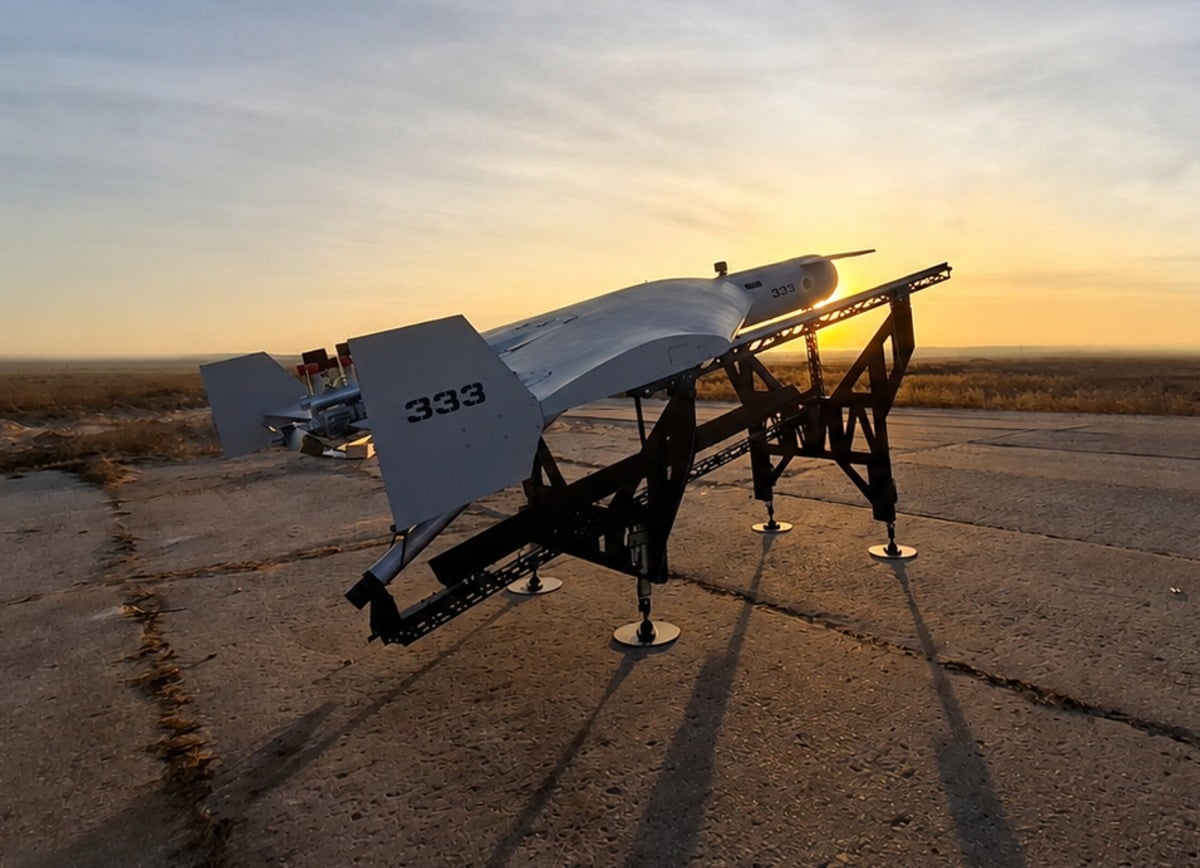
In early August, Ukrainian forces struck the cargo ship Nadezhda near Novorossiysk with a drone that resembled Iran’s Shahed rather than Ukraine’s familiar Lyutyi or FP-1 long-range attack drone, according to Ukrainian defense outlet Oboronka, whose journalists visited the weapon’s production facility. The drone is called MICH 2000. It began as a Chinese civilian airframe before Ukrainian engineers turned it into a deep-strike weapon used exclusively by the Security Service of Ukraine’s Alfa special operations center.
MICH 2000 can fly up to 2,000 km and carry as much as 60 kg of explosives, and the list of targets it has hit grows weekly, Oboronka reported.
Ukraine had relied on Chinese-sourced drones for deep strikes since 2022, before its own long-range platforms were ready. Military teams converted civilian Mugin-5 PRO aircraft, fitted them with explosives and launched them at Russian rear-area targets. Each cost about $15,000, carried 25 kg of explosives and flew up to 500 km.
The attacks drew media attention, and in summer 2023 China restricted direct export of civilian drones. That December, a team of Ukrainian developers traveled to China to buy ready-made airframes directly from manufacturers and found a factory building dozens of ZTK-150 drones closely resembling the Shahed, distinguished mainly by front canards.
“We were at a very large production facility and saw all the processes. Then we negotiated for several days with Chinese intermediaries until they came up with the idea to sell us the technology so we could make everything ourselves. That’s when they planted the idea that we could really build drones in Ukraine instead of buying and shipping them,” a member of the team told Oboronka.
Ukrainian military leadership welcomed the proposal, but when the team returned ready to buy the technology, the factory’s management refused. The intermediaries who had brokered the talks offered a workaround instead: assembling drones at a site outside China’s export restrictions, plus training Ukrainian pilots on the aircraft.
“We went there to train pilots to fly the Chinese drones. And while training, we photographed everything there was, from the production process to the layout of the shelves and cabinets,” the team told Oboronka.
The team returned with trained pilots and eight Chinese-built drones. Testing began in summer 2024. The first launch covered about 1 km before crashing on a weight-balance error. The second flew for roughly an hour before vibration sheared off its propeller. A third failed after the drone lost signal under electronic warfare, showing the airframe could not fly in contested electromagnetic environments.
“When we started making our own fuselages, we made a lot of mistakes, aerodynamic, structural, that caused us constant problems. For about a month and a half to two months we were crashing planes at the range until our customer told us: ‘You’ve worn out your welcome, it’s time for combat.’ We said we hadn’t started flying properly yet. But Alfa wasn’t interested in that. They needed results,” the company’s owner told Oboronka.
The first combat sortie flew in October 2024. Of three MICH drones launched, one was shot down and two missed their targets by about 10 meters. Alfa judged the result sufficient and approved the drone for production.
The airframe is a flying wing, so the fuselage itself serves as the wing. Finished bodies are weighed as a final check, one of dozens of inspection steps the company uses to verify manufacturing precision.
“Repeatability of the technology matters to me. The lighter the airframe, the more fuel it can carry, and the fewer problems can occur in flight. Any millimeter, or a misplaced comma in the code, can cause an error,” the owner said.
The catalog now includes eight versions for “deep strike” or “middle strike” missions, with a range up to 2,000 km and a warhead between 25 kg and 60 kg. Operators can choose analog, digital or Starlink communications, plus different warheads and guidance options. The Chinese original cost about $50,000; the Ukrainian version starts at $48,000, with final pricing depending on add-ons such as terminal guidance and CRPA antenna channels for jam-resistant navigation.
Over two years the company built a network of dozens of subcontractors producing engines, warheads, fuselages, ignition boards and rocket boosters with their own fuel. CRPA antennas, made by only a handful of manufacturers, remain imported at $20,000 to $25,000 depending on module count. A MICH 2000 without one reaches about 85 percent localization by cost; with the antenna installed, that drops to 55 percent.
“We had an unpleasant incident where third-party boosters burned about a million dollars’ worth of our equipment. After that we were banned from launching on those boosters … We went to the range, launched the first aircraft, and the booster misfired, producing more impulse than it should have. Chemists and engineers worked all night reworking the rockets right there at the range. The next day three drones flew. After that we started scaling up and switching to our own boosters,” the owner told Oboronka.
The company produces about 6,000 drones a year, a fraction of the 100,000 annual drones that Ukrainian manufacturer Fire Point has said it aims to build. Unlike Fire Point’s FP-1, fielded across multiple units, MICH 2000 has a single customer.
“We know our drones won’t just fly off somewhere into the swamps. They’ll fly to a specific target, because Alfa is about analytics and results,” the company told Oboronka.
Oboronka identified at least eight videos showing MICH 2000 in flight or striking targets. The company’s head said Alfa has launched thousands of the drones and hit hundreds of targets in occupied Ukrainian territory and inside Russia, including strikes on Moscow, the destruction of a Tu-95MS strategic bomber at the Engels airfield, a Wildberries logistics hub in Ryazan region, an electronic warfare system near Vladimir Putin’s residence in Gelendzhik, and an attack on a Russian Baltic Fleet naval base. Satellite imagery has separately confirmed the Tu-95MS’s rear section was destroyed beyond repair, and Ukrainian outlet Militarnyi reported an earlier MICH 2000 strike on an optical-mechanical plant in Azov, Russia, on July 4. The largest single strike hit the port of Ust-Luga, where more than 20 MICH drones reached their targets.
“During one attack with guided MICH drones, so many reached the target area that there weren’t enough targets left for them. They ended up chasing a Pantsir air defense system down the road after it had fired off all its ammunition,” the company’s head said, laughing.
The company is developing MICH+, a “middle strike” variant without front canards, carrying a 70 kg warhead with terminal guidance and a range up to 600 km, priced at roughly $40,000. It plans to raise annual output to 10,000 drones and is hiring workers, adding production sites and reinvesting about $1 million a month in research and development.
With Alfa as its only customer, the company says financing further expansion is difficult, and it is exploring joint production with Baltic states under the Build with Ukraine program to draw on European funding.
“Honestly, I don’t want to guess anymore what happens after 10,000. I just want the war to end. But if we need to keep working, we’ll keep working,” the company’s head said.
Content preview only. Full article available at source. View Full Article
Ukrainian forces have developed the MICH 2000 drone, a deep-strike weapon, which has been successfully deployed in operations against various targets, including Moscow and military installations. The drone, capable of flying 2,000 km and carrying up to 60 kg of explosives, has been used extensively by the Alfa special operations center since its first combat sortie in October 2024. The company behind the MICH 2000 aims to scale production significantly in the coming years.
- Ukrainian forces converted a Chinese civilian drone into the MICH 2000 for deep-strike missions.
- The MICH 2000 can fly up to 2,000 km and carry 60 kg of explosives.
- Alfa special operations center has launched thousands of MICH drones, hitting hundreds of targets.
- The largest strike involved over 20 MICH drones targeting the port of Ust-Luga.
- The company plans to increase production to 10,000 drones annually.