
Ukraine Needs 150 Patriot Interceptors a Month and NATO Cannot Deliver
 Alexandra Reeves
Ukraine Needs 150 Patriot Interceptors a Month and NATO Cannot Deliver
The Arithmetic Is the Story
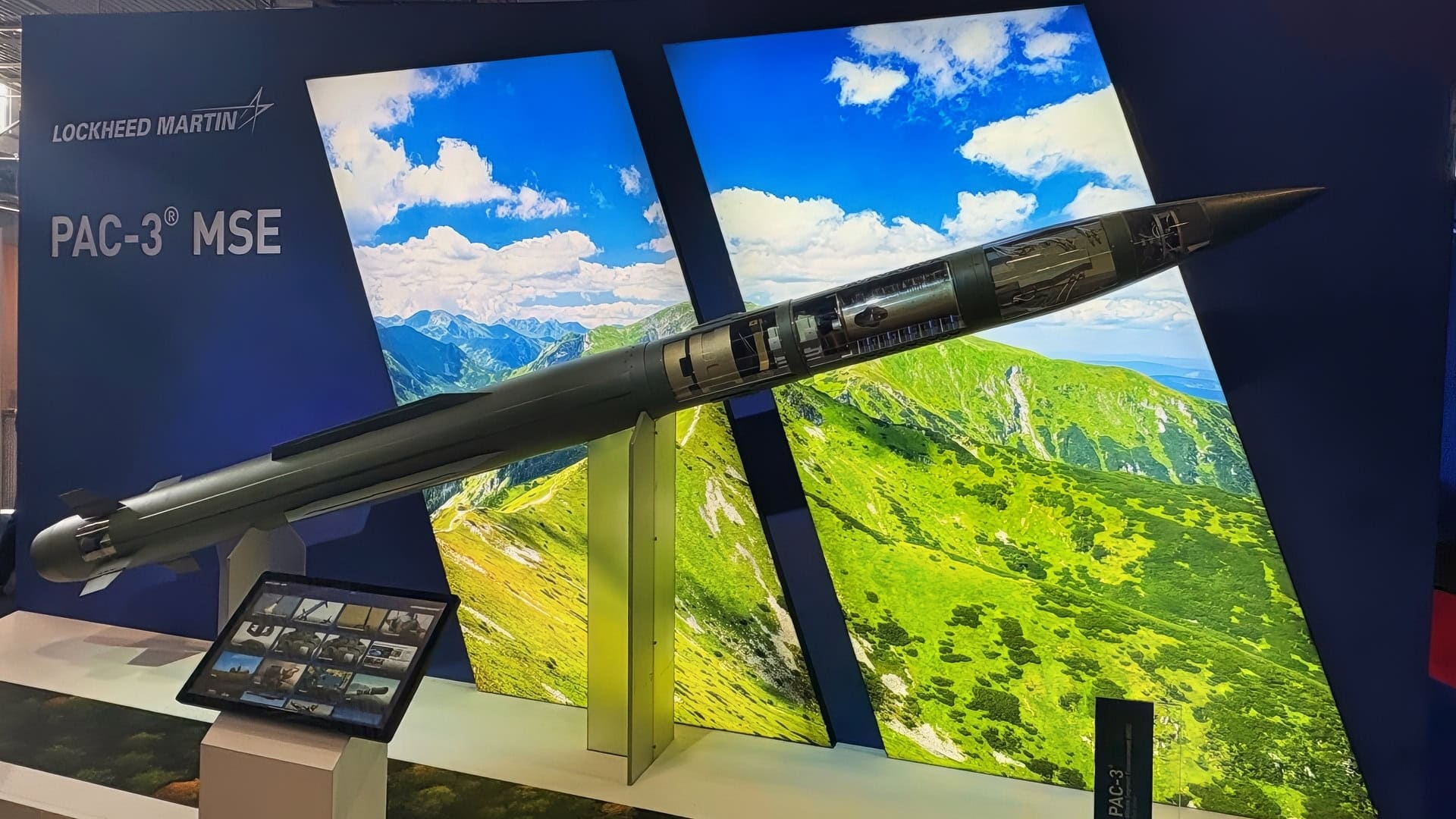
Ukraine’s air-defence problem is no longer a question of whether Patriot works. It is whether the alliance can produce enough of the missiles to keep the system alive.
President Volodymyr Zelensky said on October 28 that Ukraine needs to intercept roughly 150 Russian ballistic missiles every month, while receiving about 150 Patriot missiles from the United States in an entire year, according to the Kyiv Independent. The comparison is not a procurement complaint dressed up as strategy. It is a warning that the arithmetic of the war has outrun the industrial capacity of Ukraine’s backers.
The figures should be treated as a Ukrainian presidential estimate, not as an independently verified battle ledger. But the direction is clear. Russia is combining ballistic missiles with Shahed-type drones and faster jet-powered drones. Kyiv’s air-defence network must decide which targets deserve its most expensive interceptors, while accepting that every missed decision can become a destroyed bridge, power station, hospital or apartment block.
Why Patriot Matters
Patriot is not one missile or one launcher. It is a network built around a powerful radar, an engagement-control station, launchers and different interceptor families. The PAC-3 Missile Segment Enhancement is designed to defeat ballistic missile threats through hit-to-kill interception, striking the incoming weapon directly rather than relying only on a large explosive warhead. That makes it one of the few Western systems Ukraine can use against the ballistic missiles that are increasingly shaping Russian strike campaigns.
It is also a scarce capability. A Patriot battery cannot be everywhere at once, and its coverage is not a magic dome over an entire country. Commanders must position radars and launchers around the cities, infrastructure nodes and military sites judged most valuable. Russia does not need to overwhelm every Ukrainian battery. It only needs to create enough uncertainty about where the next salvo will land.
This is why the missile shortage is more serious than a normal ammunition shortfall. Ukraine can sometimes replace artillery shells through multiple suppliers and domestic production. It cannot quickly substitute a PAC-3 interceptor with a cheaper round when the target is a ballistic missile descending at extreme speed.
Russia Is Testing the Weak Point
The timing matters. The Kyiv Independent reported that Russian forces launched an Iskander-M/S-400 ballistic missile and 88 Shahed-type drones, including 38 jet-powered drones, overnight on October 28. The Guardian reported that Russian ballistic missiles struck Kyiv’s university campus, a major bridge, an administrative building and medical facilities the previous day, killing one person and injuring 15.
That is a layered attack in the bluntest sense: expensive ballistic weapons create the most urgent interception problem while drones stretch the defender’s attention and magazine depth. A defender can shoot down many drones with lower-cost systems, electronic warfare or guns. The ballistic missile still demands the premium shot.
The strategic effect is cumulative. If Kyiv reserves Patriot for the capital, other regions become more exposed. If it disperses the batteries, each defended location receives thinner protection. If it fires only when confidence is high, Russian planners gain more opportunities to exploit gaps. This is not a failure of Patriot performance. It is what happens when a small number of high-end batteries are asked to defend a large country against a sustained missile campaign.
NATO Has a Production Problem, Not Just a Political One
European governments can announce more support, and Washington can promise additional deliveries. Neither statement immediately creates interceptor capacity. PAC-3 production depends on specialised components, testing, trained labour and a supply chain that was never designed for a war of this intensity. Even when production expands, the missiles already promised to allies compete with emergency transfers to Ukraine.
That creates an uncomfortable alliance dilemma. NATO members need Patriot to defend their own airfields, ports and cities, especially on the eastern flank. Sending more interceptors to Ukraine can improve the alliance’s forward defence by stopping Russian missiles before they reach NATO territory. But it also reduces the stockpile available for national plans. The alliance is being forced to choose between defending the line in Ukraine and preparing for a line that may move west.
Recent developments around Romania and Poland show why the distinction is collapsing. The Guardian reported that France temporarily relocated a maritime patrol aircraft to Romania after attacks on cargo ships near the Black Sea, while Poland is to host the only Patriot maintenance centre outside the United States. These are not isolated acts of solidarity. They show a wider defence perimeter in which logistics, infrastructure and air defence are now tied together.
The Wrong Lesson Would Be to Buy Only More Patriots
Ukraine needs more Patriot interceptors. That part is obvious. But a strategy based only on buying the most capable and expensive missile is not sustainable. The alliance needs a layered mix: electronic warfare and guns against drones, cheaper surface-to-air missiles against cruise missiles and aircraft, and Patriot reserved for ballistic threats that other systems cannot reliably handle.
It also needs better industrial planning. NATO’s defence targets are often discussed in terms of platforms and annual budgets. The Ukraine war is exposing a less glamorous measure of military power: how many interceptors can be manufactured, transported, tested and replaced after a month of combat. A battery without enough missiles is a radar installation with a very expensive public-relations problem.
Kyiv’s battlefield position may be stronger than it has been in months. The Guardian reported that Zelensky described several Ukrainian counter-offensives as retaking territory, even as Russia intensified attacks on logistics and infrastructure. That makes air defence more important, not less. An army that regains ground still needs bridges, electricity, command posts and repair facilities to hold it.
What to Watch Next
The immediate indicators are simple. Watch whether the United States and European allies announce actual Patriot interceptor quantities rather than broad air-defence pledges. Watch whether European production schedules move forward, whether Poland’s maintenance hub reduces downtime, and whether Ukraine receives more lower-cost systems for drone defence. Most importantly, watch the ratio between Russian ballistic launches and Ukrainian premium interceptors.
The uncomfortable conclusion is that Patriot has succeeded so well that NATO has allowed itself to mistake capability for capacity. Ukraine is proving that a superb air-defence system is only as strong as the magazine behind it. Unless the alliance turns promises into sustained interceptor production, Russia’s missile campaign will continue to make NATO’s own security problem more expensive, more exposed and harder to postpone.
Sources
- The Kyiv Independent, news feed, October 28, 2026, reporting Zelensky’s estimate of Ukraine’s ballistic-missile interception requirement and the overnight Russian strike.
- The Guardian, “Ukraine war briefing: Kyiv retaking territory, Zelenskyy says, as Nordic leaders urge Putin to end the conflict,” October 28, 2026.
- Lockheed Martin and U.S. Army public descriptions of the Patriot PAC-3 MSE system and hit-to-kill interceptor architecture.
Ukraine requires 150 Patriot interceptors monthly to defend against Russian missile attacks, but NATO cannot meet this demand. On October 28, 2026, Russia launched ballistic missiles and drones targeting Kyiv, highlighting the urgency of Ukraine's air defense needs. The report emphasizes the limitations of NATO's production capabilities and the strategic implications for Ukraine's defense posture.
- Ukraine needs 150 Patriot interceptors per month to counter Russian missile threats.
- NATO is struggling to produce enough interceptors to meet Ukraine's needs.
- Russia launched ballistic missiles and drones against Ukraine on October 28, 2026.
- Patriot systems are critical for intercepting ballistic missiles but are in short supply.
- The strategic situation is complicated by the need for layered air defense against various threats.