
USS Colorado Makes AUKUS Real in Australia but Not Ready for War
 Marcus Chen
USS Colorado Makes AUKUS Real in Australia but Not Ready for War
The USS Colorado (SSN-788) arrived at HMAS Stirling on October 26 and was named as the first U.S. attack submarine assigned to the 2027 Australian rotation under AUKUS. That is a meaningful operational step. It is also easy to oversell. One Virginia-class submarine in Western Australia gives the alliance a forward operating point, not a continuous undersea screen for the Indo-Pacific.
The First Hull Changes the Geometry
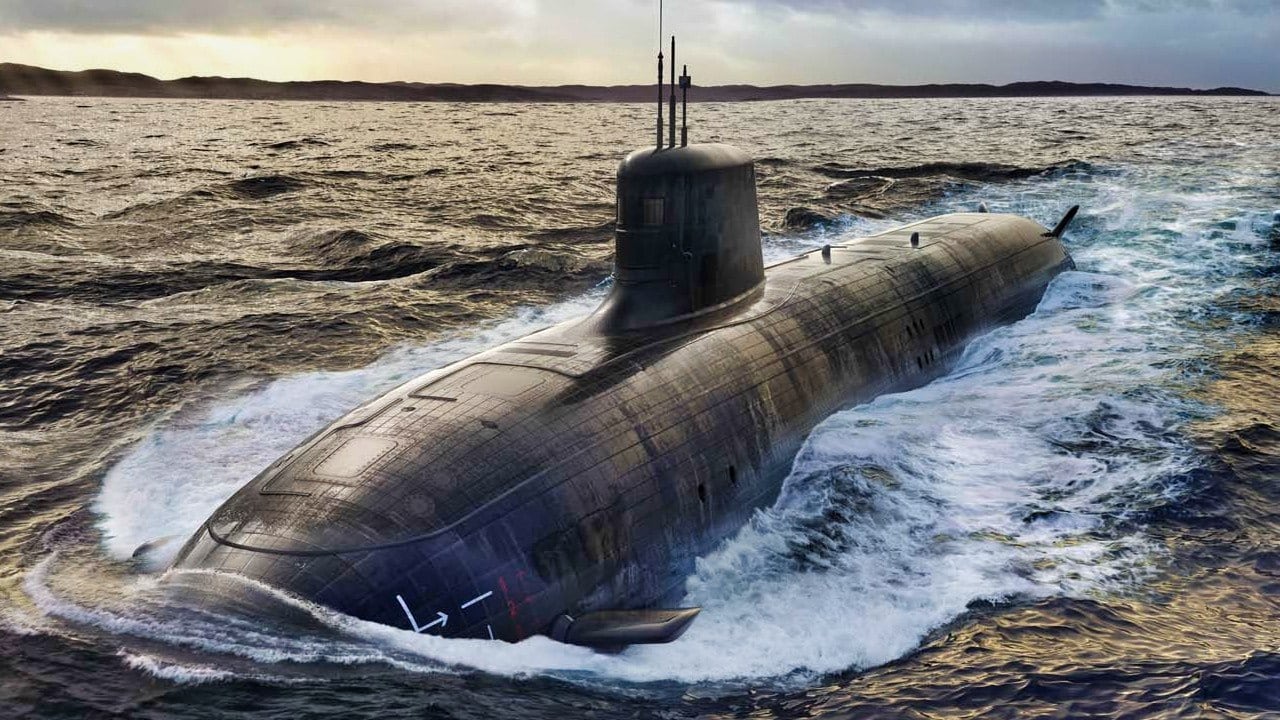
Colorado is a Block III Virginia-class nuclear-powered attack submarine. The boat is roughly 377 feet long, displaces about 7,800 tons submerged, and can sustain more than 25 knots underwater. Its two Virginia Payload Tubes can carry up to 12 Tomahawk land-attack cruise missiles, while its primary value remains covert sensing, undersea warfare, and the ability to threaten surface ships without advertising its position.
Those specifications matter because distance is the first bill in a Pacific war. A submarine operating from Western Australia begins thousands of miles closer to the eastern Indian Ocean, the Indonesian approaches, and the South China Sea than a boat sailing from Pearl Harbor. It can train with the Royal Australian Navy, use local maintenance infrastructure, and spend more of a patrol inside the operating area instead of burning days on transit.
The Pentagon announcement reported by USNI News is therefore more than a basing headline. It is the first visible hardware attached to the Submarine Rotational Force-West concept. Australia has been paying into the U.S. submarine industrial base, and the American Navy is now demonstrating what that money is supposed to buy: access, familiarity, and a place where allied crews can work before a crisis.
One Submarine Is a Presence, Not a Barrier
The arithmetic is less impressive than the map. A nuclear attack submarine is not available every day of the year. Transit, crew training, maintenance, inspections, weapons loading, and unexpected repairs consume the calendar. Even a highly ready boat produces only one patrol at a time. If Colorado is tied to a rotation that begins in 2027, the alliance still has to find the next hull, the relief hull, and the maintenance capacity to keep the pattern alive.
That is the central AUKUS problem. The agreement promises an operational bridge before Australia receives its own SSN-AUKUS boats, but the bridge is built from U.S. and British submarines that already have global tasking. Washington cannot simply add a permanent Western Australian squadron without taking boats away from the Western Pacific, the Middle East, or home-port maintenance. London faces the same constraint with an even smaller attack-submarine force.
The U.S. Navy’s announced rotation can complicate Chinese planning. A boat at Stirling can observe maritime traffic, exercise with Australian forces, and impose uncertainty on any attempt to move a task group through the archipelagic approaches. But it cannot patrol the Taiwan Strait, the Luzon Strait, the Philippine Sea, and the Indian Ocean simultaneously. A single hull cannot create sea control. At most, it creates a concealed problem for the other side.
China Will Measure the Schedule
Beijing is unlikely to judge AUKUS by the ceremony at HMAS Stirling. It will watch sortie rates, deployment duration, crew integration, and whether the next submarine arrives on time. The People’s Liberation Army Navy is already operating its carriers farther from China. Defense News reported that the carrier Liaoning’s October deployment took it near Japan, Taiwan, and the Philippines as part of what analysts described as an emerging routine of far-seas training.
That comparison is uncomfortable. China can use an older carrier to generate repeated operational experience for its newer ships because it owns the hulls and controls the schedule. AUKUS is trying to generate allied undersea presence by borrowing capacity from three separate navies. The former is an industrial problem Beijing has chosen to solve with more ships. The latter is an industrial problem Washington, London, and Canberra are still trying to solve with agreements.
The advantage of the AUKUS model is quality. A Virginia-class submarine is quieter and more capable than most conventional submarines, and Australian access to U.S. procedures can produce a better allied kill chain than a symbolic port visit. The weakness is persistence. A high-end platform that appears twice a year does not equal a force that is continuously available when the warning time collapses.
The Test Is 2027 and the Years After
Colorado should be judged as a starting gun, not as the finished force. The practical questions are straightforward: Does the 2027 rotation happen on schedule? How many days does the submarine spend underway? Can Australian personnel participate in meaningful watchstanding and maintenance? Does HMAS Stirling support the boat without quietly consuming U.S. manpower from other theaters? And when Colorado leaves, is another SSN ready to replace it?
There is also a political test. Australia is buying insurance against a war it hopes never to fight, while the United States is asking Canberra to invest in a capability whose immediate military output will largely benefit Washington. If the rotation becomes irregular, Australian confidence will fall. If it becomes reliable, China will have to account for a new undersea operating location in every contingency calculation from the South China Sea to the eastern Indian Ocean.
USS Colorado makes AUKUS real because a nuclear submarine is now attached to the promise. But the alliance has not solved the harder equation: enough submarines, enough crews, enough dock capacity, and enough missiles to sustain pressure after the first patrol ends. The first boat changes the geometry. Only a dependable rotation changes the balance.
Sources
USS Colorado arrived at HMAS Stirling on October 26, 2026, marking its assignment as the first U.S. attack submarine under the AUKUS agreement. This deployment enhances U.S.-Australia naval cooperation in the Indo-Pacific, although concerns remain about the sustainability of submarine rotations. China is expected to closely observe the operational effectiveness of this arrangement.
- USS Colorado is the first U.S. attack submarine assigned to the 2027 Australian rotation under AUKUS.
- The submarine arrived at HMAS Stirling on October 26, 2026.
- USS Colorado can carry up to 12 Tomahawk missiles and is designed for covert operations.
- The deployment aims to enhance U.S.-Australia naval cooperation in the Indo-Pacific region.
- China is likely to monitor the operational effectiveness of the AUKUS agreement.