
Ukraine Wants 300 Patriot Interceptors Before Winter Breaks Its Grid
 Alexandra Reeves
Ukraine Wants 300 Patriot Interceptors Before Winter Breaks Its Grid
Three hundred Patriot interceptors is not a shopping list. It is a warning label.
President Volodymyr Zelensky has reportedly asked Donald Trump for 300 Patriot missiles before winter, according to Axios, while other outlets including Anadolu and Turkish media reported Zelensky saying the two leaders discussed production licences for Patriot interceptors in Ukraine. Breaking Defense, citing a U.S. defence official, separately reported that the Pentagon is weighing options to license Patriot production to Ukraine.
That phrasing matters. A licence is not a factory. A factory is not a missile. And a missile in a warehouse is still not an operational Ukrainian air defence battery with trained crews, spare parts, secure supply chains and Russian intelligence trying to find it. But the fact that Washington is even discussing licensed production tells us something uncomfortable: the West is moving from aid packages to war-economy architecture, because the old model is running out of road.
The Licence Is a Signal, Not a Solution
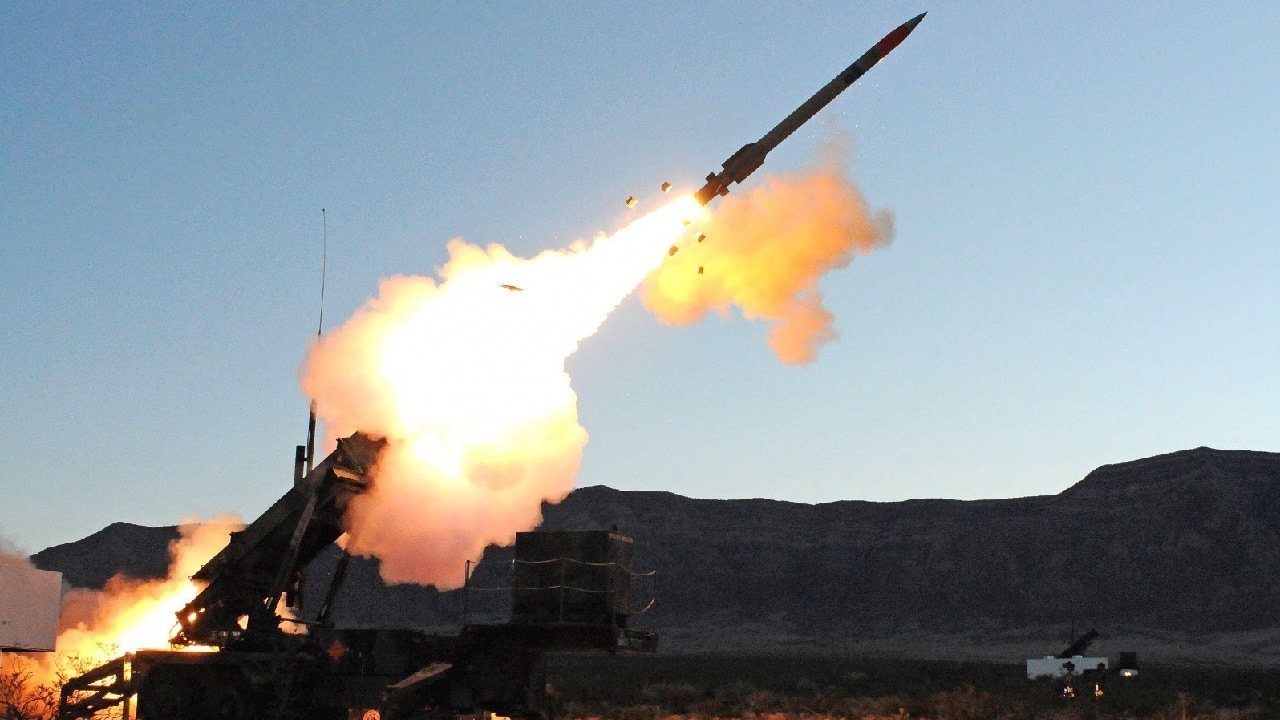
The immediate headline is simple enough: Ukraine wants more Patriot interceptors before Russia turns winter into a strategic weapon again. Moscow has spent years learning how to sequence drone swarms, cruise missiles, ballistic missiles and decoys against Ukraine's grid. The point is not only to destroy transformers. It is to force Ukraine to spend scarce high-end interceptors on every ambiguous track because the cost of guessing wrong is a dark city.
The production-licence discussion is the more important part. If the Pentagon moves forward, Ukraine would not merely be a recipient of U.S. air-defence hardware. It would become part of the Patriot supply chain, at least in some form. That could mean component work, final assembly, maintenance, repair, or a phased programme that begins far short of full missile production. The public reporting does not yet establish the scope, and anyone pretending otherwise is selling certainty they do not have.
Still, the direction is clear. Washington has discovered that shipping finished interceptors from U.S. stocks is a political and industrial dead end. Europe has discovered the same thing with 155mm shells, air-defence missiles and long-range strike systems. The Ukraine war keeps eating the inventory that NATO assumed it would never have to spend at this tempo.
What Patriot Actually Does
The Patriot system is not one weapon. It is a networked air and missile defence architecture built around radars, engagement-control stations, launchers, power units, communications equipment and interceptors. Ukraine uses it because it can engage threats that cheaper systems often cannot, particularly ballistic missiles and high-performance air-breathing targets.
- Core role: terminal air and missile defence against aircraft, cruise missiles and tactical ballistic missiles.
- Interceptor family: PAC-2 variants use blast-fragmentation warheads; PAC-3 and PAC-3 MSE are hit-to-kill interceptors designed to destroy targets by direct impact.
- PAC-3 MSE design features: an active seeker, upgraded control surfaces and a dual-pulse motor compared with earlier PAC-3 variants.
- Operational problem: Patriot is highly capable but expensive, complex and dependent on a deep industrial base for sustainment.
That last line is where the strategy lives. Patriot has become a symbol of Ukraine's survival because it can stop some of Russia's most dangerous missiles. But it is also a symbol of Western scarcity. Every interceptor fired over Kyiv is one fewer available for U.S. forces, Poland, Romania, Germany, Israel, Japan or another customer watching its own threat board.
The 300-Missile Number Is the Whole Argument
Ukraine asking for 300 interceptors before winter should be read against Russia's strike pattern, not as a normal procurement request. Moscow does not need every missile to get through. It needs enough leaks to degrade the grid, overload repair crews and create political pressure inside Ukraine and among its supporters.
That is why the debate about production licences has strategic weight. If Ukraine can eventually help produce or assemble Patriot interceptors, the alliance changes the math from allocation to multiplication. Instead of asking which capital gets the next batch, NATO and Ukraine begin asking how many production lines can run in parallel and how much risk can be pushed forward into Ukraine itself.
There is an obvious counterargument: putting Patriot production inside Ukraine creates a target set for Russia. True. But that objection is too neat. Russia already targets Ukrainian defence industry, power infrastructure, rail nodes and storage sites. The practical question is not whether production in Ukraine is risky. It is whether keeping production concentrated abroad is riskier because it leaves Ukraine dependent on a slow pipeline of finished weapons.
Everyone in Washington likes the phrase burden-sharing until the burden is an export licence, intellectual property, classified manufacturing processes and a partner country under missile attack. Then the room gets quieter.
Europe Should Be Paying Attention
This is not only an American-Ukrainian story. If Washington licenses production, Europe will have to decide whether it wants to be a customer of the new arrangement or a co-owner of it. Germany has supplied Patriot systems to Ukraine. Poland and Romania sit on the geography where Russian spillover risk is no longer theoretical. NATO's eastern flank needs more interceptors, not just more communiques about resilience.
The uncomfortable comparison is Israel. The U.S. and Israel built a dense missile-defence relationship over decades because Washington treated Israeli air defence as a standing strategic requirement, not a charity case. Ukraine is being pushed toward the same logic, but under wartime pressure and without the luxury of time.
There is also an industrial politics problem. Lockheed Martin has been moving on lower-cost Patriot interceptor concepts, including the PAC-3 ACE announced this month, while RTX remains central to Patriot system production and integration. That tells us industry sees the demand curve. But cheaper does not mean cheap, and lower-cost interceptors will not arrive fast enough to solve this winter's problem.
What To Watch Next
The first thing to watch is whether the Pentagon confirms a concrete licensing pathway rather than a vague intent. The second is whether the deal covers full interceptor production or a narrower industrial role such as component manufacturing and sustainment. The third is money. A licence without financing, machine tools, security guarantees and export-control clarity is theatre with paperwork.
For Ukraine, the winter question is immediate: can it get enough interceptors to keep Russia from turning the grid into a hostage? For NATO, the larger question is worse: can the alliance build air-defence weapons at the pace modern war consumes them?
The answer, today, is no. That is why a discussion about Patriot licences matters. It is not proof that Ukraine will soon make its own missile shield. It is proof that the old arsenal is too small for the war everyone hoped would stay limited.
Ukraine's President Volodymyr Zelensky requested 300 Patriot interceptors from the U.S. before winter to enhance air defense against Russian missile strikes. The Pentagon is considering licensing production of these interceptors in Ukraine, indicating a shift in military support dynamics. This request highlights the urgency of bolstering Ukraine's defense capabilities as winter approaches and Russian attacks intensify.
- Ukraine's President Zelensky requested 300 Patriot interceptors from the U.S.
- The Pentagon is considering licensing Patriot production to Ukraine.
- The request is driven by the need to defend against Russian missile strikes during winter.
- The discussion indicates a shift from aid to a more integrated defense production approach.
- Ukraine's air defense capabilities are under pressure from Russian attacks.