
Ukraine's 2026 Donbas Offer Puts NATO Membership on a Dangerous Clock
 Alexandra Reeves
Ukraine's 2026 Donbas Offer Puts NATO Membership on a Dangerous Clock
The most dangerous sentence in this weekend's Ukraine diplomacy was phrased as a question. According to President Volodymyr Zelensky, American negotiators asked whether Ukraine would withdraw from the parts of the eastern Donbas still held by Kyiv in exchange for NATO membership. Washington has not confirmed that this is an offer. A US official told the BBC that many ideas remain under discussion and that any final deal would need the agreement of both sides.
That caveat matters. So does the fact that Zelensky made the exchange public. This is not a peace plan. It is a test of whether the United States still sees Ukrainian sovereignty as the starting point of European security, or as a bargaining chip that might unlock a faster deal with Moscow.
The proposal changes the order of the argument
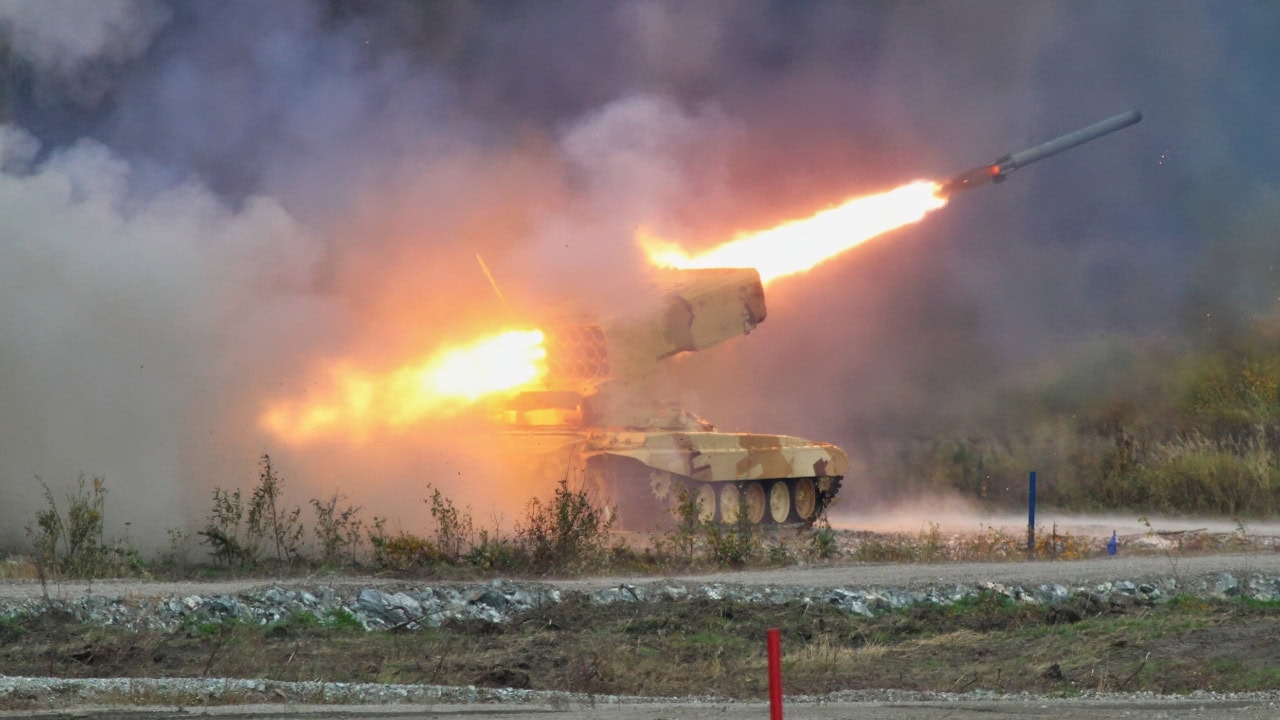
The military geography is brutal. The BBC reports that Russia controls roughly a fifth of Ukraine, including most of Donetsk and Luhansk, while Moscow continues to demand territory it does not yet occupy, as well as Crimea and restrictions on Ukraine's armed forces. The proposed trade would therefore not simply recognize the battlefield. It would ask Ukraine to abandon defensible ground in return for an alliance guarantee that NATO members have repeatedly treated as politically and militarily difficult.
That reverses the logic of deterrence. NATO membership is supposed to make aggression fail, not reward the aggressor's campaign with a larger veto over the alliance's borders. If the alliance accepts a member only after that member gives Russia the territory it wants, Moscow learns a very clear lesson: pressure creates leverage, and leverage can be converted into Western policy.
There is a technical problem as well. Article 5 is a collective defence commitment, but it does not erase the need to define the member's recognized territory or the circumstances under which the guarantee applies. A rushed accession deal could create precisely the ambiguity Russia would exploit: a new NATO member with unresolved borders, a large Russian force on the other side, and immediate arguments over whether every future strike is an attack on the alliance.
Kyiv is asking for more than a flag and a promise
Zelensky did not close the door completely. He said he would put a package to a referendum if it included credible security guarantees, no restrictions on Ukraine's military, and money to rebuild the country. That list is revealing. Kyiv understands that NATO membership by itself cannot repair a shattered economy or stop a missile in flight. It wants the force that makes membership meaningful.
The Guardian reported that Zelensky rejected Russian calls to settle a broad new European security architecture before ending the war. His sequencing is sensible. A continent-wide redesign negotiated over Ukraine's head would give Moscow the strategic discussion it wants while leaving the immediate military facts unresolved. End the war, establish enforceable guarantees, then debate the wider architecture. Not the other way around.
Ukraine's referendum condition also serves a political purpose. It prevents Washington and Moscow from presenting territorial withdrawal as a private technical adjustment. Any concession would be owned by Ukrainian voters, not merely by a president under wartime pressure. That does not make the idea safe. It makes the cost visible.
The European problem is back in the room
European leaders have reason to be alarmed even if the proposal never becomes official. France's Emmanuel Macron warned that an unjust peace would be a recipe for another war. That is not rhetorical decoration. European states would live with the consequences of a settlement that leaves Russia stronger, Ukraine constrained, and NATO's eastern frontier politically unstable.
There is a familiar Washington assumption that European governments will eventually accept any deal that stops the shooting. That assumption is wrong. Europe wants the war ended, but it also wants the next war made harder to start. Those are not identical objectives. A ceasefire that converts Russian military gains into a permanent negotiating advantage may reduce violence this winter while increasing the odds of another conflict later.
The awkward part is that Europe has limited control over the negotiations. The BBC says US envoys Jared Kushner and Steve Witkoff met Putin in Moscow and Zelensky in Dublin, while later reporting indicated that European countries could join future talks. Being invited into the next round is not the same as having a seat when the central trade is first proposed.
What to watch next
- Washington's wording: whether officials describe Donbas withdrawal as a proposal, a hypothetical, or something Kyiv requested.
- Russian conditions: whether Moscow accepts NATO membership in exchange for territory, or adds neutrality, force limits, and further concessions.
- Alliance guarantees: whether European governments offer a real military backstop, including air defence, ammunition, and a funded Ukrainian force.
- Ukrainian red lines: whether Zelensky's referendum language becomes a negotiating mechanism or a warning that Kyiv will reject the package.
The signal is already clear. NATO membership is back on the agenda, but the price being discussed could weaken the very security system it is meant to strengthen. If Washington treats Donbas as the cost of getting a signature from Moscow, Russia will not see a compromise. It will see proof that military pressure can rewrite Europe's map. The uncomfortable question is no longer whether Ukraine can join NATO. It is whether NATO can make an offer without teaching Russia how to break the alliance's front door.
President Zelensky indicated a willingness to consider territorial concessions in the Donbas for NATO membership, raising concerns about the implications for Ukrainian sovereignty and European security. The proposal, which is not yet confirmed by the U.S., could alter the dynamics of NATO's collective defense commitments. European leaders are alarmed by the potential for an unjust peace that may strengthen Russia's position.
- President Zelensky indicated a willingness to discuss territorial concessions for NATO membership.
- Russia currently controls significant portions of Donetsk and Luhansk.
- Zelensky's proposal includes a referendum for any territorial changes.
- European leaders express concern over the implications of an unjust peace with Russia.
- The U.S. has not confirmed the specifics of the negotiations regarding NATO membership.