
Ukraine's Drones Now Make Russia Defend 3,000 Kilometers
 Alexandra Reeves
Ukraine's Drones Now Make Russia Defend 3,000 Kilometers
Russia used to sell this war as a problem it could keep at the edge of the map. That argument is getting harder to sustain when Ukrainian drones are hitting export terminals, oil storage sites, logistics hubs, ships, and even the political theatre of Navy Day.
The latest signal came on July 27, when the Kyiv Independent reported that Ukrainian drones struck an export terminal on the Black Sea in Russia's Rostov Oblast as part of a wider deep-strike attack. The same report said the overnight operation also hit oil facilities in Udmurtia and Yaroslavl Oblast, both northeast of Moscow and more than 1,300 kilometers from Ukrainian territory. President Volodymyr Zelensky described the campaign as bringing the war back into Russia's rear.
That is not just rhetoric. On July 26, the Kyiv Independent also reported that Russia canceled its St. Petersburg Navy Day parade for the second year in a row amid the Ukrainian drone threat. St. Petersburg is roughly 1,100 kilometers from Ukraine's border and one of Russia's most heavily defended prestige cities. The Russian Navy could still receive speeches. It could not confidently put on the show.
The New Geography of the War
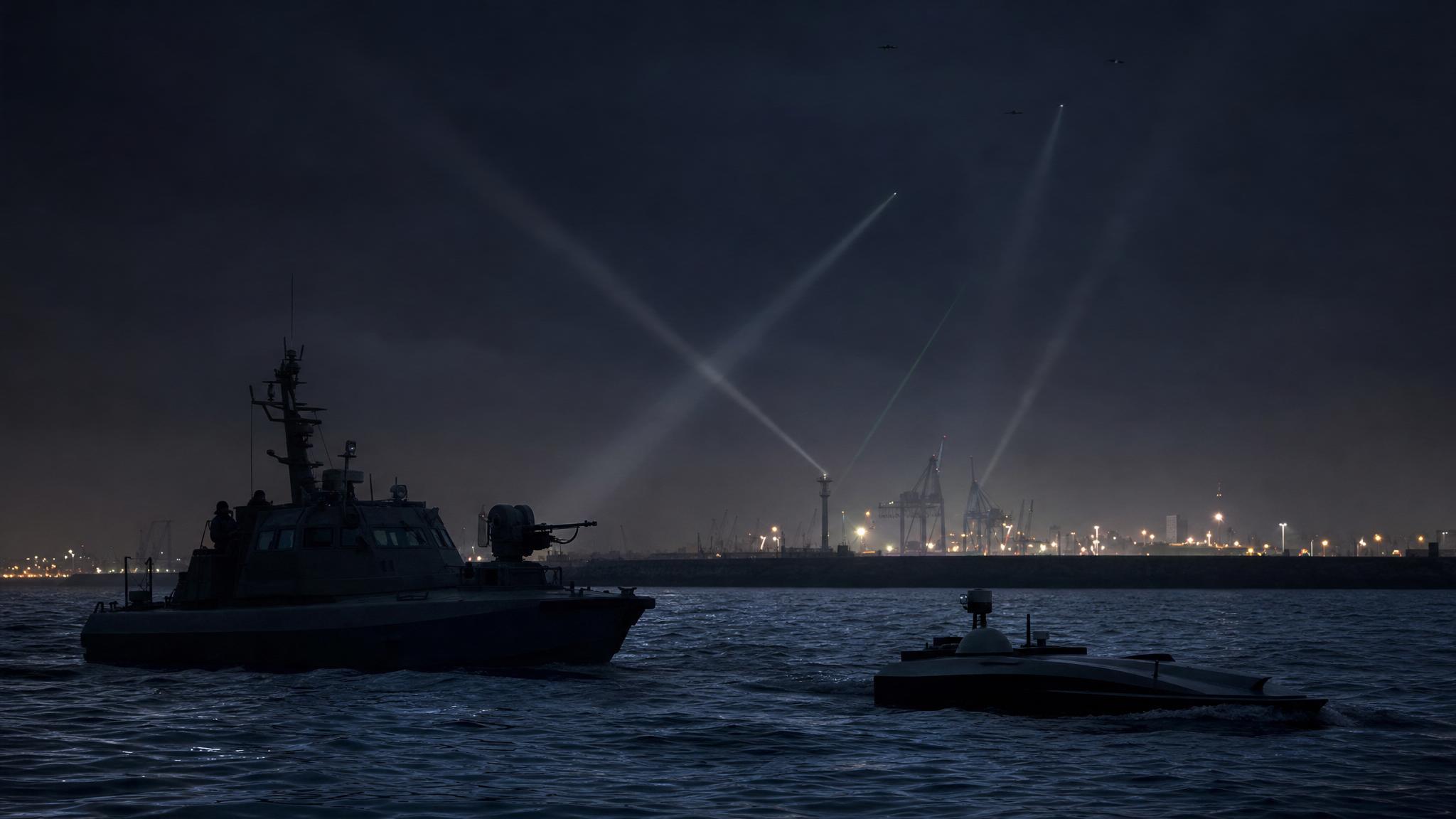
For most of the full-scale invasion, the West's argument about escalation turned on range. Give Ukraine short-range systems, then longer-range systems, then debate whether something could hit Crimea, Belgorod, Kursk, or deeper Russia. Kyiv has now built a domestic strike ecosystem that makes much of that argument look dated.
The technical details matter. Ukraine's long-range one-way attack drones are not Tomahawk-class cruise missiles. They are slower, easier to detect in isolation, and usually carry smaller warheads. But they are cheap enough to send in waves, adaptable enough to be modified quickly, and increasingly capable of reaching targets that Russia cannot ignore. The Kyiv Independent cited Zelensky on July 26 saying Ukraine can now strike targets at distances of more than 3,000 kilometers, with work underway to extend that range further.
Even if each individual drone has limited destructive power, the strategic effect is cumulative. A refinery fire, a port disruption, an airport closure, a canceled parade, and a forced redeployment of air defenses all impose costs. Moscow has to defend the front, Crimea, the Black Sea, the Baltic approaches, oil infrastructure, air bases, rail junctions, and symbolic political spaces. Ukraine does not need to destroy everything. It needs to make Russia try to defend everything.
Sea Targets Are No Longer Separate
The maritime side of this campaign is especially uncomfortable for Moscow. Reuters, carried by Defense News on July 24, reported that Ukrainian drone units operating far behind the front line had hit more than 180 vessels and other sea-borne targets in recent weeks. That number should be treated as a battlefield claim, but the pattern is visible: Ukraine is blending land-based reconnaissance, strike drones, naval drones, and targeting networks into a pressure campaign against Russian movement at sea.
This is not just about the Black Sea Fleet losing another ship. Russia's maritime problem now touches logistics and political signaling. A ship does not have to be a cruiser to matter. Tugs, patrol craft, ferries, landing ships, tankers, repair vessels, and port infrastructure all keep a war economy moving. Hit enough of them, or make them move only under heavier protection, and the operational rhythm slows.
There is a useful comparison here with the Red Sea. The Houthis showed that relatively low-cost drones and missiles can force expensive naval deployments and distort commercial shipping patterns. Ukraine is doing something different, against a state military in a conventional war, but the economic logic is familiar. The attacker uses cheap systems to create a wide defensive bill. The defender either pays it or accepts embarrassment and disruption.
Russia's Answer Is Getting More Expensive
Russia still has enormous air-defense capacity. It has layered systems around Moscow, St. Petersburg, Crimea, major bases, and key industrial zones. But air defense is not a magic dome. Systems need radars, interceptors, crews, maintenance, command links, and priority rules. Every Pantsir or S-300/400 battery pulled back to protect a refinery is a system not covering another asset. Every airport shutdown and internet disruption is a small admission that the defensive problem is spreading.
This is where the St. Petersburg parade cancellation matters. Parades are not militarily useful, but they are politically useful. Since 2017, Russia's Navy Day celebrations have been designed to display combat vessels from multiple fleets and reinforce the image of a state at ease with maritime power. Canceling the spectacle for a second consecutive year tells Russians something the Kremlin would rather not say plainly: Ukraine's drone industry can now reach into spaces that used to feel insulated from the war.
Western governments should pay attention to that. The most important Ukrainian capability on display is not a single drone model. It is the kill chain: finding targets, assigning cheap weapons, absorbing losses, learning quickly, and repeating the cycle. NATO militaries talk endlessly about mass, resilience, and distributed operations. Ukraine is doing the ugly field version because it has no choice.
What Comes Next
The next phase will turn on three questions. First, can Ukraine keep producing long-range drones at a tempo high enough to overwhelm Russian adaptation? Second, can it pair these attacks with better intelligence on Russian fuel, ammunition, and maritime logistics rather than chasing symbolic targets? Third, can Russia harden enough sites without starving the front of air defenses?
There are limits. Drone strikes alone will not break Russia's war machine. Some Ukrainian claims will be exaggerated, and some damage assessments will remain unclear for days or weeks. Russia will adapt with decoys, electronic warfare, passive defenses, and harder choices about what deserves protection.
But the direction of travel is obvious. Ukraine has moved from defending its own cities against Russian drones to making Russia defend its ports, oil infrastructure, ships, airports, and ceremonies. That is a bad exchange for Moscow. The real question is not whether Ukraine can hit Russia at 3,000 kilometers. It is whether Russia can afford the bill for being vulnerable at that distance every night.
Ukrainian drones conducted deep-strike attacks on Russian targets, including an export terminal in Rostov Oblast and oil facilities in Udmurtia and Yaroslavl Oblast, on July 27, 2023. This campaign has forced Russia to defend its territory, including St. Petersburg, where the Navy Day parade was canceled for the second consecutive year. Ukraine's drone capabilities now allow strikes at distances exceeding 3,000 kilometers, impacting Russian logistics and naval operations.
- Ukrainian drones struck an export terminal in Rostov Oblast on July 27, 2023.
- The strikes also targeted oil facilities in Udmurtia and Yaroslavl Oblast, over 1,300 kilometers from Ukraine.
- Russia canceled its Navy Day parade in St. Petersburg due to the drone threat.
- Ukrainian drones can now strike targets over 3,000 kilometers away.
- Ukrainian drone units have reportedly hit over 180 vessels and sea-borne targets recently.