
Ukraine's Interceptor Drones Turn Private Air Defense Into NATO's Next Test
 Alexandra Reeves
Ukraine's Interceptor Drones Turn Private Air Defense Into NATO's Next Test
Ukraine is doing something European governments still treat as a procurement problem: it is turning air defence into a distributed social function. On November 4, Kyiv approved six changes allowing private air-defence organisations to do more than watch the sky. They can recruit personnel from age 18, operate aircraft, and deploy interceptor drones fitted with warheads. That is not a replacement for a Patriot battery. It is an admission that Patriot batteries cannot be everywhere.
The new layer below Patriot
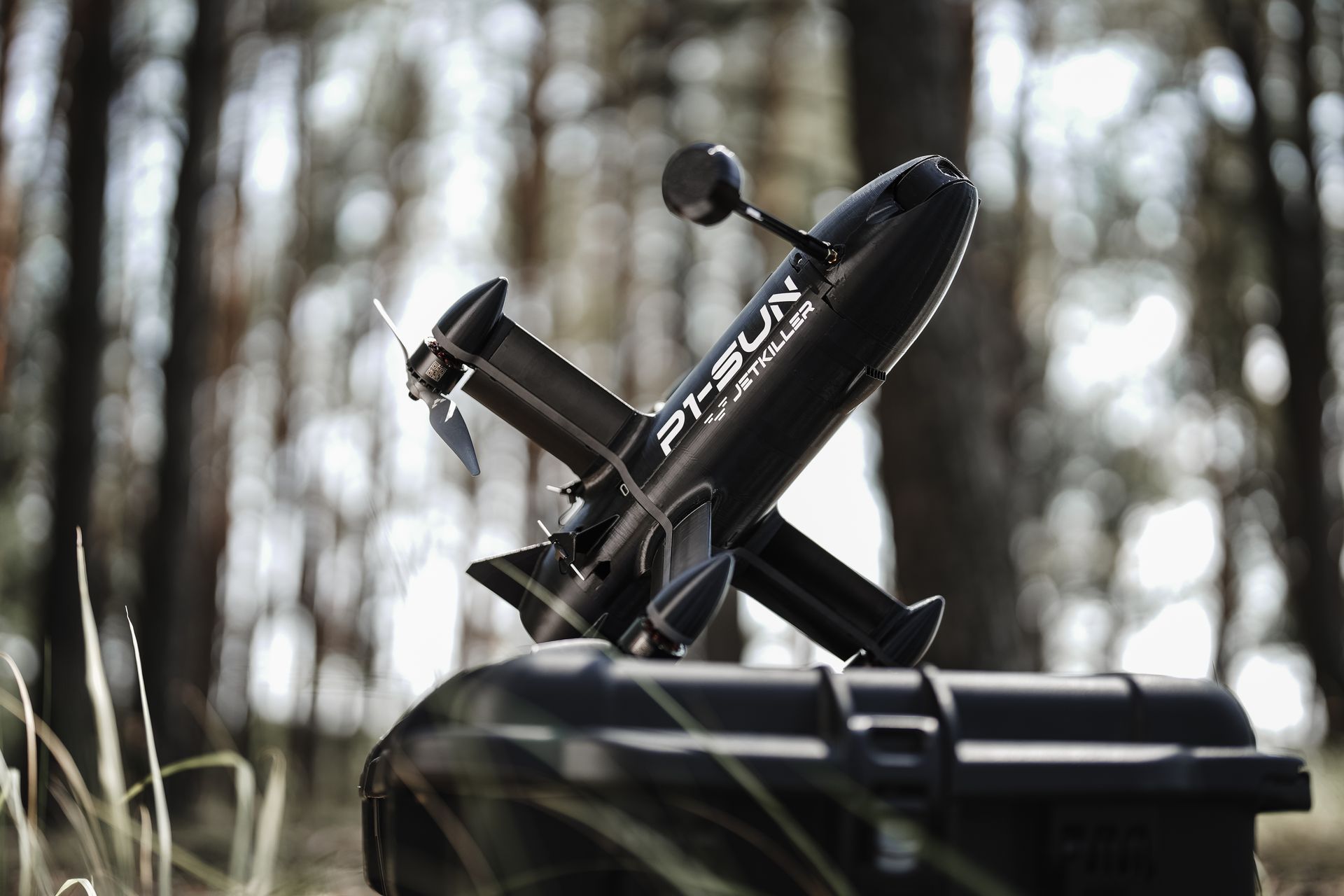
Ukrainian and regional reports describe the reform as an expansion of private-sector air defence. The exact fleet will vary by operator, and Kyiv has not published one standard interceptor-drone model with a common range, speed, or sensor package. That uncertainty matters. The programme is not a glossy weapons launch. It is a framework for putting more eyes, radios, and cheap effectors around factories, warehouses, energy sites, and other targets.
The principle is straightforward. A Russian Shahed-type attack drone is expensive enough to damage infrastructure but cheap enough to launch in quantity. Defending every approach with a surface-to-air missile creates the wrong cost curve. A locally controlled interceptor drone can offer a lower-cost response, provided it can find the target, avoid friendly aircraft, and operate under rules that prevent a panic-driven shootdown.
Why Ukraine changed the rules now
The timing is not cosmetic. Ukraine's Defence Ministry said its forces neutralised more than 8,000 Russian aerial targets in October. That is an official Ukrainian figure, not an independently audited count, but even the scale of the claim shows the operational burden: air defence is no longer an occasional specialist mission. It is a permanent national workload.
Ukrinform and other Ukrainian outlets reported that the Cabinet's measures also allow private units to operate across a wider area, including in support of neighbouring companies. That is the important part. A drone does not respect the property line around a refinery or logistics hub. A defence system organised only by individual site creates gaps that an attacker can exploit. Shared coverage is militarily smarter, though politically and legally messier.
The new age threshold is revealing too. Lowering the minimum from 21 to 18 expands the pool of people who can staff these units, but it also exposes the programme's dependency on training, supervision, and identification discipline. A cheap interceptor is only useful if the network knows what it is looking at.
The strategic trade-off
Kyiv still needs high-end systems. President Volodymyr Zelensky's recent meetings with German officials focused on accelerating deliveries of PAC-2 Patriot interceptors before winter, according to Ukrainian and European reporting. Patriot is built to engage the hardest and most dangerous targets in the stack: ballistic missiles, cruise missiles, and aircraft at ranges and altitudes that improvised systems cannot reliably cover.
But Patriot has two weaknesses that Ukraine cannot negotiate away. It is scarce, and every interceptor is costly. Russia's campaign works by forcing defenders to spend premium ammunition against massed threats, then searching for the unprotected seam. Ukraine's answer is becoming layered: Patriot for the high end, mobile guns and electronic warfare for the middle, and an expanding family of interceptor drones for the low end.
“The objective is not to make every private company a miniature air force. It is to stop treating every target as a problem only the central state can solve.”
That is also the lesson NATO should take from the announcement. European air defence plans often begin with a list of exquisite systems and end with a shortage of missiles. Ukraine is showing a different model: central command standards combined with local operators, civilian infrastructure, and cheaper effectors. It resembles resilience planning more than traditional force structure.
What NATO should worry about
There is an obvious danger in copying Ukraine too literally. Ukraine is fighting for survival under emergency conditions. NATO states have peacetime legal systems, dense air traffic, commercial operators, and a much higher political cost for a mistaken engagement. A private air-defence network would need common identification protocols, encrypted communications, airspace deconfliction, maintenance standards, and a clear chain of authority.
Yet the alliance's alternative is not reassuring. Recent reporting on NATO's emerging defence planning has emphasised deep precision strikes and long-range deterrence against Russia. That may be necessary, but it does not solve the unglamorous problem of protecting substations, depots, ports, and factories from a night raid by dozens or hundreds of small drones. Deep strike is a strategy. It is not a roof.
The question is whether NATO can build a layered system before a crisis, rather than improvise one after the first infrastructure blackout. Ukraine's private air-defence reforms offer a rough prototype: distribute sensors and interceptors, keep lethal authority accountable, and reserve premium missiles for targets that cheaper systems cannot handle.
The uncomfortable conclusion
Ukraine's move is not proof that interceptor drones will solve the air-defence problem. They will fail, require maintenance, and create new risks. But the reform correctly identifies the problem Europe keeps avoiding: mass attack makes centralised defence too thin and premium-only defence too expensive.
Over the next few months, watch whether Ukraine publishes performance data, standardises command procedures, and demonstrates safe cooperation between private units and the armed forces. If it does, NATO will have more than another battlefield innovation to study. It will have a warning. The future of air defence may depend less on buying one more exquisite missile battery than on deciding who is allowed to defend the space between them.
Sources: Ukraine's Ministry of Defence, statement on October aerial-target interceptions (November 4, 2026); Ukrinform, reporting on the Cabinet's six private air-defence measures (November 4, 2026); UNITED24 Media, reporting on interceptor drones and manned aircraft in private air defence (November 5, 2026); reporting on Ukraine-Germany discussions over PAC-2 Patriot deliveries before winter (November 4, 2026).
Ukraine approved reforms on November 4, 2026, allowing private air-defense organizations to recruit personnel and deploy interceptor drones. This initiative aims to enhance air defense capabilities amid ongoing threats, with the Ukrainian Defence Ministry reporting over 8,000 neutralized Russian aerial targets in October. The reforms reflect a shift towards a distributed air defense model, integrating private units into national defense strategies.
- Ukraine's Defence Ministry reported neutralizing over 8,000 Russian aerial targets in October.
- Kyiv approved six changes for private air-defense organizations on November 4, 2026.
- Private units can now operate across wider areas and recruit personnel from age 18.