
Ukrainian Drones Attack Russia in the 2026 Elections — 350 Devices Change the Logic of War
 Dmitri Volkov
Ukrainian Drones Attack Russia During the 2026 Elections — 350 Devices Change the Logic of War
The number 350 in the Friday statement by the Mayor of Moscow is more significant than the question of how many drones actually reached the capital. On the day of the opening of the first parliamentary elections since the start of the full-scale war, the Russian capital became the target of the largest declared drone attack in recent times. This is no longer an episode of frontline fighting, but an attempt to transfer the cost of war into the political space of the Russian Federation.
Strike on the Rear Coincided with the Electoral Calendar
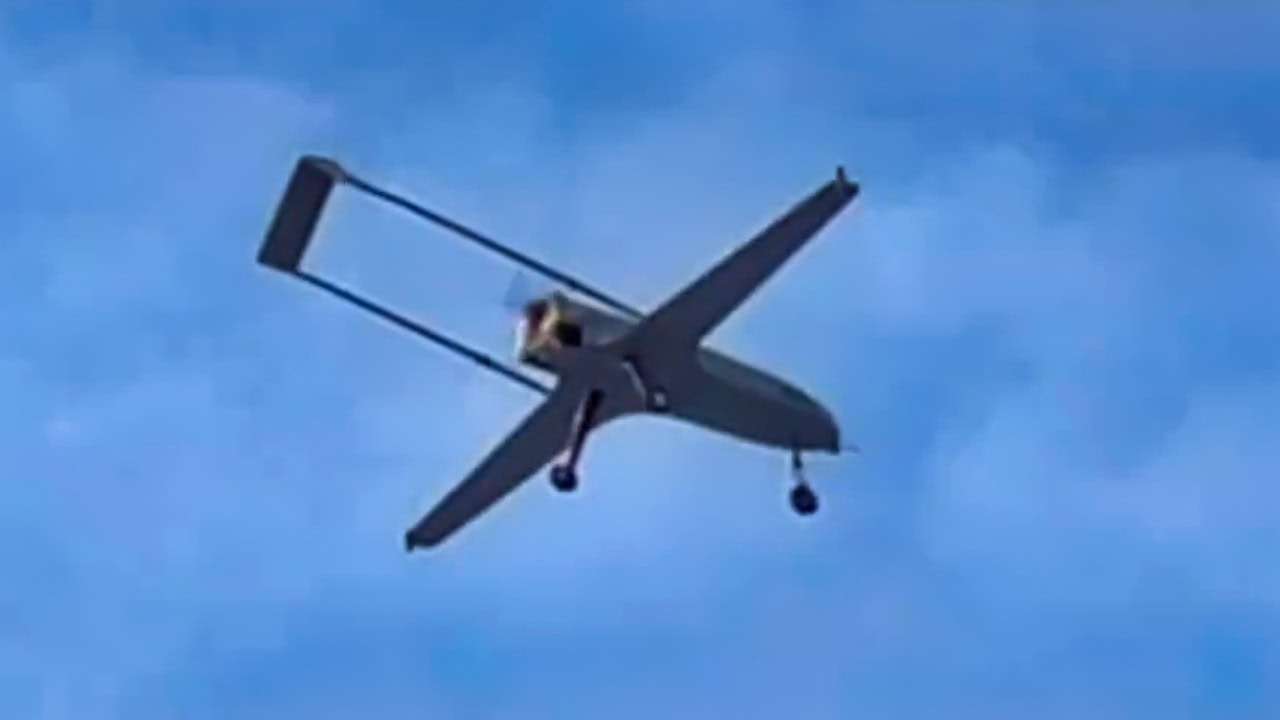
According to Al Jazeera on September 18, Sergey Sobyanin reported more than 350 Ukrainian drones heading towards Moscow; 64 devices, he said, were destroyed on the approaches to the city. At the same time, there were reports of strikes on the Yaroslavl oil refinery and a Russian military airfield in the Rostov region. The Russian Ministry of Defense announced strikes on a Ukrainian logistics hub near Odessa and a cargo ship in Chornomorsk. In other words, both sides continue to describe mutual attacks in terms of military targets, but Kyiv deliberately chose a moment when the consequences were meant to be heard not only by the command centers.
It is important not to turn the statement about 350 devices into a verified final score. Russian official figures usually reflect the number of targets detected by the air defense system or reported by the authorities, rather than an independent count of launched drones. But even in this form, the number shows the scale of saturation of the defense. For Moscow, this means the expenditure of interceptor missiles, the operation of radar posts, disruptions at airports, and the need to keep forces away from the front. A cheap long-range device forces the state to respond with an expensive and complex system.
Military Doctrine of Pressure Through Society
The Ukrainian logic here differs from the usual raid on a military target. The goal is not only oil refining or an airfield but also the sense of security in the deep rear. In this sense, attacks during the elections resemble the Soviet practice of demonstrative pressure before negotiations, but in the opposite direction: now vulnerability is shown to the Russian voter, not to a foreign delegation. Kyiv cannot expect an immediate military collapse of Russia; however, it can increase the political cost of continuing the war.
It is telling that the voting takes place over three days, and only parties supporting the war are allowed to participate; the only notable anti-war party, "Yabloko," was removed from the elections in August (Al Jazeera, September 18; France 24, September 18). In such a system, drones become almost the only channel through which the front returns to the everyday life of major Russian cities. This does not mean that the attack automatically changes electoral behavior. Rather, it amplifies the contradiction between the official picture of a "controlled operation" and the reality in which the capital has to close its skies on the day polling stations open.
Why Air Defense Does Not Solve the Problem
Even the successful destruction of most targets does not equate to strategic protection. Air defense can shoot down a device, but it does not eliminate the cost of constant readiness, false alarms, air traffic restrictions, and the relocation of military infrastructure. A system designed to protect individual objects from a limited number of threats experiences overload during a mass raid. The low cost of Ukrainian long-range drones allows for repeated attacks, changing routes, and forcing Russian command to guess where the next strike will occur.
This problem develops in parallel with Russia's adaptation of its missile arsenal. Reuters reported on September 18 that Russia is adapting a training missile for use in the front part of ballistic strikes against Ukraine. If this information is confirmed, it is not about miracle weapons but about rational military improvisation: Moscow is looking for cheaper ways to saturate Ukrainian air defense. It results in a mirror competition of economies. Ukraine reduces the cost of penetrating into the Russian rear, Russia reduces the cost of missile salvos, and both sides test whose defense system will exhaust its resources faster.
Connection to the Front and Autumn 2026
The events near Moscow cannot be separated from the situation on the line of combat contact. ISW in its assessment from September 17 indicates that the Ukrainian operation Vivaldi in the Liman direction relied on medium-range strikes against Russian logistics in the Luhansk region. A fuel shortage, according to Ukrainian estimates, limits the operation of Russian electronic warfare assets, which helps Ukrainian units create local drone superiority. At the same time, Russia is redeploying armored vehicles and about 1,200 crews from the "Rubicon" center to the Dobropil direction, preparing for autumn mechanized attacks.
That is why long-range strikes have operational significance, not just a propaganda effect. They force Russia to distribute air defense and electronic warfare resources between the front, airfields, oil infrastructure, and the political center. In Soviet terminology, this can be called the struggle for rear sustainability. But modern Russia does not have an endless supply of equipment and trained crews. Its advantage in territorial depth is gradually turning into a long list of objects that need to be simultaneously protected.
Forecast Without Illusions
The attack on election day does not prove either the collapse of Russian air defense or the proximity of a political turning point. The Kremlin will almost certainly use it for mobilization and tightening control, rather than revising its course. But the 350 declared devices, strikes on oil and military infrastructure, and the continuation of medium-range operations add up to a stable trend: the Ukrainian strategy is increasingly aimed at connecting frontline exhaustion with the internal cost of war.
The Russian military system will survive an individual raid. It will be harder to endure the repeatability of such raids if the need for air defense at the front grows, fuel availability decreases, and the autumn offensive requires new armored groups. In 2026, a drone is no longer just a carrier of a warhead. It is a tool for testing the state's ability to maintain normalcy. And the longer Moscow responds only with statements about downed targets, the more noticeable the difference will become between controlling airspace and controlling the consequences of war.
Sources
- Al Jazeera, September 18, 2026 — attack of Ukrainian drones and the start of parliamentary elections in Russia.
- Reuters, September 18, 2026 — adaptation of a training missile for Russian ballistic strikes.
- Institute for the Study of War, September 17, 2026 — Russian Offensive Campaign Assessment.
- France 24, September 18, 2026 — Russian parliamentary elections amid war.
Ukrainian drones attacked Moscow on September 18, 2026, coinciding with the start of parliamentary elections, with over 350 drones involved. The attack included strikes on a refinery in Yaroslavl and a military airfield in Rostov. Ukrainian forces aim to increase the political cost of the ongoing war for Russia, while the Russian military adapts its defenses and missile capabilities in response to these drone threats.
- Over 350 Ukrainian drones targeted Moscow during elections.
- 64 drones were reportedly destroyed before reaching the city.
- Attacks coincided with the opening of parliamentary elections in Russia.
- Strikes also occurred on a refinery in Yaroslavl and a military airfield in Rostov.
- Russia is adapting its missile arsenal in response to Ukrainian drone attacks.