
Ukrainian Drones Attacked a Oil Hub in Tatarstan from 1300 Kilometers Away — Vulnerability of the Russian Rear in 2026
 Dmitri Volkov
Ukrainian drones attacked an oil hub in Tatarstan at a distance of 1300 kilometers — vulnerability of the Russian rear in 2026
November 19, 2026
A distance of 1300 kilometers is usually considered sufficient in Russian military logic to turn the rear into a safe zone. Morning reports from Tatarstan show the opposite. According to Ukrainian and international sources, Ukrainian drones have once again reached one of the most important oil regions of Russia. Local authorities reported repelling the attack and no serious damage, while Ukrainian publications reported strikes on oil storage and pumping facilities. These versions cannot yet be mechanically reconciled into a single picture. But the very fact of an air alert in the deep industrial rear has military significance.
What is confirmed and what remains disputed
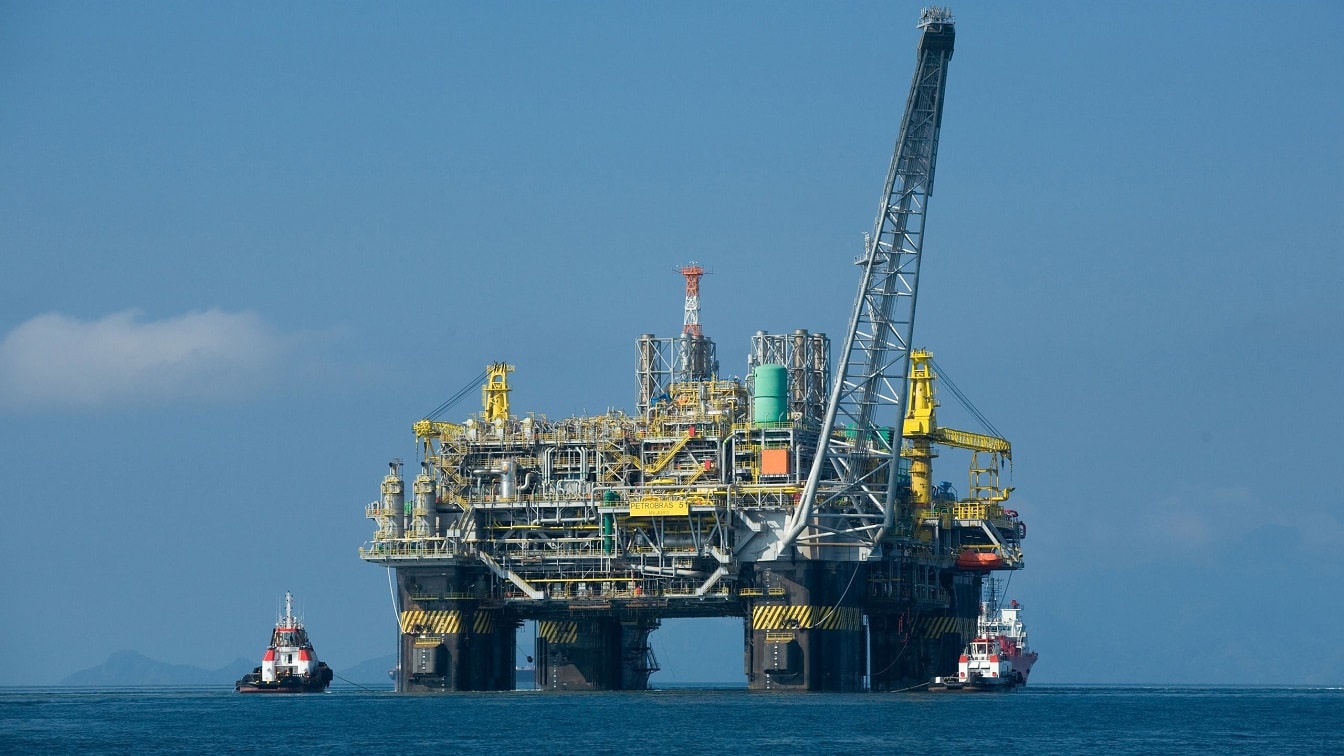
Reports from Reuters on November 19, citing regional authorities, state that Russian air defense forces repelled a drone attack on an oil facility in Tatarstan. The Kyiv Independent and Kyiv Post described the same episode as a strike on a key oil hub approximately 1300 kilometers from Ukraine. Some publications mentioned tanks or pumping infrastructure. At the time of preparing the analysis, there was no independent confirmation of the scale of the damage, the duration of the shutdown, or the exact type of drones used.
This is a fundamental limitation. The Russian statement about repelling the attack does not prove that all targets were intercepted: a drone could have been shot down near the facility, or it could have damaged secondary infrastructure without causing a major fire. The Ukrainian report of a strike also does not equate to incapacitating the facility. In such cases, the indicator is not a video recording of an explosion, but the production result — shutdown of installations, reduced processing, disruptions in railway shipments, and the need to divert firefighting and engineering units.
Oil is more important than a single facility
Tatarstan is of particular interest to the Russian military economy not only because of oil production. It is home to refining, petrochemical, and fuel logistics capacities associated with the industrial regions of the Volga. For the front, the value lies not in the abstract volume of oil produced, but in the ability to convert raw materials into diesel fuel, aviation kerosene, lubricants, and chemical components. Damage to a single tank rarely changes the strategic balance. A series of attacks on processing and storage hubs creates a different effect — it reduces the reliability of the entire chain.
According to data provided by The Kyiv Independent citing Reuters, Ukrainian strikes have already reduced Russian oil refining by 45 percent during certain periods of 2026. This figure should be viewed as an estimate rather than a constant state of the industry. However, it illustrates why Moscow reacts more painfully to such attacks than to symbolic raids. The oil system has reserve capacities, stocks, and the ability to redistribute cargo, but each new failure increases the cost of repairs, insurance, security, and transportation.
This reveals the institutional weakness of the Russian model. During the Soviet era, large industrial areas were built with consideration for dispersion and layered defense, but the modern economy has sought concentration and efficiency. Concentration reduces costs in peacetime and makes the system convenient for statistical management. In war, it turns several large enterprises into bottlenecks that cannot be quickly replaced by hundreds of small productions.
Why range changes the air defense task
A strike at 1300 kilometers does not mean that Ukraine has achieved absolute dominance over Russian airspace. Long-range drones are slow, vulnerable to fighters, electronic warfare, and anti-aircraft systems. Their route can be detected, and the cost of one attack is higher than the cost of a single interception. But defense must protect not just one front line, but thousands of kilometers of infrastructure. This is the strategic result of long-range drones.
The Russian command is forced to choose between covering Moscow, military airfields, warehouses, oil refining, and facilities in new territories. Each additional air defense system in Tatarstan is absent in another area. This is not simple arithmetic of "one drone against one missile," but a problem of distributing a limited resource. A successful interception near an oil facility may be tactically convincing, but the very fact that the system had to be deployed deep in the rear already changes the operational structure of defense.
In this sense, the Ukrainian campaign of long-range strikes resembles the Soviet struggle against rear infrastructure only superficially. The Soviet doctrine relied on massive missile and air operations and the destruction of command nodes. Ukraine operates cheaper and gradually: small waves of drones test the air defense response, identify routes, force changes in the operational mode of enterprises, and create political uncertainty. For the Russian General Staff, this is an inconvenient type of threat — not large enough to declare a strategic catastrophe, but too persistent to ignore.
The military significance outweighs the damage from fire
Moscow will likely emphasize that the attack was repelled. This is a rational information line: acknowledging even limited damage to an oil facility shows the vulnerability of the economy and may raise questions about the cost of war. Kyiv, on the other hand, is interested in presenting every long-range raid as proof of the ability to carry the war into the Russian rear. Both sides have reasons to exaggerate the part of the picture that suits them.
Therefore, the episode should be assessed by three measurable consequences. First — how long the facility operated under restrictions. Second — whether Russia had to redeploy air defense and aviation to the Volga region. Third — whether fuel routes to the front and internal logistics prices changed. If the answer to all three points is positive, then even minor physical damage will prove operationally significant.
Forecast for Russian defense
The current attack will not collapse the Russian oil industry or deprive the army of fuel. Such a conclusion would be as superficial as the official assertion that every raid was completely neutralized. A more realistic forecast looks harsher: in 2027, Russia will spend more resources on protecting processing and storage while maintaining the need for air defense at the front. This will increase the burden on the industry, which is already producing weapons under conditions of component and personnel shortages.
The Russian rear does not literally become a front. It becomes a zone of constant risk, where even a downed drone can trigger a shutdown, inspection, evacuation, and redistribution of forces. For a state accustomed to measuring security by distance from the line of combat contact, this is an unpleasant lesson. The war of 2026 shows that depth is no longer a guarantee of security — the only guarantee remains the ability to quickly restore the system after each strike.
Sources
- Reuters, November 19, 2026 — report on the repelled attack on an oil facility in Tatarstan citing local authorities.
- The Kyiv Independent, November 19, 2026 — reports on the attack by Ukrainian drones on the oil hub and the assessment of the reduction in Russian oil refining.
- Kyiv Post, November 19, 2026 — assessment of the distance to the facility at 1300 kilometers and the industrial significance of the target.
- Meduza and The Moscow Times, November 19, 2026 — additional reports on damage to oil tanks and attacks in the Russian rear; details require further verification.
Ukrainian drones attacked an oil hub in Tatarstan on November 19, 2026, from a distance of 1300 kilometers. Russian air defense claimed to have intercepted the drones, but the extent of damage remains disputed. This incident underscores vulnerabilities in Russian logistics and the impact of Ukrainian strikes on oil processing capabilities.
- Ukrainian drones attacked an oil hub in Tatarstan from a distance of 1300 kilometers.
- Russian air defense reportedly intercepted the drones, but the extent of damage is disputed.
- The attack highlights vulnerabilities in Russian rear areas and logistics.
- Ukrainian strikes have reportedly reduced Russian oil processing by 45% at times in 2026.
- The incident raises concerns about the effectiveness of Russian air defense in protecting critical infrastructure.