
Urumqi Ship Opens to the Public for the First Time: A Deep Dive into the "Ocean Vanguard" Equipment
Tomorrow marks the 77th anniversary of the founding of the People's Navy, and the People's Navy is holding ship open days in various locations across the country. Today is the first open day in Qingdao, Shandong, where the Navy ship Urumqi, named after the Silk Road city of Urumqi, is open to the public for the first time at the Qingdao Olympic Sailing Center. Next, follow the reporter from the Central Station aboard the ship to explore the hardcore equipment and deep blue style of this domestically produced main battle ship.
Reporter from Central Station, Tan Lin: On the deck of the Urumqi ship, facing this 052D-class guided missile destroyer independently developed and built by our country, the first impression is the deterrent effect brought by the ship's weaponry system. For ocean-going fleet formations, the guided missile destroyer is undoubtedly the "main force" and "ocean vanguard." On the Urumqi ship, the weaponry system from bow to stern is tailor-made for its "main force" mission.
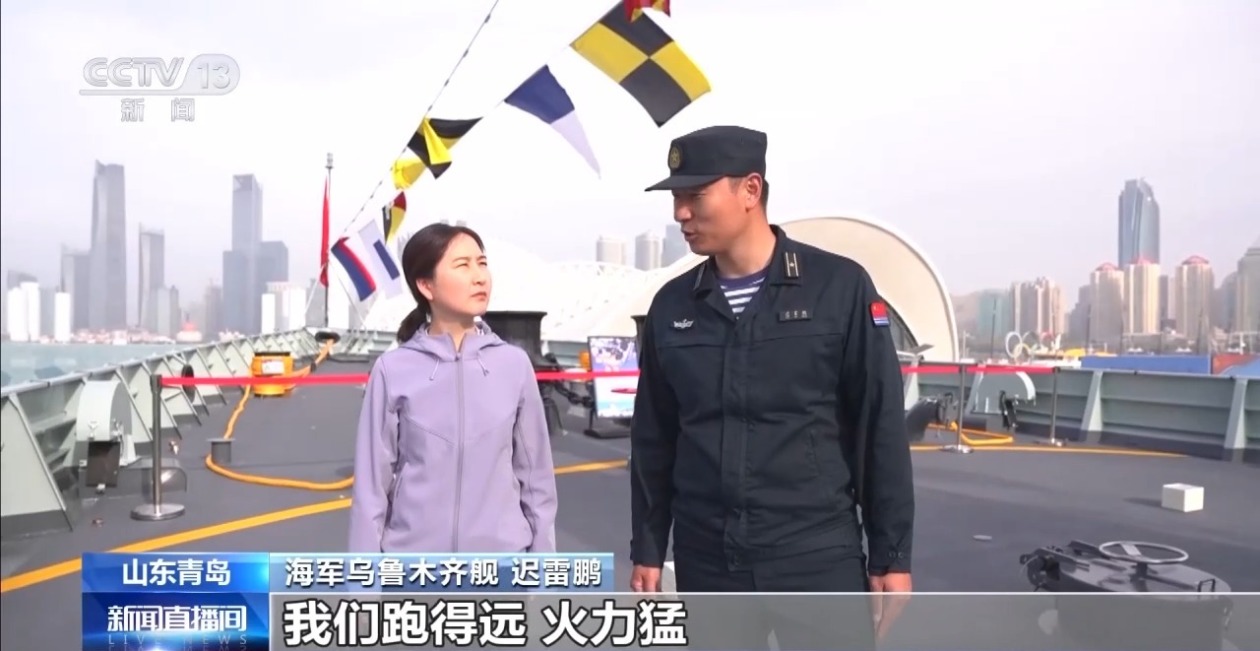
Navy Urumqi Ship, Chi LeiPeng: The Urumqi ship is over 150 meters long, about 18 meters wide, with a maximum displacement of nearly 7,000 tons. It uses a combined diesel and gas turbine propulsion system, allowing it to travel far, with powerful firepower and a very high level of information technology. Because the Urumqi ship is the main force of the fleet, its weaponry must balance four core functions: anti-ship, anti-submarine, air defense, and command.
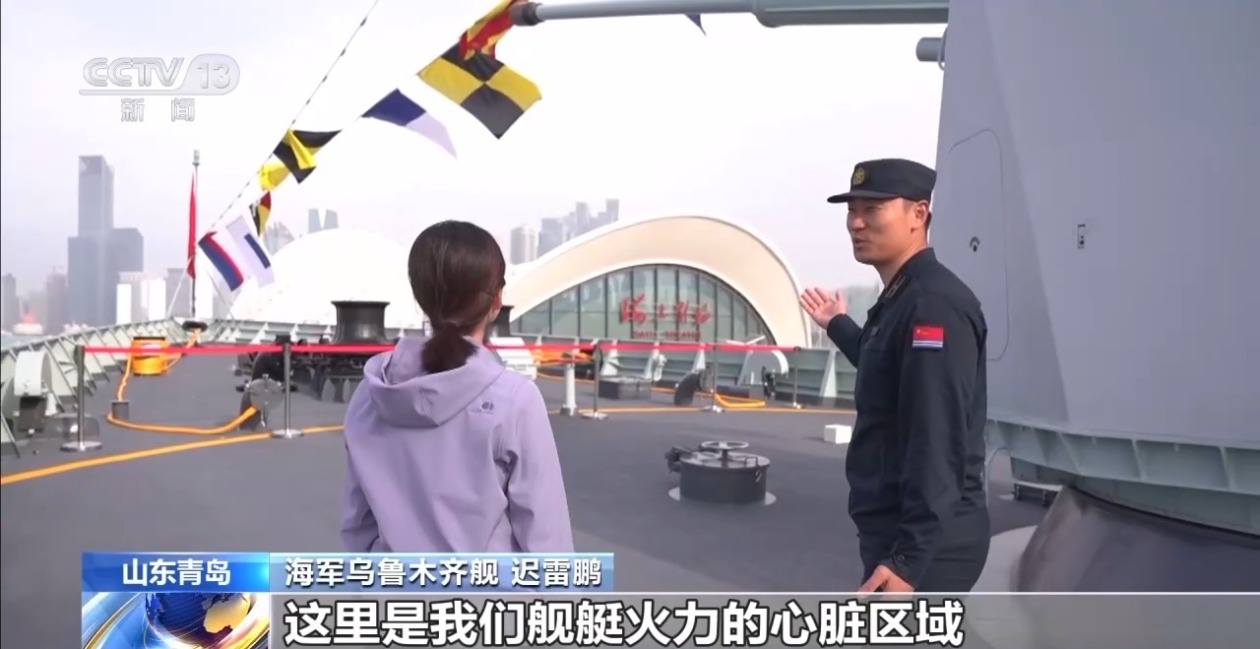
First, the forward deck is the "heart" area of the ship's firepower. The 130mm naval gun is the largest caliber naval gun currently in service with the People's Navy. It has a fast rate of fire, long range, and great power, capable of precise strikes against surface targets and providing fire support to the shore. For rapidly emerging targets, its quick response capability and strike accuracy are direct forces on the battlefield.
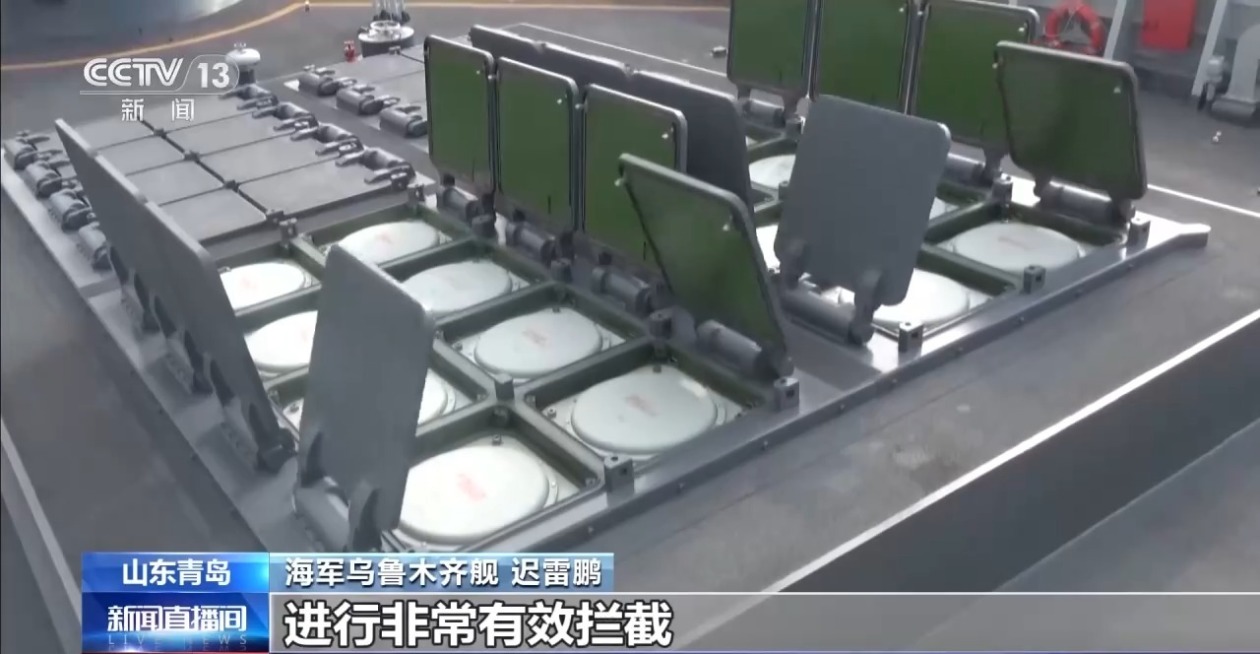
These areas, resembling chocolate squares, are the universal vertical launch systems. The Urumqi ship has 32 launch units on the forward deck and another 32 on the middle deck, totaling 64 launch units. As the main force of the fleet, serving as the "air defense umbrella" and "long-range striker," it determines how far the Urumqi ship can strike and how dense its defenses are. The universal vertical launch system can carry various anti-ship and air defense missiles, effectively intercepting incoming enemy missiles to form an aerial protective barrier, and accurately striking enemy surface vessels, creating comprehensive firepower coverage at long, medium, and close ranges. This is also the core confidence of the Urumqi ship as the main force of the fleet.
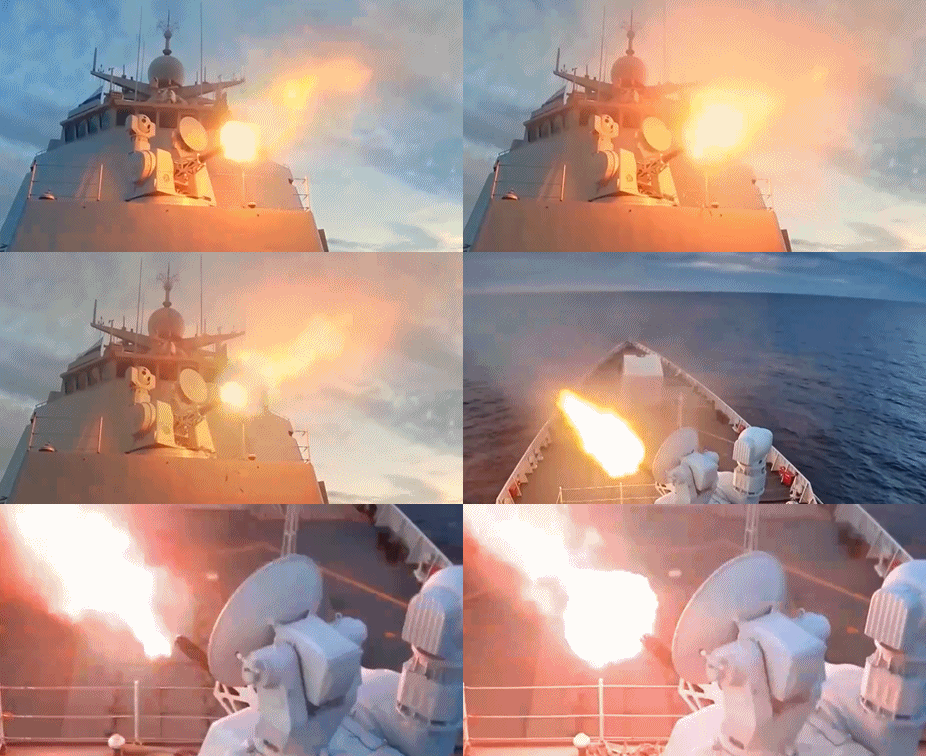
In front of the command center is the 730 gun, a 7-barrel 30mm naval gun, commonly referred to as the secondary gun, with a firing rate that can reach several thousand rounds per minute. It is mainly responsible for terminal defense, such as striking fast-approaching enemy boats and low-flying drones.
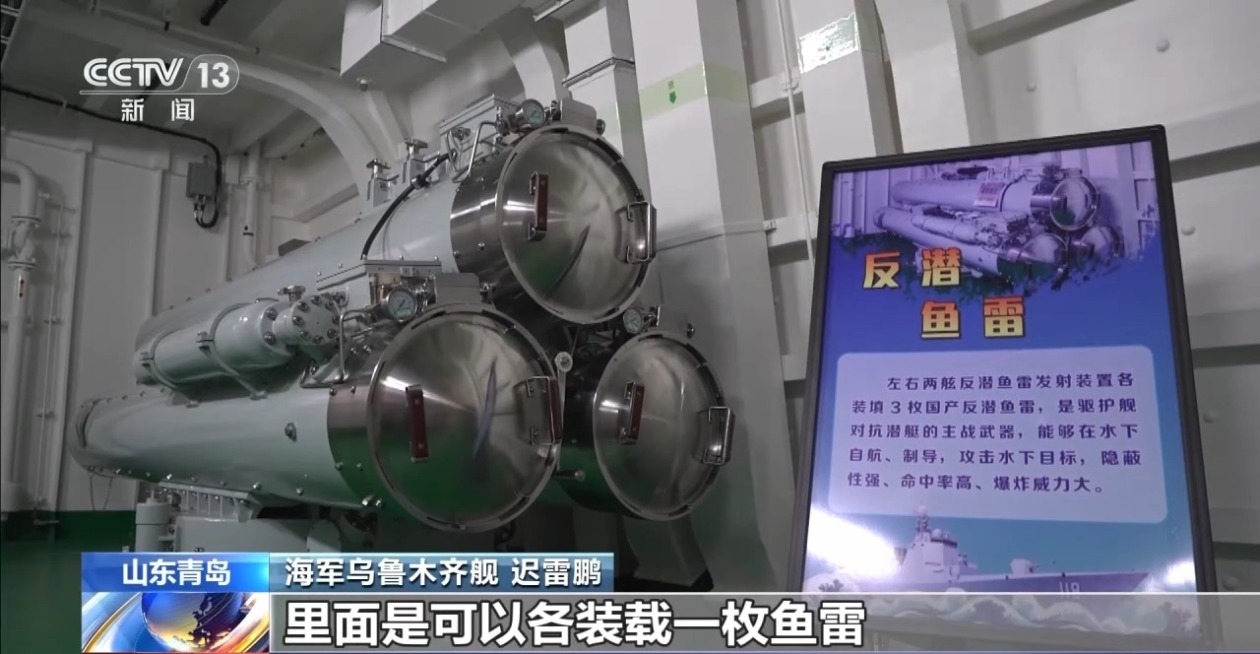
On both the port and starboard sides of the Urumqi ship, there are triple torpedo launchers, with three long tubes serving as torpedo launch tubes, each capable of carrying one torpedo. Torpedoes are one of the important weapons for surface vessels, capable of effectively striking underwater submarines, earning the title of "deep-sea sword," and allowing destroyers to accurately strike during anti-submarine operations in deep waters, establishing a three-dimensional anti-submarine defense line.
Reporter from Central Station, Tan Lin: How are torpedoes launched from the ship?
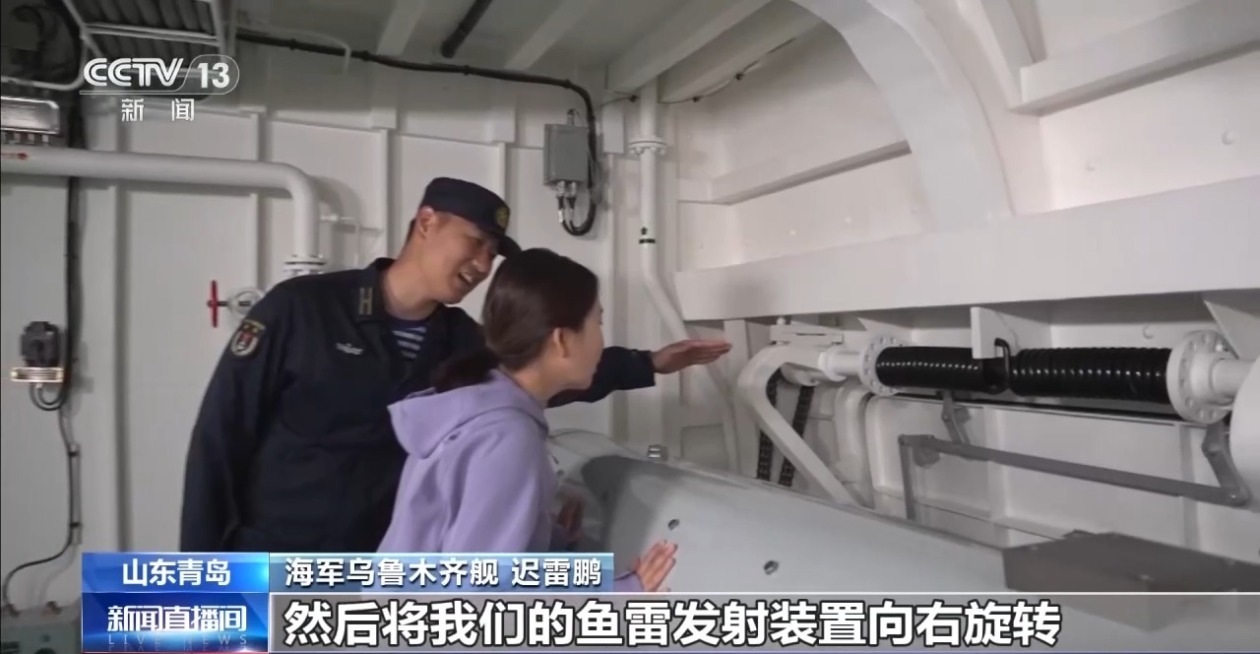
Navy Urumqi Ship, Chi LeiPeng: There is a small door on the side. When needed, this door is opened, and the torpedo launch device is rotated to the right, allowing the torpedo to be launched using compressed air.
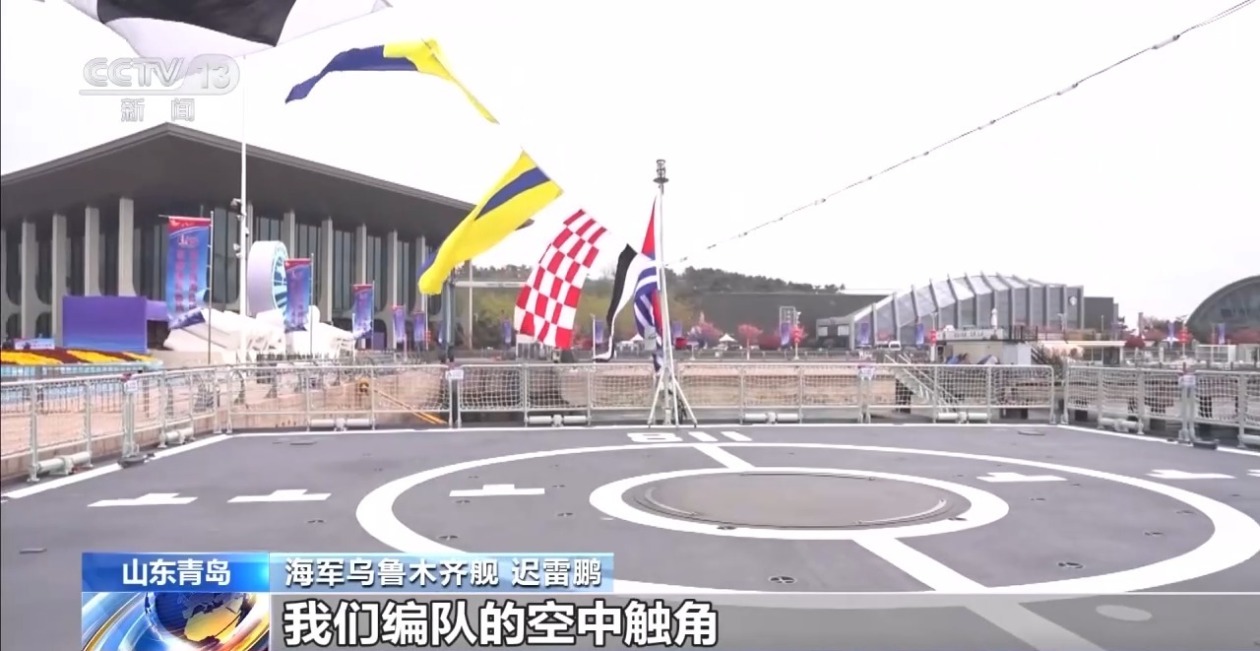
The rear deck of the Urumqi ship, also known as the take-off and landing platform, has a hangar behind the large door. This area can be referred to as the fleet's "aerial tentacle." The Urumqi ship can carry different types of helicopters and drones, enabling it to perform various tasks such as anti-ship, anti-submarine, search and rescue, transport, and early warning detection, truly achieving integrated sea and air operations and greatly extending its operational radius.
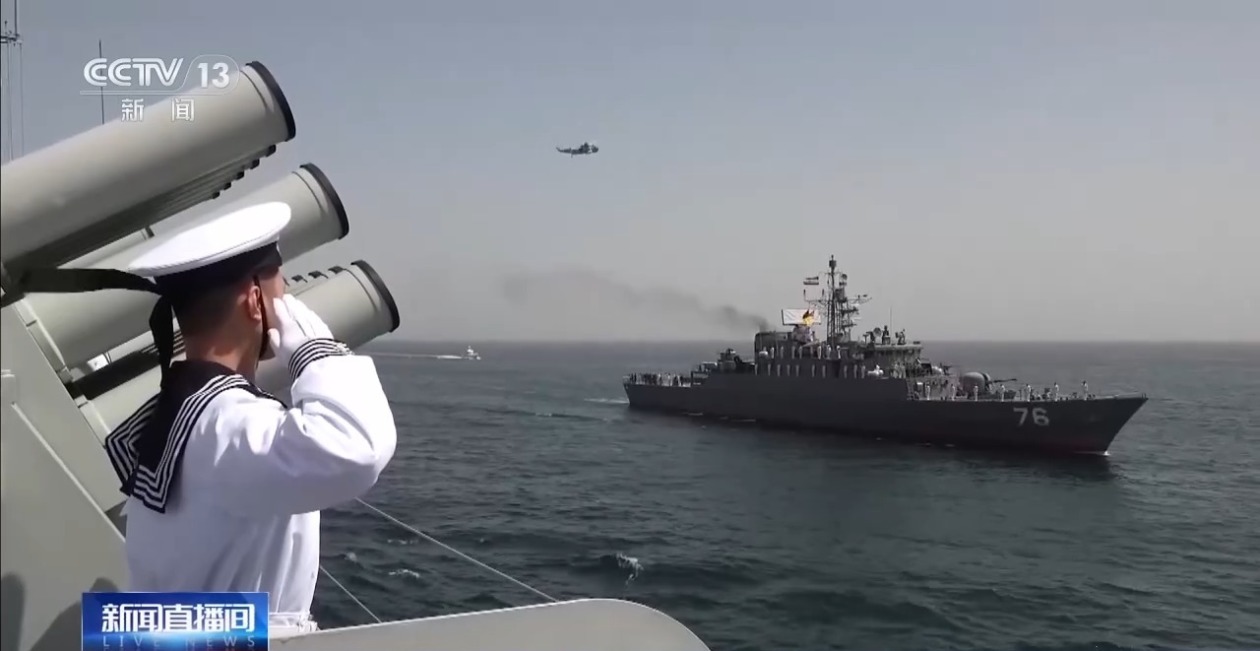
The Urumqi ship has previously operated in the Sea of Japan, patrolled the Pacific, and showcased its capabilities in the Gulf of Aden. It has visited two continents and two oceans, nine countries and nine ports. Especially in recent years, the Urumqi ship can be said to be a "model ship" navigating the deep blue, always in a state of readiness, continuously executing escort and joint exercises with foreign countries. During these missions, we have witnessed the Urumqi ship's hardcore strength and deep blue responsibility.
Named after a city, pursuing dreams on the ocean
As the first naval vessel named after a city in Xinjiang, the Urumqi ship integrates Tianshan culture and ethnic customs into its soul. Next, we continue to follow the reporter to explore the cultural connotations and deep affection between the military and the people of the Urumqi ship.
Inside the Urumqi ship, many cultural symbols that incorporate the characteristics of Xinjiang's ethnic minorities and the Navy can be seen. The emblem of the Urumqi ship incorporates elements of Tianshan culture from Xinjiang.
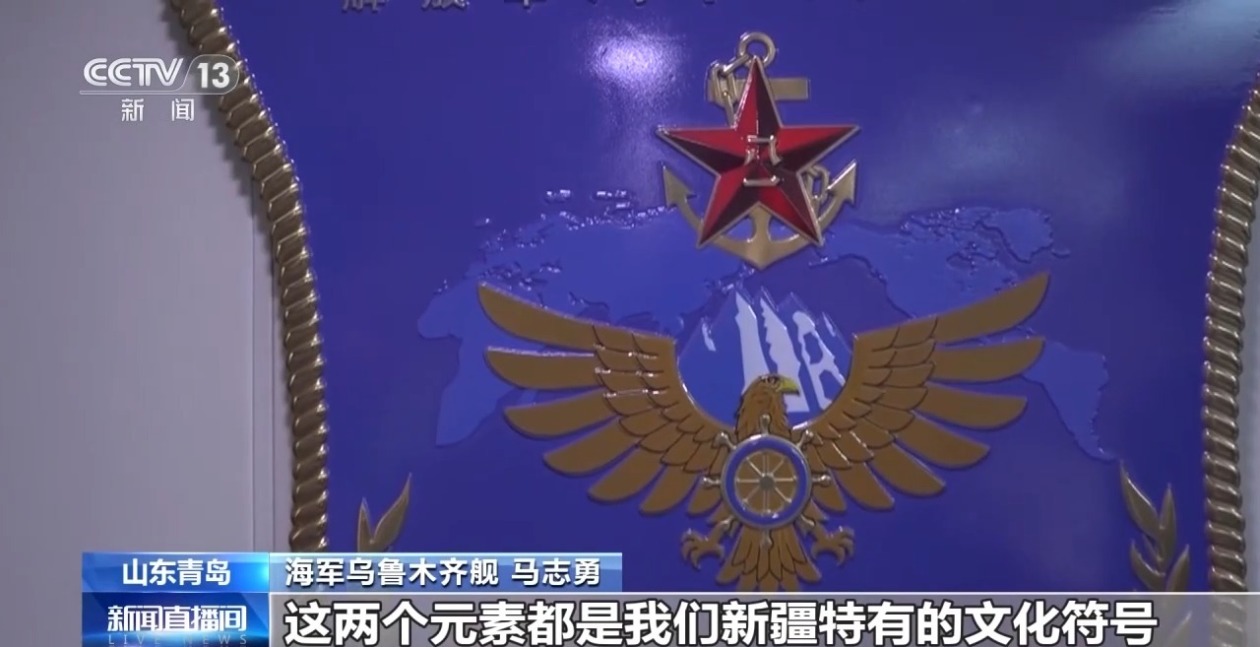
Navy Urumqi Ship, Ma Zhiyong: The emblem features our Tianshan eagle and Bogda Peak, both of which are unique cultural symbols of Xinjiang, closely integrated with our ship's deep blue mission. Walking into this passage, one can deeply feel the people's deep concern for us.
During the ship's visits and open days, these cultural symbols will also be brought out. For example, soldiers from ethnic minorities will perform local dances and serve as guides, sharing their growth experiences and telling stories of our national unity, making the Urumqi ship truly a cultural business card sailing across the vast seas.
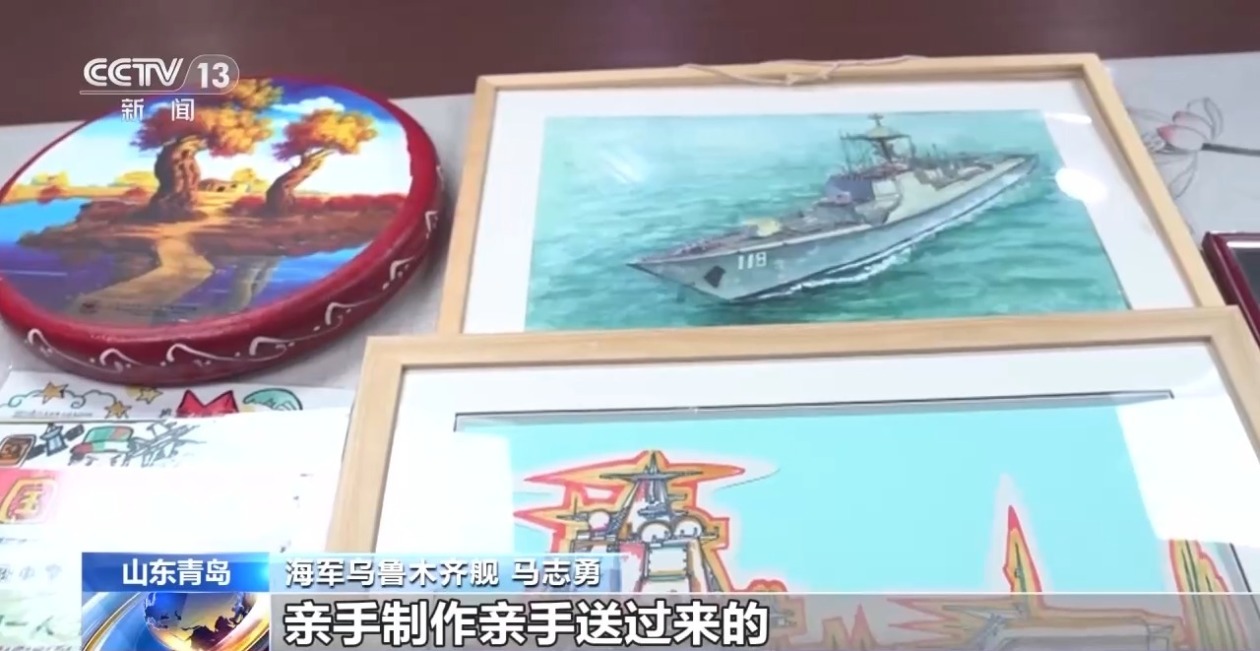
These items were personally made and delivered by students from co-built schools. Among them are their handmade ceramic Xinjiang naan, along with their blessings.
Reporter from Central Station, Tan Lin: During the naval open day event on April 23, were there any related co-building activities?
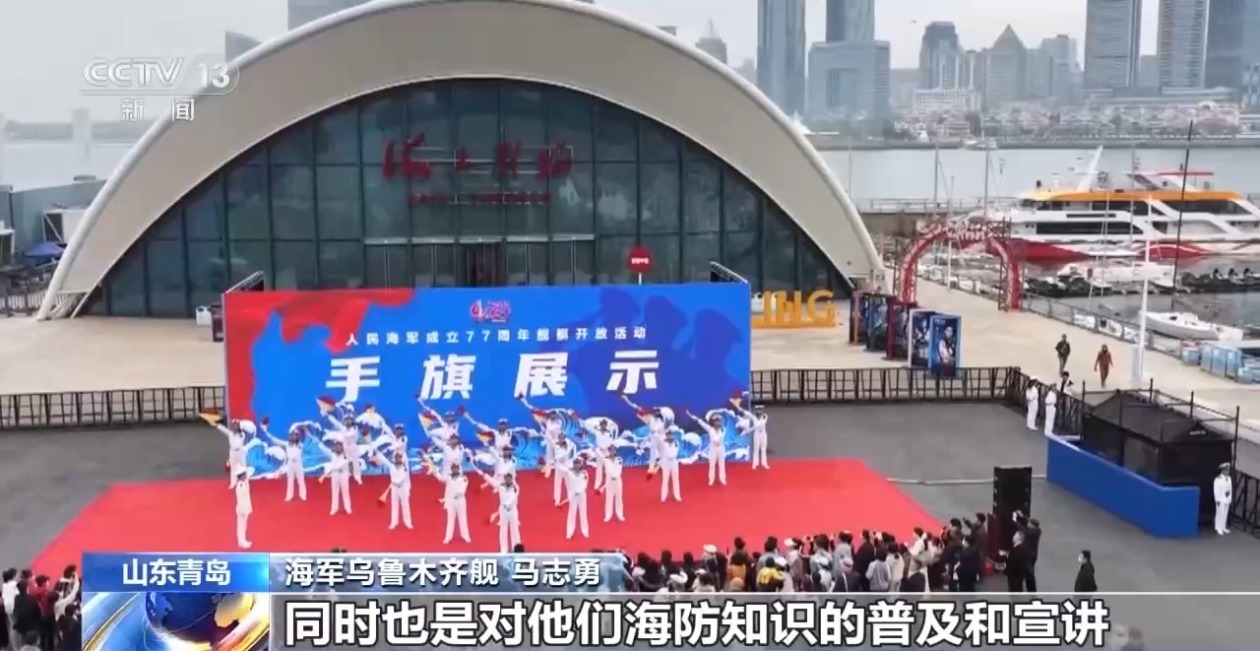
Navy Urumqi Ship, Ma Zhiyong: Our event is very rich. On the day of the naval open day on April 23, there was an online cloud classroom, reaching over 260 schools in Urumqi City, with approximately 400,000 people watching the live broadcast simultaneously for online education, as well as the popularization and promotion of maritime defense knowledge. At the same time, artists from Urumqi City performed for us in the military camp, bringing us a rich audio-visual feast. All our activities are ready, and we warmly welcome friends and family from all over the country to visit our ship.
The People's Liberation Army Navy showcased the Urumqi ship, a 052D class destroyer, during a public open day in Qingdao on April 23, 2023. The event highlighted the ship's advanced military capabilities, including its weapon systems and operational history. The Urumqi ship, named after the city of Urumqi, has participated in various naval missions and represents China's naval strength.
- The Urumqi ship is a 052D class destroyer with a length of over 150 meters and a displacement of nearly 7000 tons.
- It features advanced weapon systems including a 130mm naval gun and a vertical launch system with 64 cells.
- The ship has been involved in various missions including patrols in the Sea of Japan and the Pacific Ocean.
- The open day event was part of the celebrations for the 77th anniversary of the People's Liberation Army Navy.