
U.S. Air Force awards Raytheon $603 million for B-52 radar
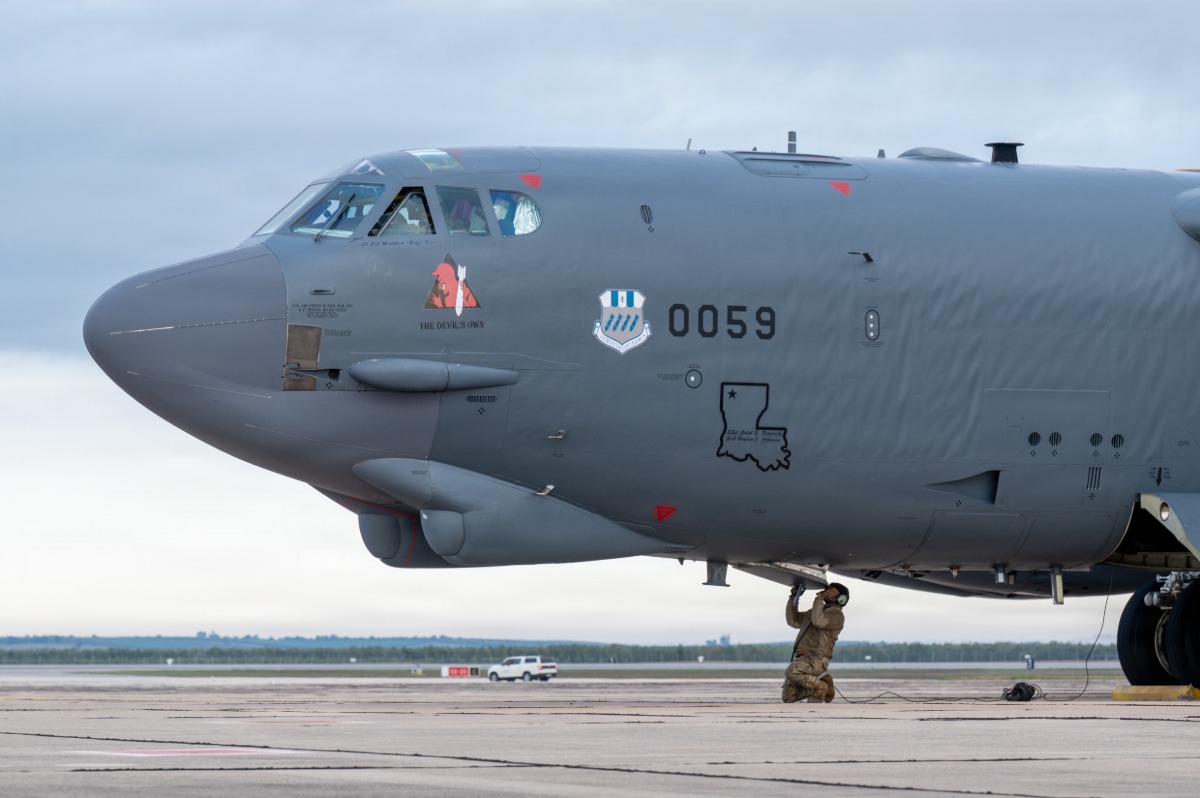 B-52H Stratofortress at Morón Air Base, Spain, Nov. 19, 2025. Photo by Codie Trimble
The U.S. Air Force awarded Raytheon a contract with a ceiling value of $603 million to produce and sustain a new radar for the B-52 bomber fleet, the Department of War announced.
The indefinite-delivery/indefinite-quantity contract covers production and sustainment of the AN/APQ-188 radar, which is replacing the B-52’s Cold War-era AN/APQ-166 system.
The Air Force Life Cycle Management Center at Wright-Patterson Air Force Base, Ohio, is managing the contract, designated FA8628-26-D-B001. The award was a sole-source acquisition, and about $46 million in fiscal 2026 aircraft procurement funds were obligated with the initial delivery order. Work will be performed at sites in Forrest, Mississippi; El Segundo, California; McKinney, Texas; and Warner Robins, Georgia, with completion expected by August 20, 2031. The Air Force listed the award date as August 21.
The AN/APQ-188, also known as the Bomber Modernized Radar System, is an active electronically scanned array radar built by Raytheon, now part of RTX, and derived largely from the AN/APG-79 radar used on the Navy’s F/A-18E/F Super Hornet. The Air Force plans to install the new radar across all 76 B-52H bombers currently in service, part of a broader modernization effort intended to keep the aircraft flying into the 2050s alongside new Rolls-Royce F130 engines under the B-52J configuration.
The B-52 Radar Modernization Program has faced repeated delays and cost growth since Boeing selected Raytheon as the radar supplier in 2019. Flight testing, originally planned for fiscal 2024, slipped to fiscal 2026 after the Air Force cited challenges with environmental qualification, software development and parts procurement. A B-52H fitted with the new radar completed a ferry flight to Edwards Air Force Base in December 2025 to begin a series of ground and flight evaluations that were expected to continue through 2026.
The Government Accountability Office reported last year that the program’s total estimated cost had grown from $2.343 billion in 2021 to $2.58 billion, pushing the per-aircraft cost of the upgrade higher across the 76-bomber fleet. The Pentagon’s Office of the Director of Operational Test and Evaluation said in a report that a decision on proceeding with integration on the first 28 B-52Hs was expected in fiscal 2026, roughly two years later than originally planned, with installation on the remaining aircraft potentially not starting until fiscal 2028.
Air Force officials reviewed the program’s requirements earlier this year in an effort to control costs, with Lt. Gen. Andrew Gebara, deputy chief of staff for strategic deterrence and nuclear integration, saying the service does not need every capability the same radar variant provides on the Super Hornet. The Air Force said in an earlier report that it was also gathering information on alternative off-the-shelf multi-mode radar options, while maintaining that the current plan to field the AN/APQ-188 remains unchanged.
The new contract does not specify how many radar units will ultimately be ordered under its ceiling value or provide an updated timeline for when the full B-52H fleet will complete the upgrade.
Content preview only. Full article available at source. View Full Article
The U.S. Air Force awarded Raytheon a $603 million contract on August 21, 2025, for the production and sustainment of the AN/APQ-188 radar for the B-52H bomber fleet. This new radar will replace the outdated AN/APQ-166 system and is part of a modernization effort to keep the B-52 operational into the 2050s. Work will be conducted at various locations, with flight testing expected to begin in fiscal 2026 after delays.
- U.S. Air Force awarded Raytheon a $603 million contract for B-52 radar.
- The AN/APQ-188 radar will replace the older AN/APQ-166 system.
- Work will be performed at multiple sites across the U.S.
- The upgrade is part of a broader modernization effort for the B-52 fleet.
- Flight testing for the new radar has been delayed to fiscal 2026.