
U.S. Air Force buys Chinese-made drones for nuclear missile base
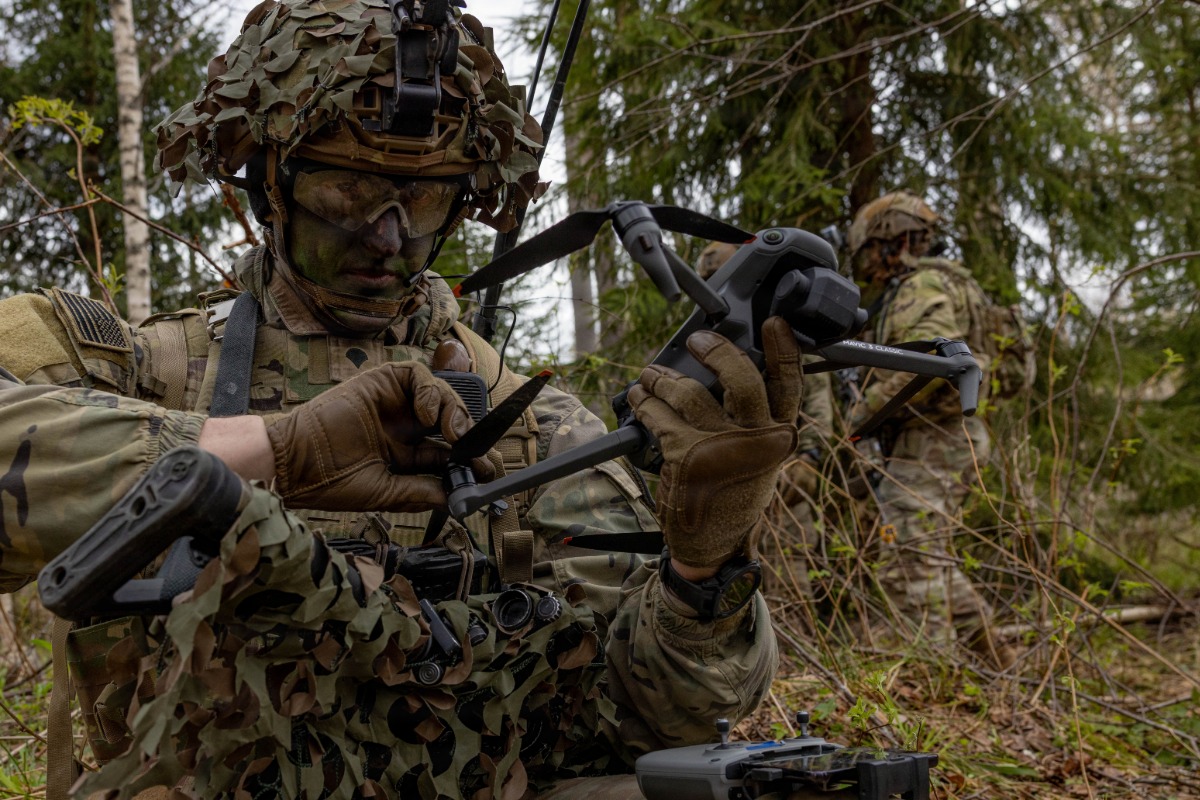 DJI Mavic 3.
The U.S. Air Force is buying Chinese-made DJI drones for a Wyoming nuclear missile base, using the foreign aircraft as stand-ins for the kind of drones security forces there are training to detect and shoot down.
The 90th Contracting Squadron posted a combined synopsis and solicitation on August 14 seeking a small business vendor to supply the drones for F.E. Warren Air Force Base, home to the 90th Missile Security Operations Squadron and part of Air Force Global Strike Command. Quotes are due August 24, with questions due five days earlier. The squadron says it needs the aircraft to run counter-small unmanned aircraft systems training, exercises meant to test radar, jamming and other defeat systems against real drone signals rather than simulated ones.
The order calls for two DJI Mavic 2 Pro quadcopters with Fly More kits, listed as refurbished, two DJI Mini 3 Pro drones with remote controllers, two DJI Avata 2 Fly More combos and six airdrop payload release devices, plus shipping. The government intends to award a firm fixed price contract to the lowest-priced offer that meets the technical requirements, according to the solicitation.
Contracting officials designated the purchase a brand-name requirement, meaning DJI specifically, rather than an open competition among drone makers. A justification document signed July 29 by Contracting Officer Chad A. Evans, a technical sergeant, states that DJI controls an estimated 80 to 85 percent of the global commercial drone market and that its “highly distinct, proprietary electronic protocols, radio frequency (RF) signatures, and flight capabilities” are not replicated by American-made drones or other manufacturers.
“To properly test our counter-systems and train our operators against the most statistically probable real-world threat, the 90 MSOS must utilize the exact devices adversaries are most likely to employ,” the justification states.
The document warns that without the specific DJI hardware, the squadron’s “no-fail nuclear security mission” would be degraded. Relying only on computer-simulated data or U.S.-made drones, the justification argues, would leave operators untested against DJI’s actual radio signatures and communication protocols, creating what it calls a critical blind spot in installation defense.
F.E. Warren is one of three U.S. Air Force bases that operates Minuteman III intercontinental ballistic missiles, and its security forces are responsible for defending that missile field against ground and airborne threats. The justification states that Malmstrom Air Force Base in Montana, another Global Strike Command missile base, is pursuing or using similar DJI platforms for its own counter-drone training, and frames the F.E. Warren purchase as bringing the two installations toward standardized threat replication across the command’s missile fields.
The document cites a Secretary of War memo titled “Unleashing U.S. Military Drone Dominance” as the legal authority permitting officers at the rank of O-6, or colonel, and equivalent to procure small quantities of foreign drone equipment for electronic warfare testing, training and counter-UAS development. That authority falls under 10 U.S.C. 2304(c)(1), which allows agencies to solicit from a single source under specific circumstances rather than through full and open competition.
To address cybersecurity concerns tied to Chinese-manufactured hardware, the justification says every DJI aircraft purchased will be loaded with software called RIZER before operational use. The document describes RIZER as overriding the drones’ native firmware to create what it calls “a completely air-gapped system that cannot transfer or download telemetry or imagery to foreign entities or DoW networks.”
The justification also states that the squadron identified multiple authorized DJI resellers and distributors capable of meeting the brand-name requirement, allowing the procurement to proceed as a 100 percent small business set-aside rather than a true single-source award to one company.
Content preview only. Full article available at source. View Full Article
The U.S. Air Force is procuring DJI drones for counter-drone training at F.E. Warren Air Force Base in Wyoming. This acquisition, announced on August 14, 2023, aims to enhance training against real drone signals, as DJI drones represent a significant portion of the commercial drone market. The purchase is justified under legal authority for foreign procurement, with cybersecurity measures planned to address potential risks.
- The U.S. Air Force is purchasing DJI drones for counter-drone training at F.E. Warren Air Force Base.
- The procurement is aimed at enhancing training against real drone signals.
- DJI controls 80-85% of the global commercial drone market, making it a preferred choice for training.
- The purchase is justified under specific legal authority allowing foreign drone procurement for military purposes.
- Cybersecurity measures will be implemented to mitigate risks associated with Chinese-manufactured hardware.