
U.S. and Iran exchange fire in Strait of Hormuz
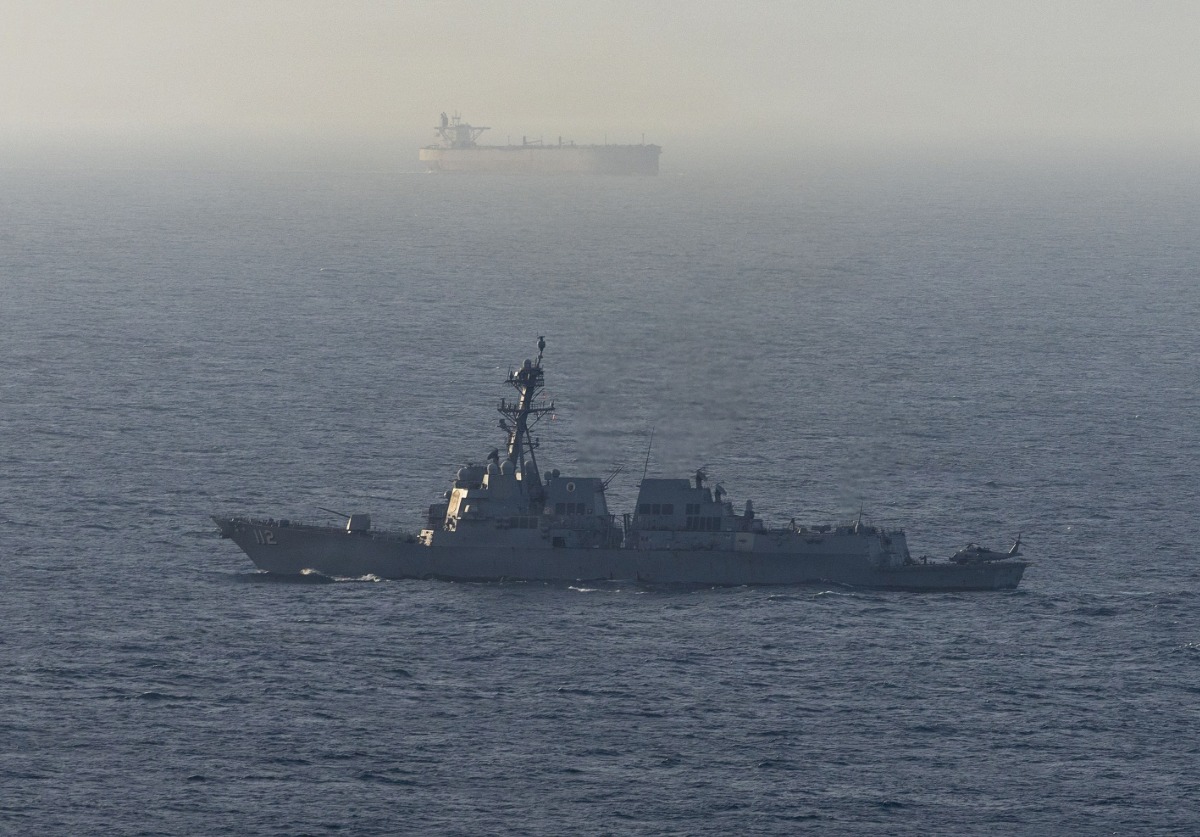
Iranian forces attacked three U.S. Navy guided-missile destroyers transiting the Strait of Hormuz on May 7 with missiles, drones, and small boats, and U.S. forces struck back, hitting Iranian missile and drone launch sites, command and control locations, and intelligence, surveillance and reconnaissance nodes.
U.S. Central Command announced that USS Truxtun (DDG 103), USS Rafael Peralta (DDG 115), and USS Mason (DDG 87) came under attack as they transited the international sea passage to the Gulf of Oman. CENTCOM described the Iranian attack as unprovoked and confirmed that no U.S. assets were struck.
“CENTCOM does not seek escalation but remains positioned and ready to protect American forces,” the command stated in its announcement. U.S. forces eliminated inbound threats and responded with self-defense strikes targeting Iranian military facilities responsible for the attack, according to CENTCOM.
Iranian news agencies reported that several explosions were heard near the Iranian city of Bandar Abbas, with commercial parts of a pier on Qeshm Island described as targeted. Iran’s top military command alleged the U.S. had targeted an Iranian oil tanker moving toward the strait and another vessel entering the strait near the Emirati port of Fujairah. Iran’s armed forces said they “immediately responded” by attacking U.S. military vessels and claimed to have inflicted significant damage — a claim directly contradicted by CENTCOM’s confirmation that no U.S. assets were struck. A reporter on Iranian television noted that “life is moving on as normal” in the affected cities, despite the explosions.
President Trump confirmed the attack on U.S. ships in an interview with ABC News, saying three naval destroyers in the strait were attacked but not damaged, and that “great damage” had been done to Iranian attackers. He described the exchange as a “love tap” while insisting the ceasefire and the U.S. blockade of Iran both remain in place. Trump has said in recent days that the war in Iran will be “over quickly” and has been pushing a 14-point memorandum of understanding with Tehran, pressing for it again on the day of the incident. A senior member of Iran’s parliament dismissed the memorandum as a “wish list,” while an Iranian foreign ministry spokesman said the latest U.S. proposal was being considered and that Tehran would share its views with Pakistani mediators.
Iran had earlier accused the United States of violating the April 7 ceasefire agreement before the ship attacks, framing the day’s events as an “exchange of fire” between Iranian armed forces and what Iranian state media described as “the enemy.” The sequencing of accusations and attacks is disputed, with the two sides offering fundamentally incompatible accounts of who fired first and why, a pattern that has characterized nearly every significant incident in the U.S.-Iran conflict since it began.
The BBC’s U.S. State Department correspondent Tom Bateman assessed the incident in terms that capture the central uncertainty it creates: “This is a significant flare-up further endangering the four-week-old truce between the US and Iran, but it so far remains unclear who fired first,” Bateman wrote in BBC’s live coverage. The ambiguity about first fire matters enormously for the ceasefire’s legal and political durability — a truce in which each side claims the other is the aggressor is a truce that can be declared void by either party at any moment with some degree of justification.
Content preview only. Full article available at source. View Full Article
Iranian forces attacked three U.S. Navy guided-missile destroyers in the Strait of Hormuz on May 7, prompting U.S. forces to retaliate by targeting Iranian military facilities. U.S. Central Command confirmed that no U.S. assets were struck, despite Iranian claims of significant damage. The incident has escalated tensions and raised questions about the ongoing ceasefire between the two nations.
- Iranian forces attacked three U.S. Navy destroyers in the Strait of Hormuz on May 7.
- U.S. forces retaliated by striking Iranian missile and drone launch sites.
- No U.S. assets were damaged according to CENTCOM, contradicting Iranian claims of significant damage.
- The incident raises concerns about the durability of the ceasefire between the U.S. and Iran.
- Ambiguity exists regarding who fired first in the exchange.