
US and Morocco test a new cruise missile in the desert
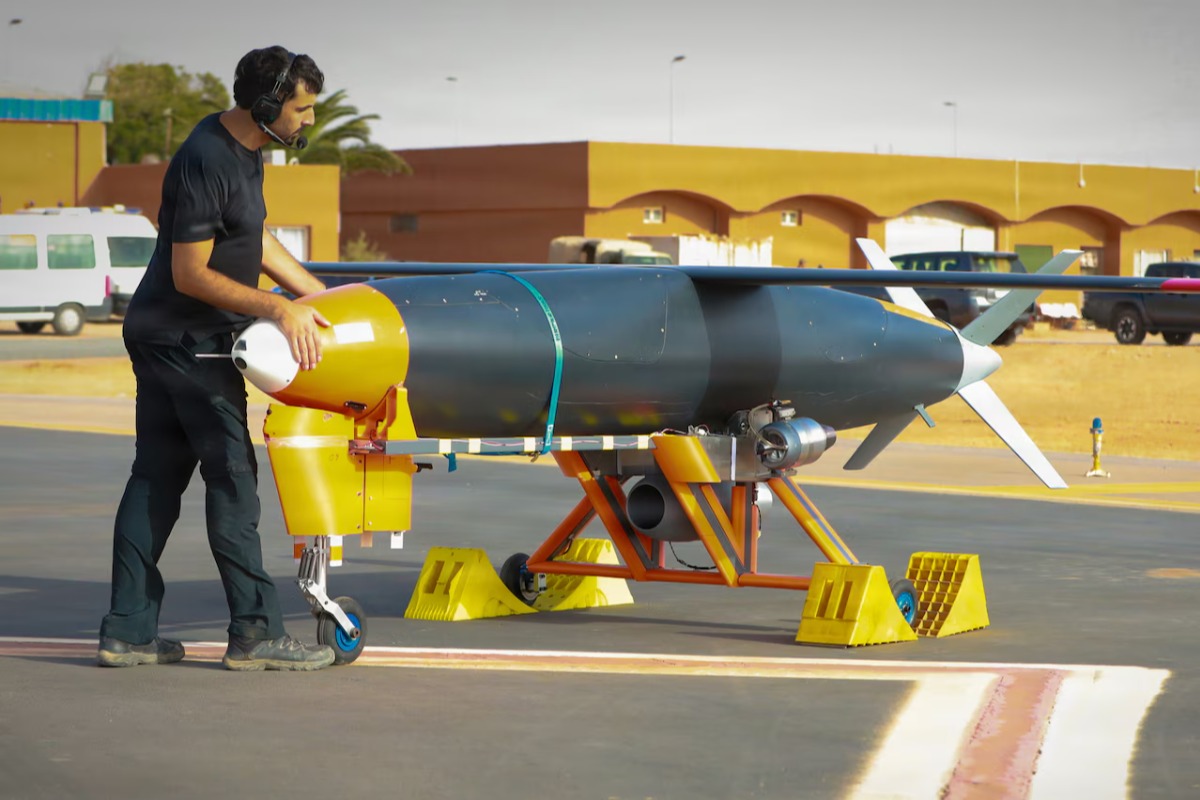
U.S. and Moroccan forces have proven out a brand-new weapons testing range in North Africa by firing a low-cost, long-range cruise missile across it, the first live-fire event ever held at the site, according to a report by Army Capt. Jordan Beagle of U.S. Africa Command.
The demonstration ran from August 3 to 7 at the Africa Multidomain Training and Experimentation Center, a testing facility located near Tan-Tan in southern Morocco that the U.S. Army has been building out as part of a broader push to open military test ranges to private defense companies faster than the Pentagon’s traditional procurement process normally allows.
The center, known by its acronym AMTEC, is not new territory for U.S.-Morocco cooperation. The two countries have run joint exercises on Moroccan soil for years, including large multinational drills like African Lion, but AMTEC represents something different: a dedicated, standing range where American and Moroccan troops work directly alongside defense industry engineers to test unproven weapons systems in real desert conditions before those systems ever reach a formal Pentagon program of record. The Defence Blog previously reported that AMTEC was named one of four sites nationwide, alongside Dugway Proving Ground in Utah, the West Cibola Range at Yuma Proving Ground in Arizona, and Camp Grayling in Michigan, chosen under the Army’s Test Range Expansion Initiative to give smaller and newer defense companies access to military-grade testing environments without the legal and bureaucratic overhead that has historically kept them locked out of Pentagon work entirely.
That initiative matters because it addresses a real bottleneck in how the U.S. military buys new weapons. Traditional defense procurement can take years to move a promising prototype from a company’s workshop to a live-fire test on a government range, a delay that has pushed some of the fastest-moving American weapons startups toward commercial investors instead of military contracts. By opening ranges like AMTEC directly to industry partners, the Army is betting it can compress that timeline dramatically, letting a company validate whether its technology actually works in realistic conditions months or years earlier than the standard acquisition pipeline would allow.
The August demonstration put that theory to a real test. U.S. and Moroccan personnel built an expeditionary test site from scratch and carried out a single live-fire event, working alongside engineers and technicians from the unnamed defense industry partner to check communications systems, assess how well the missile’s wings, tires, and launch trolley performed under actual field conditions, and collect weather and targeting data needed to refine the system further. Africa Command’s report did not name the company involved or specify the missile’s exact range, speed, or cost, describing it only as a low-cost, long-range cruise missile system built to offer affordable, scalable precision-strike capability. That kind of system reflects a broader shift underway across Western militaries, where the runaway cost of traditional cruise missiles, often running into the millions of dollars per unit, has pushed governments and private companies alike toward cheaper, mass-producible alternatives that can be fielded in far greater numbers.
Moroccan Col. Zouhair El Hamdani, the Royal Armed Forces officer overseeing coordination of the project, framed the demonstration as the first real step toward a much larger ambition for the facility.
“The vision is to establish AMTEC as a regional hub for innovation, strategic cooperation and industrial development, as well as a center of excellence dedicated to the experimentation, validation, evaluation and development of advanced technologies,” said Moroccan Col. Zouhair El Hamdani, the royal armed forces officer in charge of coordination. “This first live-fire demonstration marks a significant milestone in turning that vision into reality.”
For Morocco, hosting a facility like AMTEC deepens a defense relationship with Washington that has grown steadily over the past two decades, built on joint training, arms sales, and counterterrorism cooperation across the Sahel region. For the U.S. military, gaining reliable access to North African desert terrain adds a testing environment that is difficult to replicate at American ranges, giving engineers a chance to see how equipment performs in heat, sand, and operational conditions closer to those found in parts of the Middle East and Africa where U.S. forces and their partners actually operate.
Air Force Gen. Dagvin R.M. Anderson, the commander of U.S. Africa Command, cast the demonstration in terms of the broader partnership it represents rather than the single missile test itself.
“Morocco’s partnership provides a crucial venue that accelerates readiness for the U.S. joint force and our African partners,” said Air Force Gen. Dagvin R.M. Anderson, commander of U.S. Africa Command.
Anderson added that AMTEC strengthens security cooperation and drives innovation while also demonstrating that trusted partnerships are how the two countries tackle shared security challenges together, a message aimed as much at reassuring African partners of Washington’s long-term commitment to the region as at showcasing new hardware.
Army Col. Michael M. Gacheru, who leads the regional engagement division within Africa Command’s Strategy, Engagement and Programs Directorate, tied the single demonstration to a much longer-term vision for how the U.S. trains and equips forces across the continent.
“The AMTEC live-fire demonstrates where multinational training is headed, integrating emerging technologies with partner forces in realistic operational environments,” said Army Col. Michael M. Gacheru, the regional engagement division chief of Africom’s Strategy, Engagement and Programs Directorate. “As AMTEC continues to evolve in Morocco, we’re expanding advanced training, strengthening interoperability and accelerating innovation alongside our African and international partners. Together, we’re building a more connected, more capable force prepared for tomorrow’s security challenges.”
Africa Command said future testing at the range will expand beyond cruise missiles into long-range fires, autonomous systems, wireless communications, and advanced sensing technologies, positioning AMTEC as a permanent fixture in how the U.S. and Moroccan militaries evaluate new capabilities rather than a one-time proving ground. What remains unclear from Africa Command’s account is which company built the missile tested in Tan-Tan, what it will cost per unit, and when or whether the system will move toward an actual military contract, details that will likely surface as the program advances further.
A single missile test in a stretch of southern Moroccan desert will not by itself change how fast the Pentagon fields new weapons, but it marks the moment a years-long promise, faster access to real testing ground for the companies racing to build cheaper firepower, started producing actual data instead of paperwork.
Content preview only. Full article available at source. View Full Article
U.S. and Moroccan forces tested a new low-cost, long-range cruise missile at the Africa Multidomain Training and Experimentation Center in Tan-Tan, Morocco, from August 3 to 7. This event marked the first live-fire demonstration at the site, which aims to facilitate faster military procurement and testing of new weapons systems. The collaboration reflects a deepening defense relationship between the U.S. and Morocco.
- U.S. and Moroccan forces tested a new cruise missile in Morocco.
- The testing occurred at the Africa Multidomain Training and Experimentation Center (AMTEC).
- The demonstration took place from August 3 to 7, marking the first live-fire event at the site.
- The missile is described as low-cost and long-range, aimed at providing affordable precision-strike capability.
- The initiative aims to accelerate military procurement processes for new weapons.