
Australian firm builds device that decodes enemy radio
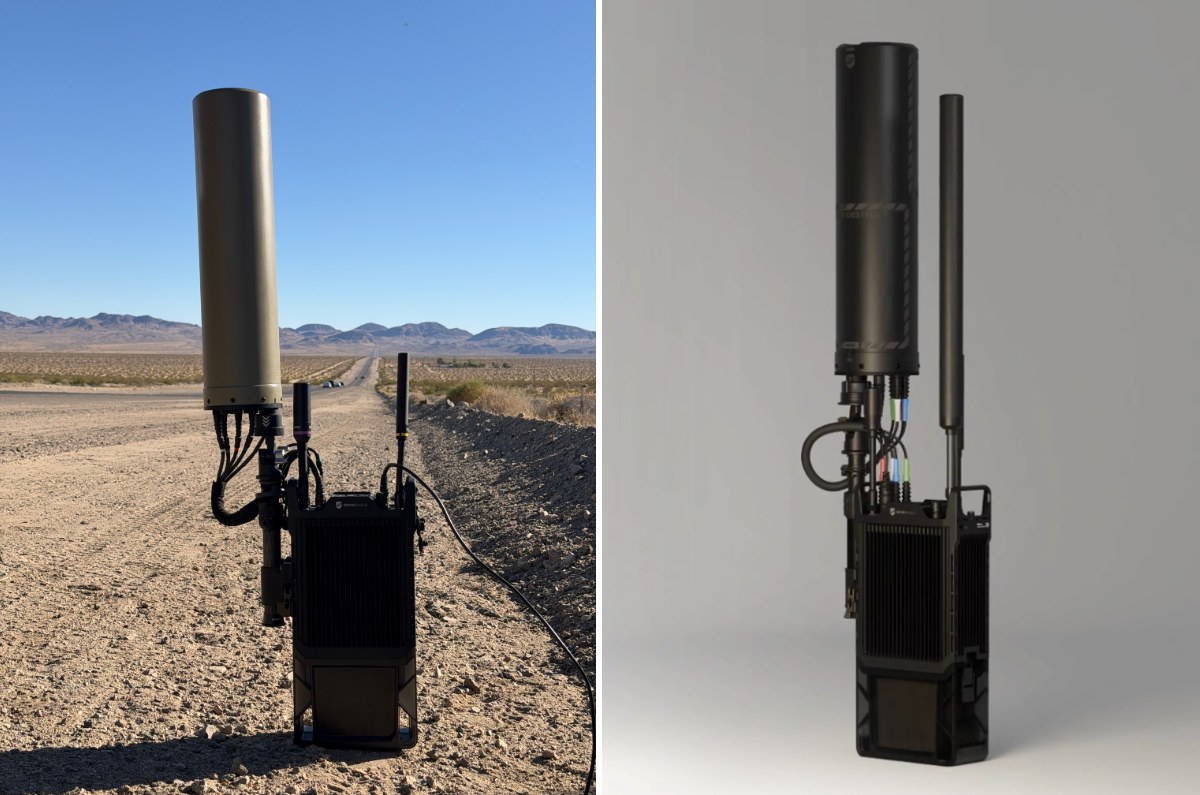
DroneShield, an Australian counter-drone technology company that has spent years building systems to detect and defeat hostile uncrewed aircraft, announced Tuesday the launch of RfRecon, a portable device designed to do something most current sensors cannot: not just detect radio frequency activity, but explain what it means, in real time, from a single handheld platform.
Radio frequency, or RF, is the invisible language machines use to talk to each other, and drones, radios, GPS units, and wireless networks all broadcast and receive signals across that spectrum every second of every operation. Reading that spectrum accurately has become one of the most valuable skills on a modern battlefield, because a soldier who can tell the difference between a friendly radio, a commercial drone, and an enemy jamming attempt gains a real tactical edge over an adversary who cannot. The problem, according to DroneShield, is that most existing sensors are good at collecting that raw data but bad at interpreting it quickly, often requiring multiple separate systems, specialist analysts, or time-consuming manual review before a commander can act on what the spectrum is actually showing.
RfRecon is built to close that gap by combining detection and interpretation in a single device that runs on DroneShield’s proprietary RfAI-3 architecture, an artificial intelligence system the company recently introduced to power signal recognition and analysis across its product line. The device combines three functions in one portable unit: wideband spectrum sensing to detect activity across a broad range of frequencies, precision direction finding to pinpoint where a signal is coming from, and AI-driven signal intelligence to identify what that signal actually is. Instead of an operator staring at a wall of spectrum noise and guessing, RfRecon is designed to hand back a clear read on what’s transmitting, where it’s located, and why it matters to the mission at hand.
The numbers DroneShield is putting behind the launch describe a substantial leap over the systems it currently sells, with the company claiming roughly six times more RF spectrum coverage, four times greater processing and AI computing power, 31 times more onboard storage, and eight times more memory than its prior generation of adopted solutions. Those are DroneShield’s own figures, and the company has not published independent third-party benchmarks alongside them, but the scale of the claimed jump signals a generational upgrade rather than an incremental refresh. Alongside the raw compute gains, RfRecon adds capabilities the earlier hardware lacked entirely, including Bluetooth and Wi-Fi Remote ID detection, which identifies drones broadcasting their required digital license plate signals, AIS and ADS-B detection for tracking ships and aircraft transmitting their positions, integrated GPS positioning, and hardware-based security features meant to protect the device and its data from tampering.
Angus Bean, DroneShield’s chief executive officer, framed the launch as a response to a shift he sees playing out across modern conflict zones, where raw sensor data has become abundant but the ability to act on it quickly has not kept pace with that flood of information.
“The electromagnetic spectrum has become one of the most important sources of operational intelligence on the modern battlefield, but collecting data is no longer enough,” said Angus Bean, Chief Executive Officer of DroneShield.
That distinction, between collecting data and understanding it, sits at the center of why counter-drone companies like DroneShield have been racing to add artificial intelligence into their sensor lines in recent years. The proliferation of cheap commercial drones in conflicts from Ukraine to the Middle East has flooded battlefields with small, hard-to-track aircraft, and defenders have learned that spotting a signal is only useful if someone can tell within seconds whether it belongs to a hobbyist, a surveillance drone, or an incoming attack platform. Bean argued that the operators who win that race will not necessarily be the ones with the most sensors deployed, but the ones who can turn a flood of signals into a usable decision the fastest.
“The teams that gain the greatest advantage will be those that can rapidly understand what they’re seeing and confidently act on it. RfRecon reflects that shift by bringing RF intelligence directly to the tactical edge.”
DroneShield designed RfRecon to work as one piece of a larger system rather than a standalone gadget, feeding information from what the company calls the tactical edge, meaning the front line where troops actually operate, up to command posts and enterprise-level command and control networks. The device is rated for use on foot, mounted in vehicles, at expeditionary forward operating sites, and at fixed installations, giving it flexibility across very different mission profiles. Its open architecture supports standard data transfer protocols, letting it plug into systems operators already rely on, including ATAK, the Android Tactical Assault Kit widely fielded by U.S. and allied forces for battlefield mapping and coordination, along with other third-party command platforms and sensors made by different manufacturers. DroneShield says RfRecon can also slot into layered counter-drone defenses that pair detection with cyber takeover tools, which hijack a drone’s control link, and kinetic defeat systems, which physically destroy a drone once it has been identified as a threat.
That layered approach reflects how counter-drone doctrine has evolved from its earlier, narrower focus, when systems were built mainly to spot a drone and sound an alarm, leaving the harder problem of deciding what to do next entirely in human hands. The current generation of systems, RfRecon among them, is being built to compress detection, identification, and decision support into a single workflow, cutting down the time between a signal appearing on a screen and a trained operator understanding what it actually represents. DroneShield says it will keep expanding RfRecon’s capabilities through regular software updates going forward, meaning the hardware customers buy today is intended to keep gaining functionality without requiring new equipment purchases down the line.
RfRecon is available immediately to qualified defense, government, and security customers worldwide, according to DroneShield’s announcement, though the company has not disclosed pricing or specified which nations or agencies have already placed orders.
Content preview only. Full article available at source. View Full Article
DroneShield launched RfRecon, a portable device designed to decode enemy radio signals in real time. This device enhances signal intelligence capabilities by combining detection and interpretation functions, providing a tactical advantage on the battlefield. RfRecon features significant improvements over previous systems, including increased RF spectrum coverage and processing power, and is intended for use in various military applications.
- DroneShield launched RfRecon, a portable device for decoding enemy radio signals.
- RfRecon combines detection and interpretation of radio frequency activity.
- The device offers significant improvements over previous systems, including greater RF spectrum coverage and processing power.
- RfRecon is designed for use in various military and defense applications.
- The device integrates with existing command and control systems.