
U.S. Army bets on AI to catch drones radar keeps missing
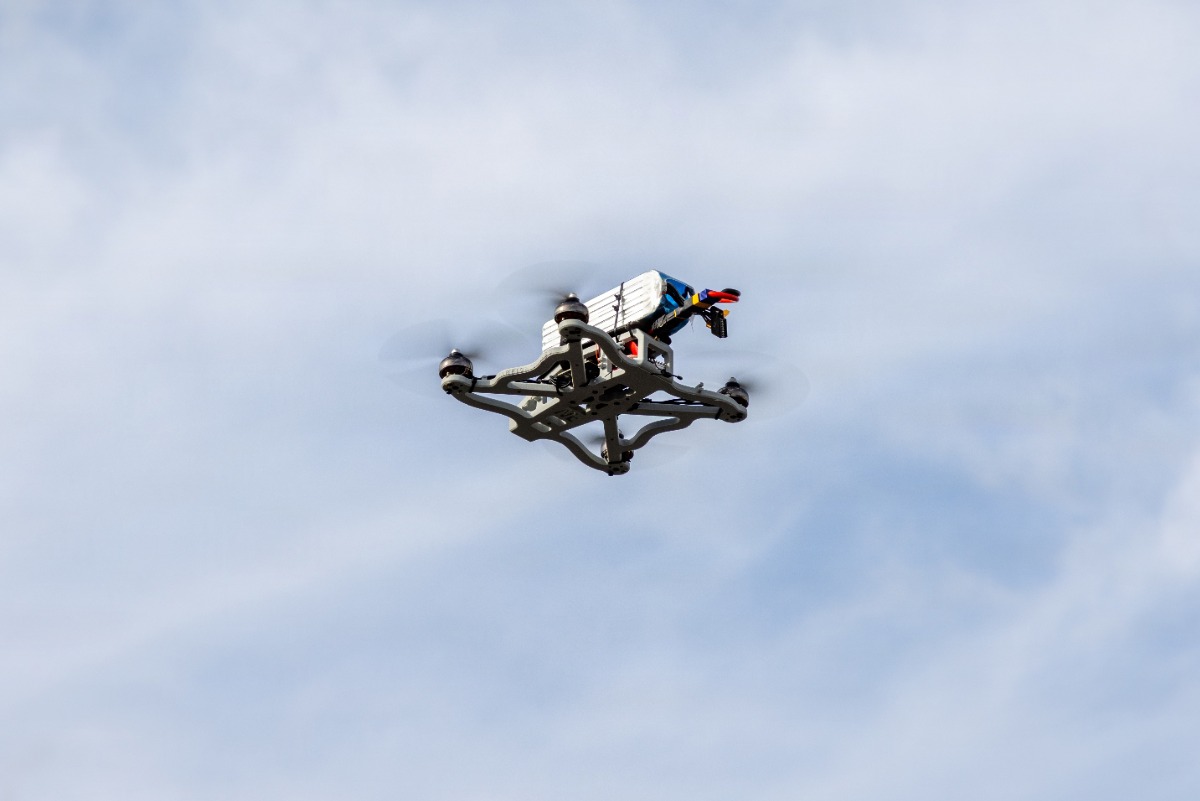
The drones buzzing over U.S. military bases today are often too small, too cheap, and too fast for existing radar systems to reliably catch, and the Army just placed a multimillion-dollar bet on artificial intelligence closing that gap.
The U.S. Army awarded Xtremis Inc., a technology company headquartered in Washington, D.C., a contract to research and develop artificial intelligence and machine learning methods specifically designed to detect unmanned aircraft systems, the formal term covering everything from small commercial-style quadcopters to more sophisticated military-grade drones. The contract carries an initial award value of $13.9 million, with a total potential ceiling of $46.8 million if the Army exercises every option built into the deal, according to a Department of War contract announcement dated August 4, 2026, that confirmed the award was made on July 15, 2026.
It is a firm-fixed-price contract, meaning Xtremis agreed to deliver the research for a set price regardless of how the actual costs shake out, shifting the financial risk of any cost overruns onto the contractor rather than the government. The Army solicited one bid for the work and received exactly one in response, a detail that signals the Army likely had a specific technical relationship or capability in mind rather than running an open competition among multiple vendors. Army Contracting Command at Aberdeen Proving Ground in Maryland, the office responsible for negotiating and administering the deal, will oversee the contract, which carries the designation W911QX-26-C-A019 and an estimated completion date stretching to October 30, 2029, giving Xtremis more than three years to develop and refine its detection algorithms.
Xtremis is not a household name in defense circles, but the company has built a fast-growing footprint in a narrower corner of military technology since its founding. The company spun out of Vanderbilt University in 2021 to commercialize research on how radios can share limited radio frequency spectrum without interfering with each other, technology that matters because modern militaries increasingly compete for the same crowded slice of the electromagnetic spectrum used for everything from radios to jamming to drone control links. That original spectrum-sharing work led Xtremis into a broader relationship with the Army, and in late 2024 the company landed more than $80 million across two separate Army contracts focused on artificial intelligence systems that help the Army’s wireless networks sense and avoid enemy jamming, work performed in partnership with the Army’s Combat Capabilities Development Command Research Laboratory and its C5ISR Center, the command responsible for the Army’s command, control, communications, computers, cyber, intelligence, surveillance, and reconnaissance technology.
Those earlier contracts also funded physical infrastructure the Army’s new UAS detection work will likely draw on directly. Xtremis partnered with the University of Arkansas to convert the site of a decommissioned nuclear research reactor into what the company calls the Devil’s Den Proving Ground, an open-air and laboratory testing campus in Washington County, Arkansas, built specifically for experimenting with radio frequency and spectrum technologies under realistic conditions rather than purely in a lab. The new UAS detection contract specifies that the actual research and development work will happen in West Fork, Arkansas, a town inside that same Washington County footprint, suggesting Xtremis is extending the spectrum-sensing expertise it built for jamming resistance into the closely related problem of spotting drones by their radio signatures rather than only by radar reflection or visual sighting.
A conventional radar system built to spot a fighter jet or a missile struggles against a small quadcopter that flies low, moves slowly, and reflects only a tiny radar signature, which is why the military has increasingly turned toward layered detection approaches that combine radar with radio frequency sensors capable of picking up the control signals many drones use to communicate with their operators, along with electro-optical and infrared cameras for visual confirmation once a threat is flagged. Artificial intelligence and machine learning enter that picture as the software layer sorting through the flood of sensor data those systems generate, trained to distinguish an actual hostile drone from birds, weather clutter, or friendly aircraft faster and more reliably than a human operator watching a screen could manage alone.
The Army’s investment in Xtremis lands amid a broader surge in Pentagon spending on counter-drone technology, driven partly by a steady stream of small drone incursions over domestic military installations that have alarmed defense officials in recent years. The Army stood up Joint Interagency Task Force 401 to coordinate a wide range of counter-drone technology projects protecting U.S. military sites at home and overseas under an initiative called Domestic Shield, and the scale of that broader push shows up in contract awards well beyond the Xtremis deal, including a separate $500 million indefinite-delivery contract the Army awarded this year to another contractor for a multi-sensor counter-drone system defending Air Force Global Strike Command bases.
Detection technology like the algorithms Xtremis is now developing represents the first link in that longer chain, the step that has to work before any base defense system can identify, track, or ultimately defeat a drone threatening American troops or installations.
Content preview only. Full article available at source. View Full Article
The U.S. Army awarded a $13.9 million contract to Xtremis Inc. on July 15, 2026, to develop artificial intelligence systems for detecting drones. The contract, which could reach $46.8 million, will focus on enhancing detection capabilities at military bases, with research conducted in West Fork, Arkansas. This initiative is part of a broader effort to improve counter-drone technology amid rising drone incursions at military installations.
- U.S. Army awarded a $13.9 million contract to Xtremis Inc. for AI drone detection.
- The contract has a potential ceiling of $46.8 million.
- Research and development will occur in West Fork, Arkansas.
- The contract is a firm-fixed-price agreement.
- The Army is increasing investment in counter-drone technology.