
Raytheon’s autonomous launcher passes major U.S. Army field test
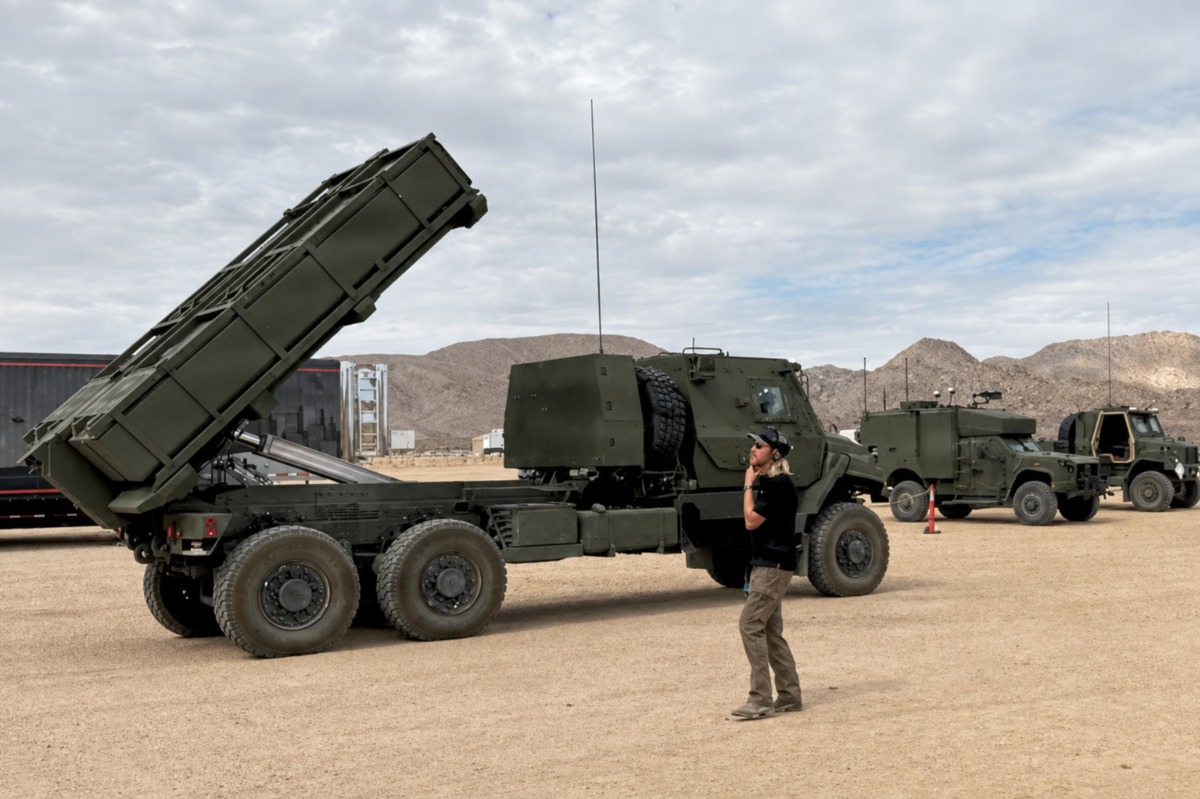
A driverless military launcher can now fire a cruise missile at a target hundreds of miles away, then be reconfigured within the same mission to shoot down an incoming enemy missile instead, all without a soldier in the driver’s seat.
Raytheon, the missile and defense systems business of aerospace giant RTX, detailed that capability in a social media announcement describing DeepFires, an autonomous missile launcher built to give the Army flexibility as battlefield needs shift mid-fight. The company says the vehicle uses a modular architecture, meaning its weapons and mission systems can be swapped or reconfigured rather than being permanently built for a single job, letting the same launcher pivot between offensive strikes and defensive air protection depending on what a commander needs it to do that day.
The list of weapons DeepFires can carry tells you how serious that flexibility claim is. The system is designed to integrate a range of effectors, the military term for the actual weapons or tools a platform delivers onto a target, including the Tomahawk cruise missile, a long-range strike weapon capable of hitting targets more than 1,000 nautical miles (1,150 miles) away, and the Patriot missile, the Army’s primary interceptor for shooting down enemy aircraft, drones, and incoming missiles before they reach friendly forces. Putting both of those weapon types on the same unmanned vehicle means a single launcher could theoretically switch from launching a strike deep into enemy territory to defending troops against an aerial attack, without swapping out the entire platform or waiting for a different specialized vehicle to arrive.
Raytheon said DeepFires recently proved that adaptability isn’t just a marketing claim during Project Convergence Capstone 6, a massive Army experiment held from July 20 to July 29, 2026, at Fort Irwin, California, where soldiers tested emerging technologies against realistic, combat-like conditions designed to mimic an actual fight rather than a controlled demonstration. Army officials have called the event the largest experiment in the history of the Project Convergence program, and it centered on validating the service’s Next Generation Command and Control network, the digital backbone meant to let American and allied forces share targeting data and battlefield awareness fast enough to outpace an enemy’s decision-making. DeepFires was folded into that experiment as part of a broader push to prove autonomous ground systems can operate alongside soldiers in a live, high-pressure training environment rather than staying confined to a lab or a trade show floor.
What that looked like in practice, according to Army reporting from the exercise, was a leader-follower setup where a single manned command vehicle called JUMPS C2 directed two unmanned platforms working in tandem: a DeepFires autonomous rocket launcher and a separate robotic resupply vehicle responsible for automatically reloading munitions. Soldiers stayed inside the protected JUMPS C2 vehicle making the tactical calls while the autonomous systems executed the physical movement and firing sequences, an arrangement the Army has said it eventually wants to scale so a single manned command vehicle can control up to four autonomous launchers simultaneously, dramatically multiplying how much firepower a small number of soldiers can direct from relative safety. Under Secretary of the Army Michael Obadal visited the unit running the demonstration in late July, receiving a firsthand orientation on the system and personally testing its autonomous and remote-control functions alongside Army Futures Command leadership.
Raytheon described exactly why that kind of adaptability matters for a launcher meant to survive on a modern battlefield.
“DeepFires can be rapidly reconfigured for offensive and defensive operations while integrating a range of effectors, including Tomahawk and Patriot missiles, to meet future fires requirements,” Raytheon said.
Raytheon developed DeepFires in collaboration with four other firms, each contributing a different piece of the puzzle: Forterra supplied the self-driving technology that lets the vehicle navigate and operate without a human driver, Oshkosh Defense provided the underlying truck platform built on its Family of Medium Tactical Vehicles chassis, a common Army truck design already used across dozens of other vehicle programs, while Corvid Technologies and Collins Aerospace contributed additional engineering and systems integration expertise Raytheon says helped shape the launcher’s overall design. That kind of multi-company partnership has become increasingly common in major Army modernization programs, where no single defense contractor typically owns every piece of technology, from autonomy software to vehicle chassis to weapons integration, needed to field a genuinely new capability.
The company demonstrated an earlier version called DeepStrike in a live-fire test at Project Convergence back in March 2025, also at Fort Irwin, using the same basic formula of Forterra’s autonomy software paired with an Oshkosh vehicle platform, though that earlier system was built around a different Raytheon-developed precision missile rather than the broader mix of Tomahawk and Patriot munitions DeepFires is designed to carry now. The progression from that single-mission demonstrator to a multi-weapon, reconfigurable launcher tested at the Army’s largest-ever experiment in a little over a year shows how quickly the Army and its contractors are trying to move autonomous ground systems from prototype to something closer to a fielded capability.
Content preview only. Full article available at source. View Full Article
Raytheon's DeepFires autonomous missile launcher successfully tested its capabilities during Project Convergence Capstone 6 at Fort Irwin, California, from July 20 to July 29, 2026. The system can autonomously fire cruise missiles and switch to intercepting incoming threats, demonstrating significant flexibility in military operations. This capability allows for rapid reconfiguration between offensive and defensive roles, integrating various weapon systems like Tomahawk and Patriot missiles.
- Raytheon's DeepFires can fire cruise missiles and intercept incoming threats autonomously.
- The system was tested during Project Convergence Capstone 6 at Fort Irwin, California.
- DeepFires can switch between offensive and defensive operations without human intervention.
- The launcher integrates multiple weapon systems, including Tomahawk and Patriot missiles.
- The project involves collaboration with multiple defense contractors.