
U.S. Army Moves Typhoon to Okinawa in October 2026: 1600km Tomahawks Will Change the Defense of the Southwestern Islands
 Tanaka Takashi
U.S. Army Typhon to Move to Okinawa in October 2026, 1600km Tomahawk to Change Defense of the Southwestern Islands
On September 25, the Ministry of Defense explained that the U.S. Army's mid-range capability system, Typhon, which participated in the Japan-U.S. joint exercise "Orient Shield 26," will be moved from the Japan Maritime Self-Defense Force's Kanoya Base in Kagoshima Prefecture to Kadena Air Base in Okinawa Prefecture for storage by mid-October. According to reports, the high mobility artillery rocket system HIMARS will also be stationed at the same base. The extremely practical question of where the equipment will remain after the training has become a factor in assessing the deterrent posture of the southwestern islands.
Range and Composition of Typhon
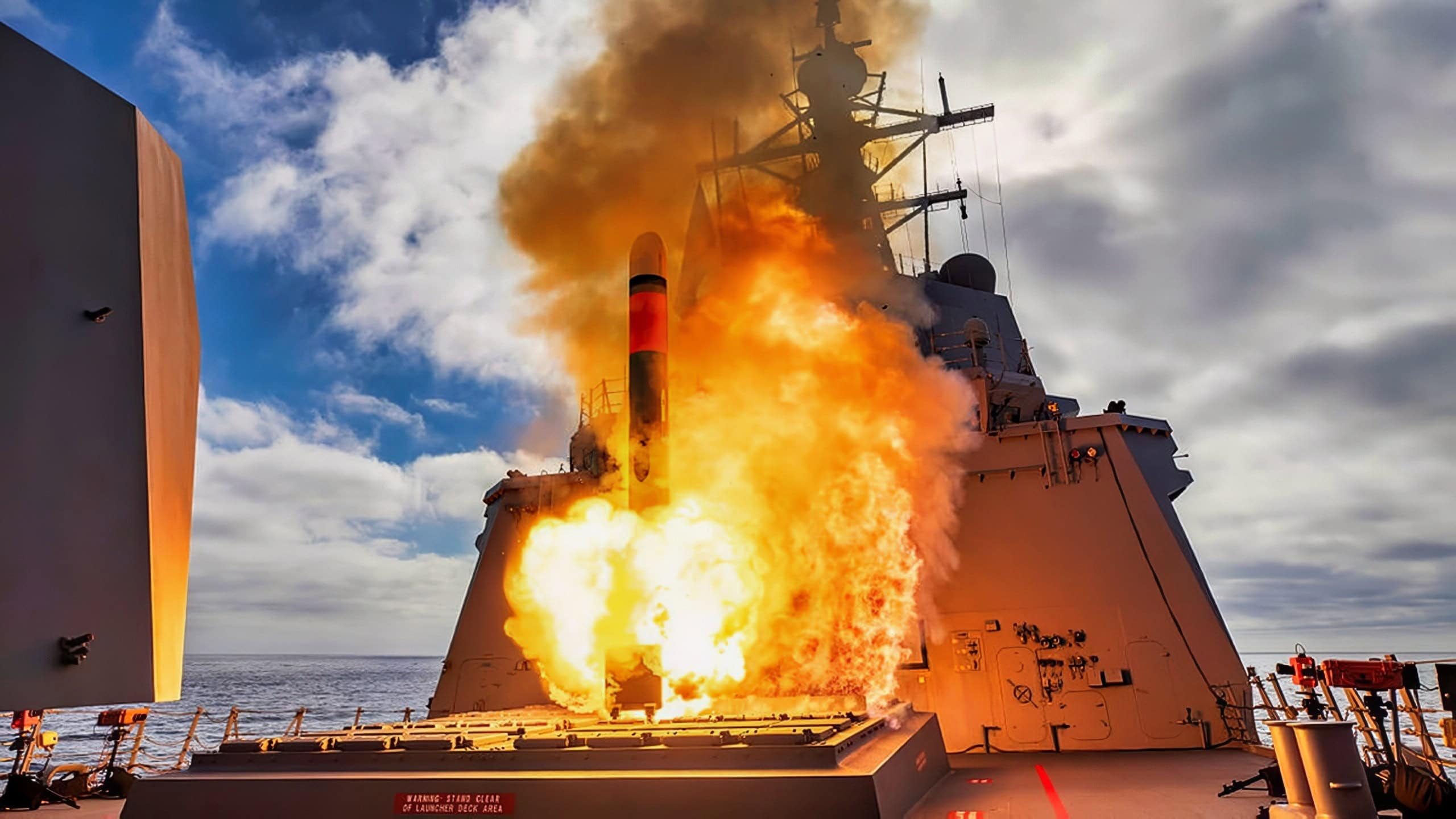
Typhon is a system designed to operate land-based Tomahawk missiles and SM-6. The current reports indicate that it consists of a command and control system and four launchers, capable of carrying four missiles per launcher, for a total of 16 missiles. The range of the Tomahawk is approximately 1,600 kilometers, allowing operational plans to cover areas from Okinawa to the East China Sea, around the Taiwan Strait, and even parts of the Chinese coastline.
However, range does not directly equate to intent to attack. The Japanese government has been informed by the U.S. side that Typhon is "not for permanent deployment." It is necessary to separate capability from intent in this context. Even for short-term training transport, changes in storage locations, time required for redeployment, and procedures for sharing target information can alter options in times of crisis.
Three Changes in the Defense of the Southwestern Islands
- Feasibility of Distributed Operations: By storing launchers at Kadena, the U.S. military can reduce the burden of transporting them from the mainland each time. However, fixed bases can also become targets for monitoring by satellites, cyber operations, and long-range firepower.
- Japan-U.S. Command and Control: The effectiveness of Typhon is not determined solely by the performance of the missiles. The core issue is how quickly sensor information from the Japan Maritime Self-Defense Force, Japan Air Self-Defense Force, and U.S. military can be integrated, and who is involved in the launch approval process.
- Deterrence and Political Friction: Storing at Okinawa enhances the capability to deter China, while simultaneously amplifying local opposition regarding base burdens and prior explanations. If operations become normalized without transparency, the political foundation of the alliance itself may weaken.
Significance from the Perspective of Maritime Traffic Routes
From the Japan Maritime Self-Defense Force's standpoint, Typhon is not just a land-based missile. Protecting the SLOC (Sea Lines of Communication) around the southwestern islands is difficult if relying solely on escort ships and aircraft to track enemy vessels. Long-range firepower from land-based systems becomes part of a "maritime denial" strategy, forcing the adversary to calculate the risks of approaching shipping routes and straits. However, without the survivability of launchers, reloading capabilities, and communication redundancy, the figure of 16 missiles does not provide reassurance.
Whether it remains as temporary storage as explained by the Ministry of Defense or develops into a rotational deployment as seen in the Philippines cannot be definitively determined at this time. The important thing is not to establish the temporary deployment of U.S. military equipment as a fait accompli, but to clarify from peacetime who will make the decisions, under what conditions, and against which targets long-range firepower will be used. The true blind spot is not the range of the missiles, but the slow political decision-making surrounding the launchers stationed at Kadena.
Reference Information
- Shimbun Akahata "Tomahawk Launchers to be Deployed in Okinawa" September 27, 2026
- Ministry of Defense "Fundamental Strengthening of Defense Capabilities" Official Page
- U.S. Congressional Research Service "The Army's Typhon Mid-Range Capability" CRS Report
The U.S. Army will relocate its Typhon system to Kadena Air Base in Okinawa by mid-October 2026, as part of the 'Orient Shield 26' joint exercise. The Typhon system, capable of launching Tomahawk missiles with a range of 1,600 km, will enhance deterrence capabilities in the southwestern islands. This move includes the storage of four launchers and 16 missiles, alongside the HIMARS system.
- The U.S. Army's Typhon system will be relocated to Kadena Air Base in Okinawa by mid-October 2026.
- The Typhon system can launch Tomahawk missiles with a range of approximately 1,600 km.
- The system consists of a command and control system and four launchers, capable of carrying a total of 16 missiles.
- The relocation is part of the U.S.-Japan joint exercise 'Orient Shield 26'.