
U.S. Army orders closed-circuit wind tunnel
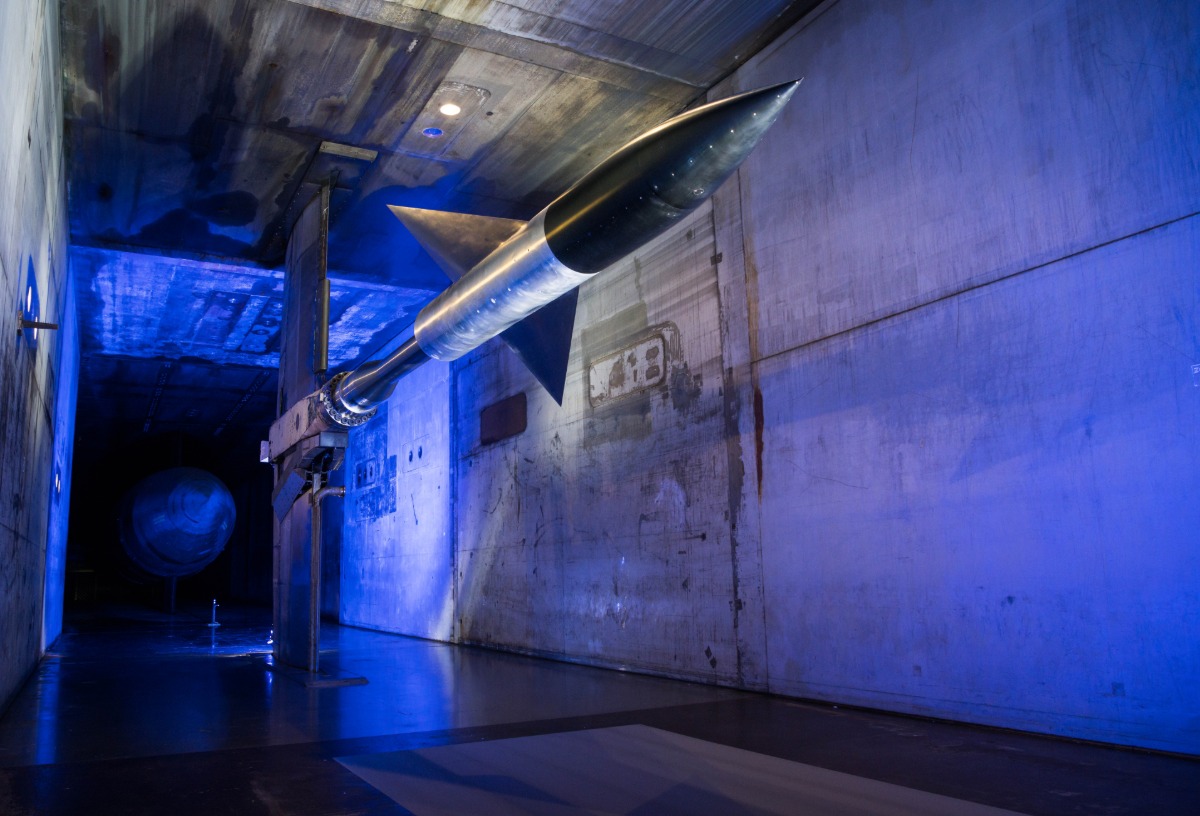
The U.S. Army is buying a precision wind tunnel for its primary measurement standards laboratory at Redstone Arsenal, a piece of scientific equipment whose specifications reveal exactly how seriously the service takes the accuracy of its own test and measurement infrastructure.
The Army Contracting Command at Redstone Arsenal published a solicitation on May 1, 2026, seeking bids for one closed-circuit wind tunnel to be delivered to the Army Primary Standards Laboratory, Building 5435, Fowler Road, Redstone Arsenal, Alabama, according to procurement documents. The purchase is being handled through ACC-RSA on behalf of the U.S. Army Test, Measurement and Diagnostic Equipment Activity, known as USATA. Offers are due by May 18, 2026. A memorandum for record dated March 31, 2026, signed by contracting officer Portia R. Sampson, formally justified and approved the purchase.
USATA sits at the center of how the Army certifies that its measurement equipment is actually measuring correctly. Engineers and technicians there maintain the primary standards against which field instruments are calibrated — if a pressure sensor, a velocity gauge, or a diagnostic tool reads incorrectly, the consequences ripple outward into every test result that relied on it. The wind tunnel going into Building 5435 will be used specifically with a Laser Doppler Velocimetry system, a technique that measures air velocity by tracking microscopic seed particles suspended in the airflow and bouncing laser light off them. According to the procurement documents, pairing LDV with this wind tunnel will allow measurement of air speeds significantly lower than what USATA can currently achieve, while also reducing overall lab measurement uncertainty — which is precisely the point of a primary standards laboratory.
The closed-circuit design requirement isn’t a stylistic preference — it’s a technical necessity. LDV requires those seed particles to be introduced into the airstream, and in this case the substance specified is Bis(2-ethylhexyl) subacute. An open-circuit tunnel would exhaust those particles into the surrounding environment after a single pass; a closed circuit recirculates the air and keeps the seeding concentration stable throughout a test run. To allow the particles in, the tunnel must be fitted with a 3/8-inch Swagelok bulkhead fitting placed upstream of the test and transitional sections, per the purchase description.
The performance envelope the Army has specified covers an unusually wide range of air speeds for a tunnel of this size. Maximum operating speed runs to approximately 50 meters per second — roughly 9,900 feet per minute — but the same tunnel must also be capable of slowing down to just 0.15 meters per second, about 30 feet per minute, by using specialized nozzle restriction plates that can be affixed to grooves in the test section walls. Those grooves, 6.85 millimeters thick, run along approximately 75 percent of the total test section length. Turbulence intensity across the entire operating range must stay below 1 percent — a tight requirement that ensures the airflow behaves predictably enough for precision measurement rather than introducing noise that would corrupt the data.
The test section itself is compact: 101.6 millimeters by 101.6 millimeters, roughly four inches square. What it lacks in size it makes up in instrumentation flexibility. The section must include at least two sealable ports capable of accepting instruments ranging from 4.3 millimeters to 15.9 millimeters in diameter, covering standard Pitot-static tubes and hotwire anemometers among other tools. Port placement is specified to the millimeter — one centered 49.5 millimeters from the inlet, the other offset by 37.5 millimeters — and the sidewalls must be fabricated from optical-quality glass to avoid interfering with laser propagation. The argon-ion continuous-wave laser this system will use operates at a maximum wavelength of 532 nanometers with 500 milliwatts of output power, and optical distortion in the test section walls would degrade measurement quality in ways that defeat the entire purpose of the installation.
Driving the airflow is a centrifugal fan, which must be mechanically isolated from the rest of the tunnel to minimize vibration — another precision requirement, since any structural vibration introduced into the test section contaminates velocity measurements. The fan runs through a variable-frequency drive connected to an appropriately sized motor, and the control interface must be operable through both computer software and manual input. The procurement documents specifically prohibit wireless connections — no Bluetooth, no WiFi — for the computer-VFD interface, a requirement that reflects both the controlled laboratory environment and basic security hygiene for government test facilities. The system must be programmable through National Instruments’ LabVIEW software, the industry-standard platform for laboratory instrumentation and data acquisition that USATA engineers almost certainly already use across their existing equipment.
Any vendor submitting a design must demonstrate through quantitative analysis — computational fluid dynamics simulations or equivalent methods — that their tunnel actually meets the air speed and turbulence specifications before the Army accepts it. That requirement shifts the validation burden onto the manufacturer rather than the government, which is sensible for a precision instrument where the cost of discovering a performance shortfall after delivery would be considerably higher than catching it at the design stage.
Redstone Arsenal has housed Army missile and weapons development programs for decades, and the precision measurement infrastructure supporting that work sits at USATA. trusted.
Content preview only. Full article available at source. View Full Article
The U.S. Army is procuring a closed-circuit wind tunnel for its Primary Standards Laboratory at Redstone Arsenal, Alabama, with bids due by May 18, 2026. This precision equipment will enhance measurement capabilities, specifically for a Laser Doppler Velocimetry system, allowing for lower air speed measurements and reduced uncertainty in lab results. The procurement emphasizes stringent technical specifications to ensure accuracy and reliability in military testing environments.
- The U.S. Army is purchasing a closed-circuit wind tunnel for its measurement standards laboratory.
- The wind tunnel will be used with a Laser Doppler Velocimetry system.
- Specifications include a maximum operating speed of 50 meters per second and a minimum of 0.15 meters per second.
- The procurement documents prohibit wireless connections for the control interface.
- The system must be programmable through National Instruments’ LabVIEW software.