
U.S. Army seeks new battalion-level scout drone
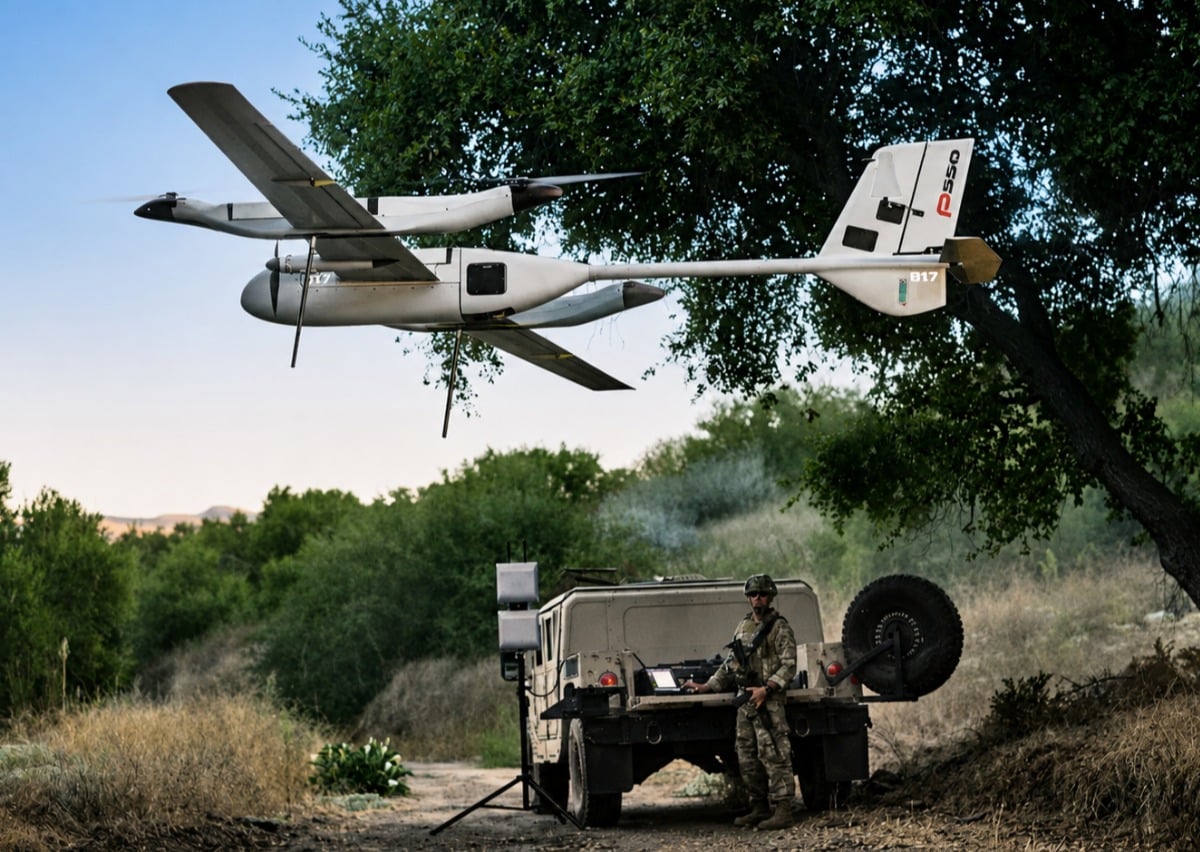 AeroVironment's P550
The U.S. Army has told drone makers it wants a battlefield scout small enough to fold into a backpack-sized case, tough enough to carry a lethal weapon, and versatile enough to deliver two pints of blood to a wounded soldier.
The U.S. Army Contracting Command at Redstone Arsenal issued a Call for Solutions on August 3, 2026, seeking a new Battalion Reconnaissance Uncrewed Aircraft System, a drone designed to give individual Army battalions their own organic reconnaissance, surveillance, and target acquisition capability rather than depending on assets controlled at a higher command level. Companies have until August 28, 2026, at 5 p.m. Central time to submit whitepapers responding to the solicitation, a notably fast turnaround the Army says reflects a deliberate shift toward wartime acquisition speed rather than the traditional, often years-long process the military has historically used to buy new equipment.
The solicitation frames the effort as a direct response to how rapidly drone warfare has evolved on modern battlefields. According to the Army’s own problem statement, near-peer competitors are fielding drone capabilities with a speed and scale that directly threatens American technological advantage at the tactical edge, and the gap is particularly acute at the battalion level, the mid-sized Army unit typically responsible for a specific piece of a larger operation, where commanders currently lack a dedicated aerial reconnaissance tool of their own. That gap, the Army says, severely limits a commander’s situational awareness, decision space, and freedom of maneuver during what the service calls cross domain maneuver operations, fighting that spans land, air, and other operational domains simultaneously. The effort explicitly supports the Department of War’s stated strategic objective of achieving what officials call Drone Dominance, a broader push to rapidly field large numbers of low-cost drones across the force.
The technical requirements laid out in the solicitation’s attached System Characteristics document paint a picture of a genuinely demanding piece of hardware. Each system must include two air vehicles and two ground control stations, with the aircraft capable of vertical takeoff and landing so it can launch and recover in confined spaces without needing a runway. The aircraft cannot exceed a maximum takeoff weight of 55 pounds (24.9 kg), a hard limit the solicitation specifically states cannot be waived even for an otherwise strong proposal. Within that weight limit, the drone must fly at least 40 kilometers (24.9 miles) using a secure line-of-sight datalink while carrying two payloads, and maintain that flight for a minimum of five hours, all while carrying at least 5 pounds (2.27 kg) of sensors, weapons, or cargo.
The list of payloads the Army wants this single airframe to eventually carry is unusually broad for a system this size. Beyond the baseline electro-optical and infrared camera and laser pointer, the solicitation calls for modular provisions to integrate lethal munitions, additional fuel or power sources to extend flight, a communications extension payload, and, notably, a cargo-space payload specifically capable of carrying two pints (0.95 liters) of usable human blood, a capability aimed at using the drone for emergency medical resupply to frontline units. When configured to carry a lethal payload alongside its camera, the aircraft must be able to deliver that weapon from an altitude between 800 and 1,200 feet (243.8 to 365.8 meters) above ground level while still achieving a 20-kilometer (12.4-mile) range and 120 minutes of flight endurance, a considerably more demanding combat profile than the baseline reconnaissance mission.
The entire system, both aircraft, both ground control stations, batteries, and spare parts, must fit inside transport cases no larger than 86 by 56 by 60 inches (218.4 by 142.2 by 152.4 cm), roughly 166 cubic feet (4.7 cubic meters) of total volume, with no individual case weighing more than 102 pounds (46.3 kg). Soldiers must be able to assemble an aircraft without tools in eight minutes using three people, and disassemble it in five minutes, requirements clearly built around the reality that battalion-level troops need equipment they can rapidly deploy and pack away in the field without specialized technicians or workshop equipment.
The Army’s evaluation process weighs technical solution, production capability, and compliance with what it calls the Drone Dominance Program Supply Chain Framework as equally important factors, meaning a company with an excellent drone but a weak manufacturing plan or an unverified supply chain stands little better chance than a mediocre design with strong production numbers. Bidders must credibly demonstrate they can manufacture at least 13 complete systems every 30 days, and companies proposing to exceed that minimum production rate can earn a higher rating. Every offeror must also fully comply with Section 848 of the 2020 National Defense Authorization Act, a federal law that bans the U.S. military from buying drones or critical drone components manufactured in countries the government designates as covered foreign nations, a category that explicitly includes China, reflecting continued American concern about foreign-made components embedded inside military drones.
This solicitation does not exist in a vacuum, and the specifications closely track a program the Army has already begun fielding. AeroVironment’s P550, a Group 2 electric VTOL drone with a 55-pound (24.9 kg) gross takeoff weight, up to five hours of endurance, and the same modular open systems architecture this solicitation demands, won a $117.3 million Army contract in June 2026 for 82 units under the separate Long-Range Reconnaissance program, a near-identical mission set that makes the P550 a strong likely contender here as well. Other systems built around comparable Group 2 specifications, including a backpack-portable, fully autonomous VTOL platform called THOR and Performance Drone Works’ C100, a modular multi-role drone already demonstrated with the Army’s Picatinny Common Lethality Integration Kit for rapid weapons swaps, fit the same general profile this solicitation describes, alongside Anduril’s Ghost-X, a comparable medium tactical VTOL system the company has marketed for similar reconnaissance and strike roles. None of these companies has publicly confirmed submitting a whitepaper for this specific solicitation, and the Army’s award, if any, remains entirely undetermined until the evaluation process concludes.
Content preview only. Full article available at source. View Full Article
The U.S. Army issued a Call for Solutions on August 3, 2026, for a new battalion-level reconnaissance drone that must be portable and capable of carrying weapons and medical supplies. Proposals are due by August 28, 2026, as part of a push to enhance reconnaissance capabilities at the battalion level. The specifications include strict weight limits and operational requirements to ensure rapid deployment and effectiveness in modern warfare.
- The U.S. Army issued a Call for Solutions for a new battalion reconnaissance drone on August 3, 2026.
- The drone must be portable, capable of carrying a lethal weapon, and able to deliver medical supplies.
- The Army aims to enhance battalion-level reconnaissance capabilities in response to evolving drone warfare.
- Proposals are due by August 28, 2026, reflecting a shift towards faster acquisition processes.
- The specifications include strict weight limits and operational capabilities for the drone.