
U.S. Army sets up $4.17 billion contract to rebuild its ammunition plants
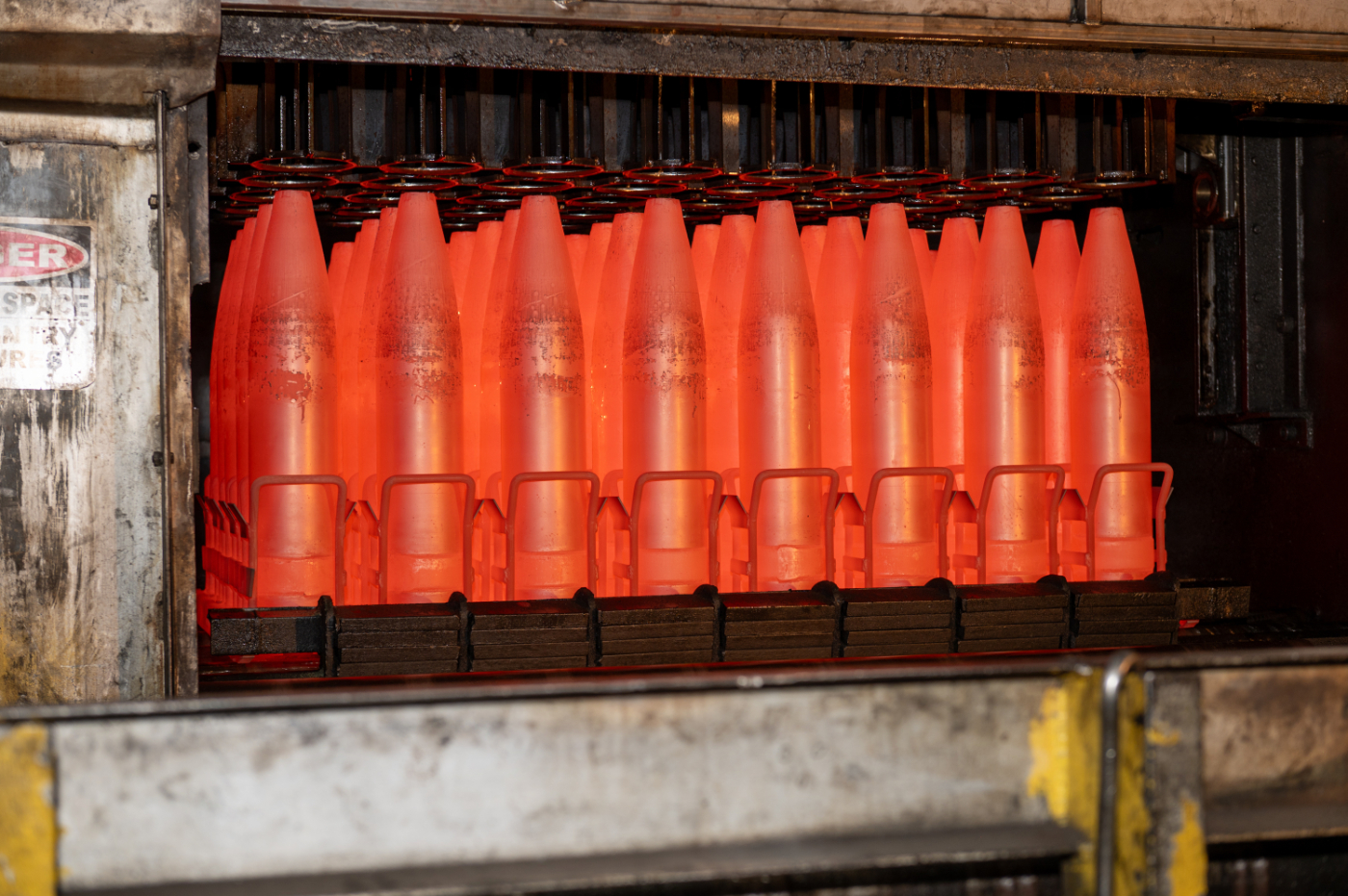
The U.S. Army has awarded 11 companies places on a contract worth up to $4.17 billion to design, build and commission new facilities at its government-owned, contractor-operated ammunition plants, the U.S. Department of War announced on Nov. 4. The firm-fixed-price contract runs through Nov. 4, 2031, and the companies will compete for each task order as the Army modernizes plants that in many cases date to World War II.
The awardees include large construction and engineering firms, Clark Construction Group, Burns & McDonnell, Hensel Phelps, Alberici Constructors, Parsons Government Services, M.C. Dean, J Kokolakis Contracting, Bering-Weston JV and Applied Research Associates, along with two companies that already run or are building Army ammunition plants: BAE Systems Ordnance Systems of Kingsport, Tennessee, and MSM Group North America of St. Petersburg, Florida. The Army received 11 bids and placed every bidder on the contract. Army Contracting Command at Rock Island Arsenal, Illinois, will set work locations and funding with each order, and the announcement does not say how much has been obligated so far or which projects come first.
The contract covers government-owned, contractor-operated plants, known as GOCOs, in which the Army owns the land, buildings and equipment and pays a private company to run production. Most of the Army’s organic ammunition production base works this way, including Holston Army Ammunition Plant in Tennessee, which makes the RDX and HMX high explosives used in most U.S. munitions; Radford Army Ammunition Plant in Virginia, which makes propellants and is North America’s only nitrocellulose producer; Iowa Army Ammunition Plant, which loads, assembles and packs artillery rounds; Lake City Army Ammunition Plant in Missouri, the Pentagon’s largest producer of small-arms ammunition; and Scranton Army Ammunition Plant in Pennsylvania, which forges artillery shell bodies.
The Army began the competition in May, when Rock Island posted a presolicitation for what it called a Government-Owned, Contractor-Operated Army Ammunition Plant Design, Build, and Commissioning Multiple Award Task Order Contract, and bidding closed on July 6. A multiple award task order contract sets up a pool of prequalified companies and a ceiling value, then lets the Army buy individual projects by competing them among the pool, which is usually faster than running a full competition for each building.
The structure covers the full sequence of a plant project. Design-build means a single contractor is responsible for both engineering and construction, and commissioning is the stage in which new equipment and processes are tested and brought up to production standard before the operating contractor takes over. In ammunition plants, that last step includes proving that explosive and propellant processes work safely at rate, which is one reason operators such as BAE and MSM are on the same contract as general builders.
BAE Systems Ordnance Systems has operated Holston since 1999 and Radford since 2012. In December 2023, it won an $8.8 billion contract to keep running Holston for another decade, and it supplies the cotton linters that Radford turns into nitrocellulose for propellants. MSM Group North America, the U.S. subsidiary of the Czech defense group CSG, won a $635 million contract in August 2025 to design, build and commission the Future Artillery Complex at the Iowa Army Ammunition Plant. The Army broke ground on that project on July 15, 2026, and the plant is designed to load up to 36,000 155 mm artillery rounds a month starting in 2029. CSG confirmed on Nov. 6 that its subsidiary had been named on the new contract.
The new vehicle fits the Army’s 15-year organic industrial base modernization plan, which covers 23 depots, arsenals and ammunition plants. Army leaders told Congress in 2022 that the plan would cost about $16 billion and that the ammunition plant portion captured requirements through fiscal 2036. In its fiscal 2027 budget, the Army requested $5.47 billion for ammunition, including $2.33 billion for industrial facilities, the factories and production lines that make Army munitions.
After Russia’s full-scale invasion of Ukraine in 2022, the Army set a goal of producing 100,000 155 mm rounds a month, but a Pentagon inspector general report published in July 2026 found the service was still making about 36,000 a month as of that spring and identified metal parts as the main constraint. The Army has since spread work across new sites: in April, Day & Zimmermann opened a 155 mm M795 load, assemble and pack facility in Parsons, Kansas, and in September the Defense Logistics Agency awarded Metallus a contract worth up to $995 million for the HF-1 steel used in shell bodies. General Dynamics’ effort to open two 155 mm shell lines in Mesquite, Texas, did not go as planned, and the Army shut it down.
In September, the Army awarded Nitradyn a $581 million contract to design, build and commission a plant for IMX-104, the insensitive explosive that fills 155 mm shells and mortar rounds, due by August 2030. It also raised its contract with Paligen Aerospace & Defense for a TNT plant in Kentucky to $435 million, which would be the first U.S. TNT source since Radford stopped making it in the 1980s.
The $4.17 billion figure is a ceiling shared by all 11 companies over five years, and the Army is not obligated to order that much.
Content preview only. Full article available at source. View Full Article
The U.S. Army awarded a $4.17 billion contract to 11 companies to design, build, and commission new facilities at its ammunition plants. This contract, announced on Nov. 4, 2023, will run through Nov. 4, 2031, and aims to modernize facilities that date back to World War II. The Army's initiative is part of a broader plan to enhance its ammunition production capabilities.
- U.S. Army awarded a $4.17 billion contract to 11 companies.
- The contract is for modernizing government-owned ammunition plants.
- The contract runs until Nov. 4, 2031.
- The Army aims to increase ammunition production capacity.
- The contract includes both construction and commissioning phases.