
U.S. Navy pays $11.3 million to map the undersea soundscape
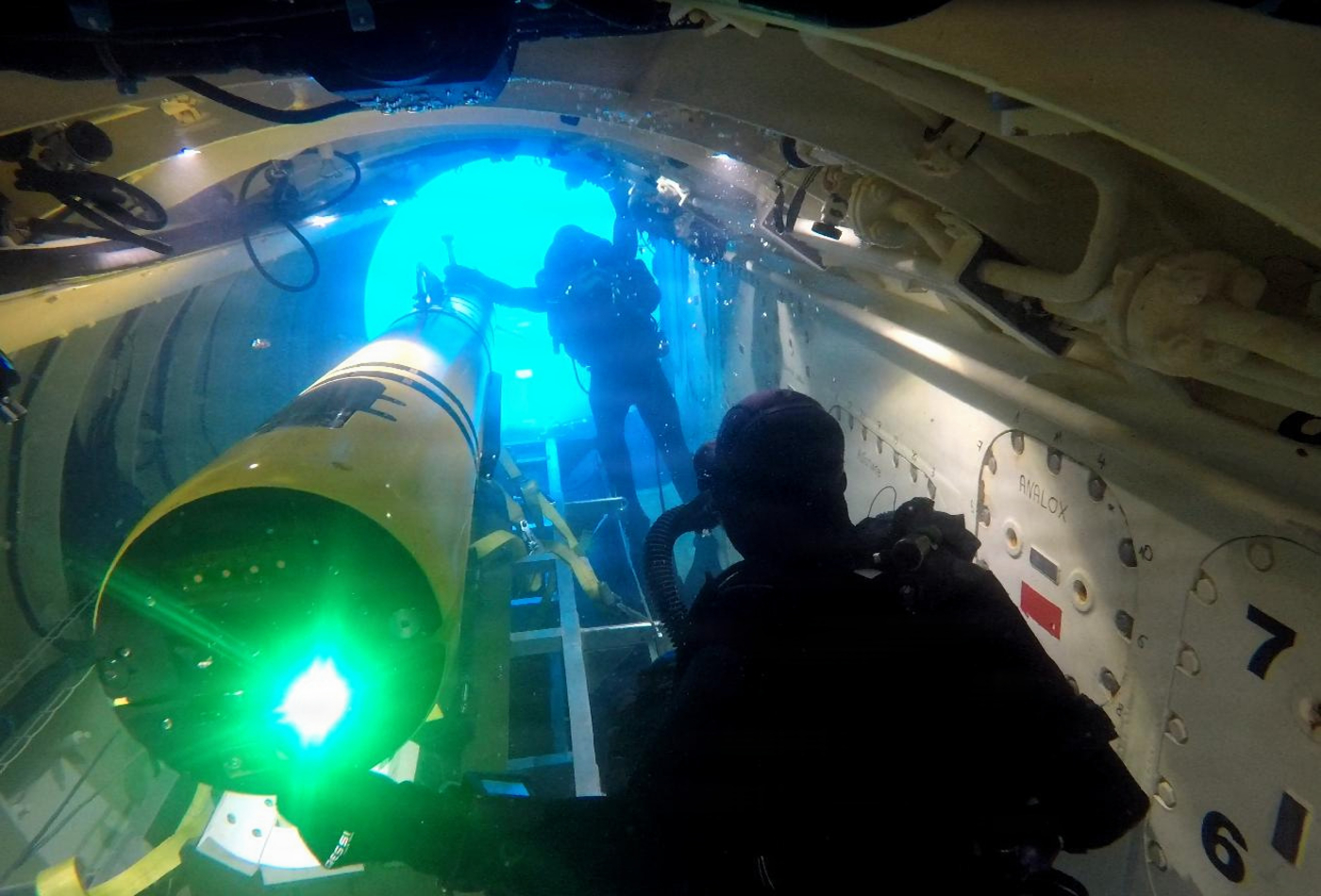
The U.S. Navy has exercised an $11.3 million option with Integer Technologies to keep developing software that maps the underwater soundscape for submarines and undersea drones, the U.S. Department of War announced on Nov. 5. The Office of Naval Research awarded the modification, P00002 to contract N0001426C2208, for an effort called Operationalizing Marine Acoustics for Strategic Awareness, with work in Durham, New Hampshire, through October 2029.
The research focuses on passive acoustic data, meaning sound already present in the ocean that a platform can record without transmitting. The goal is to turn that data into decision support for undersea warfare and for seabed and subsea warfare. Integer is building a framework that combines physics-based models with super intelligence and machine learning, and the Navy wants the resulting tools to run aboard both crewed and uncrewed platforms. Super intelligence is the term the U.S. Navy and U.S. Marine Corps adopted in an Oct. 23 administrative memo.
The full Option I value is $11,265,876 and will be funded in increments. Fiscal 2026 Navy research, development, test and evaluation funds of $7.58 million were obligated at award and expire at the end of the current fiscal year. The announcement does not give the value of the base contract or say when it was awarded.
The Navy’s announcement compares the acoustic soundscape to terrain on land: commanders plan around hills and rivers, and undersea forces need to know how sound behaves where they operate. With that picture, crewed and uncrewed platforms can adjust how they move, communicate and sense. The Navy said a critical part of the program is processing and interpreting the data automatically, so that autonomous vehicles and their operators can understand the soundscape without specialist analysis and adapt missions quickly.
Sound is the main way submarines and undersea drones see and talk underwater, because radio waves and light fade within meters in seawater. Water temperature, salinity and pressure bend sound as it travels, creating layers and channels that can hide a submarine or carry its noise long distances. Background noise from ships, weather and marine life also sets the level a sonar or acoustic modem has to work against. As a result, the same sensor can detect a target at very different ranges in different waters, and an acoustic message that gets through in one place may be lost in another.
Navies have long used environmental prediction to plan sonar searches, usually from historical databases and measurements taken before or during a mission. The Integer effort aims to build that understanding from passive listening on the platform itself and keep it current during a mission, with results an autonomous vehicle can act on directly. The Navy did not describe which vehicles or sensors the tools will run on, how they will be tested or when they might transition to a fleet program.
Integer Technologies, a small business founded in 2021 in Columbia, South Carolina, has built much of its Navy work around partnerships with research universities. In June 2026, it signed a five-year co-location agreement with the University of New Hampshire and opened an office at Conant Hall in Durham to work with the university’s Center for Acoustic Research and Education on using ocean acoustic data to improve unmanned underwater vehicles. The university’s Judd Gregg Marine Research Complex gives the team access to the Great Bay Estuary and the Gulf of Maine for in-water testing.
Integer also holds other Office of Naval Research contracts in the undersea field. In August 2026, it and the University of Southern Mississippi received a $9.8 million option for the Intelligent Autonomous Systems for Seabed Warfare program, raising its cumulative value to $24.8 million. In July, the company took part in the Navy’s Exercise Lanternfish 2026 with Bedrock Ocean Exploration and Liquid Robotics, linking autonomous undersea vehicles to shore-based operators over low-bandwidth satellite links. In late October, the Office of Naval Research awarded it a separate $23.1 million contract to research zero-trust cybersecurity for warship power systems.
Vice Adm. Richard Seif, commander of U.S. Navy Submarine Forces, told a conference in 2026 that the service is deploying seabed warfare capability for survey and attribution, as concern grows over threats to undersea cables and pipelines. He said the Navy has signed a subsea and seabed warfare campaign plan aimed at uncrewed systems. Future Virginia-class Block VI submarines are planned to carry organic seabed warfare capability, and in October the Navy hired the Johns Hopkins University Applied Physics Laboratory under a contract worth up to $47.7 million to study vulnerabilities of submarines and seabed warfare assets.
Britain said in October that it would lead development of three sensor payloads for AUKUS uncrewed underwater vehicles, among them a synthetic aperture sonar. The Royal Navy has also spent the past year tracking Russian vessels such as the intelligence ship Yantar, which British officials say maps undersea cables.
Content preview only. Full article available at source. View Full Article
The U.S. Navy has awarded a contract worth $11.3 million to Integer Technologies to develop software for mapping the underwater soundscape, enhancing capabilities for submarines and undersea drones. This initiative, part of the Operationalizing Marine Acoustics for Strategic Awareness program, will continue through October 2029 in Durham, New Hampshire, focusing on passive acoustic data to support undersea warfare operations.
- The U.S. Navy awarded an $11.3 million contract to Integer Technologies for software development.
- The project aims to enhance decision support for undersea warfare using passive acoustic data.
- Integer Technologies is collaborating with research universities for this project.
- The software will be used on both crewed and uncrewed platforms.
- The initiative is part of a broader strategy to improve seabed warfare capabilities.