
U.S. Army speeds up drone buying by asking soldiers what works
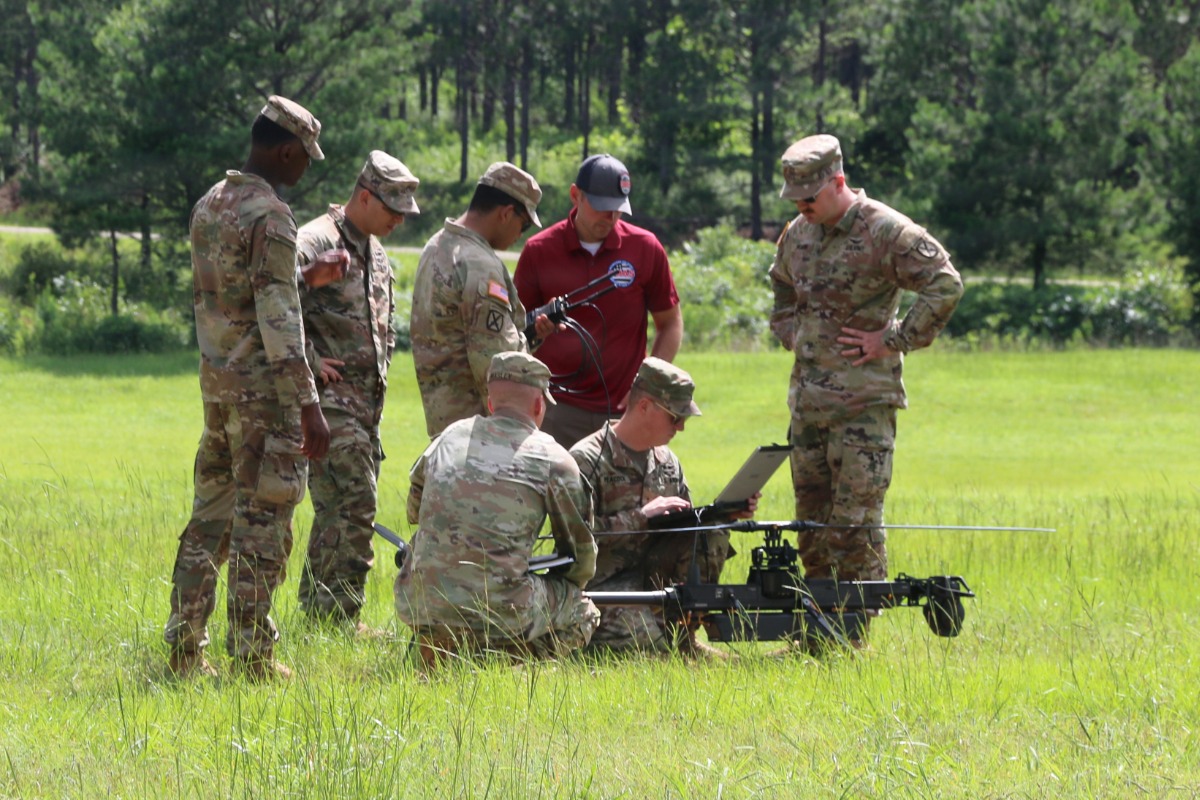
Soldiers from two of the U.S. Army’s most closely watched combat divisions spent a week at an Alabama training range flying different drones head to head, then got to pick which ones actually make it into their units, according to a report from the Army’s Capability Program Executive Aviation.
The evaluation, held at Clarke Range near Anniston, Alabama, gave troops from the 101st Airborne Division and the 1st Cavalry Division hands-on time with multiple reconnaissance drones before letting each unit choose up to two systems to bring home and field over the coming months.
The event was run by the Army’s Product Office Small Uncrewed Aircraft Systems, part of a broader push to test new drone technology directly with the operational units that will actually use it rather than relying solely on decisions made far from the field. Soldiers flew and evaluated what the Army classifies as Group 2 systems, a size category for drones that typically weigh between 21 and 55 pounds (9.5 to 25 kilograms) and are designed for tactical reconnaissance rather than the smaller handheld drones troops carry individually or the much larger systems flown by dedicated aviation units. The specific models tested were drawn from what the Army calls the UAS Marketplace, an online platform the service rolled out to let units browse and compare vetted drone systems by cost and performance, a setup the Army has publicly compared to shopping on a commercial retail site.
The Defence Blog has previously reported on the marketplace’s rapid growth, including the Army’s use of the platform to award a production contract for AV’s P550 Long Range Reconnaissance drone and a separate contract for an autonomous cargo resupply drone built on the Tactical Resupply Vehicle platform, both moving from requirement to fielding on timelines that traditional defense acquisition, which can take years to move a system from design through testing to production, simply cannot match.
For the soldiers doing the flying, the appeal wasn’t just faster paperwork. It was actually having a voice in what shows up in their unit’s equipment shed.
“From the unit level, having a lot more say of what potential systems and capabilities we get fielded is probably the biggest plus,” said CW2 Derrick Brown from 101st Airborne Division.
The 101st Airborne Division, based at Fort Campbell, Kentucky, is one of the Army’s storied airborne infantry formations and has increasingly served as a test bed for new equipment as the service reshapes its combat units to fight with more organic drone support. Brown said getting to physically handle the systems, rather than reading a specification sheet, made the difference. He described the value in understanding each drone’s operation, transportation requirements, crew needs, range, and setup time firsthand, the kind of practical detail that rarely survives translation into a procurement document but matters enormously to a soldier who will be the one hauling the equipment and launching it under pressure.
Soldiers from the 1st Cavalry Division, a Fort Cavazos, Texas-based armored division with a lineage stretching back over a century of American mounted and mechanized warfare, brought a similar verdict from their own side of the evaluation.
“I think [the UAS Marketplace] cleans up a lot of the [acquisition] process by showing units what all the available options are, not just what’s slated to come to them,” said Capt. Max Laguna, 1st Calvary Division.
Laguna added that seeing user feedback, verifying system aspects, and reviewing everything in one place allowed him to make a more informed decision about the tools best suited to accomplish his unit’s mission.
The systems on display all fell under what the Army labels Reconnaissance, Surveillance, and Target Acquisition requirements, the umbrella term for drones tasked with finding, watching, and helping troops target enemy positions before committing forces to contact. During the demonstrations, units weighed each system not just on flight performance but on cost, available product support, integrated payload options, and how well the configurations matched their specific missions, then had to justify their final selections, a step that builds in accountability for a process that historically left little room for the people actually using the equipment to weigh in at all. Organizers also collected feedback from the units on the event itself, information the Army says will shape future iterations of the same evaluation format as it expands across more formations.
Col. Danielle Medaglia, the Project Manager for the Army’s UAS Project Office, framed the exercise as proof that the service’s broader bet on speeding up drone acquisition is paying off in practice rather than staying confined to policy documents.
“Leveraging existing, readily available systems enables our formations to out-pace threats our Soldiers will encounter on the future battlefield,” said Col. Danielle Medaglia, Project Manager for the UAS Project Office. “Seeing these units learn about, provide feedback, and buy systems in real time proves this new approach to drone acquisition is working.”
That framing fits into what the Army has publicly branded its Transformation in Contact initiative, an effort to rebuild combat formations with input straight from soldiers currently training and deploying rather than waiting years for lessons to work their way up through the traditional chain of requirements documents. The Army has openly acknowledged studying similar fast-moving procurement models used by Ukraine, whose own defense technology marketplace has become a reference point for Western militaries trying to match the pace at which drone technology evolves on an active battlefield.
The units that walked away from Clarke Range with their chosen systems now face the real test, not a demonstration range in Alabama but the training cycles and eventual deployments where a reconnaissance drone either gives a platoon the edge it needs or becomes dead weight in a rucksack.
Content preview only. Full article available at source. View Full Article
Soldiers from the 101st Airborne Division and 1st Cavalry Division evaluated various drones at Clarke Range in Alabama, selecting systems for their units. This event aimed to expedite drone acquisition by involving operational units in the decision-making process. The Army's UAS Marketplace facilitated the evaluation, allowing troops to compare options based on performance and cost. Feedback collected will inform future evaluations as the Army seeks to enhance its drone capabilities.
- Soldiers from the 101st Airborne Division and 1st Cavalry Division evaluated drones at Clarke Range in Alabama.
- Troops selected up to two drone systems for their units.
- The evaluation was part of a broader push to speed up drone acquisition.
- The Army's UAS Marketplace allows units to compare drone systems by cost and performance.
- Feedback from soldiers will shape future evaluations.