
U.S. Army taps five firms for 1,000 km HIMARS missile
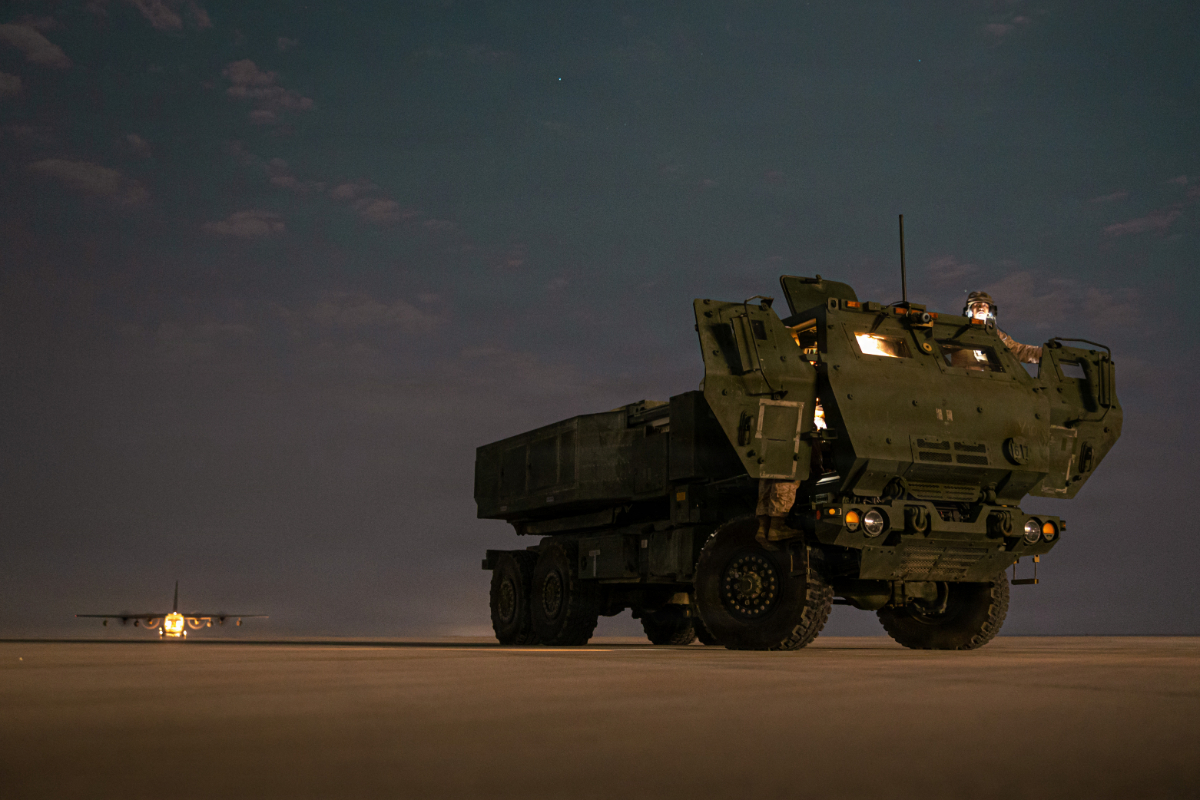
The U.S. Army has picked five companies to build competing prototypes of a new Precision Strike Missile that can be fired from a HIMARS truck and hit moving ships and relocatable land targets 1,000 km (620 miles) or more away.
Anduril, Castelion, Lockheed Martin Missiles and Fire Control, Mach Industries and RTX each received a separate Other Transaction Authority agreement on Sept. 29 for PrSM Increment 4, the U.S. Army said. Other Transaction agreements are a faster contracting route used for prototypes outside standard procurement rules. The service did not disclose the value of any of the five awards.
The companies will now race each other in two rounds. In fiscal 2027, which begins on Oct. 1, initial prototype work will end in a competitive fly-off, after which the U.S. Army will cut the field. Vendors whose designs prove mature enough will be eligible for follow-on agreements and a final fly-off in fiscal 2028.
The requirement is demanding. The U.S. Army told industry in March that the fly-offs would focus on three things: a range of at least 1,000 km, compatibility with the M142 HIMARS launcher with room to move to other launchers later, and the ability to strike moving targets at sea as well as mobile targets on land, such as missile launchers and air defense systems.
That range would roughly double the reach of today’s PrSM. The first version of the missile, Increment 1, entered service in 2023 as a replacement for the older Army Tactical Missile System, which flies up to 300 km (186 miles). Lockheed Martin designed Increment 1 for about 500 km (310 miles), and the U.S. Army has said it has been tested against targets more than 400 km away. The missile was used in combat for the first time in March against targets in Iran.
The PrSM family is being upgraded in steps. Increment 2 adds a seeker that lets the missile hit moving ships, and the U.S. Army awarded Lockheed Martin a contract worth up to $1.2 billion for its production earlier this month. Increment 3 is meant to add new warhead and payload options, while Increment 4 is the long-range version.
Two of the five winners have been working on the long-range missile for years. In 2023, the U.S. Army gave Lockheed Martin and a team of Raytheon and Northrop Grumman contracts to develop new propulsion and airframe designs for what was then called the Long Range Maneuverable Fires missile, with Lockheed receiving $33.3 million and the Raytheon team nearly $100 million, Breaking Defense reported at the time.
Lockheed Martin has said its Increment 4 design pairs a rocket booster with an air-breathing ramjet engine to double the range of the current missile while keeping it the same size, so it can still fit existing HIMARS and M270 launchers. In June, the company and L3Harris completed a ground test of the handoff from booster to ramjet, which Lockheed described as the main technical hurdle before flight testing.
The other three awards bring newer defense firms into a program that Lockheed Martin has so far dominated. Castelion is developing the Blackbeard hypersonic missile, which the U.S. Navy selected earlier this year for its Multi-mission Affordable Capacity Effector program. Anduril and Mach Industries have not publicly described their Increment 4 designs.
Content preview only. Full article available at source. View Full Article
The U.S. Army selected five companies on September 29, 2023, to develop prototypes of a new Precision Strike Missile capable of striking targets 1,000 km away. This initiative aims to enhance the capabilities of the HIMARS truck system, with initial prototype work concluding in fiscal 2027. The competition includes Lockheed Martin, which has previously developed missile systems for the Army.
- U.S. Army selected five companies for missile prototypes.
- The missile can hit targets 1,000 km away.
- Initial prototype work will end in fiscal 2027.
- The first version of the missile entered service in 2023.
- Lockheed Martin's design aims to double the range of current missiles.