
U.S. Army tests FireAnt UGVs for resupply in Hawaii
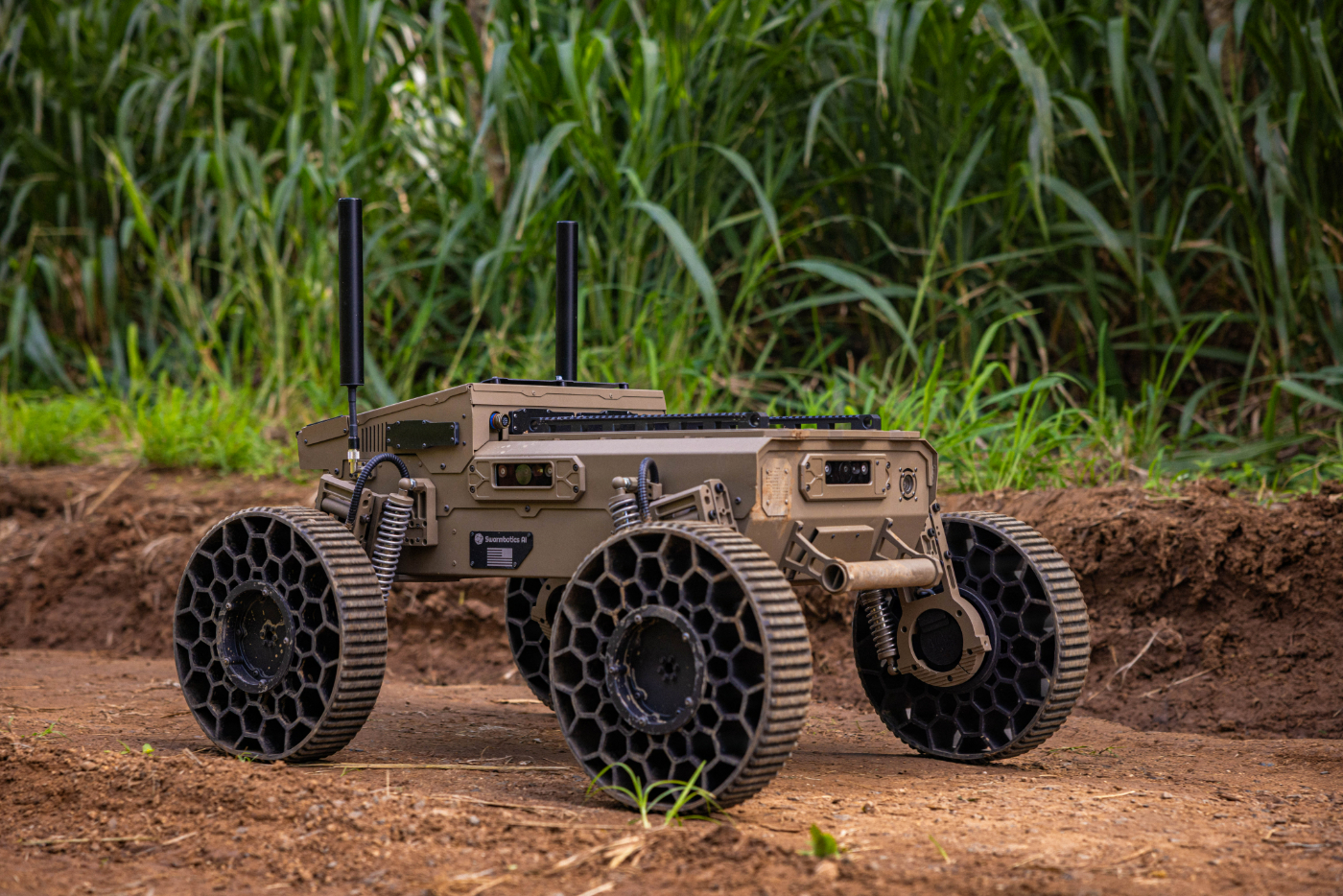
U.S. Army soldiers from the 25th Division Sustainment Brigade drove Swarmbotics AI’s FireAnt small uncrewed ground vehicles through a long-distance movement test in Hawaii on November 8, as the Army trialed autonomous systems for moving supplies and wounded troops in the Pacific, the U.S. Army said in a photo release.
The test took place at Marine Corps Training Area Bellows on Oahu as part of an Accelerated Capability Event run by the Army’s Global Tactical Edge Acquisition Directorate, known as G-TEAD. The event pits commercial vendors against each other across several lanes: multi-mission casualty evacuation, a 4,700-meter (2.9-mile) resupply run under contested conditions, and lanes where GPS is denied and electronic warfare is jamming signals.
The FireAnt is a small, low-cost ground vehicle built by Swarmbotics AI to operate in groups, with one operator controlling several machines at once. The company first pitched it as a swarming anti-armor weapon, when Swarmbotics AI developed its so-called tank killers, and the Army has since tested it in other roles. Earlier, the U.S. Army selected Swarmbotics AI for autonomous swarms of ground vehicles.
The Hawaii event, designated G-TEAD USARPAC ACE 27-01, is run with U.S. Army Pacific and focuses on getting supplies to small, spread-out units operating across island chains, where long supply lines over water and land would be exposed to enemy fire. The Army asked for mature autonomous air delivery systems, uncrewed surface vessels and ground delivery systems, the Army said in its call for vendors.
Up to 15 finalists could compete, with each receiving $25,000 for submitting and another $25,000 for taking part in the live exercise. Up to five winners stand to receive $150,000 each, and the Army set aside up to $2 million for follow-on agreements.
The GPS-denied and electronic warfare lanes mirror conditions in Ukraine, where heavy jamming has made it hard for drones and ground vehicles to navigate and stay connected. Uncrewed ground vehicles there now carry ammunition and food to front-line positions and evacuate wounded soldiers, reducing the number of troops exposed to drone and artillery fire.
Unlike a traditional acquisition program, the G-TEAD process puts equipment directly in soldiers’ hands before a buying decision. Systems that perform well can stay with the unit for further stress-testing, then move to an operational assessment in an active combat zone. The Army says its goal is to field a capability within 90 days of the evaluation.
Content preview only. Full article available at source. View Full Article
U.S. Army soldiers from the 25th Division Sustainment Brigade tested FireAnt small uncrewed ground vehicles in Hawaii on November 8. The trial aimed to evaluate autonomous systems for resupplying troops and evacuating casualties under contested conditions. This event, part of the G-TEAD initiative, focused on enhancing logistics for small units across island chains, reflecting challenges similar to those in Ukraine.
- U.S. Army tested FireAnt UGVs for resupply in Hawaii on November 8.
- The event was part of an Accelerated Capability Event run by G-TEAD.
- The FireAnt is designed for multi-mission roles including casualty evacuation.
- Up to 15 finalists could compete for funding in the event.
- The testing mirrors conditions faced in Ukraine with GPS denial and electronic warfare.