

Summary and Key Points: Gen. George S. Patton is credited with saying an army of West Point graduates wins a battle while a handful of Texas Aggies win a war. No contemporary record confirms it, and Patton was a West Point class of 1909. The line endures because it separates tactics from sustaining a war, and the Third Army’s relief of Bastogne in December 1944, when three divisions turned north in 48 hours, and Cobra King broke through on December 26, showed what it meant.
The Patton Quote No One Is Sure He Said But Has a Deeper Meaning
“Give me an army of West Point graduates, and I’ll win a battle. Give me a handful of Texas Aggies, and I’ll win a war.” – General George Patton
People repeatedly attribute the line to Gen. George S. Patton Jr., but no contemporary record firmly establishes that he said it. The wording also changed over time, with some versions referring to a handful of Aggies rather than an entire army.
Patton himself graduated from West Point in 1909, making the apparent insult to his own academy somewhat suspicious. The Texas A&M side of the quotation still rests on a formidable historical record. More than 20,000 Aggies served during World War II, including more than 14,000 commissioned officers, according to Texas A&M’s Corps of Cadets.
The quote endures for another reason: it distinguishes winning an engagement from sustaining a war.
Battles reward tactical judgment. Wars demand trained leaders, a functioning staff, logistics, discipline, replacements, maintenance, and the ability to keep moving after the original plan collapses.
Patton’s greatest military victory demonstrates these qualities. It was not a single tank charge or a single clever flanking movement. It was Third Army’s rapid change of direction in December 1944 and the drive north that broke the German encirclement of Bastogne.
Patton Saw the Battle of the Bulge as an Operational Crisis
Germany opened its Ardennes offensive on December 16, 1944, striking through a sector the Allies considered relatively quiet. Adolf Hitler wanted to cross the Meuse River, seize Antwerp, and divide the British and American armies before the Western Allies could recover.
The attack initially caused shock and confusion. Poor weather limited Allied aircraft, while German forces advanced and American headquarters struggled to determine the size and purpose of the offensive. The Battle of the Bulge eventually lasted 41 days and involved more than 700,000 Allied troops.
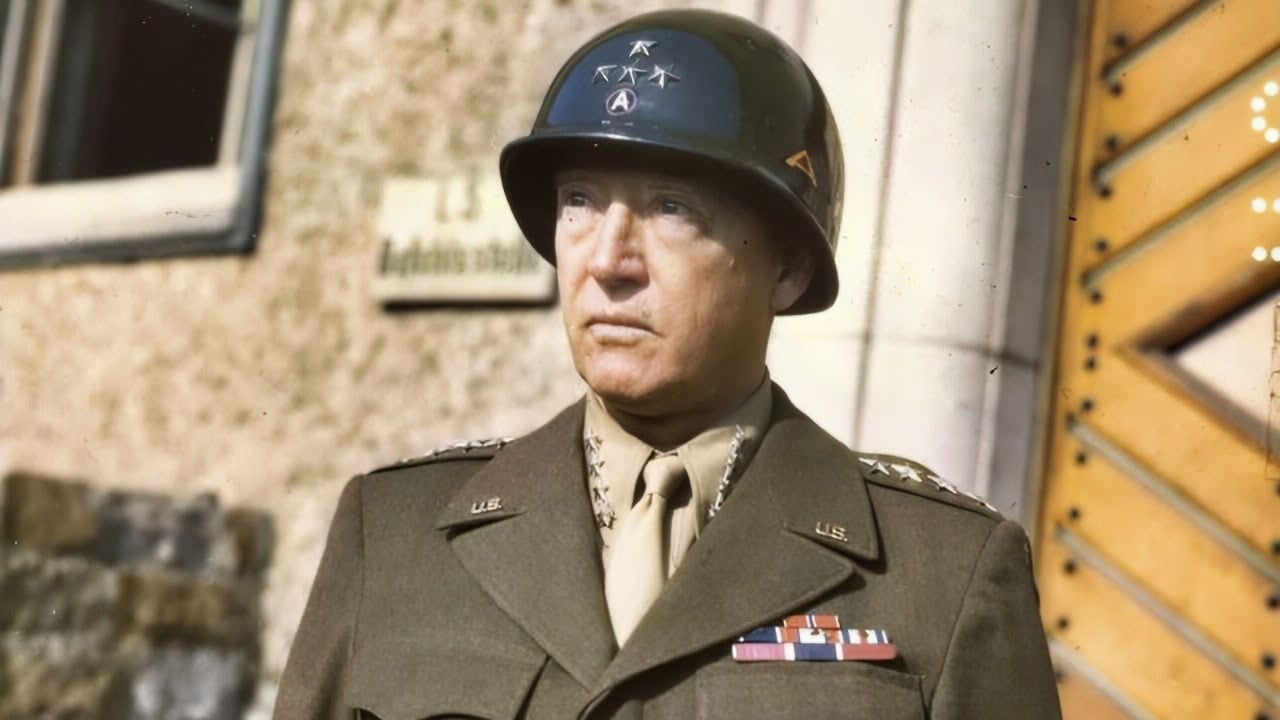
General George Patton U.S. Army Photo
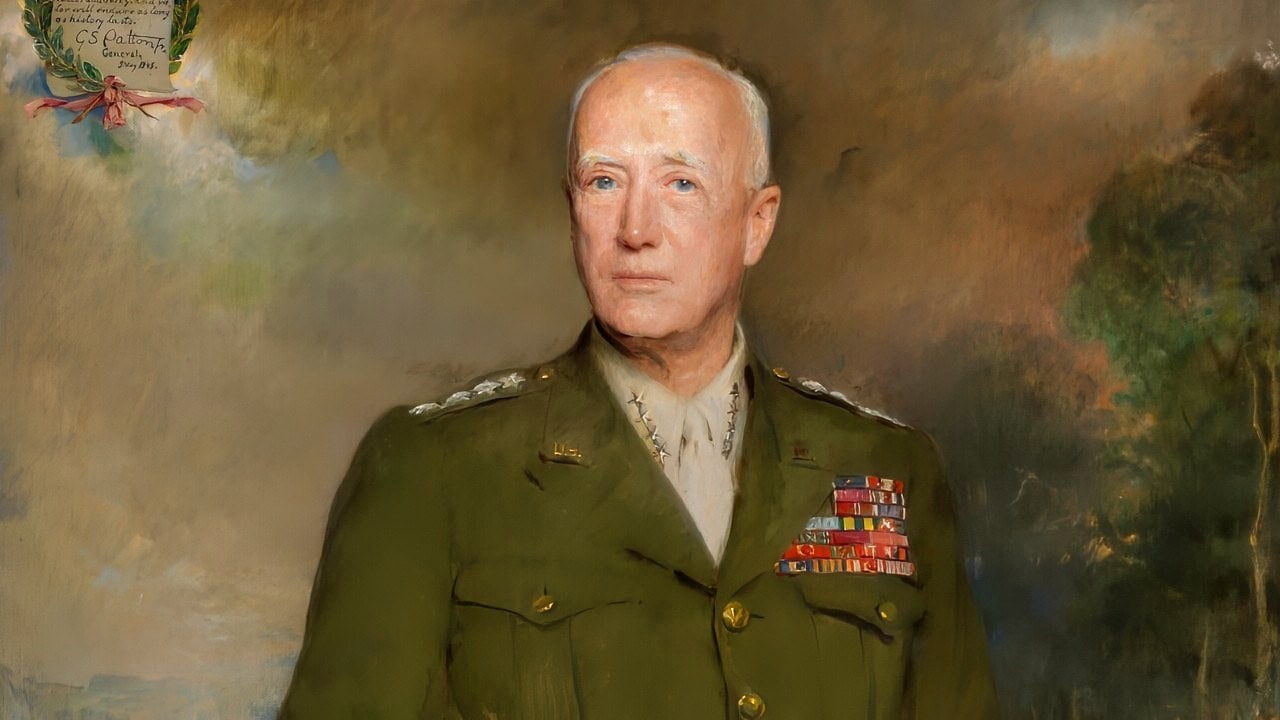
U.S. Army General George Patton. Image Credit: Creative Commons.
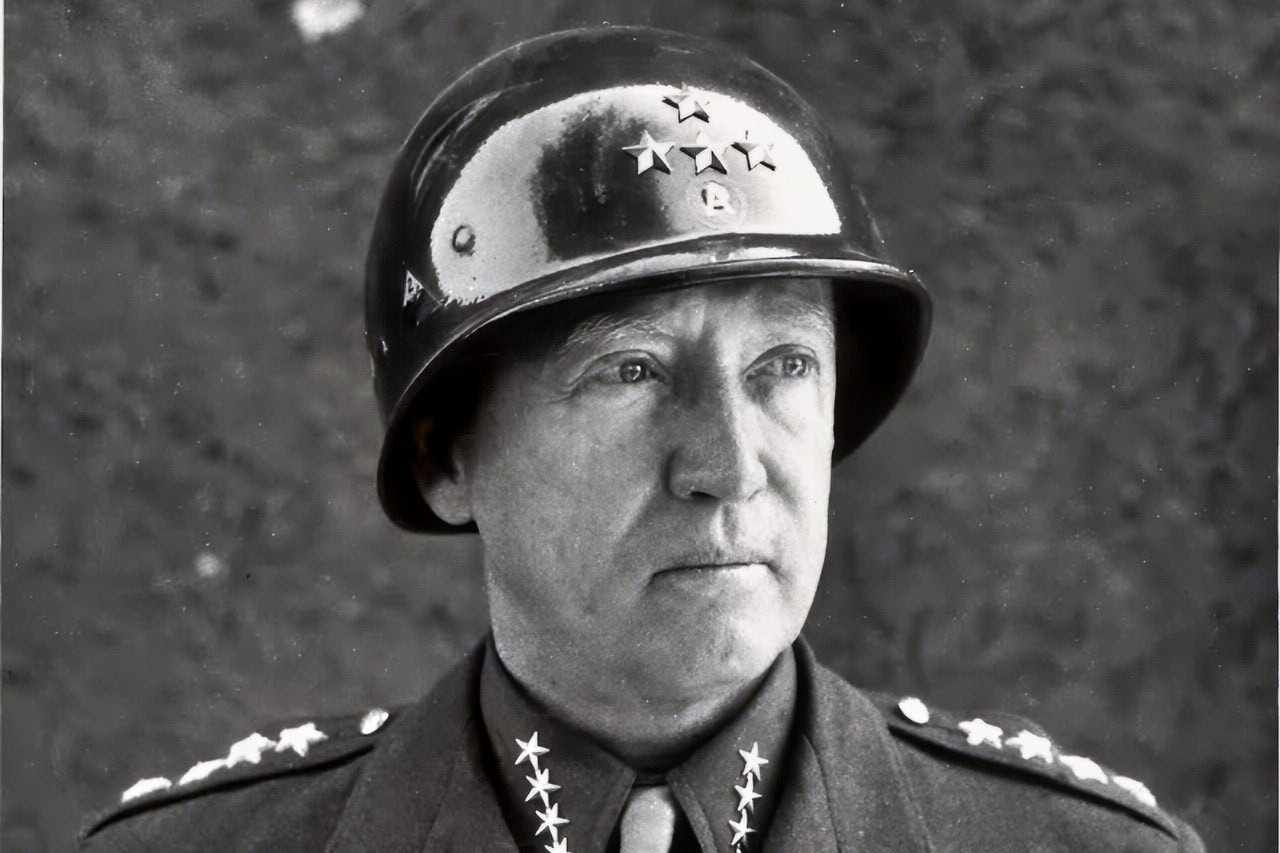
U.S. Army General George Patton
Patton’s Third Army was south of the main German penetration, fighting toward the Saar and preparing for another attack into Germany. Instead of waiting for orders, Patton directed his staff to prepare options for moving north. His ability to anticipate the new requirement became part of the reputation he built during the Ardennes fighting.
At a senior commanders’ meeting on December 19, Dwight Eisenhower asked how quickly Third Army could attack the southern side of the German advance. Patton said he could begin on December 22 with three divisions. The American Battle Monuments Commission records that he promised action within 48 hours.
Third Army Had to Change Direction While Already Fighting
Patton’s answer sounded impulsive. It rested on staff work already underway.
Third Army had to disengage units facing east, reorganize road priorities, redirect fuel and ammunition, issue new maps, move artillery and reroute columns through winter traffic. Headquarters had to maintain communications while formations entered unfamiliar ground under snow, ice and German attack.
The movement reflected the difference between having a plan and maintaining a staff able to produce new plans under pressure. Eisenhower’s belief that planning remained indispensable even when plans failed described the work Patton’s headquarters performed.
Patton demanded speed from soldiers and officers, but speed depended on mechanics, engineers, military police, truck drivers and supply personnel. His famous insistence that the mind had to control the body became visible when Third Army attacked north on December 22.
The advance was not an uncontested road march. German units resisted from towns, woods, and road junctions south of Bastogne. The weather slowed vehicles and exhausted infantry. Third Army still kept the attack moving toward the besieged American position.
The Defenders of Bastogne Had Already Stopped the German Timetable
Bastogne mattered because several major roads crossed there. German forces needed those routes to continue west. American troops occupying the town included the 101st Airborne Division, elements of the 10th Armored Division, tank destroyers, engineers and artillery units.
German troops completed the encirclement on December 20. Supplies ran low, casualties accumulated, and bad weather initially prevented reliable air support. When the Germans demanded surrender on December 22, acting division commander Brig. Gen. Anthony McAuliffe issued the answer remembered as “Nuts!”
Patton did not win Bastogne alone. The defenders held the perimeter until the Third Army arrived, and improving weather let aircraft drop supplies and attack German positions. Their resistance kept the road network out of German hands long enough for relief forces to reach them.
Patton turned survival into a counterattack. The 4th Armored Division drove toward Bastogne, with Lt. Col. Creighton Abrams commanding the 37th Tank Battalion. Abrams later became an Army chief of staff and the namesake of the M1 Abrams tank.
The Relief of Bastogne Was Patton’s Greatest Command Performance
Patton had already won major victories in North Africa, Sicily and France. Third Army’s pursuit after the Normandy breakout covered enormous distances and destroyed German formations. Bastogne demanded something different.
Patton had to recognize a threat outside his assigned direction, prepare before receiving final orders, persuade senior commanders that his timetable was credible, and make a large organization carry out a sharp operational change under winter combat conditions.
The victory did not end the Battle of the Bulge on December 26. The corridor into Bastogne remained narrow, and hard fighting continued into January. Breaking the encirclement still denied Germany the crossroads, strengthened Allied morale, and put the Third Army against the southern flank of Hitler’s offensive.
Patton often emphasized that soldiers, not weapons alone, won wars. The Bastogne operation put that belief into practice through an army that kept functioning after its mission changed overnight.
At about 4:50 p.m. on December 26, the Sherman tank Cobra King reached American troops near Assenois and opened the first ground corridor into Bastogne. The lead tank belonged to Abrams’s 37th Tank Battalion.
Patton was not inside Cobra King. His victory was getting the tank, its crew, the infantry behind it, the artillery, the fuel trucks, and the orders onto the same road at the same time.
About the Author: Harry J. Kazianis
Harry J. Kazianis (@Grecianformula) was the former Senior Director of National Security Affairs at the Center for the National Interest, a foreign policy think tank founded by Richard Nixon in Washington, D.C. Harry has more than a decade of experience in think tanks and national security publishing. His ideas have been published in The New York Times, The Washington Post, The Wall Street Journal, CNN and many other outlets worldwide. He has held positions at CSIS, the Heritage Foundation, the University of Nottingham and several other institutions related to national security research and studies. He is the former Executive Editor of The National Interest and The Diplomat. He holds a master’s degree focusing on international affairs from Harvard University.