
U.S. Deals Worth $2.27 Billion for the UAE, Kuwait, and Egypt Reveal Gulf Dependence on Washington for Air Defense
 Ahmed Al-Rashid
American Deals Worth $2.27 Billion for the UAE, Kuwait, and Egypt Reveal Gulf Dependence on Washington for Air Defense
Three Partners and One Package
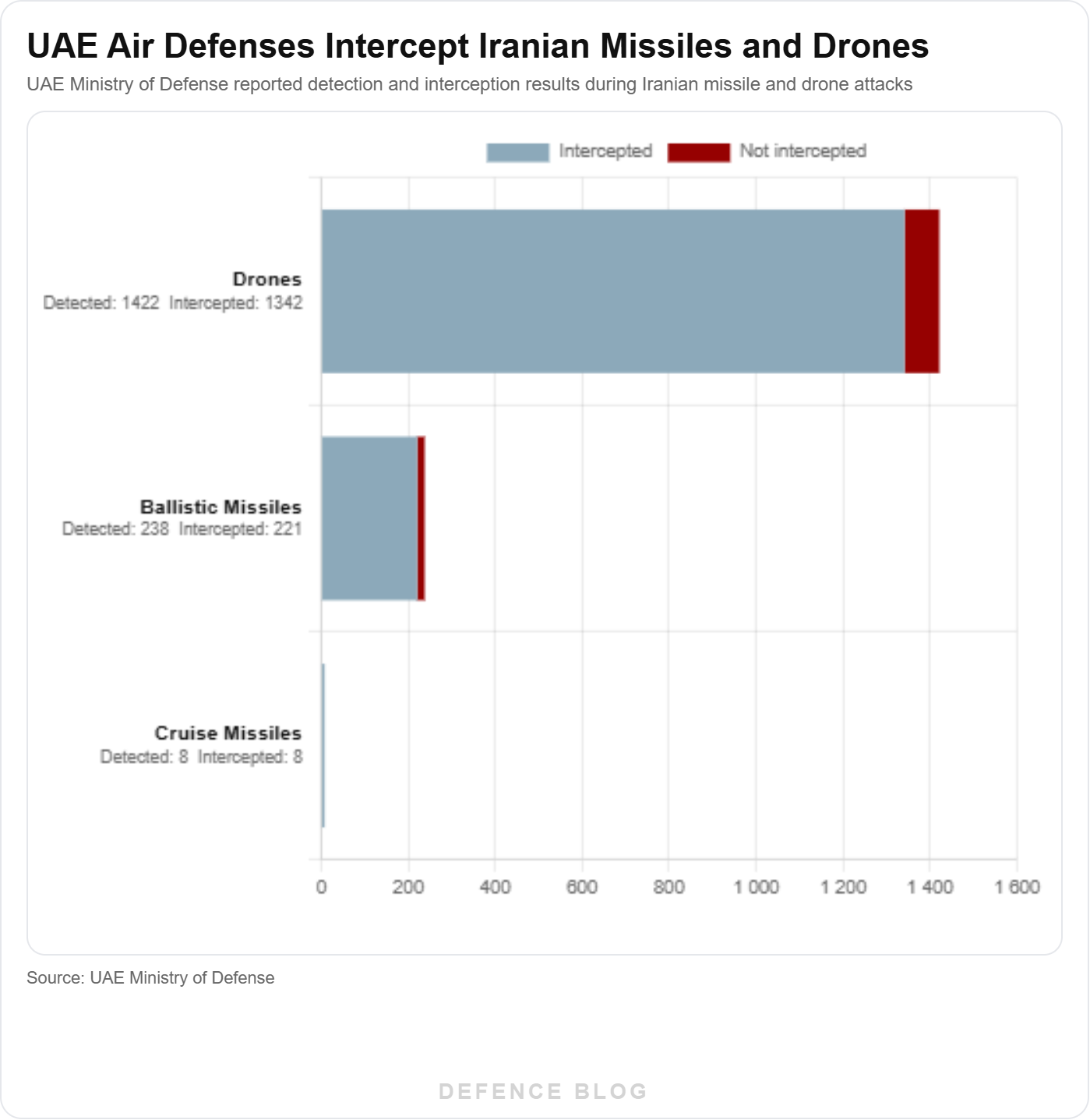
On October 5 and 6, 2026, the U.S. State Department approved a series of potential deals exceeding $2.27 billion for Egypt, Kuwait, and the United Arab Emirates. The most notable part is a deal approaching $1 billion for the UAE, and a package of about $400 million for the repair and refurbishment of Kuwaiti Patriot missiles, while the remainder goes to Egypt for guided munitions and equipment. These figures do not appear to be merely routine sales. They came after months of Iranian attacks and drones, at a time when Riyadh and its partners are trying to build regional defense arrangements that do not rely entirely on the United States.
Reports from Breaking Defense, Al Arabiya English, and Anadolu Agency indicated that the packages include guidance equipment for missiles, maintenance support for Patriot systems, guided missiles and munitions, in addition to Javelin anti-tank weapons. Other reports mentioned that the UAE's share is particularly related to guided air munitions, including APKWS II, while the Kuwaiti request is linked to the rehabilitation of the Patriot stockpile after use and operational pressure.
The UAE Buys Time, Not Independence
The UAE is the most advanced of the three countries in operating a multi-layered air defense network. It has Patriot, THAAD, advanced radars, and command and control networks, and has accumulated experience in intercepting missiles and drones. However, purchasing additional munitions does not solve the fundamental problem. Air defense is not a missile launcher standing alone in the desert; it is a continuous capability consisting of radar, communication, target discrimination, stockpiling, training, and then maintenance.
In my estimation, the UAE deal grants Abu Dhabi important tactical flexibility and reduces the risk of running out of munitions in a prolonged wave of attacks, but it does not provide operational independence. The UAE still needs the United States for software, spare parts, threat updates, and perhaps in some early warning loops. Owning an American system does not mean having the full capability to use it without its owner. This is the gap that typically appears after the contract signing ceremonies are over.
Kuwait Pays the Price of Deferred Readiness
The Kuwaiti Patriot package reveals a harsher aspect. Repairing the missiles and returning them to service is necessary, but it also means that readiness is not the result of purchasing the system once. The interceptor missile has a storage life, the battery needs inspection, operating crews require recurrent training, and the software and radars do not remain valid for a full decade without updates.
Kuwait occupies a sensitive position between Iraq, Iran, and the Gulf, and cannot treat air defense as a commodity to be purchased when necessary. If the missiles have been consumed or malfunctioned during recent waves of attacks, the problem is not just the number of missiles, but the supply cycle and decision-making. A system that is repaired after months does not protect an oil facility today. And as any military personnel who has served in the region knows, readiness that is not tested in peacetime does not suddenly appear in war.
Cairo in the Deal for Reasons Beyond the Gulf
Including Egypt in the package expands its geographical significance. Cairo is not a Gulf state, but it has a direct interest in the security of the Red Sea and the Suez Canal, and its military and political stability affects shipping lines and operations against armed groups in the region. Additional guided missiles and munitions may enhance the Egyptian forces' ability to strike specific targets, but the real value will depend on intelligence, reconnaissance, and fire coordination, not on the number of boxes arriving from the United States.
Washington, for its part, sells capability and re-establishes its influence simultaneously. After rising calls for collective defense arrangements among Saudi Arabia, Turkey, and Pakistan, the United States does not want to leave a vacuum that allows these arrangements to become an alternative to it. Therefore, the deals come in the form of assistance to partners, but they also serve as a political message that the backbone of regional air defense is still American.
Gulf Deterrence Between Equipment and Integration
The real threat is not a single missile, but a composite attack that combines ballistic missiles, low-flying drones, electronic jamming, and repeated strikes on oil infrastructure. Patriot and THAAD are capable of intercepting significant targets, but they do not cover everything, nor can they alone protect every facility, port, and airport. Cheaper munitions, such as APKWS II missiles, may be useful against some drones, but their use requires a detection and classification network that prevents firing an expensive missile at a cheap target.
The problem, then, is the capability triangle that Gulf states have long neglected. The equipment is present, but training is uneven, national institutions do not exchange data quickly enough, and chains of command remain fragmented. Spending $2.27 billion may increase the number of possible interceptions, but it does not automatically build a joint air defense command or a regional maintenance force. The buyer owns the platform, the manufacturer owns the knowledge, and the threat owns the time.
Sources and Implications
- Breaking Defense, October 5, 2026, on missile guidance packages and repairs of Patriot and Javelin for Middle Eastern partners.
- Al Arabiya English and Anadolu Agency, October 5, 2026, on U.S. approval of potential deals worth $2.27 billion for Egypt, Kuwait, and the UAE.
- The Times of Israel and The Arab Weekly, October 5 and 6, 2026, on the UAE's $1 billion deal and Kuwait's $400 million package.
- Army Recognition, October 5, 2026, on the program to repair Kuwaiti Patriot missiles after months of missile and drone attacks.
The conclusion is not that the Gulf is buying a lot of weapons, as this has been known for decades, but that it is still purchasing parts of capability in installments after a crisis occurs. Between the desire for independent deterrence and the need for maintenance, munitions, and American data, the hardest question remains unanswered in Washington, Riyadh, Abu Dhabi, and Kuwait together: Do these deals build a regional defense, or merely extend the lifespan of dependence on the external supplier?
The U.S. Department of State approved potential arms sales worth $2.27 billion to Egypt, Kuwait, and the UAE on October 5-6, 2026. The UAE is set to receive nearly $1 billion in additional munitions, while Kuwait's package focuses on repairing Patriot missiles. This move underscores the Gulf's reliance on U.S. defense support amid rising regional tensions.
- U.S. approved $2.27 billion in arms sales to Egypt, Kuwait, and UAE.
- UAE's deal includes nearly $1 billion for additional munitions.
- Kuwait's package is approximately $400 million for Patriot missile repairs.
- Egypt's inclusion in the deal reflects its strategic interest in regional security.
- The sales come amid heightened regional tensions and Iranian threats.