
U.S. Delays Arms Sales to Taiwan in 2026, PLA Shifts Focus to Military Production Capacity Amid Taiwan Strait Pressure Test

U.S. Delays Arms Sales to Taiwan Until 2026, PLA's Taiwan Strait Pressure Test Shifts to Military Production Capacity
On September 24, U.S. Secretary of State Rubio stated that the arms sales to Taiwan have been delayed due to the United States' own weapon production capabilities. This statement is more worthy of analysis than the question of "whether to sell or what to sell": Washington is incorporating Taiwan Strait deterrence into the production schedule of U.S. military-industrial capacity, rather than merely into diplomatic commitments. Almost simultaneously, Taiwan reported the detection of 11 Chinese military vessels and 2 military aircraft activities; Reuters also reported that the PLA conducted its second "combat patrol" within a week. The numbers themselves do not constitute a war forecast, but indicate that pressure testing is still ongoing.
The Bottleneck in Arms Sales is Primarily Production Capacity, Not Political Will
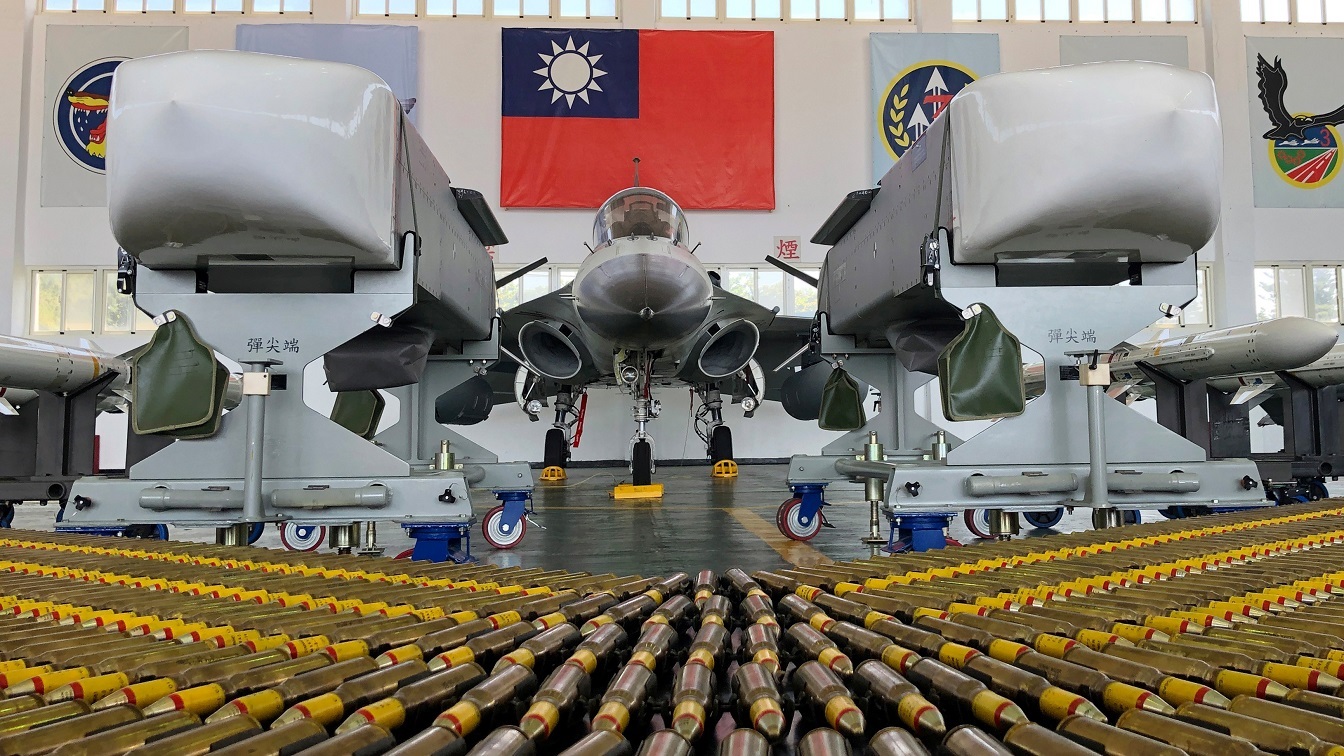
Rubio's remarks corroborate the previous backlog of U.S. arms sales to Taiwan. What Taiwan needs is not just a few showcase pieces of equipment, but ammunition, drones, long-range firepower, and communication equipment that can sustain consumption in high-intensity conflicts. The constraints faced by U.S. military-industrial companies include the recovery cycles of supply chains for engines, rocket propellants, guidance systems, shells, and electronic components. Even if the president approves an order, delivery may take years.
In simple terms, the numbers on the arms sales list do not equate to the combat capability in the hands of the Taiwanese military. If production lines cannot stably convert orders into inventory, there will be a time lag in deterrence. For Taiwan, this time lag may affect defense plans; for the PLA, it serves as a window to observe whether the U.S. can translate political commitments into sustained supplies.
The PLA is Not Gaining a "Delay Dividend"
The Beijing defense department requested "extreme caution" regarding arms sales to Taiwan before the meeting between Trump and Xi Jinping, indicating that China views arms sales as a highly sensitive issue before the summit. However, the U.S. delay should not be simply understood as a relaxation for the PLA. The activities of vessels and aircraft around the Taiwan Strait have shifted from one-time demonstrations to normalized surveillance, escorting, and maritime formations. The PLA needs to train to continuously create military pressure and collect data on Taiwan's responses without immediately escalating conflicts.
The public numbers of 11 warships and 2 aircraft are not sufficient to determine the mission of the formations, which may include routine patrols, coordination between the Coast Guard and Navy, or intelligence reconnaissance of Taiwan and external support routes. The truly valuable indicators are the frequency of activities, routes, duration, whether they cross Taiwan's so-called "median line," and the operational costs of Taiwan's air and naval forces.
The Taiwan Strait Military-Industrial Competition Enters the "Delivery Speed" Phase
The author believes that the most important variable in the coming year is not which side announces a larger arms sales amount, but who can replenish consumables and repair capabilities faster. If Taiwan relies on U.S. platforms but lacks local ammunition, spare parts, and decentralized maintenance systems, advanced equipment may become expensive yet fragile "first-strike assets." The PLA also cannot focus solely on the number of vessels and missiles; it must address logistics support at sea, joint command, and spare parts consumption in high-intensity continuous operations.
The constraints of U.S. military-industrial capacity add a layer of uncertainty to the Taiwan Strait: it may reduce short-term delivery speed, but it will also push Washington to incorporate allied supply chains, pre-positioned inventories, and unmanned systems production into an overall layout. The real unanswered question now is whether the delay in arms sales will weaken deterrence in the Taiwan Strait or force the U.S. and Taiwan to establish a wartime supply system that does not rely on a single delivery chain more quickly?
Sources
U.S. Secretary of State Rubio announced a delay in arms sales to Taiwan due to production capacity issues, impacting military readiness. Concurrently, the Chinese military has increased its activities in the Taiwan Strait, with 11 ships and 2 aircraft reported. This situation raises concerns about Taiwan's defense capabilities and the reliability of U.S. support.
- U.S. Secretary of State Rubio announced a delay in arms sales to Taiwan due to U.S. production capacity issues.
- The Chinese military has been conducting regular activities in the Taiwan Strait, including the presence of 11 ships and 2 aircraft.
- The delay in arms sales may affect Taiwan's defense capabilities and U.S. political commitments.