
US investors warm to Ukrainian defense startups—but export laws slow cooperation
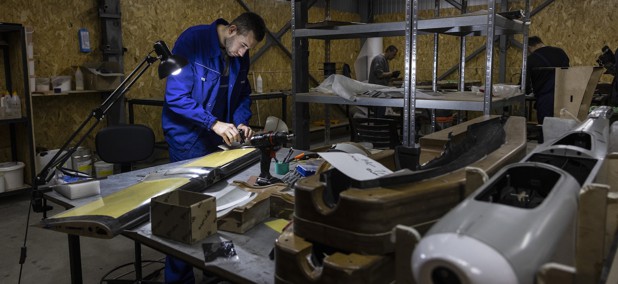

Ukrainian companies are attracting American private investment and Pentagon interest with award-winning drones, but U.S. export laws threaten to squelch efforts to develop technology, company execs said Friday.
U.S. investors are pouring money into Ukrainian defense startups. For example, Swarmer, which makes AI software to control multiple drones simultaneously, saw its shares rise 700 percent on its first day of trading.
Meanwhile, a joint effort of Ukraine’s SkyFall and UK’s SkyCutter won the initial competition of a series held by the Pentagon’s Drone Dominance effort, which would grow by several thousand percent to $54 billion under the White House’s 2027 budget plan. Several other Ukrainian drone companies took spots on the leaderboard.
“We're excited about that,” Undersecretary of Defense for Research and Engineering Emil Michael told reporters at the Pentagon last week. “These companies now that have gotten big and had a lot of expertise, if they're willing to do it in America, because we want to control our own supply chains. I think that's excellent.”
But Ukrainian companies say U.S. export-control laws make it all but impossible to build cutting-edge defense products in the United States. Take Airlogix, which has a joint venture with Auterion, a U.S.-German company, to develop and build drones in the United States. The company has found it can take four months to obtain licenses to send its U.S.-developed tech to Ukraine, even if the tech it developed in the United States is based on information from the Ukrainian front line.
“That is not fast, I would say. We iterate with a pace of weeks, not months,” Airlogix CTO Mykola Mazur said Friday at the Special Competitive Studies Project AI+ Expo in Washington D.C.
This should be remedied, perhaps by granting Ukraine a special status, like designating Taiwan a major non-NATO ally, said John Hardie, the deputy director of the Foundation for Defense of Democracies’ Russia Program.
Failure to lift the barriers will slow the Pentagon’s efforts to buy the best drone and counter-drone technology, which increasingly comes from Ukraine, said Joseph Gagnard, who runs U.S. field operations for Swarmer.
“There has to be some sort of middle ground where the government says, ‘OK, this technology is born in Ukraine. This technology was shared with the United States for our benefit. There's got to be some sort of expedited ITAR process that is going to encourage countries to do this—Ukraine specifically,’” Gagnard said Friday.
U.S. investors are actively investing in Ukrainian defense startups, particularly in drone technology, despite challenges posed by U.S. export laws. Companies like Swarmer have seen significant financial success, while officials express the need for expedited processes to facilitate technology transfer. The Pentagon's Drone Dominance initiative is expected to expand significantly under the 2027 budget plan, highlighting the importance of Ukrainian innovations in U.S. defense efforts.
- U.S. investors are significantly investing in Ukrainian defense startups.
- Swarmer's shares rose 700% on its first trading day.
- U.S. export laws hinder the development of defense products in the U.S.
- Airlogix faces delays in obtaining licenses for technology transfer to Ukraine.
- The Pentagon's Drone Dominance effort is projected to grow to $54 billion.