
U.S.-Iran Negotiations on the 26th Approaching: Will There Be Military Action Against Iran? The White House is Already in Disarray.
A new round of negotiations between the United States and Iran will be held on February 26 in Geneva, Switzerland. According to informed sources on the 23rd, U.S. presidential envoy Wittekov and Trump’s son-in-law Jared Kushner will also participate in these talks. However, the U.S. military actions on the same day seem to be intensifying, with the USS Ford aircraft carrier having arrived at a key base in the eastern Mediterranean, and multiple U.S. military aircraft landing at Israel's Ben Gurion Airport. The U.S. State Department also officially announced the beginning of a "withdrawal" of personnel from Lebanon.
At this time, the internal decision-making circles in the U.S. regarding military action against Iran seem to be gradually "surfacing" in terms of differences.
U.S. military deployments around Iran continue
On February 23 local time, informed sources revealed that U.S. presidential envoy Wittekov and Trump’s son-in-law Jared Kushner plan to travel to Geneva, Switzerland this week to participate in the new round of U.S.-Iran negotiations on the 26th.
While preparing for the new round of negotiations, the U.S. is also tightening its military pressure.
U.S. Navy's largest aircraft carrier arrives at a key base in the eastern Mediterranean
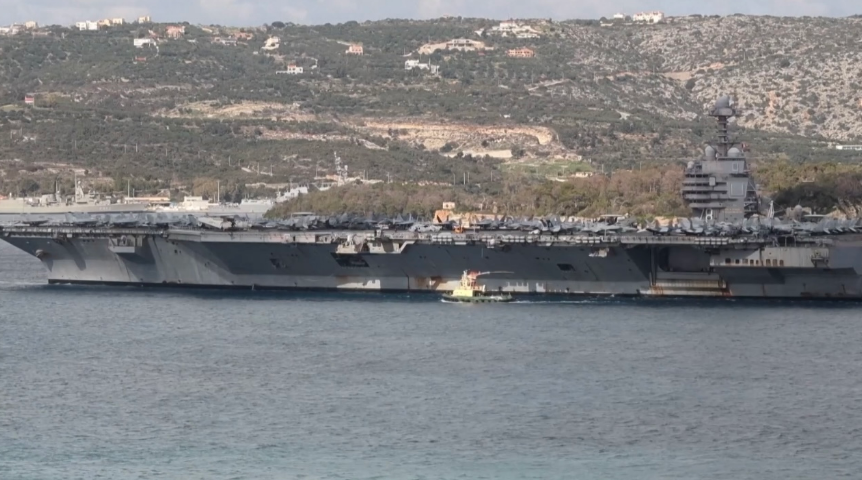
The U.S. Navy's largest aircraft carrier, the USS Gerald R. Ford, arrived at Souda Bay in Crete, Greece on February 23. The island hosts a NATO military base and is an important strategic facility for Greece, the U.S., and NATO in the eastern Mediterranean.
Multiple U.S. military aircraft land at Israel's Ben Gurion Airport
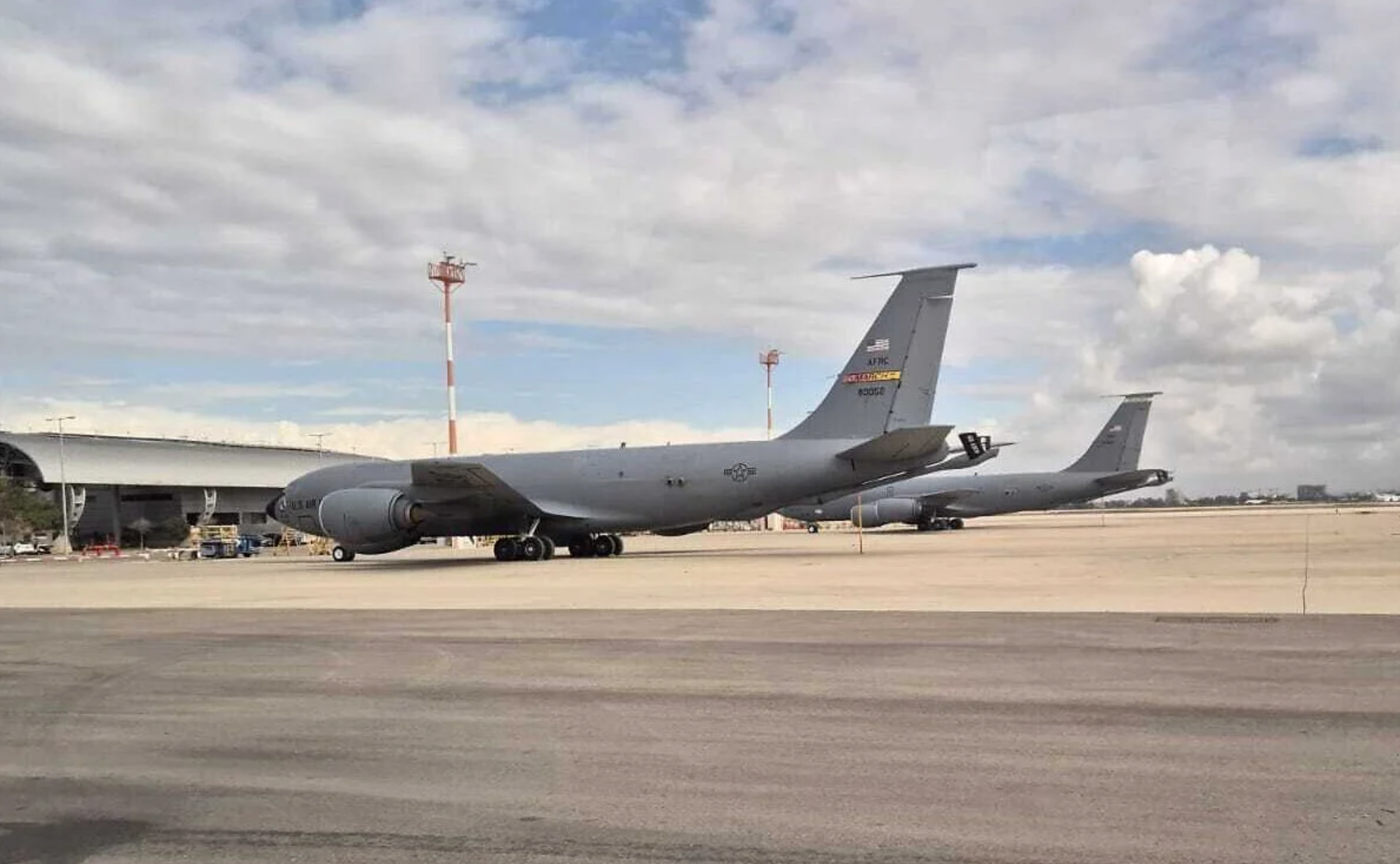
On February 23, a reporter from the Central Station learned that several U.S. air refueling and transport aircraft had landed at Ben Gurion International Airport in Tel Aviv, Israel, within the past day. It is currently unclear whether these military aircraft are using the airport as a temporary stop.
Regarding the deployment of U.S. military forces at Israel's main civilian airport, Israeli officials have not yet made any comments.
U.S. Embassy in Lebanon withdraws personnel and suspends all routine consular services
On February 23 local time, the U.S. State Department raised its travel warning for Lebanon to "Level 4: Do Not Travel," which is the highest level of warning regarding travel advice. On the same day, citing the security situation in Beirut, the State Department ordered the evacuation of non-emergency government personnel and their families from the U.S. Embassy in Lebanon.
The U.S. Embassy in Lebanon stated on February 23 that, out of caution, the embassy in Beirut has suspended all routine consular services and strongly advised American citizens in Lebanon to leave immediately.
Trump reportedly considers a preliminary strike against Iran
Earlier, U.S. sources indicated that President Trump had told his advisors that he "leans towards conducting a preliminary strike (against Iran) in the coming days," followed by a larger military strike in the coming months to force Iran to "yield" and reach an agreement as per U.S. demands.
Public information shows that since mid-January, approximately 300 U.S. military transport flights have been made to the Middle East, with about 130 of those flights used to transport air defense systems, exceeding the 115 flights before the U.S. airstrikes on Iranian nuclear facilities in June 2025. Additionally, the number of deployed refueling aircraft has also significantly increased.
Trump and U.S. military leadership reportedly have differing opinions
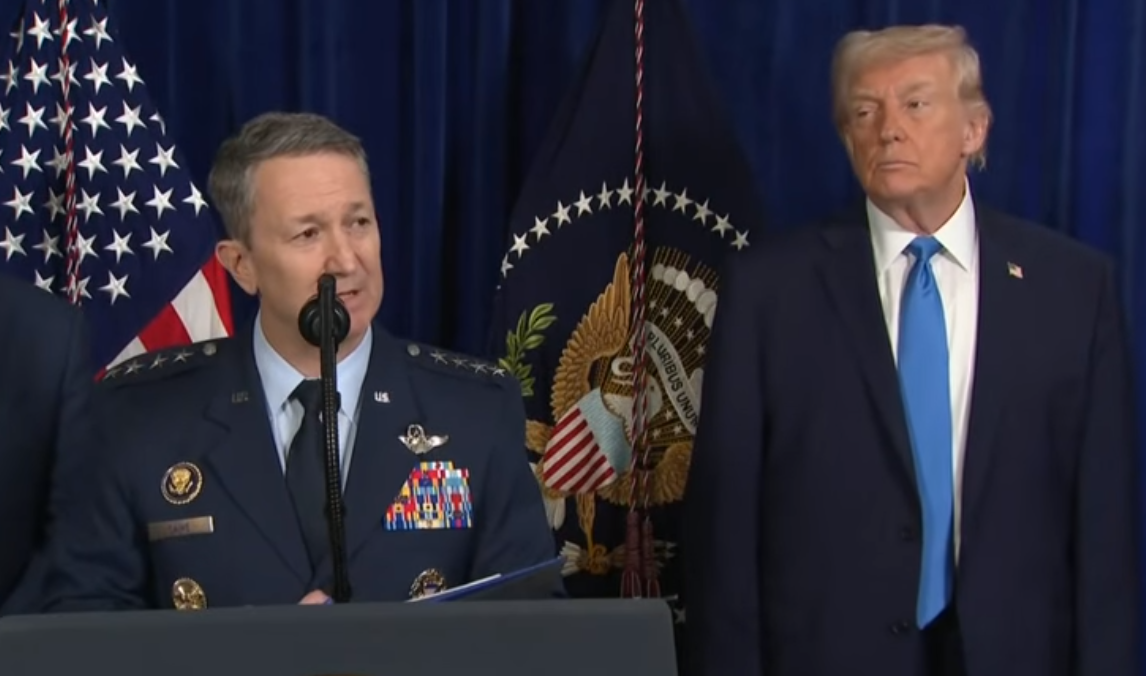
Differences regarding military action against Iran seem to be gradually "surfacing" within the U.S. decision-making circles. On February 23 local time, two informed sources revealed that Chairman of the Joint Chiefs of Staff Gen. Dan Kane has been advising President Trump and senior officials that military action against Iran could pose significant risks, especially the possibility of getting embroiled in a protracted conflict.
Later that day, Trump took to social media to deny reports about Gen. Kane opposing military action against Iran, stating that such claims are "100% wrong."
Other U.S. sources indicated that regarding a military strike against Iran, Vice President Vance has expressed doubts about its risks and complexities, but he denied opposing the military strike plan. Secretary of State Rubio has taken a wait-and-see attitude, neither strongly advocating for a strike nor clearly opposing it.
Additionally, according to previous reports, Trump held a meeting in the White House Situation Room on the 18th to discuss plans for striking Iran, with attendees including Vance, Rubio, Kane, and CIA Director Ratcliffe.
Experts: There is still great uncertainty about whether the U.S. and Iran can reach a preliminary agreement
Iran warns against using negotiations as a deceptive tactic
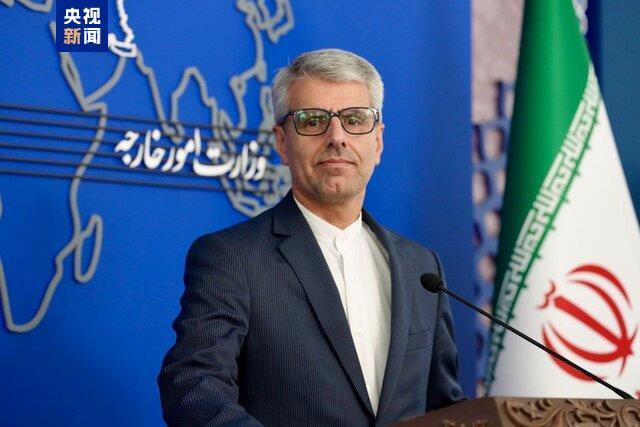
On February 23, Iranian Foreign Ministry spokesman Baghaei stated at a weekly press conference that there is no such thing as a "limited strike"; any attack on Iran, regardless of its scale, will be regarded as aggression, and the initiator will bear the corresponding consequences.
Baghaei stated that the Iranian armed forces remain vigilant, closely monitoring developments while engaging in diplomatic negotiations. He emphasized that any negotiations that impose burdens or preset positions will not yield results. If Iran determines that the other party is using negotiations as a deceptive tactic, it will take corresponding measures in response.
Iran reportedly willing to make concessions on nuclear issues
There are reports that Iran is prepared to make concessions on nuclear issues.
According to an unnamed Iranian official, to facilitate a nuclear agreement between Iran and the U.S., Iran is willing to seriously consider making certain concessions, including sending half of its existing high-enriched uranium abroad, diluting the remaining portion, and participating in the establishment of a civil uranium enrichment consortium, in exchange for U.S. recognition of Iran's "peaceful uranium enrichment rights" and the lifting of economic sanctions against Iran.
He also stated that in the economic negotiations, the U.S. will have the opportunity to make significant investments in Iran's oil industry and reap benefits.

However, according to Qin Tian, deputy director of the Middle East Studies Institute at the China Modern International Relations Research Institute, there is still great uncertainty about whether the U.S. and Iran can reach a preliminary agreement. Qin pointed out that although Iran has shown greater flexibility on nuclear issues, this concession from Iran is clearly not a comprehensive "compromise to the U.S.," and thus the U.S. will not significantly lift sanctions against Iran.
Qin also stated that, in addition to whether the U.S. and Iran can reach a compromise within the already very tight time window, the uncertain factor of Israel must also be taken into account. Israel is not willing to see a thaw between the U.S. and Iran, nor will it want to see an agreement reached between the two. At the same time, Israel may also mimic the previous "12-day war" (a direct military conflict between Israel and Iran from June 13 to 24, 2025) by launching a military strike against Iran first, thereby dragging the U.S. into war.
Israeli Prime Minister: If attacked by Iran, we will retaliate with unimaginable force
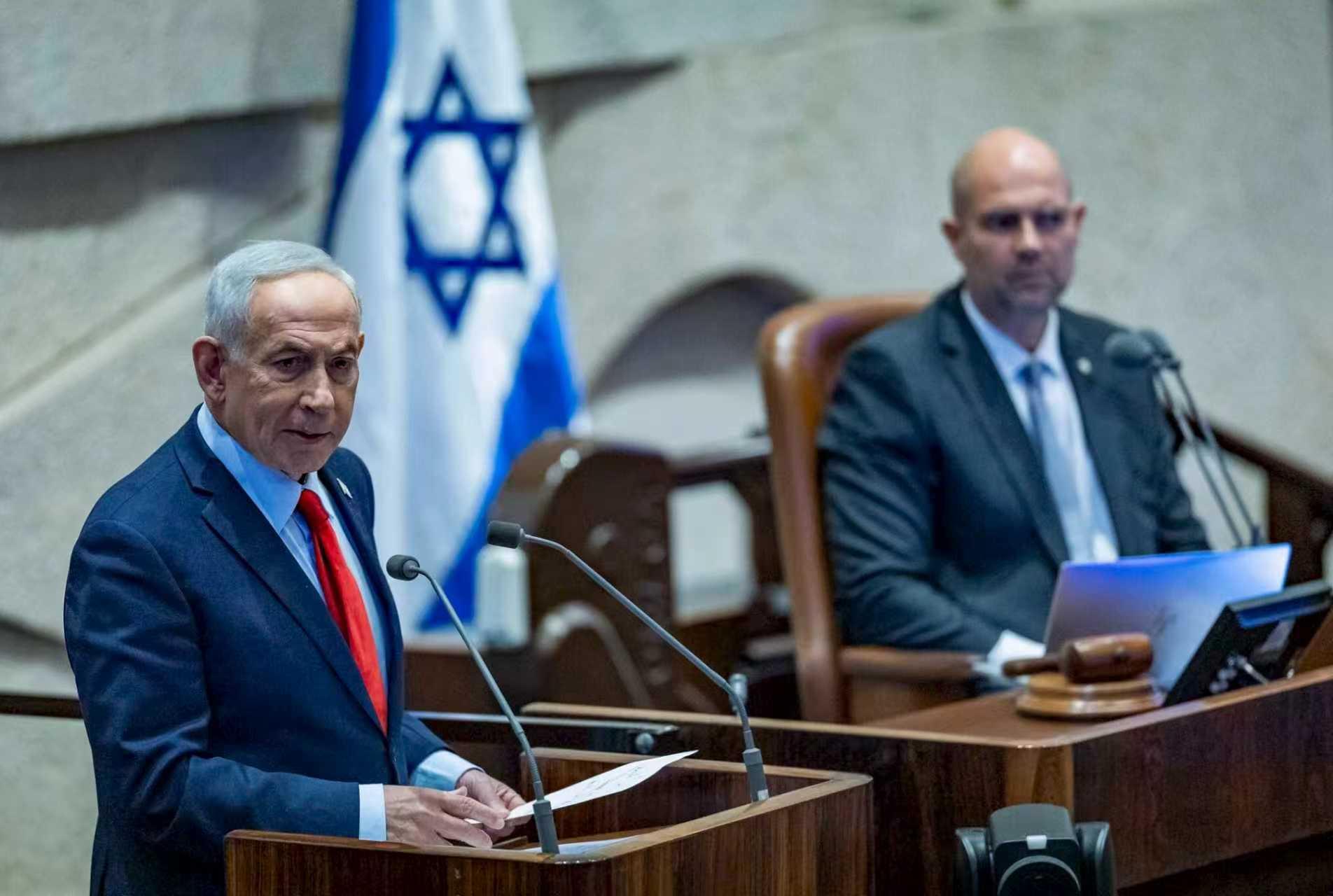
On February 23 local time, Israeli Prime Minister Netanyahu stated in a speech to the Knesset, "No one knows what will happen tomorrow. I have made it clear to Iran that if they commit the gravest error in history and attack Israel, we will retaliate with unimaginable force."
Reporters: Liang Hui, Zhu Lei, Liu Xiaoqian, Yang Mingjiao
U.S. military aircraft landed at Ben Gurion Airport in Israel on February 23, 2023, as the USS Gerald R. Ford arrived at Suda Bay, Crete. The U.S. Embassy in Lebanon ordered the evacuation of non-emergency personnel amid rising tensions. President Trump is reportedly considering a preliminary military strike against Iran, while internal military leadership expresses concerns about the risks involved. Negotiations between the U.S. and Iran are set for February 26 in Geneva.
- U.S. military aircraft landed at Ben Gurion Airport in Israel.
- The USS Gerald R. Ford arrived at Suda Bay, Crete.
- The U.S. Embassy in Lebanon ordered non-emergency personnel to evacuate.
- Trump is considering a preliminary military strike against Iran.
- Internal U.S. military leadership expresses concerns about military action against Iran.