
U.S. Media Reports: Pentagon Requests Emergency Additional $200 Billion in Military Funding
[Global Times Comprehensive Report] The large-scale military operations launched by the United States and Israel against Iran not only have a direct impact on the world but have also begun to backfire on the U.S. military itself, which is facing the "gold-devouring beast" of war. The Washington Post reported on the 18th that the Pentagon has requested the White House's approval for a funding request exceeding $200 billion to finance the latest Middle East conflict.
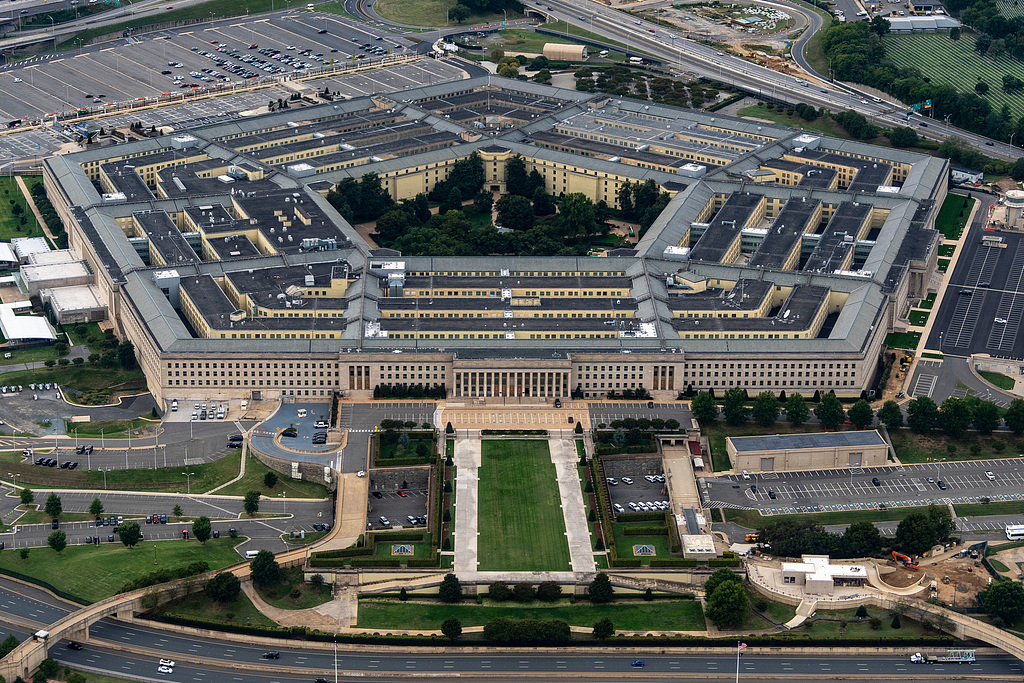
According to reports, three informed sources revealed that the $200 billion figure far exceeds the cost of the U.S. launching this large-scale airstrike operation and will be used to urgently increase the production of key weapons, which have been used by U.S. and Israeli forces to strike thousands of targets over the past three weeks.
It is currently unclear how much funding the White House will ultimately request Congress to approve. A senior White House official stated that the likelihood of the Pentagon's funding request being approved by Congress is low. It is reported that over the past two weeks, the Pentagon has submitted several different funding requests. This funding request is likely to trigger a fierce political struggle in Congress, as public reaction to military actions against Iran has been "tepid," with strong criticism from the Democratic Party. The report also mentioned that U.S. President Trump promised to end American adventurism abroad during his campaign and frequently criticized the Biden administration for approving large sums of money to fund the Russia-Ukraine conflict. According to the U.S. Special Inspector General for Afghanistan Reconstruction, Congress had approved about $188 billion for the Russia-Ukraine conflict as of last December.
Turkey's Anadolu Agency reported on the 19th that White House economic advisor Kevin Hassett stated that U.S. expenditures on the attack against Iran exceeded $12 billion in the two weeks prior, while The New York Times cited a Pentagon briefing indicating that expenditures in just the first six days exceeded $11.3 billion. Earlier, the U.S. government expressed complete confidence in the existing inventory of U.S. military weapons. Hassett stated that the U.S. "has ample weapon reserves" and may not need additional budget approval from Congress at all. U.S. Secretary of Defense Hegses also refuted reports of U.S. ammunition shortages, claiming that the U.S. has "almost unlimited" reserves of precision-guided bombs.
However, the actual situation differs from the statements of White House officials. A recent report from the Center for Strategic and International Studies shows that in the first phase of U.S. military operations against Iran, $3.7 billion was spent in the initial 100 hours, highlighting the enormous economic burden of high-intensity modern warfare.
According to reports, based on information released by the U.S. and Israel, approximately 2,600 munitions were used to strike nearly 2,000 targets within Iran at the beginning of the military operations. Multiple waves of attacks utilized long-range standoff weapons such as cruise missiles, targeting Iran's command centers and air defense systems. These missiles are among the most expensive weapons in the U.S. arsenal. The cost of a Tomahawk cruise missile is about $3.6 million; relatively cheaper guided bomb components, such as Joint Direct Attack Munitions (JDAM), cost about $80,000.
In addition, the high-intensity attacks by the U.S. military against Iran have also resulted in ongoing equipment losses. In the initial 100 hours, over 200 aircraft participated in airstrike missions, costing about $125 million; the Navy deployed two aircraft carriers, several destroyers, and submarines stationed in the Arabian Sea and the Persian Gulf, costing about $64 million; artillery and air defense forces in the region spent about $7 million.
Intercepting Iranian missiles and drones has also imposed a significant financial burden on the U.S. military. The report from the Center for Strategic and International Studies states that Iran launched hundreds of ballistic missiles and thousands of drones, forcing the U.S. and its allies to utilize expensive missile defense systems such as the Patriot and THAAD. Analysts estimate that the initial costs for just the air defense interception systems could reach as high as $1.7 billion.
Furthermore, the U.S. military has also suffered considerable combat losses during the conflict. Just three F-15E fighter jets were shot down by friendly fire over Kuwait, with estimated replacement costs reaching $309 million. At least six MQ-9 Reaper drones were shot down, with an average cost of about $30 million each; several THAAD missile defense systems were partially damaged in Iranian missile and drone attacks, with a complete THAAD system costing about $2.7 billion, and the radar alone valued at $500 million; additionally, several U.S. military bases in the Middle East suffered significant damage.
The Washington Post stated that Mark Cancian, a senior advisor at the Center for Strategic and International Studies, said, "We have made some estimates of the war costs based on currently limited data, but there is a great deal of uncertainty. Congress wants to know what the final bill will be. If the White House requests additional funding, it will trigger a fierce political struggle, as all anti-war sentiments will focus on this request."
The report also mentioned another issue: having funding does not necessarily mean that the U.S. military's ammunition consumption problem can be quickly resolved. The speed at which the U.S. defense industry can increase production is limited by the number of available workers, production facilities, and the key materials needed to manufacture the military's most sophisticated weapons. Elaine McCusker, former acting inspector general of the Pentagon and current defense budget analyst at the American Enterprise Institute, stated, "Simply pouring large amounts of money into the industrial base does not necessarily yield faster results, but if you don't do it, you certainly won't get results faster." (Chen Shan)
The U.S. military conducted extensive airstrikes against Iranian targets, utilizing approximately 2,600 munitions on nearly 2,000 sites. The Pentagon requested over $200 billion in emergency funding for these operations, with expenditures exceeding $12 billion in the initial weeks. Significant equipment losses were reported, including F-15E jets and drones, amid ongoing logistical challenges.
- Pentagon requested over $200 billion for military operations in the Middle East.
- U.S. military spent over $12 billion in the first two weeks of operations against Iran.
- Initial airstrikes involved approximately 2,600 munitions targeting nearly 2,000 sites in Iran.
- Significant costs incurred from using advanced weaponry like Tomahawk missiles and air defense systems.
- U.S. military faced equipment losses, including F-15E jets and drones.