
U.S. Military Typhon to Remain in Japan in June 2026, Changing Southwest Defense Firepower Design
 Tanaka Takashi
US Military Typhon to Remain in Japan in June 2026, Changing the Firepower Design for Southwest Defense
Connecting the place names of Kanoya, Amami, Miyako, Ishigaki, and Yonaguni in Kagoshima Prefecture with a single line makes the nature of this Japan-U.S. exercise quite clear. The Ground Staff Office announced on May 22 that Resolute Dragon 26 will be conducted from June 20 to 30. The locations will include facilities in Oita, Saga, Kumamoto, Kagoshima, and Okinawa, including ports and airports. The Joint Staff Office also announced on the same day that the Self-Defense Forces will participate in the U.S.-hosted Valiant Shield 26 from June 22 to July 1. On paper, this is an exercise plan. However, in practice, it is a task of placing the firepower, transportation, and command and control of the southwestern region onto a single timetable.
Significance of Typhon's Presence
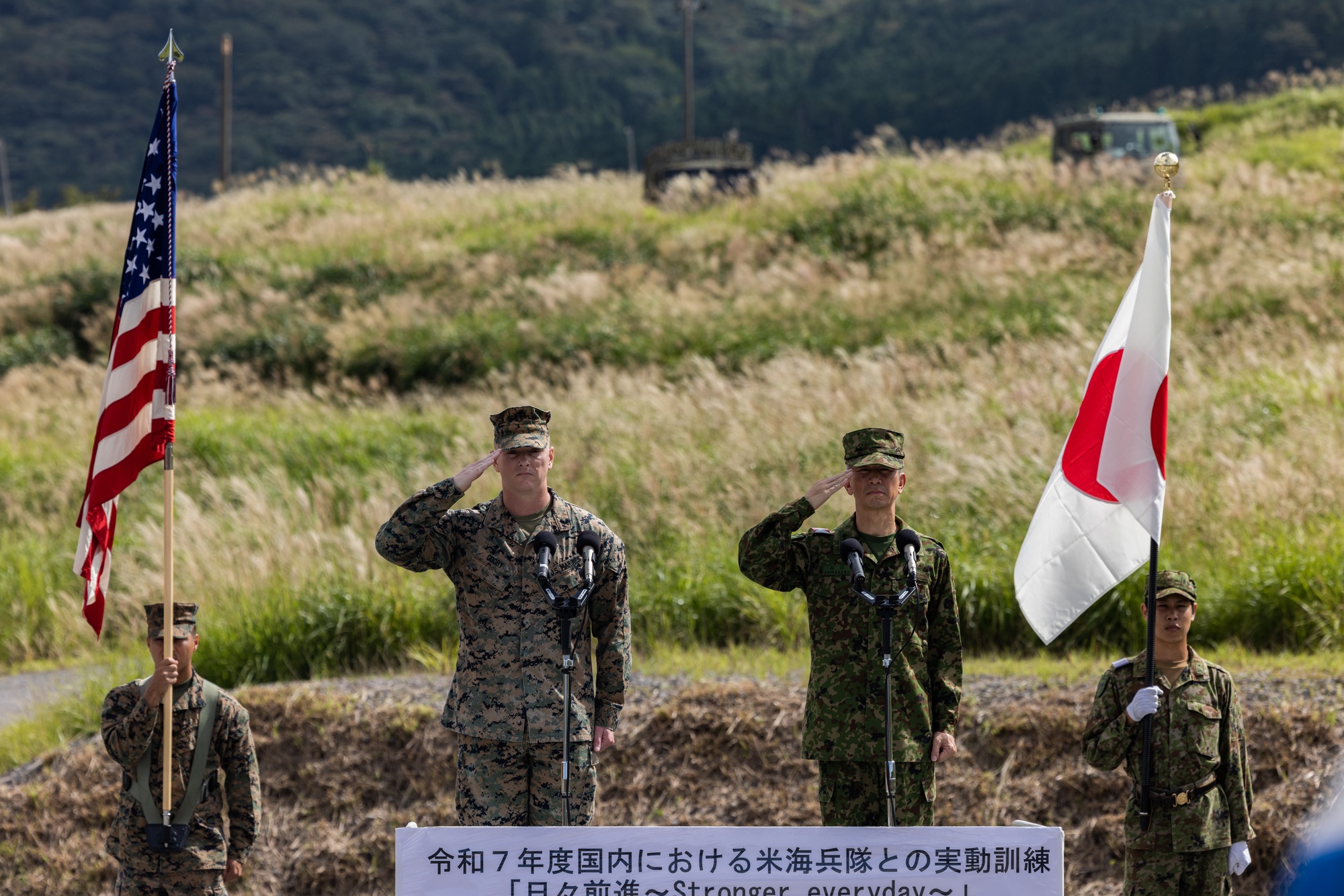
According to USNI News, during Valiant Shield 26, the U.S. Army's containerized Typhon missile system is expected to be deployed in Japan and, unlike last year, will likely be stored at U.S. military bases in Japan after the exercise. Typhon is a medium-range firepower platform capable of launching Tomahawk cruise missiles and SM-6s, and while it is not as agile as HIMARS, it can influence strait management with its range and variety of munitions. The Japanese announcement does not detail Typhon itself. This silence is not unnatural. The more politically sensitive the equipment, the more it is placed between the lines of the exercise name and the participating units.
What is important is the shift from mere "temporary deployment" to "storage." Even if the launchers are not constantly deployed, if ammunition, maintenance equipment, communication procedures, and security protocols remain in Japan, the speed of future deployments will change significantly. During the Cold War, the Japan Maritime Self-Defense Force emphasized not just the number of vessels but also how many hours it could re-deploy from bases. Applying the same thinking to land-based long-range firepower, the presence of Typhon has greater operational significance than political announcements.
Distributed Operations Tested in the Southwestern Islands
The participating units in Resolute Dragon 26 include the Western Army Command, the 8th Division, the 15th Brigade, the Japan Maritime Self-Defense Force's Transport Group, and the Air Self-Defense Force's Air Support Group. On the U.S. side, the 3rd Marine Expeditionary Force, the 12th Marine Regiment, and the 1st Marine Air Wing will participate, along with the U.S. Army's 3rd Multi-Domain Task Force, the 7th Fleet, and the 18th Air Wing. This is not just a land exercise. It is training that simultaneously utilizes ports, airports, island areas, air support, and maritime transport to move small units and firepower quickly.
The U.S. Marine Corps HIMARS training at Camp Fuji in May should also be viewed in this context. The AP reported that during this training, HIMARS demonstrated a "shoot-and-scoot" operation, changing position after firing. In recent battlefields, stationary firepower is easily detected due to drones and satellite surveillance. Therefore, in the defense of the southwestern islands, the ability to shoot before being discovered and move to another island or concealment area is more critical than simply placing strong firepower.
Time Lag with Chinese Naval Activities
The June 12 update of USNI Western Pacific Pulse reported that Chinese naval vessels Nanjing and Hanzhou were confirmed about 70 kilometers southeast of Okinawa and subsequently operated east of Kikaijima. It was also reported that the East Zhao-class intelligence-gathering ship Kaiyousei sailed east through the Osumi Strait and entered the Pacific Ocean. This is too coincidental to dismiss as mere navigation just before the exercise. It is believed that the Chinese side is observing not only the deployment of Japan-U.S. firepower but also the frequency of port usage, air transport, and communications.
For Japan, the troublesome aspect is that strengthening deterrence simultaneously increases information exposure. If training is not made public, the alliance's intentions will not be conveyed. However, if made public, the routes of movement, coordination with local governments, road closures, and base security habits will also be visible to the adversary. According to Tanaka's view, this year's focus is not just on the presence of Typhon. It is about what remains in Japan after the exercise and which procedures become standardized as routine operations in peacetime.
Remaining Political Weaknesses
Militarily, the overlap of Typhon, HIMARS, and the Self-Defense Forces' Type 12 surface-to-ship guided missile capability will change calculations regarding maritime traffic routes heading toward the Taiwan Strait, Bashi Channel, and Luzon Strait. However, within Japan, explanations regarding long-range firepower are still insufficient. The Ministry of Defense explains it as "deterrence," but what residents want to know is which equipment will be placed, for what duration, and under what safety management.
The blind spot in southwest defense may not be the range of missiles but rather the range of political consensus. Launchers can be moved in a matter of days. Understanding from residents and coordination with local governments cannot be moved so easily.
Sources: Japan Ground Self-Defense Force release on Resolute Dragon 26; Japan Joint Staff release on Valiant Shield 2026; USNI News on Japan-U.S. exercises and Typhon deployment; USNI Western Pacific Pulse; AP report on HIMARS live-fire training in Japan.
The U.S. Army's Typhon missile system is set to be deployed and stored in Japan following joint military exercises in June 2026. The exercises, involving U.S. and Japanese forces, will take place across multiple locations including Kagoshima and Okinawa. This deployment marks a shift from temporary to permanent storage of advanced missile systems, enhancing regional defense capabilities.
- U.S. Army's Typhon missile system will be stored in Japan after exercises in June 2026.
- Joint exercises Resolute Dragon 26 and Valiant Shield 26 will take place in various locations in Japan.
- The exercises involve multiple military units from both the U.S. and Japan.
- The Typhon system can launch Tomahawk missiles and SM-6, impacting regional security dynamics.
- Chinese naval activities were observed near the exercise locations, indicating heightened regional tensions.