
US munition stockpile ‘especially problematic’ in a war with China, report warns

Source: Task & Purpose
Loading...Strong SignalCredibility: 81%
Report Content
The U.S. military has “probably used” one-half to two-thirds of its missile defense interceptors in its war with Iran, a congressional report found. The report’s authors warned the diminished stockpile could hamstring U.S. efforts if it had to defend Taiwan against a Chinese invasion.
The dire warnings about the U.S. munitions were included in a Congressional Budget Office report released Tuesday. The report was produced in response to a request for cost estimates related to combat operations against Iran by Rep. Brendan F. Boyle (D-Pa.), ranking member of the House Committee on the Budget.
“The main opportunity cost of the conflict thus far has been the large expenditure of missile defense interceptors, which will leave the United States with a reduced inventory of interceptors for several years. The shortfall would become especially problematic if a conflict arose with an opponent whose arsenal included large numbers of ballistic and cruise missiles,” officials wrote in the report. “(The People’s Republic of China, PRC, maintains such an arsenal, which would probably play a major role in a military conflict involving Taiwan.)”
According to the report, the “large expenditure” of missile defense interceptors, like Patriot and Terminal High Altitude Area Defense (THAAD) interceptors, would reduce the U.S. inventory for years to come. The report also found that replacing those “costly” interceptors “would probably take at least five years” and that a war with China could then put even “greater stress” on U.S. defense efforts.
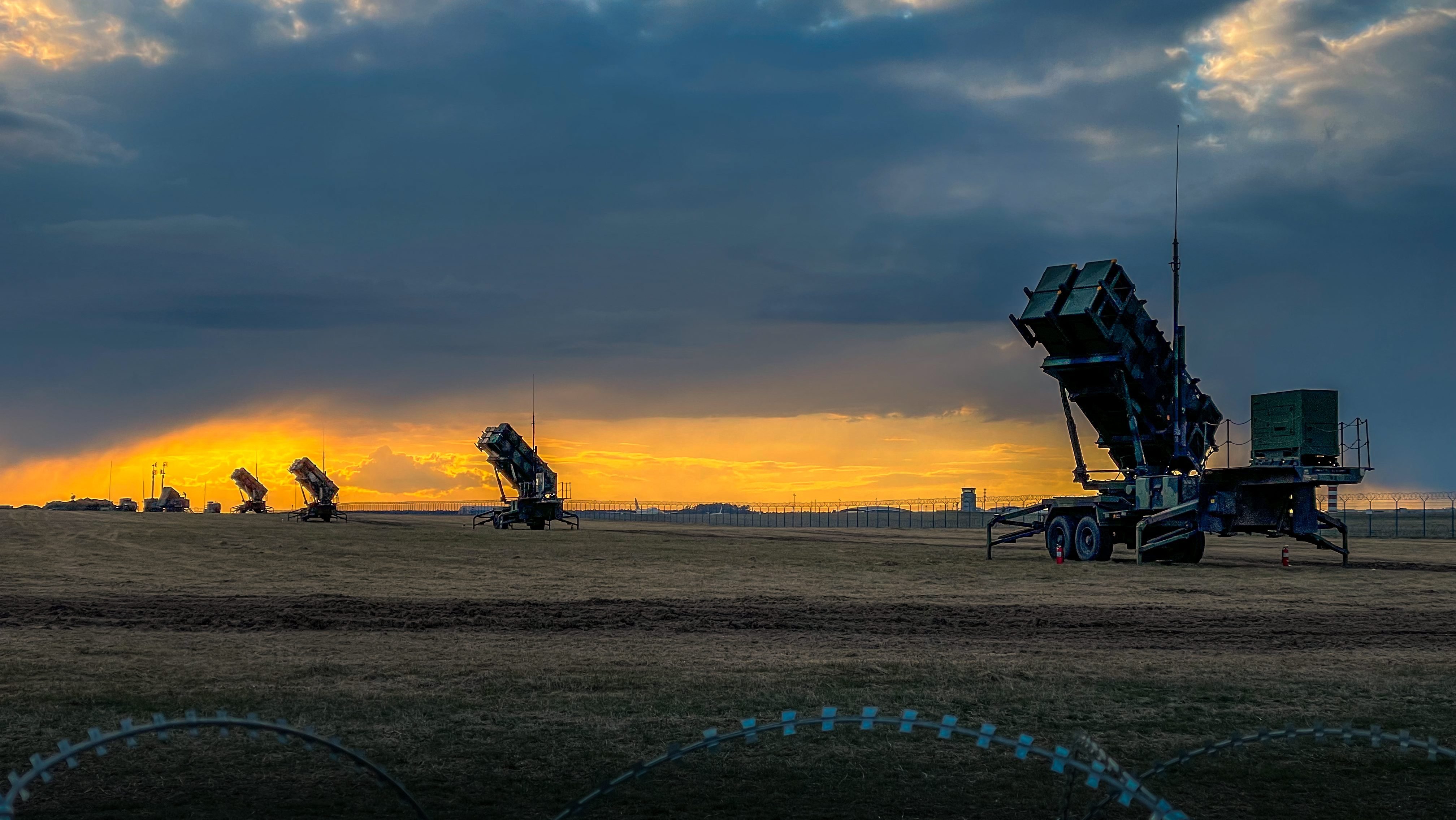 A Congressional Budget Office report found that the U.S. has used a significant portion of missile interceptors in its war with Iran. Army photo by Sgt. 1st Class Christopher Smith.
The warning comes as the Defense Department has increasingly emphasized missile defense as its primary deterrent against China in the Indo-Pacific region. The U.S. shifted missiles from the region earlier this year to support operations in the Middle East, moving missile defense systems from South Korea.
U.S. missile interceptors have mostly been used to defend U.S. and allied assets in the region against Iranian ballistic missile attacks, according to the Congressional Budget Office. The report specified that “significant quantities” of some munitions were used to defend Israel against Iranian ballistic missiles in June 2025.
The Wall Street Journal reported that the U.S. used nearly 150 THAAD interceptors and 80 Standard Missile-3s during those defense operations.
“Operation Epic Fury has reduced those inventories further,” officials wrote. Operation Epic Fury is the Pentagon’s name for initial combat operations against Iran that reportedly ended in May. In July, the DOD began referring to Iran war-related combat as “overseas operations.”
Top Stories This Week
Reports of dwindling munitions stockpiles have circulated within the defense community for months, with many experts expressing concerns as early as the first week of the war. In August, President Donald Trump dismissed these concerns about the severe depletion of munition reserves and told Forbes the U.S. had “massive amounts” of munitions, and manufacturers are already producing more.
Overall, the Congressional Budget Office estimated that the Iran war has cost the Defense Department nearly $38 billion, a higher number than the Pentagon Inspector General’s $33.4 billion total released Monday. Part of the estimate included efforts to replenish U.S. stockpiles of interceptors, land-attack cruise missiles and other munitions used in operations with Iran between Feb. 29 and Aug. 1. The report estimated that it could cost as much as $21.7 billion to replace those munition supplies.
However, those figures came with a caveat, with the authors noting that estimates “are subject to considerable uncertainty” because the Department of Defense did not respond to requests for information. Instead, congressional analysts “relied” on government databases and public reports, according to the report.
The cost estimate doesn’t include base damages, routine Navy ship deployments, future equipment maintenance, medical supplies, or other personnel costs. Nor does it include future estimates for post-separation healthcare costs impacting veterans afflicted by injury after operations in Iran have ended.
Combat operations against Iran are ongoing, which also means Defense Department costs associated with the war are still increasing. The budget office estimated that another month of conflict could equate to between $2 and $3 billion per month, depending on the level of intensity, which includes strikes and combat flight hours.
The post US munition stockpile ‘especially problematic’ in a war with China, report warns appeared first on Task & Purpose.
Classification
Region
West Asia, East Asia & Pacific
Analytical Domain
Operational
Primary Category / Secondary Categories
Weapons & Equipment / Military Operations
Subcategory
Missile Usage
SALUTE Report
Size
Significant portion of missile defense interceptors used
Activity
U.S. military has used missile defense interceptors in combat operations against Iran, impacting readiness for potential conflict with China
Location
Iran · Taiwan
Unit
U.S. military
Time
Ongoing conflict since February 29, 2025
Equipment
missile defense interceptorsPatriot interceptorsTHAAD interceptorsStandard Missile-3s
Summary
The U.S. military has utilized a significant portion of its missile defense interceptors in ongoing operations against Iran, which may hinder its ability to defend Taiwan in the event of a Chinese invasion. The Congressional Budget Office warns that the depletion of these interceptors could take years to recover, with costs to replace them estimated at $21.7 billion. The report highlights the strategic implications of this depletion for U.S. defense capabilities in the Indo-Pacific region.
Key Facts
- U.S. has used 50-66% of its missile defense interceptors in the Iran conflict.
- The U.S. inventory of interceptors will be reduced for several years due to this usage.
- Replacing the used interceptors could take at least five years.
- The conflict with Iran has cost nearly $38 billion to the Defense Department.
- The U.S. has shifted missile defense systems from South Korea to support operations in the Middle East.