

Summary and Key Points: In March 1993, the US Navy attack submarine USS Grayling collided with the Russian Delta IV ballistic missile submarine Novomoskovsk while shadowing it in the Barents Sea, about 105 nautical miles north of Murmansk. The Russian boat carried 16 nuclear missiles.
The US Navy and Russian Navy Don’t Know the Cold War Is Over in 1993
During the Cold War, the Soviet Navy was the United States Navy’s most formidable competitor.
The Soviets maintained a sophisticated submarine fleet that NATO monitored as best it could.
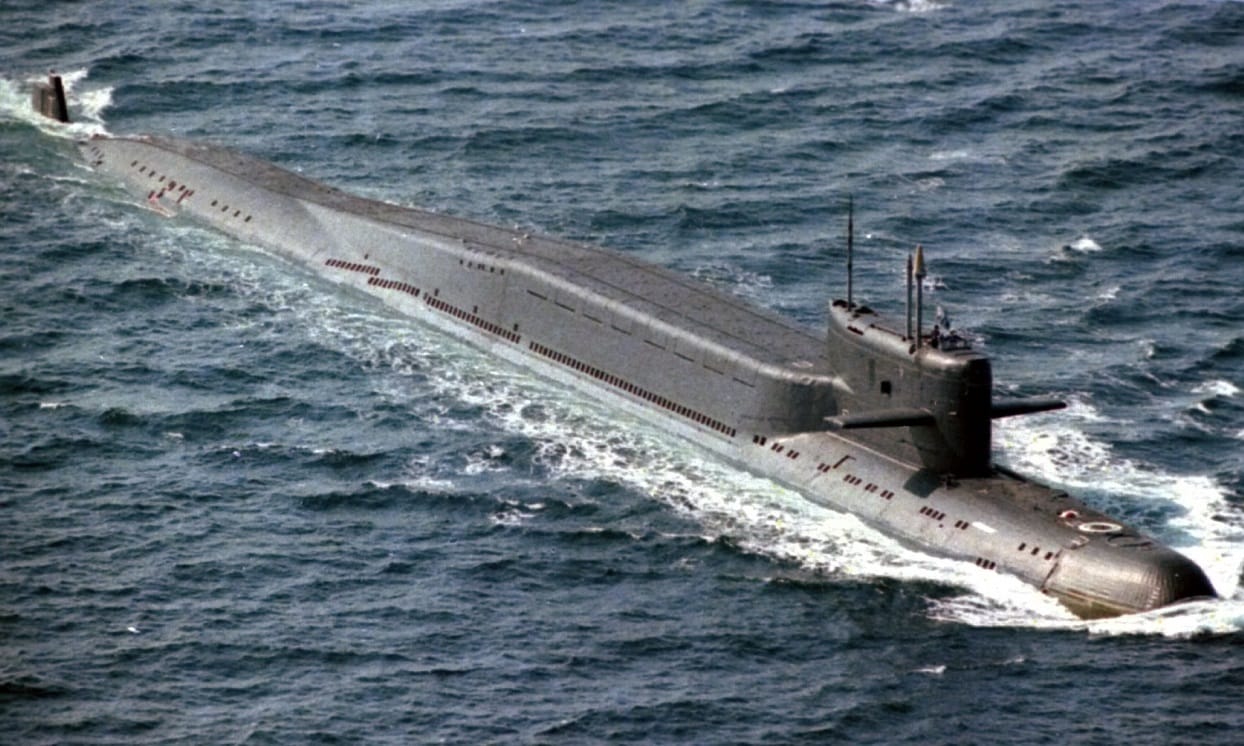
Image: Creative Commons.
After the Cold War ended, Russia inherited most of the USSR’s submarine inventory.
Despite the relaxed tensions, the U.S. continued to monitor the newly formed Russian Navy, especially its nuclear submarines.
However, modern submarines are difficult to track.
In one incident, an American submarine, the USS Grayling (SSN-646), was tracking a Russian Delta IV-class submarine, Novomoskovsk (K-407).
While on mission in 1993, Grayling lost sight of the Russian sub and collided with Novomoskovsk’s starboard bow.
Fortunately, neither ship sustained major damage, and both sides swept the incident under the rug without causing widespread panic.
An American Sub Collides With A Russian Ballistic Missile Sub
On March 20, 1993, an American attack submarine was shadowing Novomoskovsk in the Barents Sea north of Murmansk.
U.S. Cold War-era doctrine required its nuclear attack submarines (SSNs) in the North to track Soviet nuclear ballistic missile submarines (SSBNs) constantly and, in case the Cold War went hot, destroy them before the ship could launch its nuclear missiles.
Grayling was assigned to monitor the Delta IV-class SSBN Novomoskovsk as it conducted routine training in the Barents Sea.
While details of the incident are sparse, at around 12:46 A.M. (Eastern Time), both vessels were submerged about 105 nautical miles north of Murmansk.
Grayling apparently lost track of Novomoskovsk, leading to the collision.
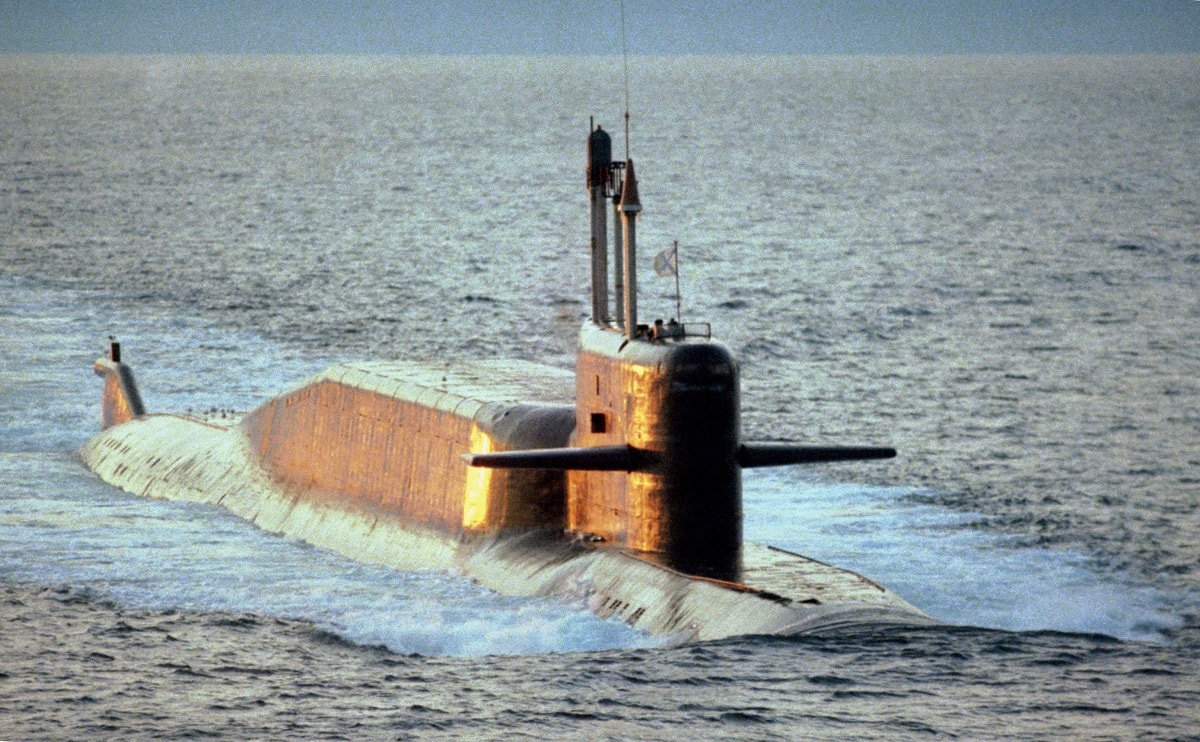
An aerial starboard bow view of a Russian Navy Northern Fleet DELTA IV class nuclear-powered ballistic missile submarine underway on the surface.
The American ships struck the Russian vessel’s starboard bow, causing minor damage to both ships. Fortunately, no one on either ship was injured.
The incident sparked outrage in the Russian Ministry of Defense, which issued a strongly worded statement but did not name the U.S. as the perpetrator. “The high command of the Russian Military Fleet expresses its extreme concern over the latest incident of dangerous maneuvering by foreign submarines in military training zones,” the Russian statement reads.
According to Russian Naval spokesman Aleksandr Mineyev, the ship in question was a less advanced Delta III-class submarine.
However, he was either mistaken or misquoted, as it was later confirmed that Grayling struck Novomoskovsk, a Delta IV-class submarine.
Mineyev also said the ship sustained a “small dent” and confirmed that no damage had affected the ship’s outer hull or nuclear reactor. The U.S., for its part, expressed regret over the incident and said it was investigating.
A Minor Collision That Could Have Been a Disaster
Some reports said Grayling miscalculated her speed and accidentally struck the Russian submarine. Others suspect that the American ship had lost sight of Novomoskovsk, leading to the collision.
The exact details are still unknown.
Either way, the incident could have been much worse. Grayling is a Sturgeon-class nuclear SSN, while Novomoskovsk was an SSBN.
Typically, Delta-IV class ships carry 16 RSM-54 nuclear ballistic missiles, each with four to ten separate 100 kT MIRV warheads.
While a more serious collision would not have caused the warheads to detonate, had the incident been more serious, it could have damaged the nuclear reactors aboard Novomoskovsk, resulting in potentially serious radiation hazards for the crew.
Fortunately, the incident caused no major damage to either ship or to Russian-American relations at the time.
Aside from the Russians’ strongly worded statement, the event largely stayed under the surface.
Under Boris Yeltsin, Russian-American relations were mostly positive, especially compared to the Cold War era.
With the Russian economy collapsing and the Cold War finally over, neither side saw the need to make a big deal out of a submarine collision that resulted only in minor damage.
Both ships were subsequently returned to their home ports, repaired, and returned to service. Grayling, originally commissioned in 1962, was retired in 1997.
Novomoskovsk, commissioned in 1992, remains active in Russia’s Northern Fleet.
The U.S. Submarine Force in the Immediate Post-Cold War Era
The immediate post-Cold War era brought ambiguity and uncertainty for the U.S. Submarine Service.
The Navy had spent the last decades preparing for a confrontation with the Soviet Union.
In the 90s and early 2000s, that threat suddenly disappeared, and nuclear attack submarines no longer seemed necessary.
Although Russia retained most of the USSR’s advanced submarines, defense planners in Washington assumed that Russia would eventually lose the ability to build and sustain them (given Russia’s economic state in the 90s, those assumptions were not entirely unfounded).
Despite this, the Navy still argued that a strong submarine force was necessary for U.S. national security, even if its mission had to adjust to the new world order.
Unfortunately, the post-Cold War peace dividend did not last long, as Russia soon began rebuilding and improving its submarine capabilities.
At the same time, Communist China emerged as one of the U.S. Navy’s main competitors, rapidly rising to power and quickly maturing its shipbuilding industry.
Now, the U.S. must contend with Russian and Chinese subs while recovering from post-Cold War budget cuts. The need for advanced nuclear submarines didn’t disappear with the Soviet Union and remains a top Navy priority.
About the Author: Isaac Seitz
Isaac Seitz, a Defense Columnist, graduated from Patrick Henry College’s Strategic Intelligence and National Security program. He has also studied Russian at Middlebury Language Schools and has worked as an intelligence Analyst in the private sector.