
Bulgaria Wants NATO Anti-Drone Systems After Black Sea Ships Sink
 Alexandra Reeves
Bulgaria Wants NATO Anti-Drone Systems After Black Sea Ships Sink
Bulgaria is asking NATO for anti-drone systems after unmanned attacks on commercial shipping in the western Black Sea. That sounds like a narrow request from a country with a small navy. It is actually a warning about the alliance's most awkward blind spot: NATO can defend air bases and capitals, but it still struggles to protect the moving, civilian infrastructure that keeps the Black Sea economy alive.
Reuters reported on October 16 that Bulgaria's defence minister said Sofia expects to join a NATO anti-drone initiative and has asked the alliance to strengthen capabilities in the Black Sea region. The request followed a sequence of attacks and accidents involving ships near the Bulgarian and Romanian coasts. Reuters separately reported that seven sailors were missing after a drone-hit ship, while earlier reporting said eleven crew members were missing after a vessel sank off Bulgaria. The precise attribution and target selection in each incident still require caution. The pattern, however, is already strategic.
The Black Sea Is Becoming a Drone Frontier
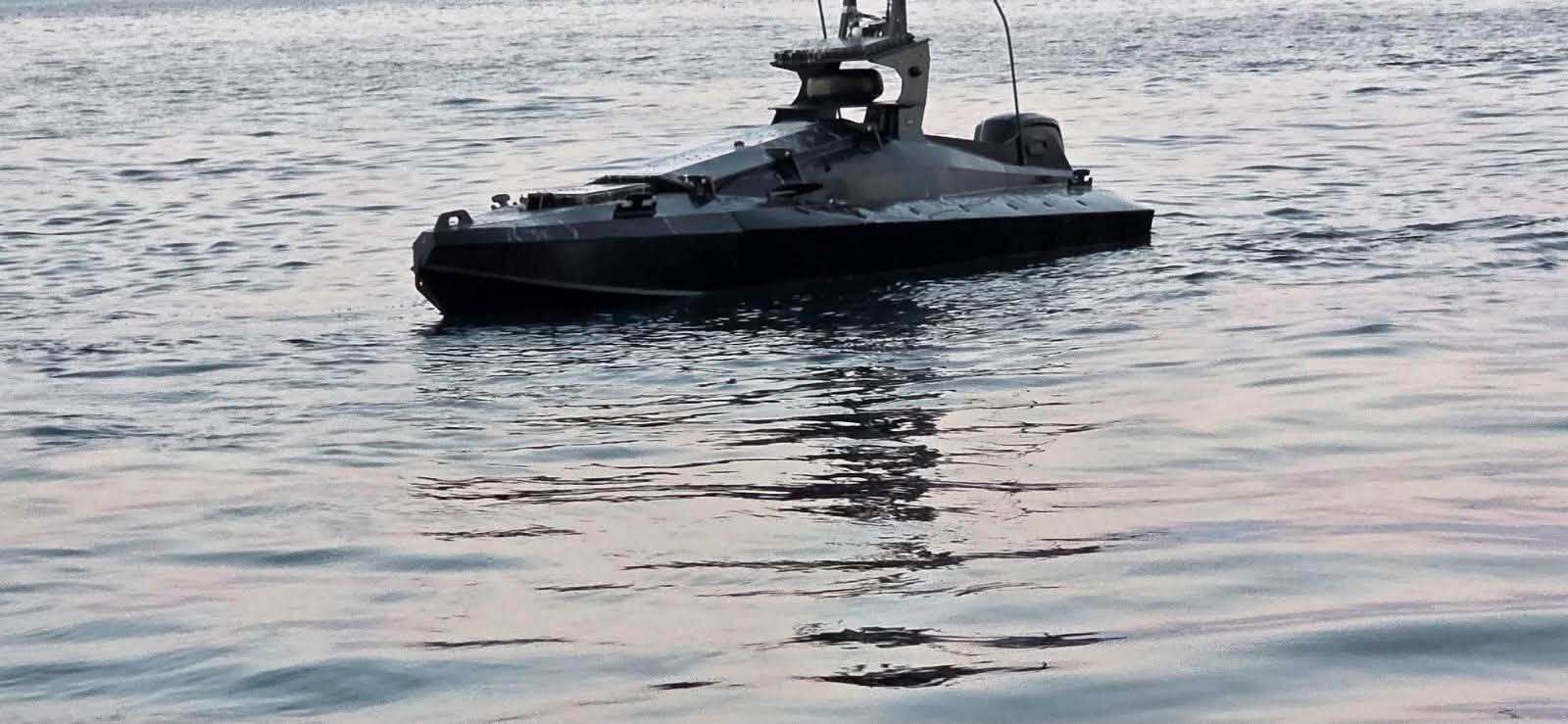
For three years, the Black Sea has been treated primarily as a missile and naval-drone theatre. That picture is now incomplete. Russian and Ukrainian forces have normalised the use of cheap unmanned systems against ports, ships, fuel routes and coastal infrastructure. A merchant vessel does not need to be sunk to create military effect. A near miss, a disabled engine or a crew evacuation can raise insurance costs, delay cargo and make a route politically fragile.
The likely threat mix is cheap, low-flying one-way attack drones such as the Shahed/Geran family, maritime drones, and improvised reconnaissance systems that help cue follow-on strikes. A Shahed-type aircraft is subsonic, carries a warhead in the rough 30-to-50 kilogram class, and is dangerous less because of exquisite accuracy than because it is inexpensive enough to launch in salvos. Against a vessel at sea, the economics become even nastier: a defender may spend a million-dollar interceptor or scramble a fighter to defeat a weapon that costs a fraction of that.
That is why Sofia is not simply asking for more missiles. A credible counter-drone shield needs layered sensors, electronic warfare, guns, short-range missiles and a command network that can distinguish a hostile drone from a civilian aircraft or a fishing vessel. The equipment problem is real, but the integration problem is worse.
NATO Has the Technology but Not the Coverage
NATO already possesses most of the ingredients. Romania operates modern air-defence assets and hosts allied forces. Bulgaria has radar coverage, NATO data links and access to allied air policing. Poland's recent fighter scramble during Russian strikes on western Ukraine showed how quickly a member state can move aircraft when the threat is visible and politically clear, as reported by Al Jazeera and other outlets.
But fighter aircraft are a poor answer to a persistent swarm. They are fast, expensive and designed to control airspace, not to patrol every harbour, shipping lane and energy facility. Traditional surface-to-air systems have the opposite problem: they are powerful but scarce, and their interceptors are too valuable to waste on every small drone. Electronic warfare can be cheaper, but it depends on line of sight, target resilience and an operator who knows whether jamming will cause a drone to crash or simply redirect it.
The missing layer is a distributed, affordable maritime counter-UAS network. It would combine coastal radars, passive sensors, naval and civilian tracking data, mobile gun systems, programmable ammunition and low-cost interceptors. It would also need rules for engagement in crowded waters. Shooting down a drone over the Black Sea is not technically the same as shooting one over a training range; the debris still has to land somewhere, and a false identification could trigger a diplomatic crisis.
Why This Is a NATO Problem
Bulgaria's request exposes a familiar alliance habit: treating exposed members as local consumers of security rather than as the front line of a shared system. The Black Sea is not a Bulgarian security issue. It connects Ukraine's war to Romania, Bulgaria, Turkey, the eastern Mediterranean and the sea lanes that carry grain, fuel and industrial cargo. An attack that starts outside NATO territory can still impose costs inside it without crossing the clean legal threshold that would force a collective military response.
That ambiguity is useful to Moscow. It permits pressure without the political risk of openly striking a NATO base. It also forces the alliance into a bad choice. Ignore repeated incidents and appear unable to protect its own periphery, or overreact to every drone and make escalation easier. A robust counter-drone network narrows that choice by making routine defence cheaper and more credible.
The political obstacle is burden sharing. Bulgaria is asking NATO for systems because national budgets and procurement pipelines are slow. Allies will say the answer is to buy more equipment. They will be right, but incomplete. A dozen disconnected national purchases will not create a Black Sea shield. The alliance needs common standards, shared air pictures, pre-positioned ammunition and a standing mechanism for protecting commercial shipping during periods of heightened threat.
The Signal to Watch Next
The next test is not whether NATO announces another initiative. It is whether the initiative produces hardware on the coast and a visible operating concept at sea. Watch for the deployment of mobile counter-UAS units, joint exercises involving commercial ports, and rules that allow civilian maritime authorities to pass tracks directly into military air-defence networks. Those details will show whether this is a real adaptation or another press release written after the damage.
Bulgaria's request is therefore more than a plea for equipment. It is evidence that the drone war is escaping the battlefield and turning the Black Sea into a test of alliance persistence. NATO can probably defeat individual drones. The harder question is whether it can protect a whole region from hundreds of cheap threats without bankrupting its magazines or escalating every incident. If Sofia has to ask after ships are already sinking, the alliance is learning the lesson late again.
Sources
- Reuters, “Bulgaria seeks NATO anti-drone systems, says defence minister,” October 16, 2026.
- Reuters, “Romania resumes search for seven missing sailors from drone-hit ship,” October 16, 2026.
- Al Jazeera, “Poland scrambles fighter jets as Russia strikes western Ukraine,” October 16, 2026.
- Associated Press reporting on the Black Sea ship incidents and rescue operations, October 2026.
Bulgaria requested NATO anti-drone systems in October 2026 following unmanned attacks on commercial shipping in the Black Sea. The defense minister emphasized the need for enhanced capabilities to protect civilian infrastructure amid rising drone threats. Recent incidents have resulted in missing sailors and highlighted NATO's challenges in defending the region. This request underscores the political and military implications of ensuring security in the Black Sea.
- Bulgaria is requesting NATO anti-drone systems after attacks on shipping in the Black Sea.
- Seven sailors are missing after a drone-hit ship, and eleven crew members were missing after another vessel sank.
- The Black Sea has seen increased use of drones by Russian and Ukrainian forces.
- NATO has the technology but lacks a comprehensive counter-drone strategy in the region.
- Bulgaria's request highlights the need for a collective NATO response to emerging threats.