
US Navy, Gecko Robotics surge AI maintenance contract to $300M

The U.S. Navy is ramping up its investment in artificial intelligence technology to streamline ship repairs and resolve maintenance logjams.
Gecko Robotics announced Tuesday that the Navy is increasing the value of its initial contract to up to $300 million — just six months after the company reached an initial agreement with the sea service.
“Gecko’s AI and robotic technology can save the U.S. Navy up to $8 million in repair costs per ship and return vessels to sea quicker by identifying structural issues up to 50 times faster than traditional methods — reducing inspections from months to days,” Gecko Robotics said in a release.
The initial contract began as a 5-year, $54 million indefinite delivery, indefinite quantity deal for Gecko to work on 18 ships assigned to the Navy’s U.S. Pacific Fleet.
The company uses drones, wall-climbing robots and fixed sensors to gather data on components, decks, welds and hulls.
That information, paired with AI tools, is used to identify current and potential structural issues that may remain hidden to the naked eye.
A key part of the new contract investment is Gecko Robotics’ Komodo machine system, which analyzes the health of deck coatings by scanning — eliminating the need to physically dig into them.
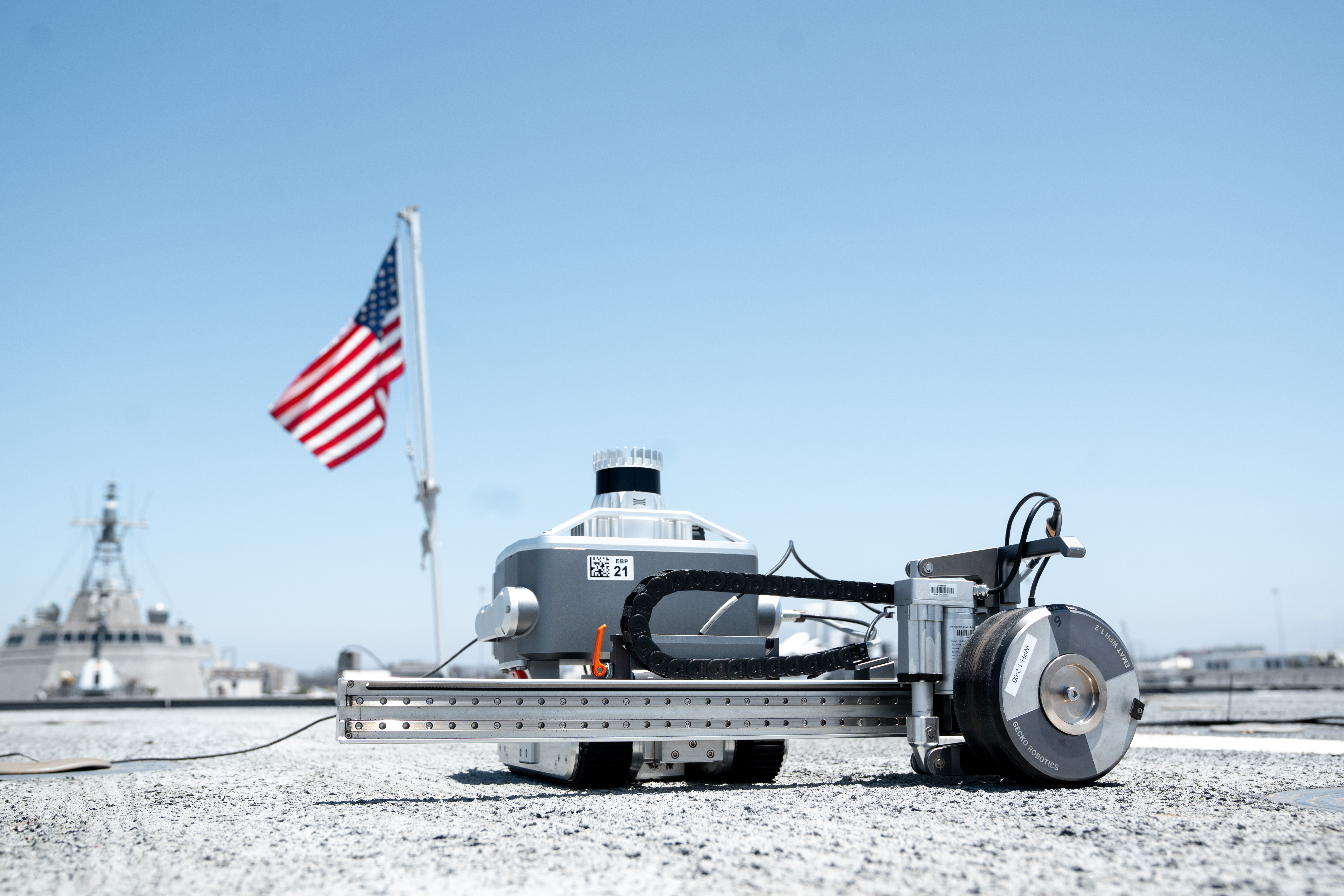
This allows the Navy to plan repairs and map out damaged areas before the ship enters dry dock, something that previously only occurred after the maintenance cycle began.
The Navy has consistently stated its goal of reaching 80% fleet readiness by 2027, despite criticisms of the service’s deployment capabilities.
The Government Accountability Office reported in December 2024 that readiness rates among the Navy’s amphibious warfare ships fell to 46% between 2011 and 2020, hindering Marine Corps deployment and training plans.
In August 2025, that rate reportedly dipped to just 41%, resulting in a more than five-month gap in Marine Expeditionary Unit deployments that year and further straining resources amid the Trump administration’s push to counter the illicit drug trade in Latin America and the Caribbean.
Chief of Naval Operations Adm. Daryl Caudle, who adopted the 80% goal from his predecessor Adm. Lisa Franchetti, laid out the major tenets for achieving the ambitious milestone.
“Achieving this requires shorter maintenance cycles, increased spare-parts availability, improved training pipelines and targeted upgrades across the fleet,” Caudle wrote for Military Times in December.
The U.S. Navy has ramped up its investment in artificial intelligence technology, increasing its contract with Gecko Robotics to $300 million for ship repairs and maintenance. This technology aims to save costs and improve readiness by identifying structural issues faster than traditional methods. The Navy's goal is to achieve 80% fleet readiness by 2027, addressing past challenges with maintenance and deployment capabilities.
- U.S. Navy increases AI maintenance contract to $300 million.
- Gecko Robotics' technology can save up to $8 million in repair costs per ship.
- Initial contract was for 5 years and $54 million for 18 ships.
- Navy aims for 80% fleet readiness by 2027.
- Readiness rates among amphibious warfare ships fell to 41% in August 2025.