
U.S. troops test upgraded Bumblebee interceptor on southern border
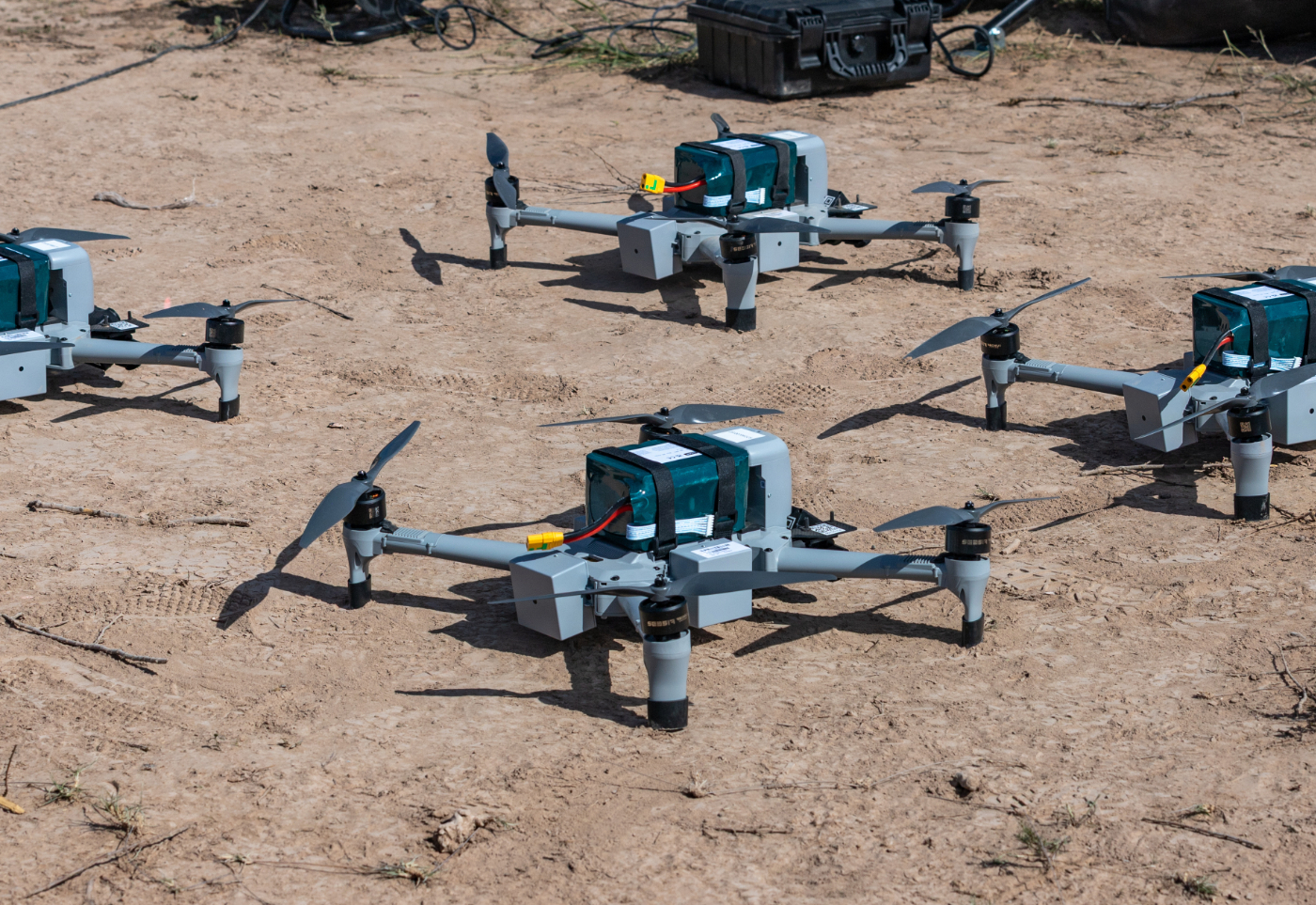
Joint Task Force-Southern Border has deployed the Bumblebee Version 2, an updated light interceptor drone that destroys hostile drones by ramming them, for testing near the U.S.-Mexico border, according to photos and captions released by the U.S. military.
The interceptors were staged near Chaparral, New Mexico, on Oct. 21, where service members and military contractors trained on operating them as part of the task force’s mission at Fort Bliss.
The military said the training is meant to expand interoperability and test ways of intercepting suspected illegal drone flights near the southern border under Operation Ardent Vanguard. It did not say how many Bumblebee V2 interceptors were sent to the task force or whether any have been used against real drones crossing from Mexico.
The Bumblebee V2 is built by Perennial Autonomy, a company founded by former Google CEO Eric Schmidt under the name Project Eagle. The same company makes the Merops interceptor, which has downed more than 4,000 Russian drones over Ukraine. The earlier Bumblebee V1 is also in service in Ukraine, where the country’s Unmanned Systems Forces have received tens of thousands of the drones, Janes reported in April. Ukrainian units use it at the tactical level against Russian FPV drones and Molniya strike drones.
The Bumblebee V2 is a first-person-view multirotor drone that carries no explosive. It flies into its target, and the impact disables both aircraft. The U.S. Army says the updated version has a three-camera array, improved gimbal rotation and AI-driven automatic target recognition, letting it track targets and carry out mid-air intercepts while an operator oversees the engagement.
The Army’s Joint Interagency Task Force 401 first bought the Bumblebee V2 under a $5.2 million agreement awarded Jan. 30, with deliveries starting in March. In May, the Pentagon awarded Perennial Autonomy a three-year contract worth up to $500 million for counter-drone interceptors. Army Rangers then assessed the Bumblebee V2 at Fort Benning, Georgia, in July as a homeland defense tool for protecting military bases and critical infrastructure.
Drone activity on the border has kept the task force busy. In the 30 days before a counter-drone exercise at Yuma Proving Ground, Arizona, that ended in late September, Joint Task Force-Southern Border recorded 378 drone detections, 75 turnbacks, 15 takedowns and one captured drone, Breaking Defense reported, citing task force commander Maj. Gen. Curtis Taylor. Officials said most of the drones were commercial quadcopters flown for reconnaissance in support of human trafficking.
The U.S. military has been testing several interceptors with roots in Ukraine for the border mission, and The Defence Blog has reported on how it put Ukraine-tested interceptor drones through border tests.
Content preview only. Full article available at source. View Full Article
Joint Task Force-Southern Border tested the upgraded Bumblebee Version 2 interceptor drones near Chaparral, New Mexico, on October 21. The drones are designed to disable hostile drones by ramming them, enhancing border security under Operation Ardent Vanguard. The military reported significant drone activity in the area, primarily related to reconnaissance for human trafficking.
- Bumblebee Version 2 interceptor drones are being tested near the U.S.-Mexico border.
- The testing occurred on October 21 near Chaparral, New Mexico.
- The drones are designed to intercept and disable hostile drones by ramming them.
- Joint Task Force-Southern Border is involved in the operation under Operation Ardent Vanguard.
- The U.S. military has recorded significant drone activity related to human trafficking in the area.