
USS Benfold's Blackout Proves the Pacific Fleet Has No Spare Destroyers
 Marcus Chen
USS Benfold's Blackout Proves the Pacific Fleet Has No Spare Destroyers
USS Benfold (DDG-65) went dark in the South China Sea on July 24, when a generator casualty left the Arleigh Burke-class destroyer drifting without power for four days. The Navy's recovery plan was not a rescue ship. It was contracted tugboats, a repair team flown down from Japan, and a tow to Subic Bay. Power came back on July 30. The ship reached Yokosuka on Aug. 8 and is only now back in service, roughly three weeks after one generator problem took a forward-deployed destroyer off the board.
The Ship Went Dark
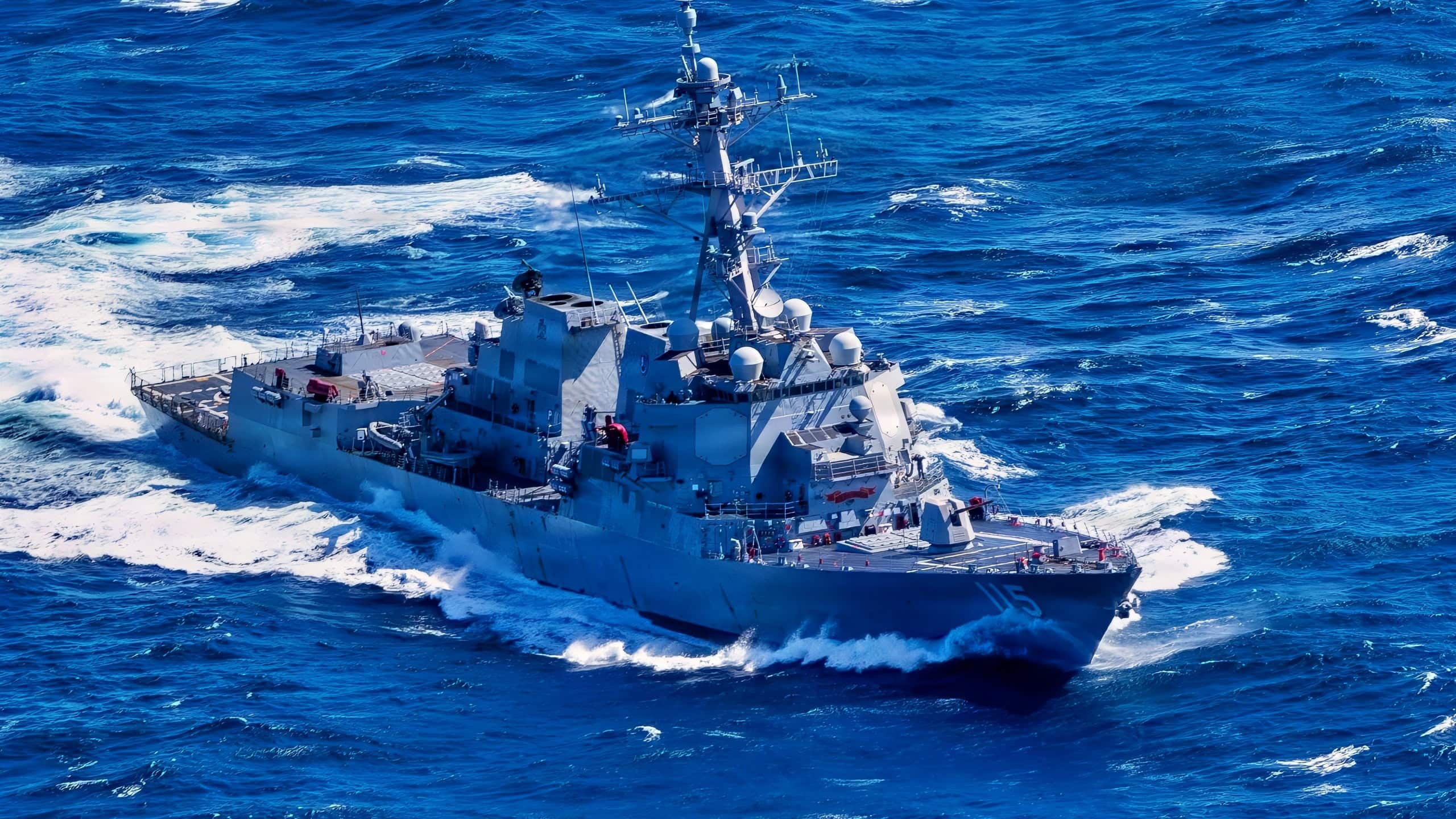
Benfold is a Flight I hull, commissioned in March 1996, 30 years old this year. It carries 90 Mk 41 vertical launch cells, a crew of roughly 300, and it is one of the handful of destroyers the United States keeps permanently forward-deployed at Yokosuka. On July 24 its ship-service gas turbine generators, three units of about 2.5 megawatts each, failed to the point of a total electrical blackout.
The loss of power took out more than the combat systems. According to 7th Fleet, the blackout knocked out potable water, air conditioning, toilets, and the galley. The cruiser USS Robert Smalls (CG-62) fed the crew. Contracted tugboats towed Benfold to Subic Bay, where personnel from Ship Repair Facility Japan's Regional Maintenance Center, based in Yokosuka, met the ship on July 28. Power was restored July 30. Repairs were complete by Aug. 7. The ship sailed for Japan on Aug. 8.
That timeline deserves a second look. A single generator casualty took a destroyer out of the fight for more than two weeks, and the maintenance response required flying repair teams across the Western Pacific and hiring commercial tugs, because the Navy does not keep enough organic salvage and repair capacity in theater to move one of its own warships.
The Recovery Was a Logistics Experiment
The Benfold recovery reads like a rehearsal for what sustainment would look like in a real fight, and it is not encouraging. The tow was done by contracted tugboats. The crew was put in contracted lodging ashore at Subic. The repair crew came from Japan. Every piece of that logistics chain is ad hoc, commercial, or both.
Defense Security Asia's assessment of the casualty lists the failure modes that could take down all three generators at once: contaminated fuel reaching multiple generating units, lubricating-oil degradation, seawater intrusion through cooling systems, or a fault in the ship's electrical-distribution architecture. The Navy has not announced a root cause. Whatever it was, the ship could not restore propulsion, combat power, or habitability without outside help for four days.
In peacetime, that is an embarrassment and a repair bill. In wartime, a dead-in-the-water destroyer in the South China Sea is not a logistics problem, it is a target. The PLAN would have every submarine and over-the-horizon radar in the region vectoring on it within hours. The crew's "unwavering steadiness" would not have changed that.
What One Hull Costs the Screen
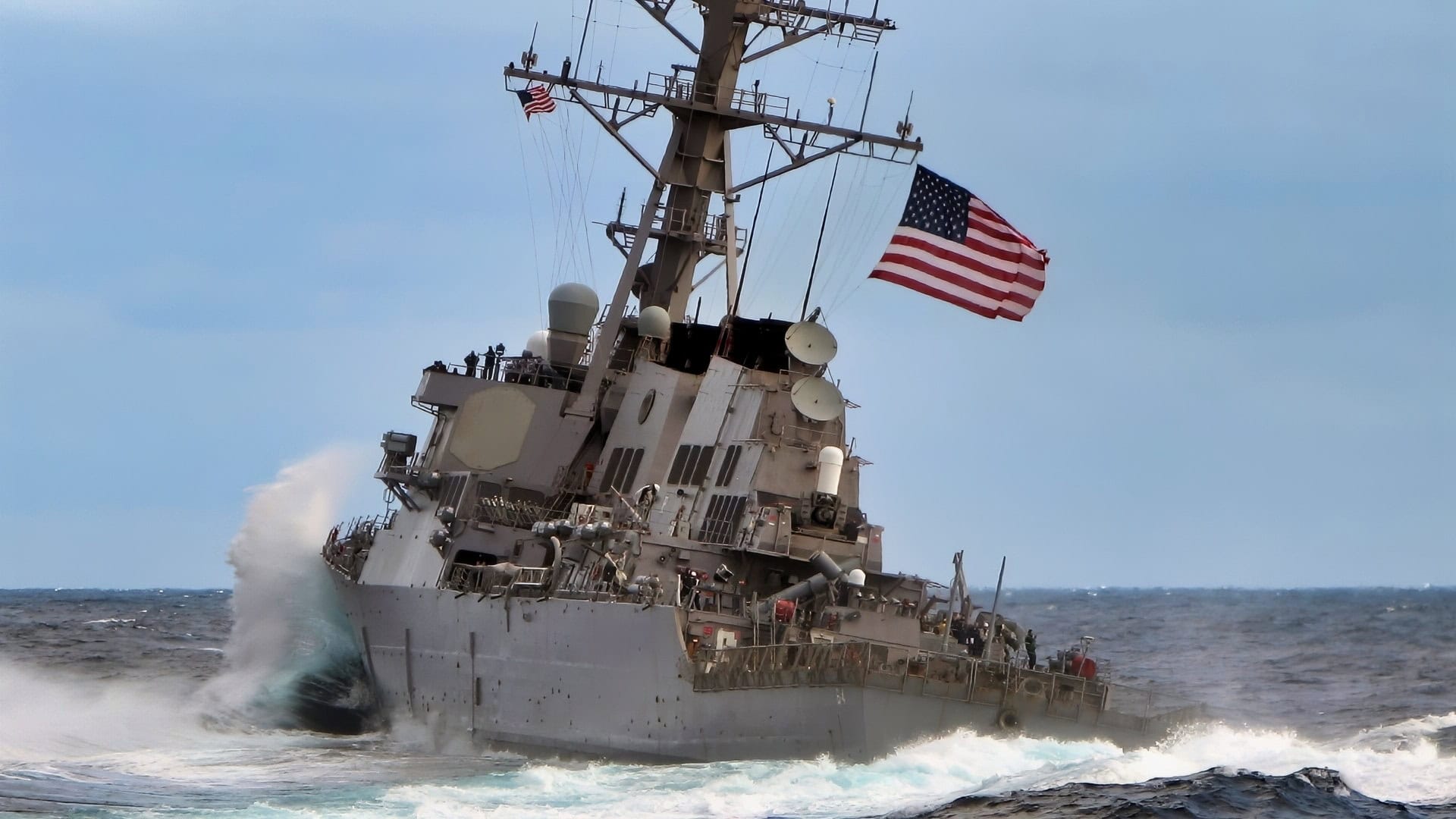
Here is the part the Navy does not want to count. Benfold was sailing with the USS George Washington carrier strike group. A standard CSG fields four to six escorts to cover air defense, anti-submarine warfare, and strike. Benfold's 90 VLS cells are roughly a fifth of a typical screen's magazine. When the strike group headed west on Aug. 13, bound for the Middle East to relieve USS Abraham Lincoln, it sailed with a hole in its screen where a destroyer should have been.
That is the structural problem. The U.S. Navy counts about 70 Arleigh Burke-class hulls in commission, but availability is not presence. The forward-deployed force at Yokosuka, Destroyer Squadron 15, fields roughly eight to ten destroyers and cruisers to cover the entire Western Pacific. One hull down for three weeks is a 10 percent cut in the force that actually has to show up every day. There is no surge capacity to absorb it, because the new-construction pipeline is years behind and the maintenance backlog is measured in hull-years.
The Availability Problem Nobody Is Counting
Benfold's blackout is not the first generator casualty on a Flight I hull, and it will not be the last. These ships are three decades old, running harder than their designers planned, at a tempo the 1990s Navy never imagined. The service can keep replacing parts, but it cannot replace the underlying math: aging hulls, a shrinking pool of skilled maintainers, and a construction program that delivers new destroyers slower than old ones wear out.
The Navy's message after the incident was about the crew. The right message is about the fleet. One generator failure took a destroyer off the line for three weeks in peacetime. In a real fight, the adversary does not wait for the tugboats, and there are no contracted tugs in a shooting war. The Pacific Fleet is running on availability it does not actually have, and Benfold just showed everyone where the limit is.
USS Benfold experienced a generator casualty leading to a blackout in the South China Sea on July 24, 2023, requiring external assistance for recovery. The ship was towed to Subic Bay, where repairs were completed by August 7, and it returned to service on August 8. This incident underscores the logistical challenges and lack of spare destroyers within the U.S. Pacific Fleet.
- USS Benfold lost power due to a generator casualty on July 24, 2023.
- The ship was towed to Subic Bay and required external repair assistance.
- Power was restored on July 30, and the ship returned to service on August 8, 2023.
- The incident highlights a lack of spare destroyers in the Pacific Fleet.
- The recovery involved contracted tugboats and repair teams from Japan.