
Video | 81192, Always Waiting for Your Return!

“Call 81192, please return immediately!”
“81192 received, I can no longer return, you continue forward.”
25 years ago on April 1
33-year-old naval aviator Wang Wei
sacrificed his life
to defend the motherland's airspace
after being forced to parachute into the sea due to a collision with a U.S. aircraft
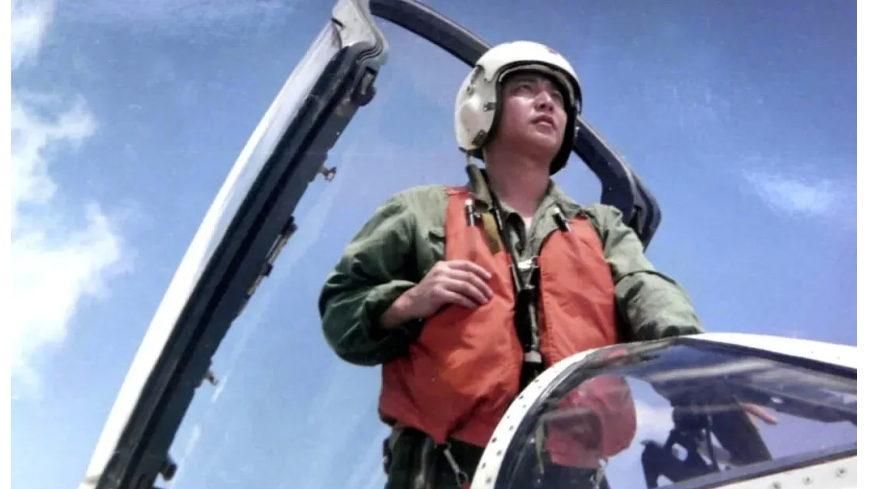
25 years, never forgotten!
On April 1, 2001
A U.S. reconnaissance aircraft violated our airspace in the South China Sea
Chinese naval aviators Wang Wei and Zhao Yu
took off in fighter jets to intercept
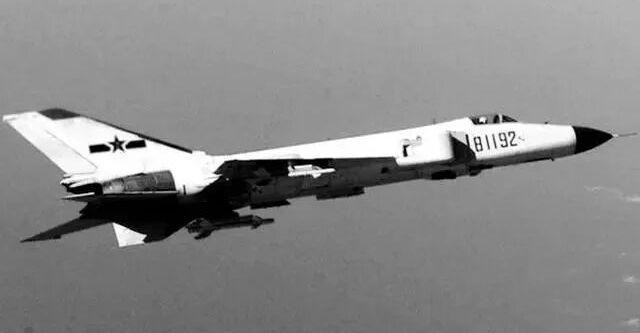
During the standoff
the U.S. aircraft suddenly turned, violating flight rules
Wang Wei's fighter jet was struck by the U.S. aircraft
Wang Wei was forced to parachute into the sea
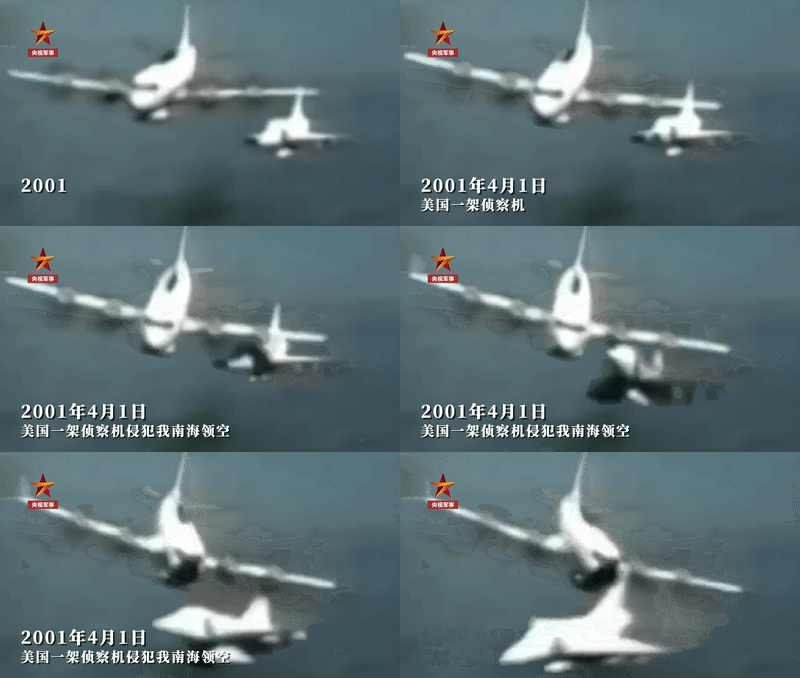
△ Animation demonstration
The hero's life was forever frozen at 33
……
The Central Military Commission posthumously awarded Comrade Wang Wei
the honorary title of “Guardian of the Sea and Air”
and a first-class model medal
81192, please rest assured
your long-cherished wish has been fulfilled
Wang Wei once hand-painted an oil painting titled “Long-cherished Wish”
In the painting, a pilot
is taking off from an aircraft carrier
in a carrier-based aircraft
This was the scene he dreamed of
He once said his greatest wish
was to take off from an aircraft carrier in a fighter jet
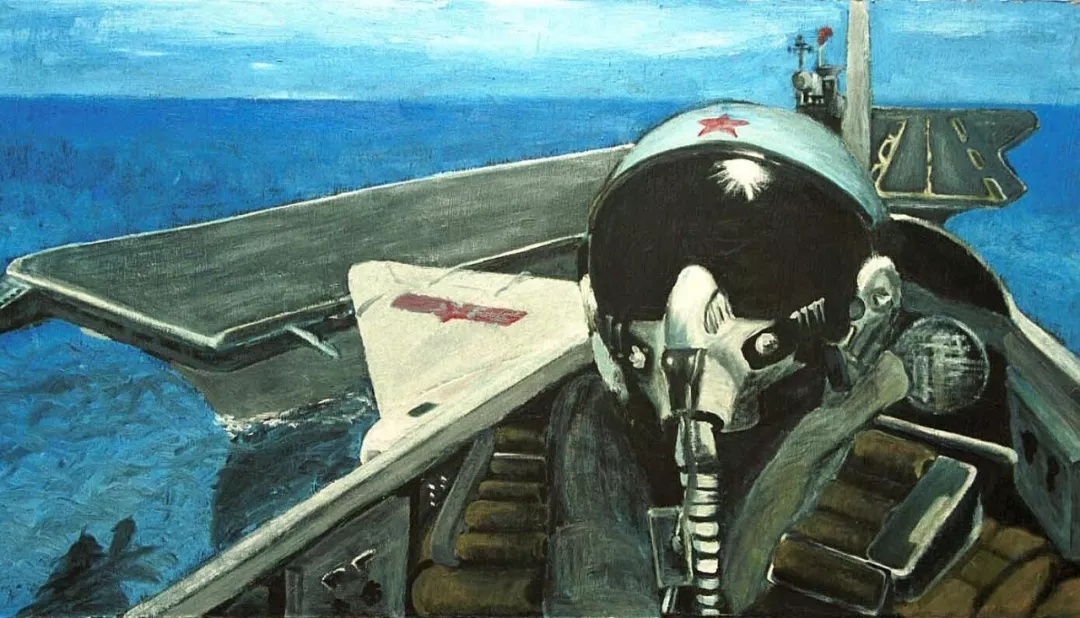
△ Wang Wei's hand-painted oil painting “Long-cherished Wish”
Today, Wang Wei's dream has become a reality
25 years have passed
the country's naval and air forces continue to grow
China has entered the “three aircraft carrier era”
Liaoning
On September 25, 2012, our first aircraft carrier, the Liaoning, was officially commissioned, hull number “16.” Its service marked a historic leap for our aircraft carriers “from nothing to something.” On November 23, 2012, China's first generation carrier-based fighter J-15 successfully took off and landed on the Liaoning, announcing to the world that the Chinese Navy has acquired long-range strike capabilities.

△ Liaoning
Looking back at the “achievements” of the Liaoning, each one is clear and solid.
On November 23, 2012, the domestically produced J-15 carrier-based aircraft successfully took off and landed on the “Liaoning” for the first time, breaking through key flight technologies such as carrier-based aircraft ski-jump takeoff and arrested landing.
In July 2015, the Liaoning conducted its first live-fire exercise, achieving a perfect hit rate.
In November 2017, the Liaoning organized night landing training for carrier-based aircraft, making China one of the few countries in the world to master the night landing technology for carrier-based pilots.
Shandong
On December 17, 2019, the first domestically designed, equipped, and built aircraft carrier, the Shandong, was officially commissioned, hull number “17.” Thus, the Chinese Navy officially entered the dual aircraft carrier era.
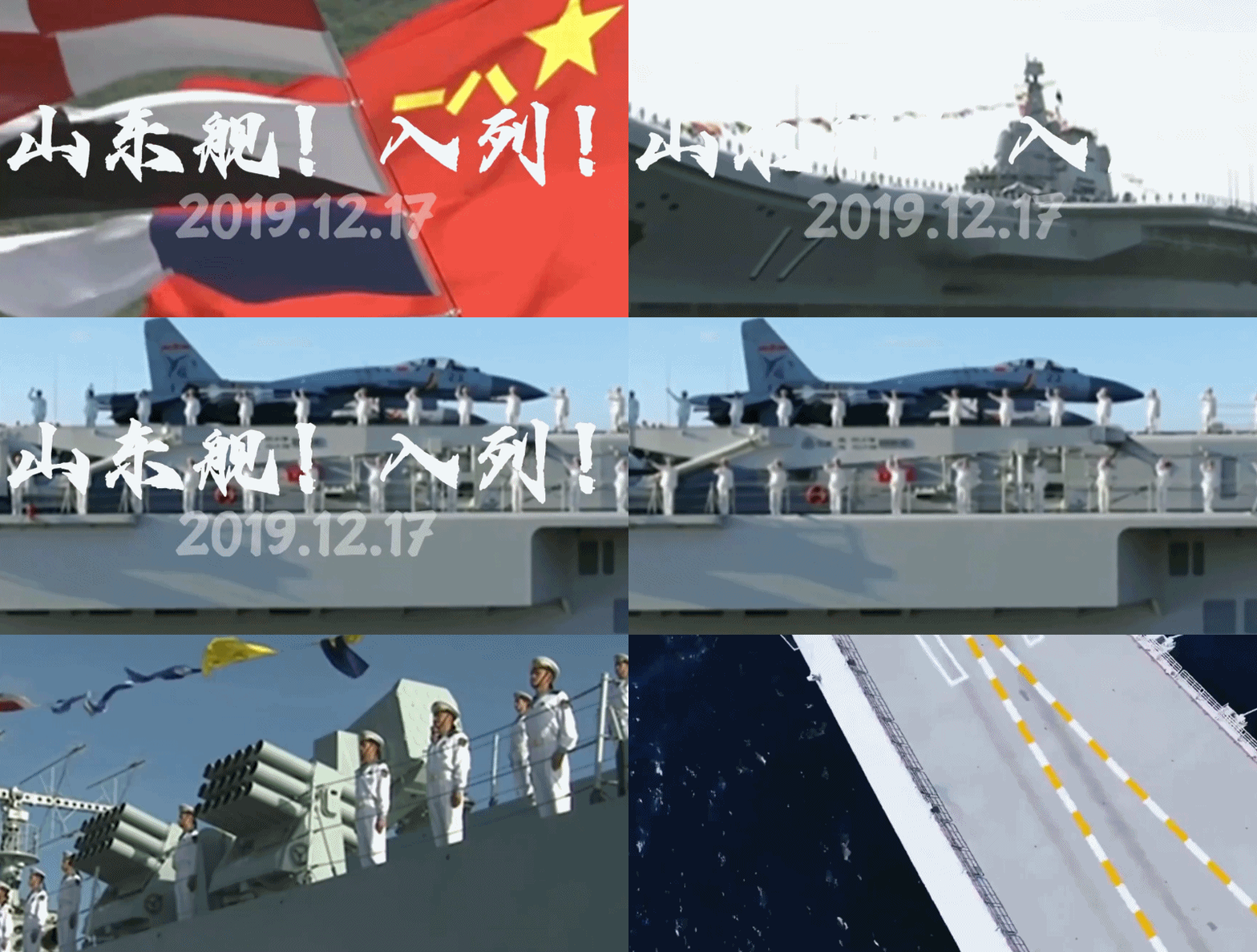
△ Shandong
Since its commissioning, the Shandong's “report card” has been impressive.
In May 2020, the Shandong began its first military mission at sea, marking its initial combat capability.
In December 2020, the Shandong crossed the Taiwan Strait for training in the South China Sea.
In May 2021, the Shandong advanced into the South China Sea to safeguard national sovereignty, security, and development interests.
In October 2024, the Liaoning and Shandong carrier groups conducted their first dual aircraft carrier formation exercise. J-15 fighter jets formed a wedge formation flying over the dual aircraft carrier group.
Fujian
On November 5, 2025, China's first electromagnetic catapult aircraft carrier, the Fujian, was officially commissioned, hull number “18.” It is the world's first aircraft carrier to use conventional power electromagnetic catapult technology, marking China's entry into the forefront of global aircraft carriers.
△ Fujian's first live military training task at sea after commissioning
The Fujian is now in position, let's take a look at the “heavy punch” combination on board:
The J-35 is a new generation carrier-based fighter independently developed by China, primarily for air superiority operations, but also capable of executing various strike missions against sea and land targets. After the J-35 is commissioned, China becomes the second country in the world, after the United States, to develop and possess stealth carrier-based fighters. The J-35, with its excellent stealth capabilities, can penetrate enemy air defense networks.
The J-15T heavy carrier-based fighter can take off with full fuel and armament, increasing its range and operational radius while also increasing its payload capacity, allowing it to conduct saturation attacks on enemies based on its large payload and long range, possessing strong strike capabilities against both sea and land targets.
The KJ-600 is China's first carrier-based fixed-wing early warning aircraft, supporting catapult takeoff, capable of performing early warning detection, command guidance, target indication, and operational coordination tasks, known as the “Sea and Air Command Center,” providing the carrier battle group with longer early warning time and greatly improving interception efficiency.
“81192, do you see the J-35?”
On September 3, 2025
the commemoration of the 80th anniversary of the victory of the Chinese People's Anti-Japanese War
and the World Anti-Fascist War was grandly held
at Tiananmen Square in Beijing
The J-35 was reviewed in the aerial formation
As the aerial formation flew over Tiananmen Square
“Guardian of the Sea and Air” Wang Wei's wife, Ruan Guoqin
held up Wang Wei's photo towards the blue sky
“Wang Wei, you and your comrades are reunited!”
The hero has never left
One by one, carrier-based aircraft soared into the sky
and more “81192” came to take over Wang Wei's mission
guarding this blue sea and sky
The hero has never left
Wang Wei's spirit
inspires countless successors to strive unceasingly
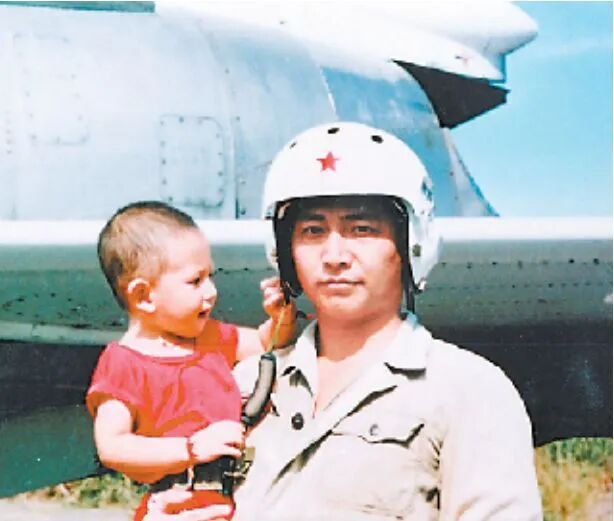
△ Wang Wei and his son Wang Zi
Wang Wei's son, Wang Zi
has also devoted himself to national defense
After graduating from high school
he was admitted to the Naval Engineering University
and became a naval officer
After two years of work
Wang Zi was admitted to Peking University for a master's degree
After graduation, Wang Zi returned to the military
continuing to guard the blue sea and sky
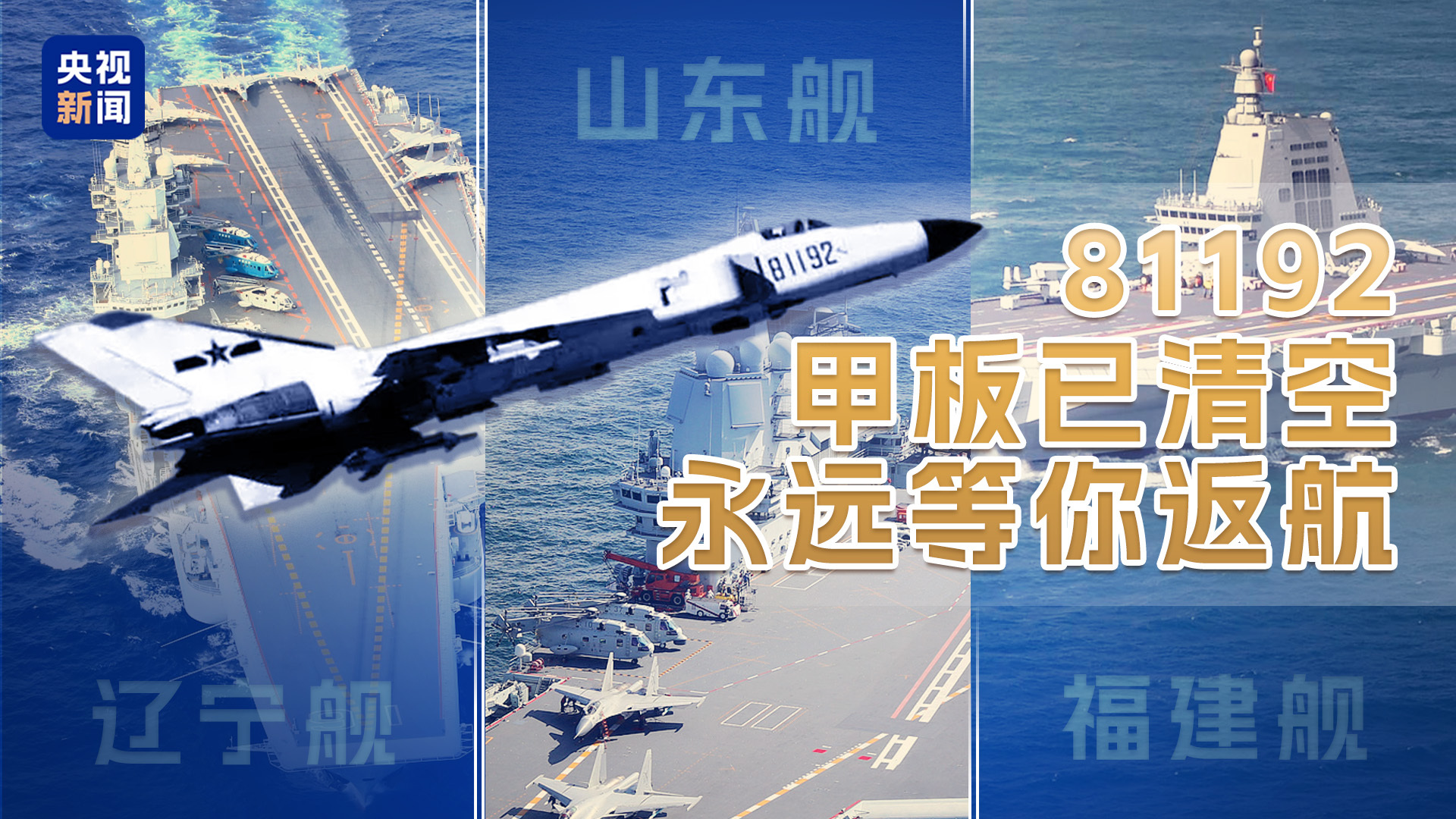
Today, once again calling 81192!
The deck is clear
waiting for your return forever!
On April 1, 2001, Chinese naval pilot Wang Wei died after a collision with a U.S. reconnaissance aircraft in the South China Sea. The report commemorates his legacy and highlights the advancements in China's naval aviation, including the introduction of the J-35 stealth fighter and the operational status of three aircraft carriers. Wang Wei's contributions continue to inspire new generations of pilots in the Chinese Navy.
- Wang Wei, a Chinese naval pilot, died in a collision with a U.S. reconnaissance aircraft on April 1, 2001.
- China has developed multiple aircraft carriers, entering a 'three-carrier era' with the addition of the Fujian.
- The J-35 stealth fighter is now part of China's naval aviation capabilities.
- Wang Wei's legacy continues to inspire new generations of pilots in the Chinese Navy.
- The report commemorates the 25th anniversary of Wang Wei's sacrifice.