
Video: H-6K and Tu-95 Fly Together Over the Miyako Strait, Experts Explain Details of Sino-Russian Patrol Formation
On the 27th, the air forces of China and Russia conducted their 11th joint aerial strategic cruise. Military aircraft from both countries carried out joint patrols in the airspace over the Sea of Japan, the East China Sea, and the western Pacific Ocean, demonstrating their determination and capability to jointly maintain regional peace and stability. In the latest released video, multiple aircraft types including the J-16D, H-6K, KJ-500A, and Y-20 were seen operating in coordination. What is the deeper significance of the appearance of various military aircraft with different functions?
Full spectrum aircraft types make a strong appearance
Forming a complete integrated combat system
Military commentator Fu Qianshao believes that the formation of this joint cruise between China and Russia is "quite formidable," establishing a complete aerial combat system that includes early warning command, strategic strike, air escort, aerial refueling, and electronic reconnaissance. This is the most comprehensive configuration of support and logistics aircraft seen in their previous patrols.
Fu Qianshao: One of the biggest highlights of this joint cruise is the exceptionally outstanding full set of personnel—under the command of the airborne early warning aircraft, fighter jets escort the bombers, and electronic warfare aircraft provide electronic suppression cover for the entire formation, thus forming a complete integrated combat system.
The J-11B and J-10C fighter jets, after refueling from the Y-20, can provide escort for the strategic bomber formation for half or even the entire journey. In a complex battlefield environment, a corresponding command and control system is also needed, which is the KJ-500A early warning command aircraft. Additionally, electronic warfare aircraft must act in coordination, and this time the J-16D and the electronic warfare aircraft modified from the Y-9 were deployed.
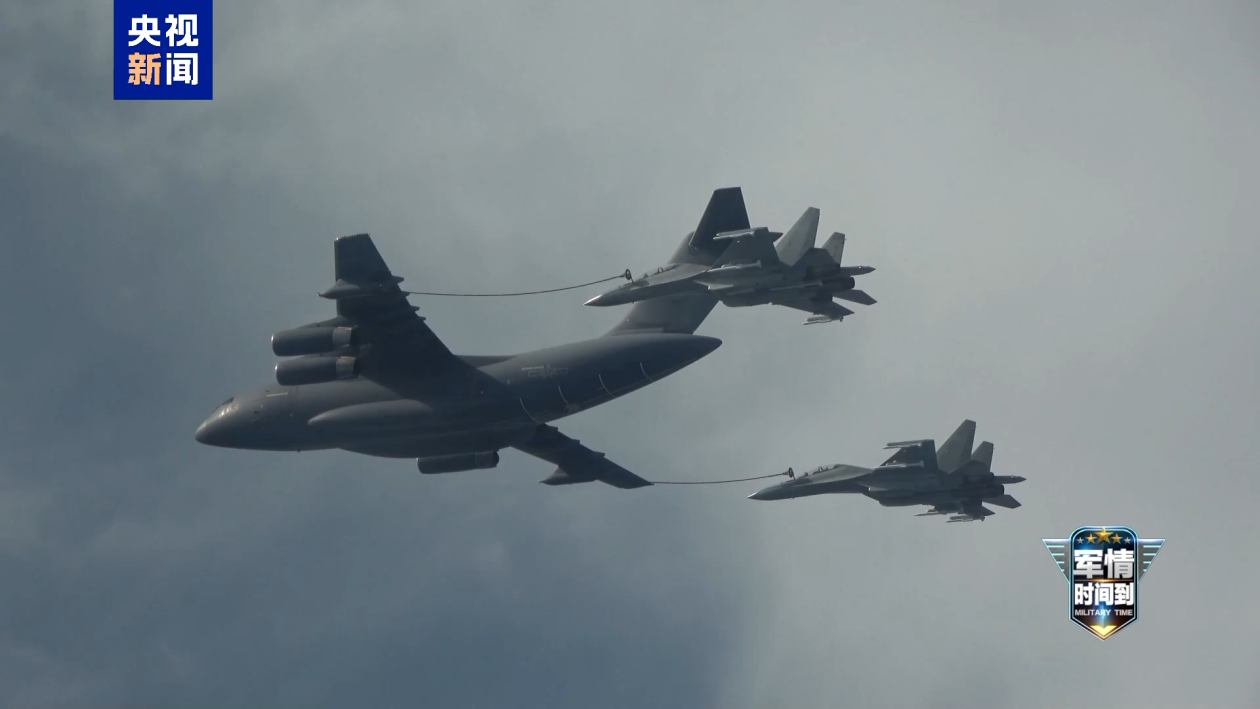
△Y-20 refueling fighter jets
Electronic warfare aircraft build a solid safety barrier for the joint formation
In the face of a complex electromagnetic environment and potential air defense threats, who will provide an invisible safety barrier for the entire formation? Fu Qianshao points out that the participation of electronic warfare aircraft in the joint cruise is also a major highlight.
Fu Qianshao: The J-16D is a multi-purpose tactical electronic warfare aircraft primarily focused on electronic countermeasures, which will closely accompany bombers or other aircraft to provide escort and conduct tactical electronic countermeasure operations. The electronic warfare aircraft modified from the Y-9 has stronger combat capabilities than tactical electronic warfare aircraft because of its larger airframe and higher output power of electronic warfare equipment, often covering several hundred square kilometers. With advanced tactical electronic warfare aircraft and strategic-level electronic warfare aircraft, it can conduct electronic suppression against enemy ground targets, especially radar and air defense missile systems, and when necessary, launch anti-radiation missiles to attack the most threatening air defense positions, allowing strategic bombers to carry out precise strikes against deep enemy targets in a relatively safe environment.
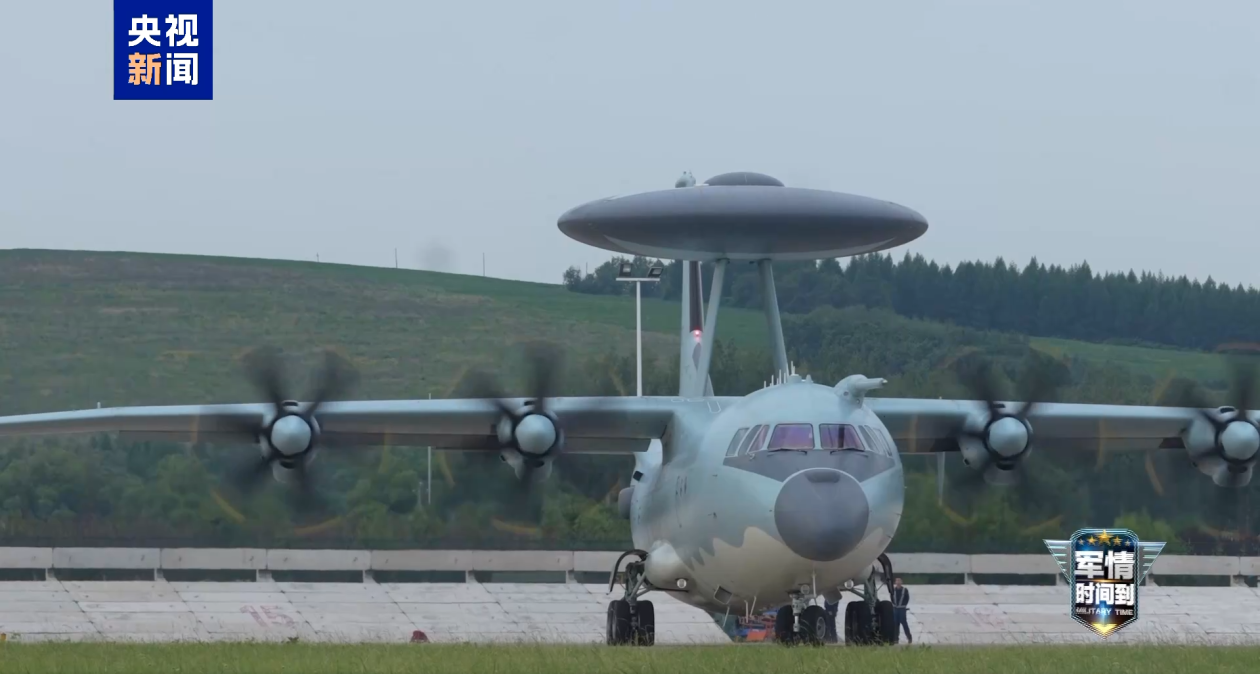
△KJ-500A
The electronic warfare aircraft address the "invisible" threats, but a "thousand-mile eye" is also needed to grasp the overall situation. Where the formation flies and from which direction threats come—these all require an "aerial brain" to coordinate. The KJ-500A serves as the command center for this formation.
Fu Qianshao: It can be said that the participation of the KJ-500A in the strategic bomber cruise mission of China and Russia is an important highlight. The KJ-500A is currently the most advanced and capable medium-range airborne early warning aircraft in the world. Its biggest highlight is that it uses very advanced digital array radar, fully controlled by computers for scanning, making it lighter, with more transceiver components, longer detection ranges, and effective against stealth targets and low-flying small targets. It has become the main type of airborne early warning force in our military.
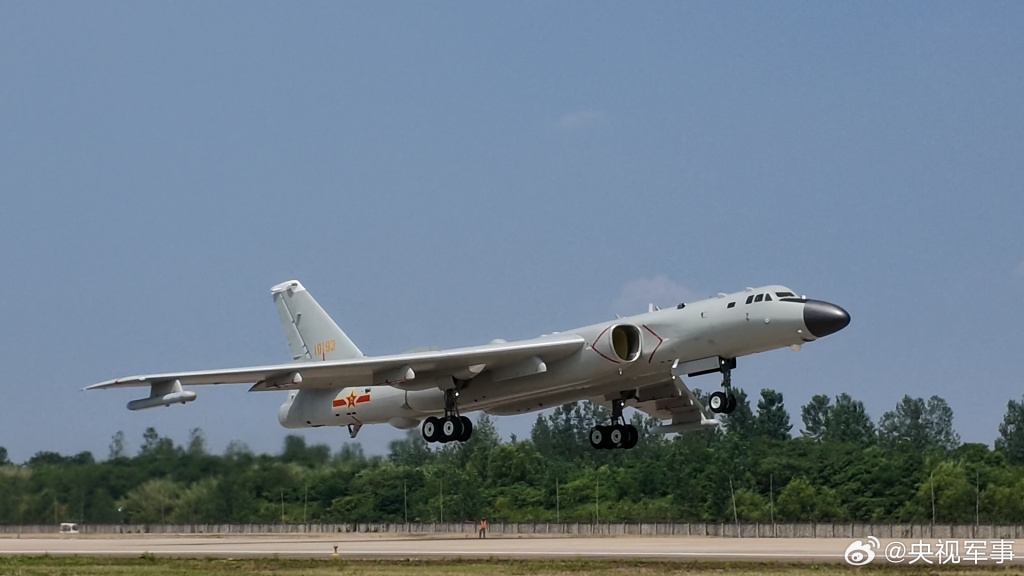
△H-6K
China and Russia's H-6K and Tu-95
Jointly fly over the Miyako Strait
This time, the joint formation of China and Russia completely traversed the vast international airspace over the Sea of Japan, the East China Sea, and the western Pacific Ocean, with the H-6K and Tu-95 jointly flying over the Miyako Strait. The Miyako Strait, located between Okinawa Island and Miyako Island, is an important maritime passage connecting China's near seas with the western Pacific Ocean and is the widest waterway in the first island chain. According to international law, the Miyako Strait is a non-territorial sea strait, and vessels and aircraft from all countries enjoy freedom of navigation and overflight.
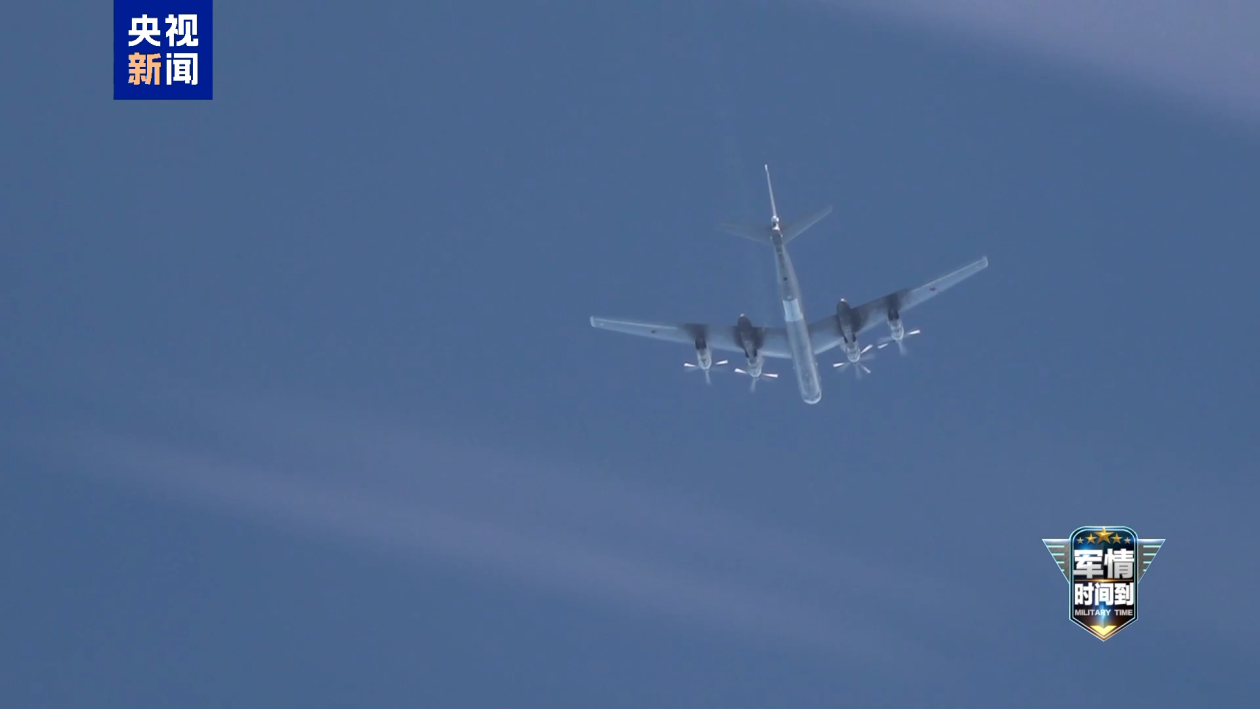
△Tu-95
In recent years, the PLA Navy and Air Force's passage through the Miyako Strait to the western Pacific has become routine. Since the first cruise in 2019, the China-Russia air forces have conducted a total of 11 joint patrols over the past seven years. This joint flight of strategic bombers over the Miyako Strait is a new demonstration of the air strategic coordination capabilities of the two countries.
Fu Qianshao: The joint strategic cruise between China and Russia is a normalized joint training. Regardless of how the external situation changes, they will implement corresponding training and patrols according to the original plan, which can be said to be continuously improving in technical level. This normalized strategic patrol demonstrates the determination and capability of China and Russia to maintain military balance and ensure peace and stability in the Asia-Pacific region.
China Central Radio and Television Station Voice of China
Producer丨Wu Zhehua
Reporter丨Wang Jiyun
On October 27, 2023, the Chinese and Russian air forces conducted their 11th joint strategic air patrol, flying through the Miyako Strait, Sea of Japan, East China Sea, and Western Pacific. The operation involved multiple aircraft, including H-6K bombers and Tu-95s, demonstrating their collaborative military capabilities. The KJ-500A acted as the command center, coordinating the mission.
- China and Russia conducted their 11th joint strategic air patrol on October 27, 2023.
- Aircraft involved included H-6K, Tu-95, J-16D, KJ-500A, and Y-20.
- The patrol traversed the Miyako Strait, Sea of Japan, East China Sea, and Western Pacific.
- The operation showcased the capability and determination of both nations to maintain regional peace and stability.
- The KJ-500A served as the command center for the operation.