
Video: Japan Conducts Maritime Drills to Prepare for Blockade Against China
Currently, the multinational joint exercise Rim of the Pacific 2026 is taking place in the waters surrounding the Hawaiian Islands in the United States. During the exercise, the Japan Maritime Self-Defense Force's destroyer "Kongo" not only conducted live-fire launches of the Standard-2 missile but also formed a coordinated attack group with the Spanish Navy's F-101 frigate to strike the retired U.S. Navy amphibious assault ship and target vessel "Baliu."
Japan frequently tests offensive weapons overseas
This is not the first time the Japan Self-Defense Forces have conducted live-fire exercises overseas.
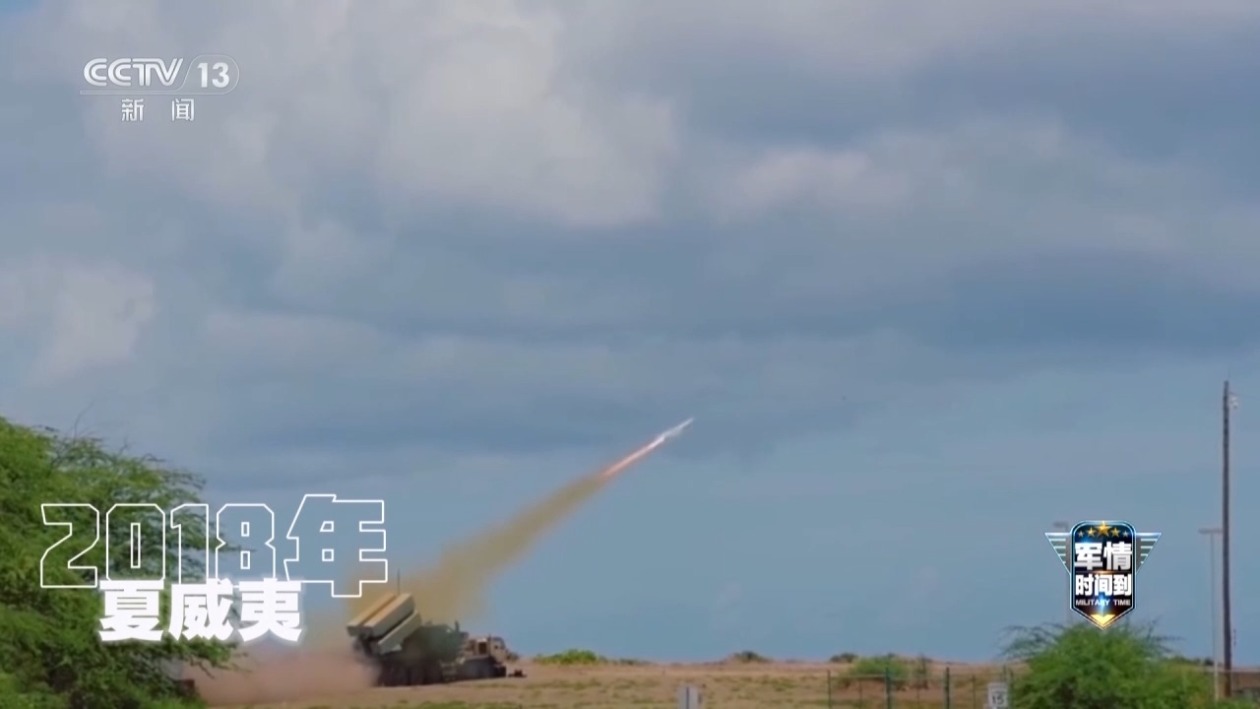
In 2018, the Japan Ground Self-Defense Force used the domestically produced Type 12 ship-to-ship missile for the first time in Hawaii, relying on the U.S. military's joint reconnaissance and data link system, successfully hitting the retired U.S. Navy tank landing ship "Racine," which served as a target vessel.
In the 2024 Rim of the Pacific exercise, the Japan Ground Self-Defense Force again launched Type 12 ship-to-ship missiles, targeting the retired "Austin" class dock landing ship and the target vessel "Dubik."
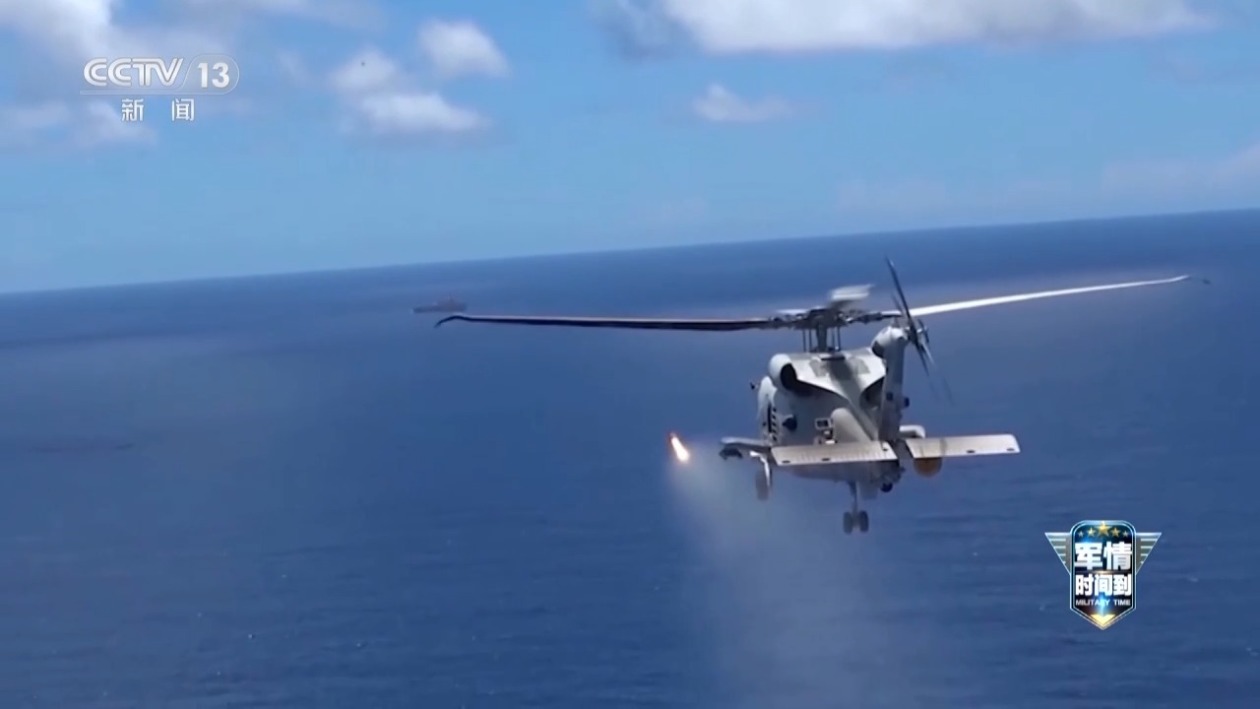
In the recently concluded "Brave Shield 2026" multinational joint exercise, the Japan Maritime Self-Defense Force's SH-60 "Seahawk" helicopter launched U.S.-made "Hellfire" missiles at the "Juno," while the destroyer "Winter Moon" fired Type 90 anti-ship missiles, ultimately leading to the complete sinking of the "Juno" by the submarine "Swift Whale," which launched heavy torpedoes.
In recent years, Japan has increasingly used overseas joint exercises to test various weapons.
During the 2023 U.S.-Australia-led "Courageous Sword" joint exercise, the Japan Ground Self-Defense Force launched Type 12 ship-to-ship missiles at the Picton Weapons Testing Ground in New South Wales, Australia, relying on drone target guidance.
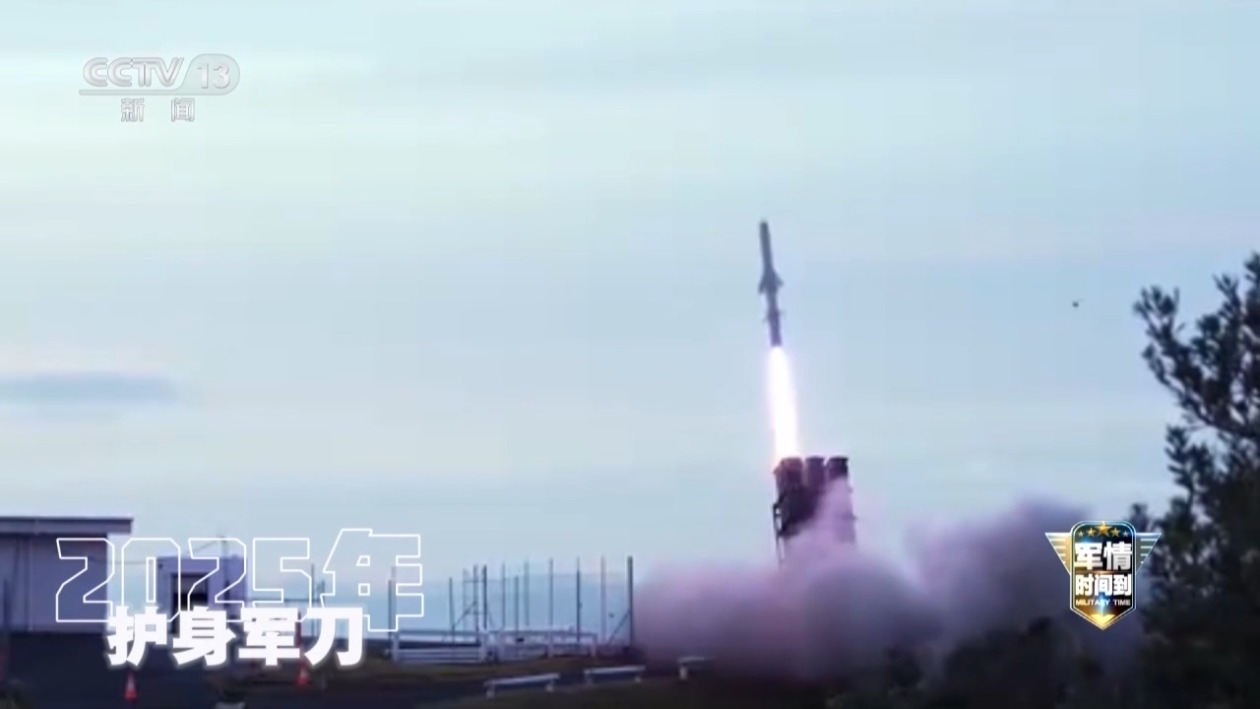
In the 2025 "Courageous Sword" exercise, Japan further expanded its scale, with the Ground Self-Defense Force launching both Type 12 anti-ship missiles and Type 03 medium-range air defense missiles.
In this year's U.S.-Philippines "Shoulder to Shoulder" exercise, the Japan Ground Self-Defense Force, participating for the first time as a formal member, conducted live-fire launches of two Type 88 ship-to-ship missiles on Luzon Island in the Philippines, with one hitting a target ship approximately 75 kilometers away and the other missing. This move is widely seen as a landmark event marking Japan's breach of the "defensive-only" principle.
What intentions are revealed by Japan's test-firing of anti-ship missiles?
This year's live-fire launch of Type 88 ship-to-ship missiles by the Japan Ground Self-Defense Force on Luzon Island in the Philippines is widely regarded as a landmark event marking Japan's breach of the defensive-only principle. What is the seriousness of this event?
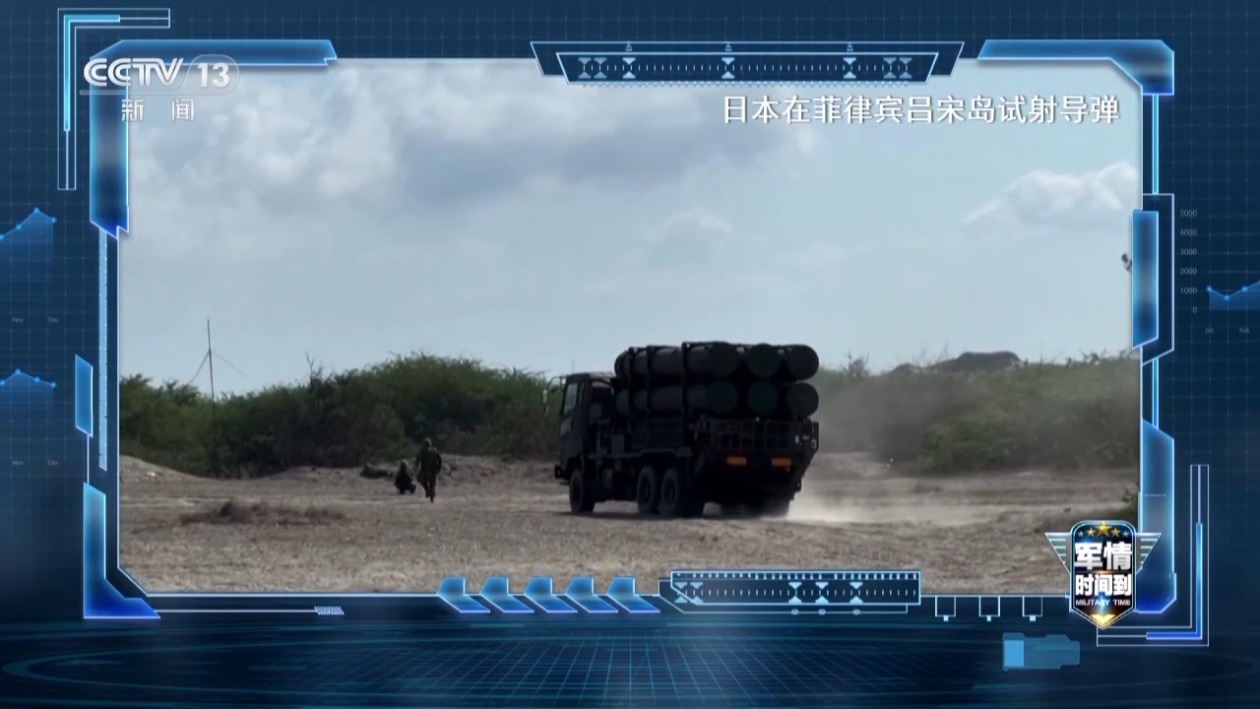
Military commentator Zhang Xuefeng: Japan's live-fire launch of Type 88 anti-ship missiles on Luzon Island can be said to have a very strong strategic direction and a clear tactical background. The clear tactical background of testing missiles in the Philippines is to block the Bashi Channel. Because the Chinese Navy, including the Air Force, often enters and exits the Western Pacific through the Miyako Strait and the Bashi Channel, if Japan were to deploy anti-ship missile forces in the Philippines, especially on Luzon Island, the purpose would be to block the future passage of the Chinese Navy into and out of the Western Pacific, which is very obvious.
Japan's confrontational stance under the banner of a free and open Indo-Pacific
Specifically, looking at the recently concluded "Brave Shield 2026" exercise, Japan showcased offensive weapons such as air-to-ground missiles, anti-ship missiles, and heavy torpedoes all at once. How should we view the equipment and weapons used by Japan during the exercise?
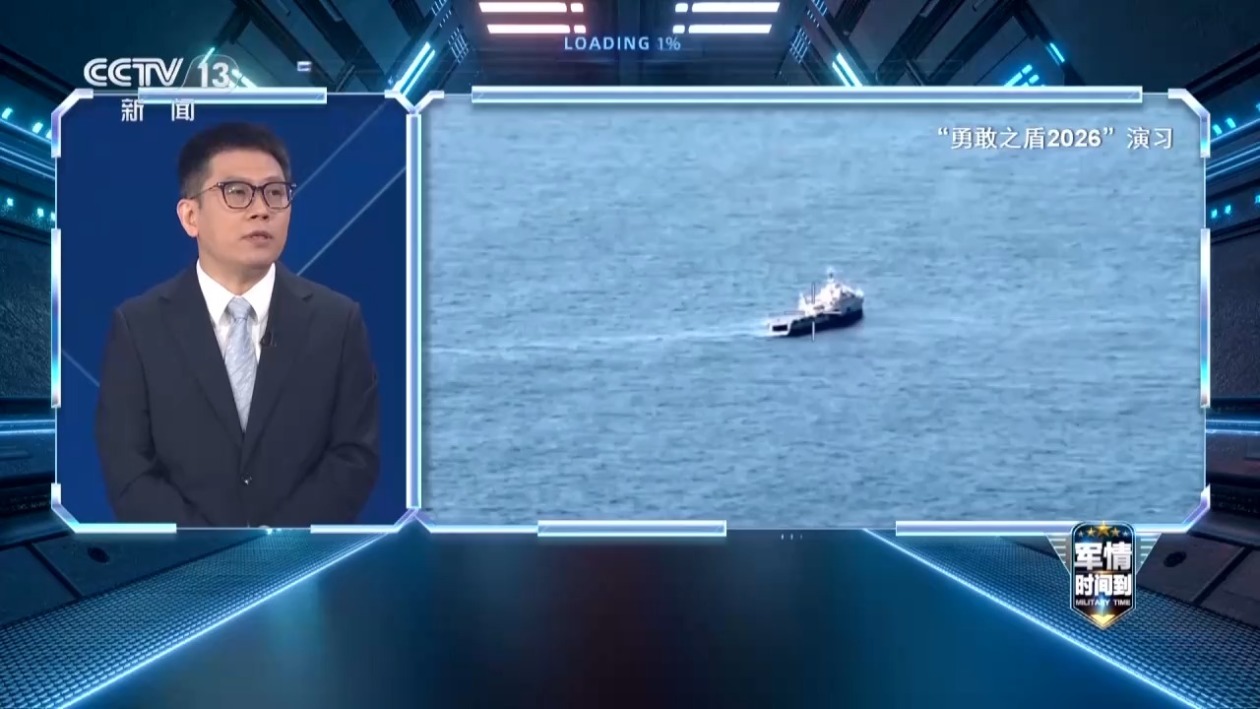
Military commentator Zhang Xuefeng: These weapons have obvious offensive attributes, especially submarines. Globally, submarines are regarded as a very clear offensive weapon. They can not only be used to strike the opponent's surface warships but also to disrupt the opponent's maritime supply lines, block their shipping routes. The air-to-ground missiles used this time also have the capability to strike the opponent's maritime targets, preparing for possible future blockade operations in the Western Pacific. From this point, we also see that Japan claims to support a free and open Indo-Pacific, but in reality, it is engaging in confrontation and blockade.
Japan seeks to use exercises to
recruit allies for joint operations is unrealistic
In recent years, Japan has frequently conducted live-fire exercises overseas under various pretexts. What is the intention behind this?
Military commentator Zhang Xuefeng: The first intention is to improve the military training and combat readiness of its participating forces; the second level is to send a signal of military mutual trust between it and some so-called allied countries.
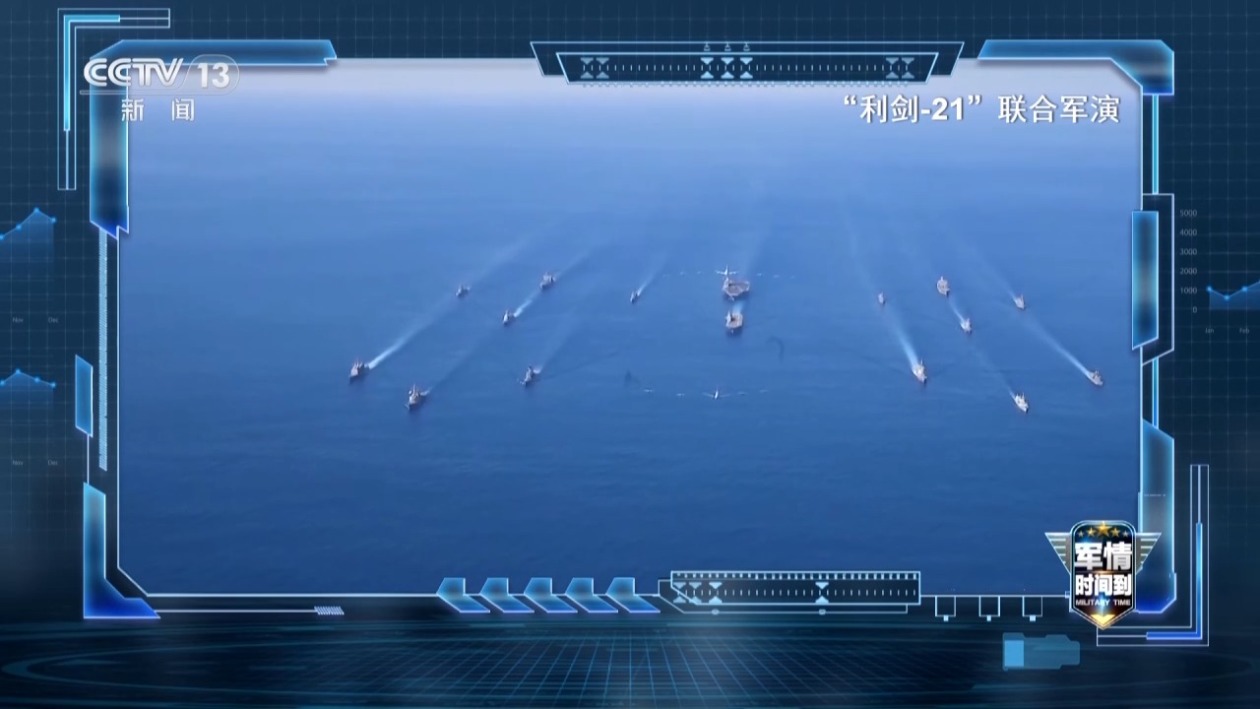
In fact, this exercise is somewhat like a person opening a restaurant in town; sometimes friends and relatives may come to support, but there may also be some fair-weather friends who come for a free meal. However, I think more often, people just pay to eat. If the organizers or participants of the relevant exercises were to call for everyone to "rob and kill," I think there might be one or two countries that would follow, but most countries would just wipe their mouths and go home. Therefore, it is unrealistic for Japan to maintain such close relationships through exercises with other countries and expect to fight together in the future in the Western Pacific.

Looking closely at what Japan is actually practicing in these exercises, during the Rim of the Pacific exercise, the Japan Maritime Self-Defense Force's "Kongo" not only conducted live-fire exercises but also performed supply drills with the Royal Canadian Navy. What does this indicate?
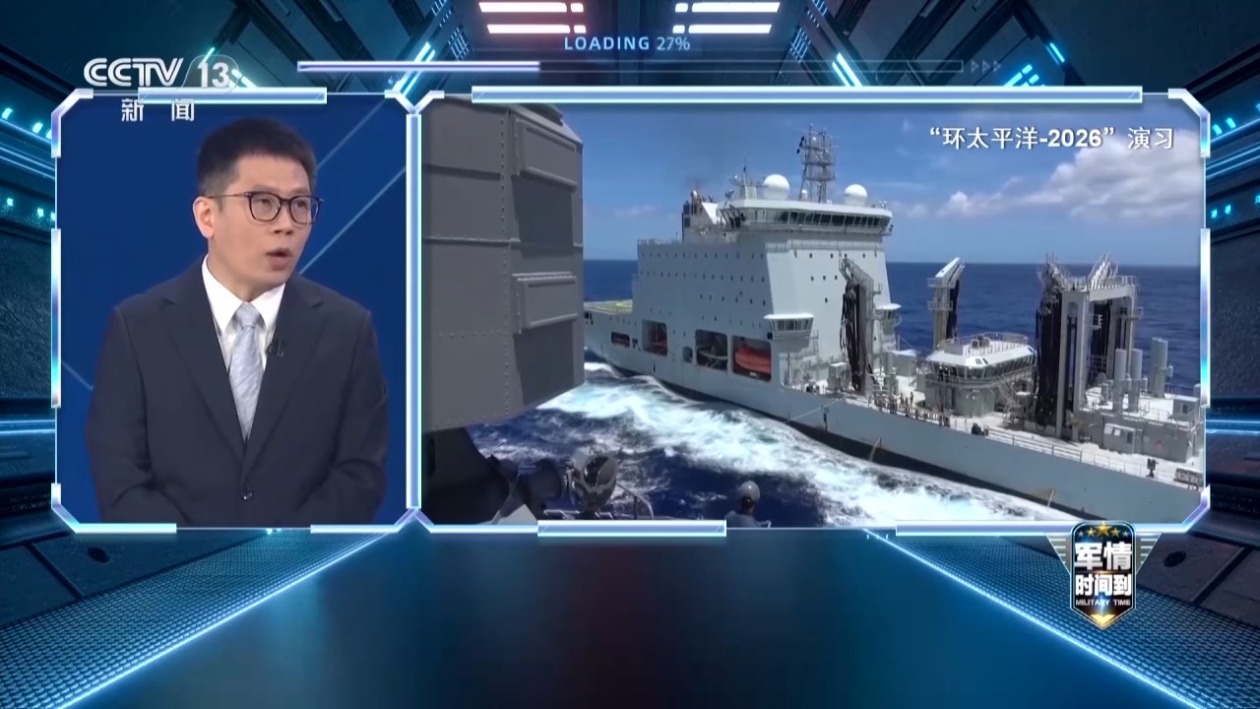
Military commentator Zhang Xuefeng: Through cooperation with these countries, Japan is first gaining diplomatic, public opinion, and political support for its remilitarization. The ultimate goal is still to attempt to conduct joint operations with these countries in possible future conflicts. However, we must also recognize that if Japan wants to conduct joint operations with Canada and other NATO countries, the distance will be a huge gap. Whether it is European countries or Canada, projecting military power into the Western Pacific is extremely challenging.
Japan conducted live-fire missile tests and naval exercises in Hawaii and the Philippines during the Rim of the Pacific 2026 multinational exercise. The Japan Maritime Self-Defense Force utilized various offensive weapons, including Standard-2 and 12-type anti-ship missiles, signaling a strategic intent to counter Chinese naval movements. These actions are interpreted as a significant shift from Japan's traditional defense posture, indicating increased military cooperation with allies.
- Japan conducted live-fire missile tests during the Rim of the Pacific 2026 exercise.
- The Japan Maritime Self-Defense Force used various offensive weapons including Standard-2 and 12-type anti-ship missiles.
- Japan's actions are seen as a strategic move to counter Chinese naval movements in the Pacific.
- The exercises included collaboration with allied forces, indicating military cooperation.
- Japan's missile tests in the Philippines are viewed as a significant shift from its defense-only posture.