
Video: What Allows China's Aircraft Carrier Group to "Shake Off Peepers"

In the naval fleet of the Liaoning
that has just completed its offshore training
the so-called "official photographer" of the Chinese Navy,
the Japanese Ministry of Defense
did not, as in the past,
produce a large number of clear photos of the vessels,
essentially submitting a "blank paper."
They tracked and monitored daily,
but how come they didn't even get a chance to press the shutter this time?
The Japanese side not only "submitted a blank paper"
but also "lost track."
During this training, the Liaoning fleet was closely tracked and provoked multiple times by Japanese vessels and aircraft.
However, on June 1, in a report released by the Japanese side, only the fleet's track chart and the number of takeoffs and landings of carrier-based aircraft were recorded; until the Liaoning fleet returned successfully, no further photos were released. Moreover, the Japanese records abruptly stopped on May 29 and then jumped to June 20.
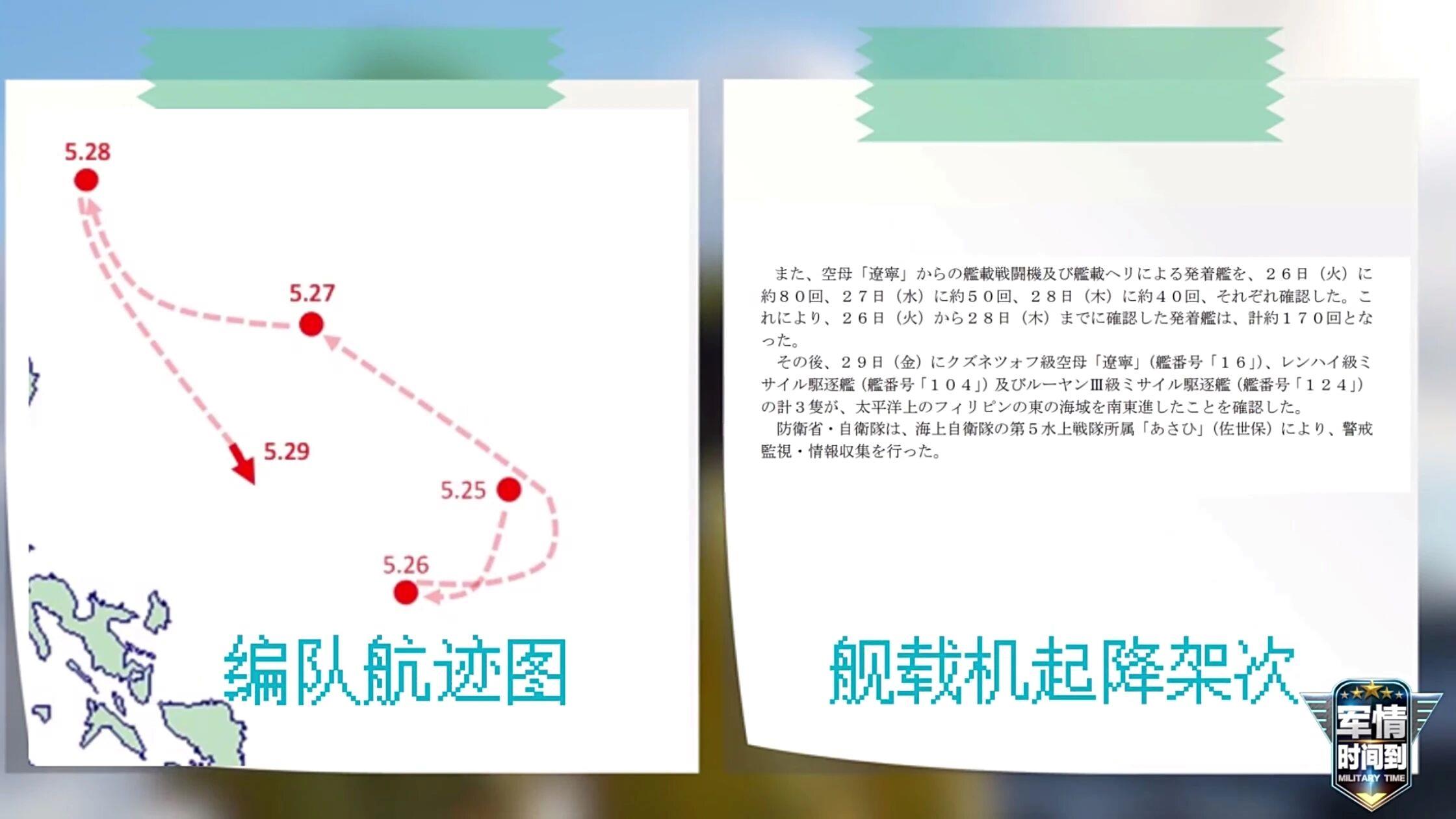
Not only could they not take photos, but they also lost track; they followed closely every day, yet had no chance to press the shutter. Is the camera broken? Of course not, it’s that the Liaoning has already evaded their "close surveillance."
What does the Chinese aircraft carrier fleet rely on
to "shake off the peepers"?
A tightly integrated combat system
The fleet that went to sea for training included not only the Liaoning but also destroyers, an amphibious assault ship, and a supply ship. Air defense, anti-submarine, anti-ship, and resupply operate in unison. Furthermore, the operational radius and air superiority time of the Chinese Navy in the sky are continuously improving.
A tightly integrated combat system and stronger operational resilience have left the Japanese side, which was trailing closely, only able to watch the Liaoning from a distance, ultimately submitting a report without any photos.
A powerful electronic warfare system
The powerful electronic warfare system of the Liaoning fleet has significantly increased the difficulty for Japanese reconnaissance platforms. What does this mean for the Japanese side? Their radar searches, electronic reconnaissance, communication feedback, and data fusion may all be constrained and interfered with by Chinese electromagnetic activities. Want to further accurately identify the positions of each ship in the fleet? Determine the rhythm of carrier-based aircraft takeoffs and landings? Coordinate shooting angles? It’s increasingly difficult!
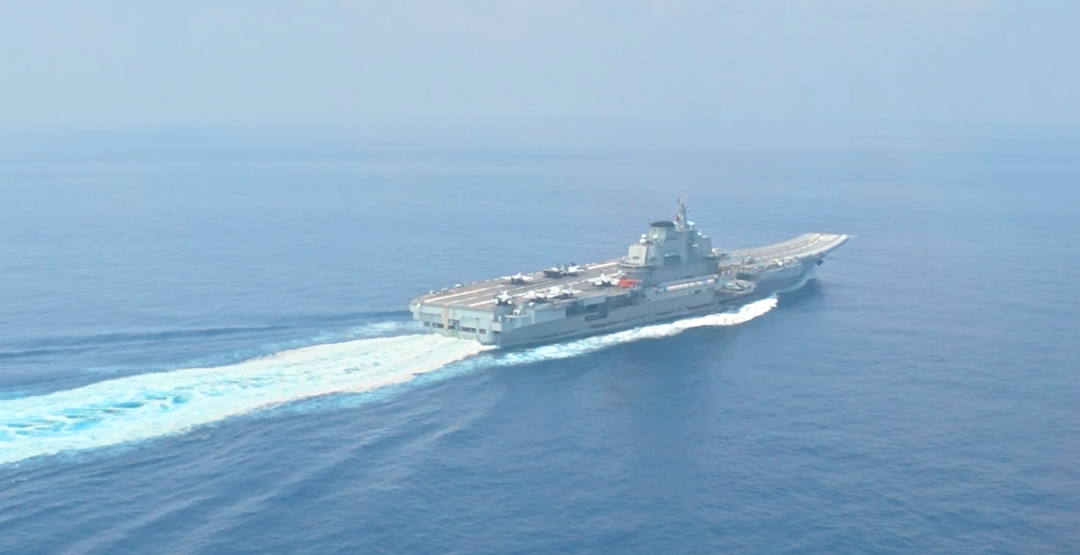
▲ Scene released by the Chinese side.
Strong offshore system capabilities
This time, the Liaoning's training entered an area that is the most challenging and easiest for the Japanese to lose track of within their monitoring chain. The advantage of the Japanese "first island chain" surveillance system mainly lies in relatively fixed near-sea passages like the Miyako Strait and the Bashi Channel, while there has been a certain reconnaissance gap in the open waters of the western Pacific.
The Liaoning fleet's strong offshore system capabilities allow it to maneuver continuously in the vast waters of the western Pacific. Once entering the deeper waters of the western Pacific, the area becomes more open, and the maneuvering space larger, objectively extending the Japanese monitoring chain and increasing the difficulty of close-up photography and continuous grasp of the overall situation.
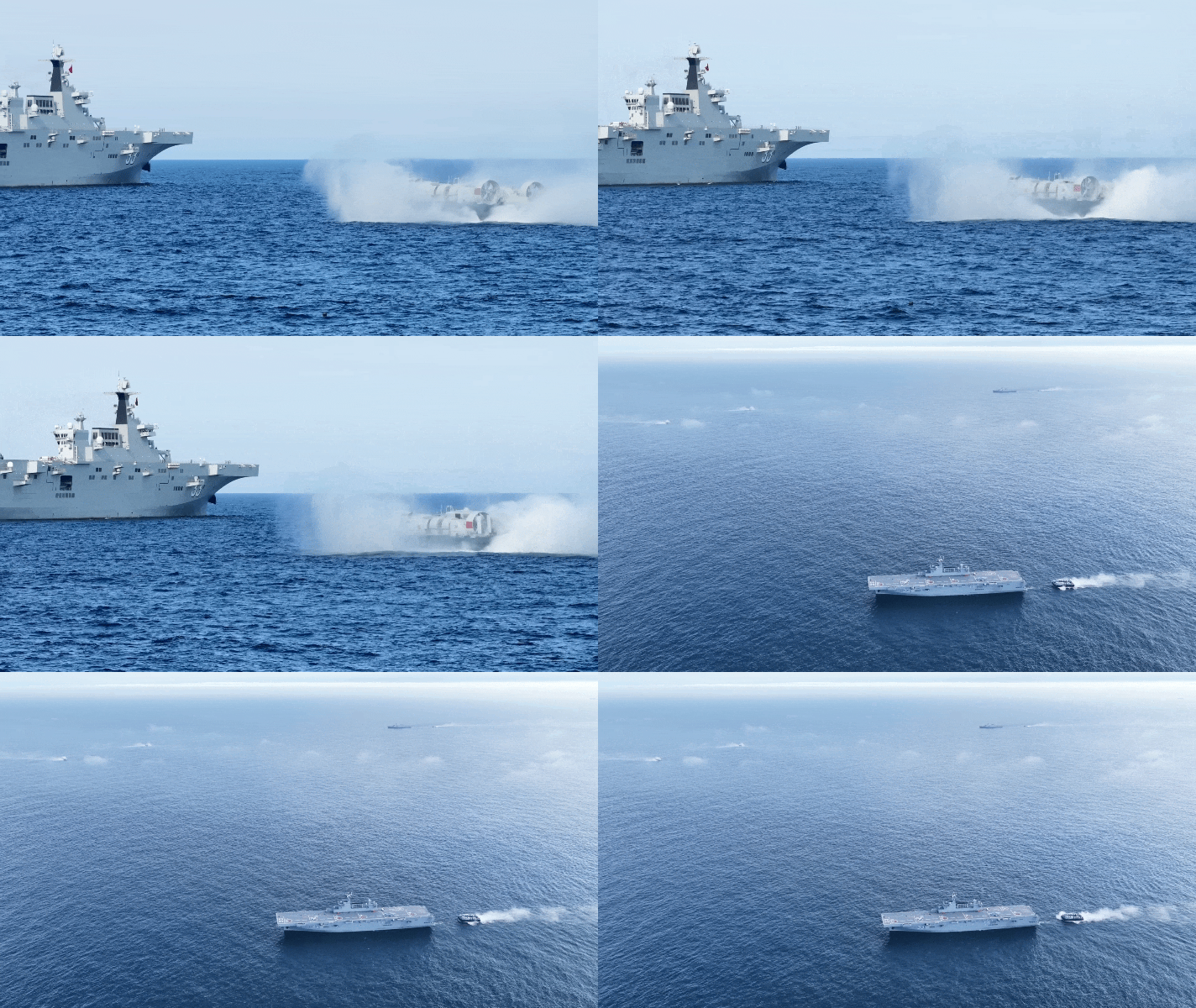
▲ Scene released by the Chinese side: In a certain area of the western Pacific, the Liaoning fleet conducts joint exercises with the amphibious assault ship fleet.
The inability to take photos and keep up is a reflection of the continuous enhancement of the Chinese aircraft carrier fleet's integrated sea and air denial capabilities, which can keep ill-intentioned "peepers" firmly out of sight. If some people still want to use the "old camera" and outdated thinking to view today's Chinese Navy, then the future "blank papers" will likely only increase.
The Chinese Navy's Liaoning aircraft carrier and its task force successfully conducted a training exercise in the Western Pacific, evading close surveillance from Japanese forces. Despite multiple attempts to monitor the exercise, Japanese vessels and aircraft failed to capture clear images or maintain tracking of the task force. This operation demonstrated the enhanced operational capabilities and electronic warfare systems of the Chinese Navy, complicating reconnaissance efforts by Japan.
- The Liaoning task force successfully completed a training exercise in the Western Pacific.
- Japanese forces were unable to capture clear images of the Liaoning during the exercise.
- The Chinese Navy's operational capabilities have improved, complicating Japanese surveillance efforts.
- The exercise took place in areas where Japanese monitoring is traditionally strong, yet they lost track of the Liaoning.
- The report indicates a significant advancement in China's electronic warfare capabilities.