
Walking and Shooting, Lightning Speed Destruction: Exclusive Insight into China's Anti-Drone Laser Weaponry Combat Power

Where there is a spear, there must be a shield. When the invisible iron wings weave a sky net, the edge of countermeasures has already taken its position.
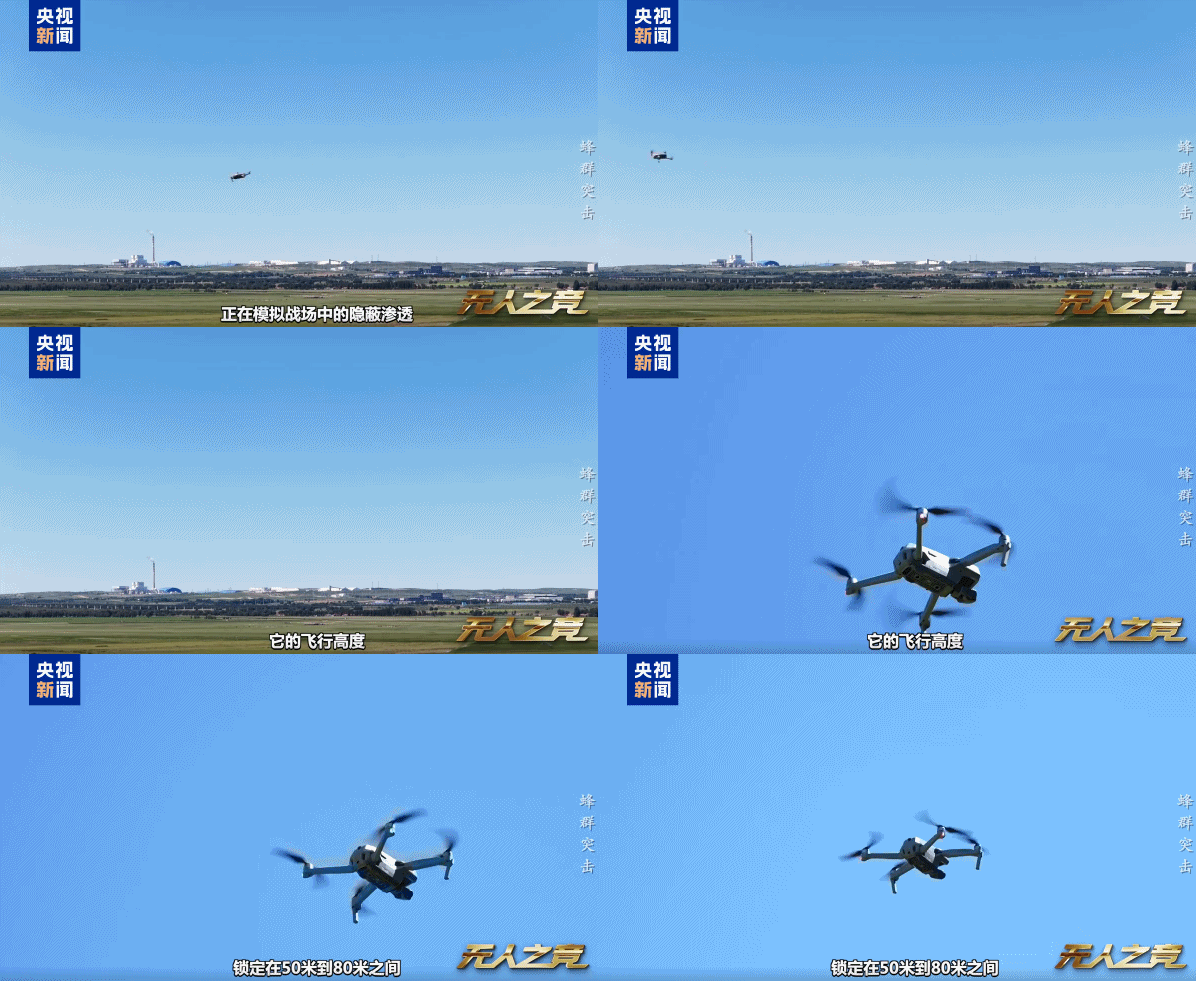
The drone in the picture, which resembles a "low, slow, small" aircraft, is simulating covert infiltration on the battlefield. Its flight altitude is locked between 50 meters and 80 meters, precisely within the detection blind spot of traditional radar.
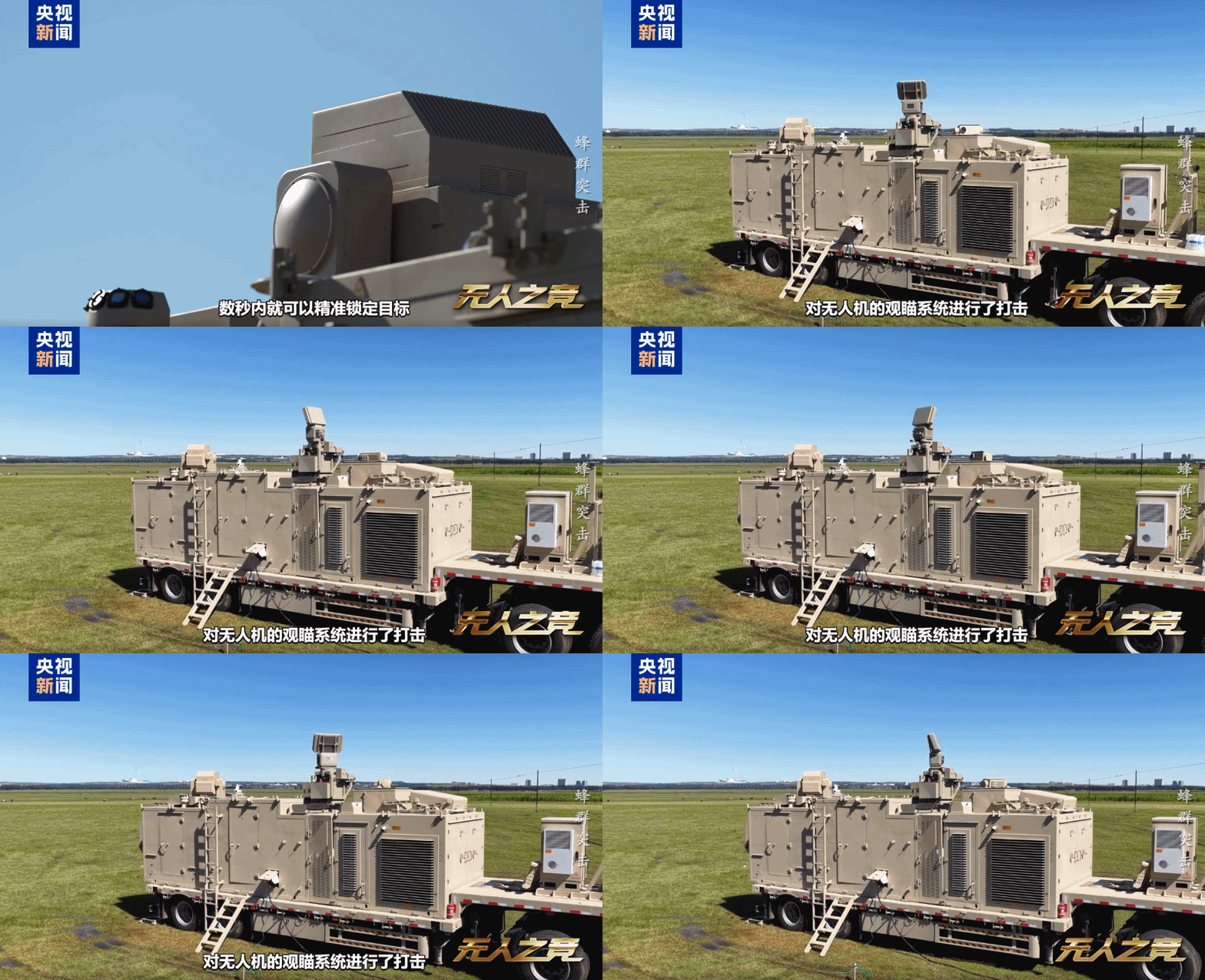
This device, which looks somewhat like a shipping container, is the "Light Arrow-11E" multi-mode composite terminal interference system. When responding to incoming "low, slow, small" drones, it acts like a quick-reacting guardian, capable of accurately locking onto targets within seconds and striking the drone's observation and targeting systems.
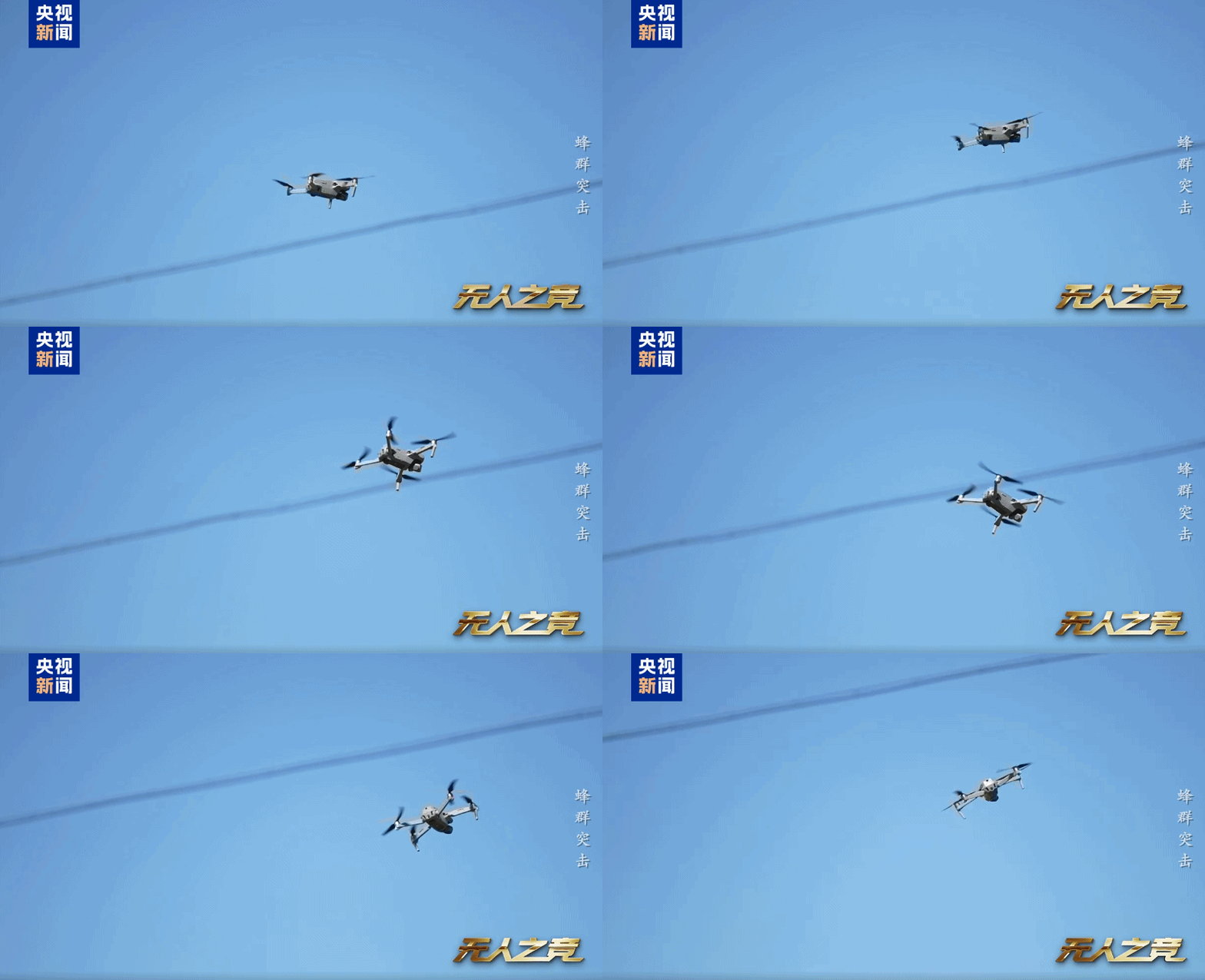
Fiber optic drones have the unique feature of transmitting flight data and images to the operator in real-time via fiber optics, making them difficult to jam electronically; the only option to deal with them is often to shoot them down.
Now making an appearance is the "Light Arrow-21A," which adopts a "move and fire" response mode, maintaining fire suppression while avoiding easy targeting by the enemy due to being stationary.
In terms of strike mode, the "Light Arrow-21A" excels in "hard kill" capabilities, capable of forming a high-density energy beam from several kilometers away, continuously acting on the drone's structural integrity, penetrating the target drone's shell in a short time, burning out internal circuits or power systems. In contrast, the "Light Arrow-11E" does not use a hard-hitting damage mode but instead relies on pulsed lasers to achieve precise targeting, directly striking the drone's core components and instantly "blinding" them, causing them to lose reconnaissance, data transmission, and other combat capabilities.
These two combat modes, "soft" and "hard," target different distances and threat levels, perfectly filling the gaps in their respective operational ranges.
As combat "partners," both the "Light Arrow-21A" and "Light Arrow-11E" are equipped with phased array radar and infrared reconnaissance systems, capable of interconnecting through both "wired + wireless" methods to achieve real-time information sharing, accurately completing target locking and identification.
Zhou Shuiliang from the China Aviation Industry Corporation Manufacturing Institute: Laser weapons, as a new type of equipment in a new domain, automatically allocate strike firepower through multi-dimensional detection and intelligent recognition, with very strong reaction speed and adaptability to battlefield environments. In terms of systematic combat, our two types of equipment can achieve a combination of hard and soft capabilities, collaborative operations, and can quickly link with radar, electro-optical, and other early warning detection systems, forming a closed loop of "discover and destroy."
(Source: China Central Television Defense Military Channel's program "Competition of Drones")
China demonstrated its anti-drone laser weapon capabilities, specifically the '光箭-21A' and '光箭-11E' systems, designed to counter low-altitude drones. These systems can engage targets from several kilometers away and utilize advanced targeting and data-sharing technologies. The integration of these weapons with radar and reconnaissance systems enhances their operational effectiveness.
- The '光箭-21A' laser weapon can engage drones from several kilometers away.
- The '光箭-11E' system uses pulsed lasers to blind drones.
- Both systems are designed to counter low-altitude, slow-moving drones.
- The systems can share real-time data through wired and wireless connections.
- The report highlights the integration of these systems with radar and infrared reconnaissance.