
Washington envisions strikes in Mali in 2026 — JNIM forces an American return
 Marie Dubois
Washington envisions strikes in Mali in 2026 — JNIM forces an American return
In Anefis, on the road connecting Gao to the forward positions in northern Mali, an ambush on July 18 killed at least 50 Malian soldiers according to reports from Al Jazeera. This attack, jointly claimed by the Azawad Liberation Front (FLA) and Jama'at Nusrat al-Islam wal-Muslimin (JNIM), comes at a time when Washington is reportedly considering military options against JNIM in Mali, according to information from the Washington Post.
This convergence is not trivial. It speaks to the real war in the Sahel in 2026. On one side, Bamako claims to have regained control of its operational theater thanks to the Russian partnership and the Sahel States Alliance. On the other, armed groups demonstrate that they can still strike a mixed Malian and Russian convoy on one of the most important roads in the North. Between these two realities, Washington is once again looking towards Mali.
A road, not just a map
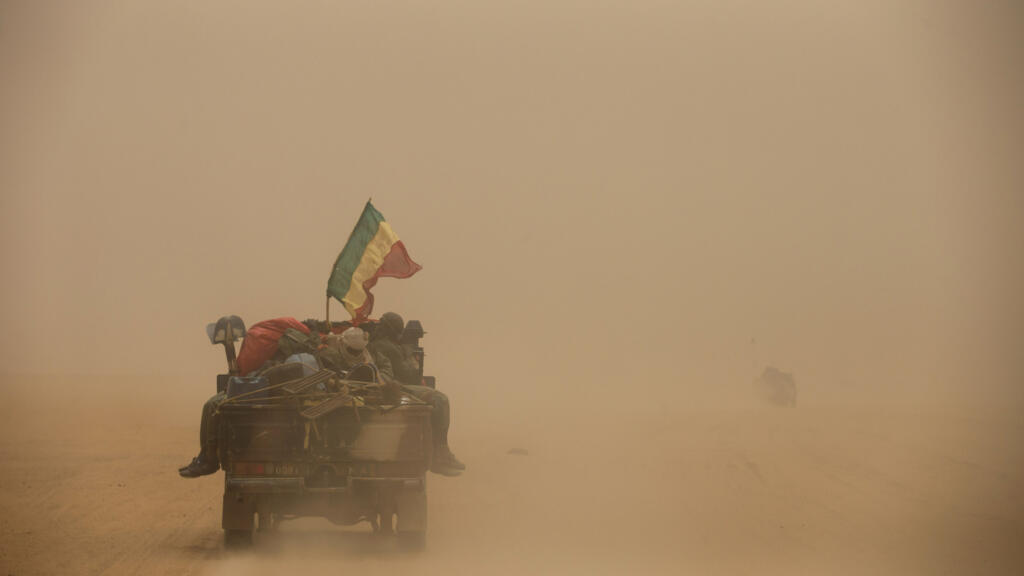
The Gao-Anefis-Kidal area is not a strategic abstraction. It is a succession of long, exposed tracks, poor in water points and easy to monitor from the hills or villages. On the ground, a column moving towards Anefis carries fuel, ammunition, food, mechanical parts, and potential casualties. It moves slowly. It raises dust. It announces its presence even before arriving.
This is precisely what armed groups know how to exploit. The FLA brings intimate knowledge of the Tuareg terrain and local networks. JNIM, the Sahelian branch of Al-Qaeda, brings experience in asymmetric combat, improvised explosive devices, encirclement, and propaganda. Their cooperation does not erase their ideological differences. It simply makes them more dangerous in the immediate term.
Al Jazeera cites analyst Héni Nsaibia from ACLED, who states that these actors behave as force multipliers because they share a common enemy: the Malian army and its Russian partners from Africa Corps. This explanation is sober and convincing. In northern Mali, alliances do not always arise from a doctrine. They often emerge from a track to defend, a convoy to block, or a local kinship to preserve.
The American debate returns through the wrong door
According to Outlook Business, citing the Washington Post, the Trump administration is examining strikes against JNIM, with an internal debate between proponents of military action and more cautious officials. The case of Kevin Rideout, an American missionary held by Islamist militants according to this information, would also weigh in the discussions.
If this option were validated, it would mark an American return through the riskiest route: the targeted strike in a theater already saturated with foreign actors, local militias, and rivalries between jihadist groups. Mali is not Yemen, nor Somalia. There is a fragile but sovereign national army, an active Russian presence, Tuareg separatists, JNIM, cells affiliated with the Islamic State further east, and neighboring capitals that watch every American move with suspicion.
The operational problem is simple to formulate and difficult to resolve. To strike effectively at JNIM, reliable human intelligence, persistent sensors, a post-strike confirmation capability, and a deconfliction mechanism with the Russians are needed. Without this, the tactical effect may be real but short-lived. One destroys a vehicle, a depot, or a command team. Then the track closes, informants disappear, and the war continues.
The Russian presence does not resolve the North
Bamako and Moscow have certainly strengthened certain combat capabilities. Drones, aviation, and Russian advisors give the Malian army more firepower than it had at the time of the French withdrawal and the end of MINUSMA. Africa Corps has released images that it presents as strikes against the attackers in Anefis. It would be wrong to say that this support does not count.
But it counts mainly at the moment of contact. It does not replace secure logistics, credible territorial policing, or local arrangements with communities that control information. The army can retake Kidal, lose convoys, strike after the fact, and then start again. This mechanism wears down men and vehicles. It also gives JNIM a narrative material: the state advances with foreign partners, then finds itself unable to hold the road.
This is where the American hypothesis becomes paradoxical. Washington may want to demonstrate that Moscow has failed to stabilize Mali. Yet a poorly calibrated American strike would provide the Malian regime and its proxies with a convenient argument: to present any military criticism as Western interference. From experience, this type of discourse does not destroy a jihadist column, but it can be enough to close intelligence doors for months.
The risk of a jihadist boomerang effect
JNIM is not just a target. It is a local system of arbitration, coercion, taxation, and recruitment. In certain areas, it punishes, recruits, negotiates, collects, and administers through fear. Reducing it to a group that can be broken from the air is a classic mistake of headquarters far from the ground.
There is also a competitive risk. Brutally weakening a JNIM katiba in a contested area can open space for the Islamic State in the Greater Sahara, or push JNIM to harden its ties with Al-Qaeda leadership to compensate for its losses. The desired effect would then be reversed: fewer visible commanders, but more autonomous cells, more distrustful and more brutal.
The available information remains incomplete. It is unclear whether Washington is considering direct strikes, enhanced intelligence, indirect assistance to a regional partner, or simple political pressure on Bamako. This uncertainty matters. In the Sahel, vague announcements often produce more diplomatic agitation than military effects.
What to watch for now
The first indicator will be the Gao-Anefis-Kidal road. If Malian and Russian convoys reduce their movements, armed groups will have achieved an operational result without holding the ground sustainably. If they continue to circulate with losses, Bamako will have to explain why its new security model is so costly.
The second indicator will be diplomatic. Any sign of discreet coordination between Washington, Bamako, and regional intermediaries would signal that the United States is seeking a realistic margin of action. Conversely, aggressive public rhetoric without a deconfliction channel with Africa Corps would increase the risk of an incident.
The third indicator will be jihadist. If the FLA and JNIM claim other joint operations, the ambush in Anefis will no longer be an episode. It will become a model. In this case, the immediate danger will not be a jihadist march on Bamako. It will be more mundane, and therefore more serious: the gradual strangulation of the northern axes, until each military convoy becomes more political than logistical.
In the Sahel, a strike can kill a leader. It does not hold a track. And today, it is the track that decides.
On July 18, 2023, an ambush by JNIM and the Front for the Liberation of Azawad killed at least 50 Malian soldiers near Anefis, Gao, in Northern Mali. The U.S. is contemplating military strikes against JNIM as the situation in Mali becomes increasingly complex with Russian support for Malian forces and ongoing threats from armed groups. This incident highlights the challenges faced by the Malian military in securing key routes.
- At least 50 Malian soldiers were killed in an ambush on July 18, 2023.
- The ambush was claimed by JNIM and the Front for the Liberation of Azawad.
- Washington is considering military options against JNIM in Mali.
- Malian forces are reportedly receiving support from Russia.
- The situation in Mali is complex with multiple armed groups and foreign involvement.