
‘We’ve drowned ourselves in buzzwords’: Acting US Army secretary gives sermon-like first speech

One year ago, Army Secretary Dan Driscoll eviscerated bureaucratic delay and acquisition roadblocks in a profanity-laced public address.
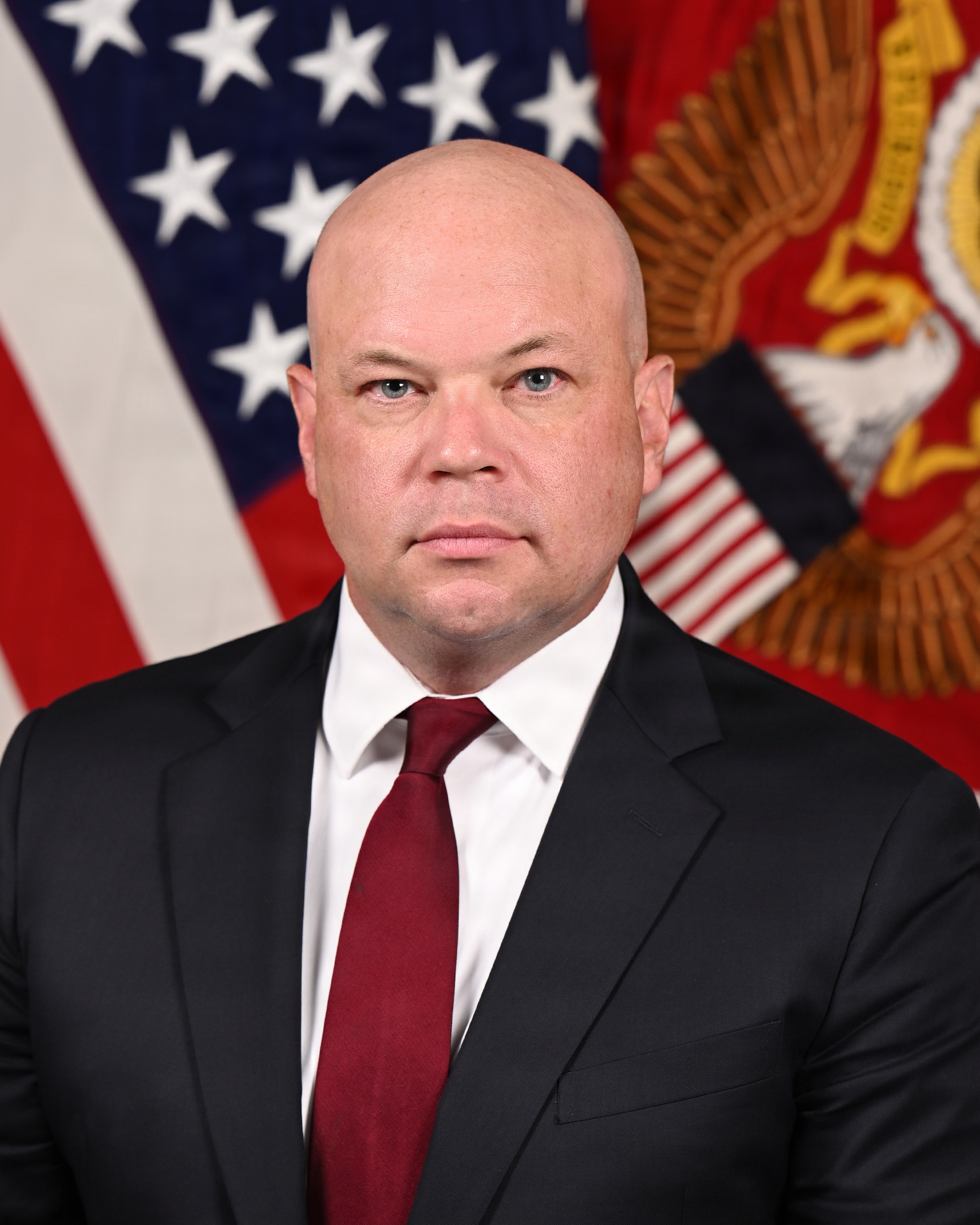
On Monday, his successor, Acting Army Secretary Adam Telle, took things back to the biblical book of Genesis in his first public speech to troops since assuming the role.
“Controlling land is fundamental to humanity,” he told a packed ballroom at the Association of the United States Army’s annual meeting. “The Army does it better than anyone, and it’s on us, the people in this room, to keep it that way. Humanity’s connection to the land is biblical, and it even transcends faith, since the dawn of creation, as recorded in Genesis.”
Telle, who previously served as the assistant secretary of the Army for public works, enlisted the Old Testament to preach a message of simplicity of purpose, invoking the sacred ground of past battlefields and the Army’s long history of protecting American territory.
“It makes me wonder why the United States Army, again the most lethal and dominant institution in human history, struggles to explain in common terms who we are in 2026, who we really are,” Telle said. “We’ve drowned ourselves and the public in buzzwords, strategies, slideshows, government acronyms and bureaucratic doublespeak — things that are advertised as revolutionary. But the Army’s value proposition is actually too fundamental for goofy corporate jargon.”
Though Telle’s rhetorical approach differed from Driscoll’s, he quickly made it clear that the Army was holding the course set by his predecessor, who resigned Aug. 31 over growing disagreements and friction with Defense Secretary Pete Hegseth.
Telle hailed the Army’s work to streamline acquisition and reduce roadblocks to getting soldiers the gear they need, citing the Army’s work to reduce service “fiefdoms” from thousands to a few newly named portfolio acquisition executives.
The service, he said, is moving away from what he called “compound self-interest,” or bureaucratic risk avoidance.
“We’re empowering a small number of teams to address our biggest mandates to make difficult trade-offs around speed, manufacturability and supply chain realities early, often and together,” he said. “This is how you generate compound soldier-interest. That’s the opposite of compound self-interest.”
He demonstrated the Pentagon’s new small drones online marketplace, likening it to Amazon.com and showing how soldiers could access it on their smartphones and leave reviews for future soldiers based on how well their gear worked.
Likewise, he compared the Army’s new online test range reservation system for industry, initiated under Driscoll, to the hotel reservation site Booking.com.
The site, he said, is like a “white-glove concierge service that allows innovators to get a reservation on the range faster.”
Officials have previously said the new system can accelerate companies’ range-testing schedules from as much as 18 months to 30 days.
Telle also reasserted the Army’s commitment to what the military has called a “right to repair,” meaning that it will demand open-architecture systems from all future vendors and limit industry’s ability to control intellectual property and charge a premium for fixes and spare parts.
“Right now, we’re sprinting to field low-cost interceptors with open architecture built in from the outset. We need these low-cost interceptors to shoot down missiles and drones headed our way,” Telle said. “We know we need thousands of these things, but they have to seamlessly connect to our network.
“If the data is trapped behind proprietary moats, and we have to call a contractor to decode the data, our superintelligent command and control doesn’t matter,” He continued. “Everything we buy from here on out will have open architecture; it’s non-negotiable.”
A ‘manufacturing rodeo’
Next, he said, the Army will launch a new project: a “manufacturing rodeo,” to be held early next year, that will put the service’s industrial base suppliers in competition with each other.
“We’ve invested a lot in our organic industrial base. Now we need to strain it in the nation’s larger industrial base,” Telle said. “We’re going to stress-test the supply chain, the manufacturing processes and see where it breaks.”
Telle did not provide specifics, such as the precise mechanism for competition or the challenges in which companies would be asked to compete.
“We’re going to learn by doing, not by sitting around postulating at the Pentagon,” he said. “We’re going to find the weak links. We’re going to make them stronger, and we’re going to keep iterating.”
Telle did not refer to Driscoll or allude to the fact that the service has no current Army secretary nominee. He did, however, address the “beautifully chaotic” system of American government, saying that while it wasn’t efficient, it centered human freedom and allowed for creativity and innovation.
“The United States Army laid the groundwork for that, and will continue to guarantee that it’s never extinguished. Meanwhile, the other team’s human spirit, its imagination, is bounded and boxed and regulated,” Telle said. “The United States of America is where the magic happens, where brilliant people turn science fiction into science fact, and you can’t flip a switch to turn that on.
“The Army’s work over the course of history has been so fundamental, so successful that the American spirit it unleashed is now the most important and potent force we have,” he continued. “It’s a potent force that the other guys don’t have.”
Acting Army Secretary Adam Telle delivered a speech in the United States, emphasizing the Army's commitment to controlling land and streamlining procurement processes. He announced initiatives to reduce bureaucratic delays and promote open-architecture systems for future vendors. Telle also introduced a 'manufacturing rodeo' to test the industrial base suppliers and highlighted the need for low-cost interceptors to enhance defense capabilities.
- Acting Army Secretary Adam Telle emphasized the importance of controlling land in his speech.
- Telle announced initiatives to streamline Army procurement and reduce bureaucratic delays.
- The Army is committed to open-architecture systems for future vendors.
- A 'manufacturing rodeo' will be held to test the industrial base suppliers.
- Telle highlighted the need for low-cost interceptors to enhance defense capabilities.