
What is the Deep Meaning Behind the J-35A Codename "Cloud Dragon"?

Recently, during a special program for the National Defense Education Day, the code name of the J-35A fighter jet was revealed—“Cloud Dragon.” This naming continues the “Dragon” series tradition of the Chinese Air Force's multi-role fighter jets since the J-10. What significance does the code name “Cloud Dragon” carry? From the code name “Mighty Dragon” of the J-10 to the current “Cloud Dragon,” what does it reflect about the development of the Chinese Air Force?
What does the code name “Cloud Dragon” mean?
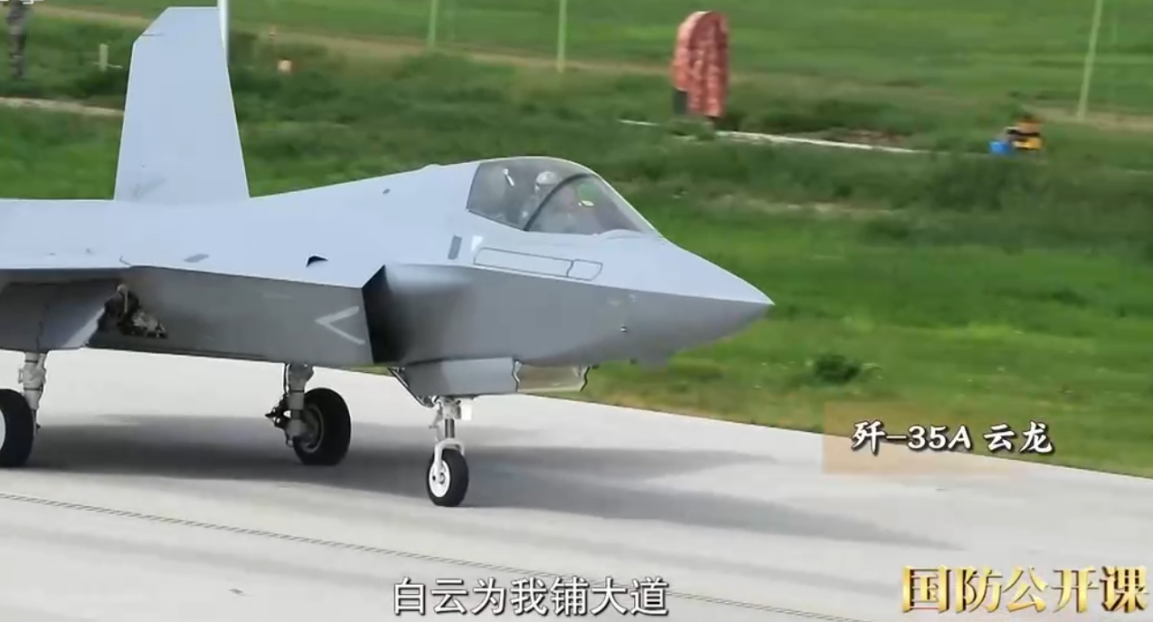
△ J-35A
The J-35A is a new generation of medium stealth multi-role fighter jet independently developed by China, featuring an integrated design of overall structure, aerodynamics, and stealth, primarily focused on air superiority while also capable of ground and maritime operations. Fu Qianshao, a military commentator for China Voice's “Fengxian Liaowang,” stated that the code name “Cloud Dragon” continues the naming tradition of the “Dragon” series, distinguishing it from other military aircraft and reflecting its performance.
Fu Qianshao: Through the lineage of the word “Dragon,” we can differentiate our various military aircraft by name. “Dragon” generally refers to fighter jets. The reason it is called “Cloud Dragon” is likely in accordance with the “Dragon” series naming. For example, the J-10 is called “Mighty Dragon,” the J-20 is called “Mighty Dragon,” and thus the J-35A is called “Cloud Dragon,” which is quite logical. Through this “Dragon” character, it can be seen that they are very formidable, being the top among fighter jets. We have our own names, which should match the identity of the aircraft and also highlight its capabilities.
From the code name “Cloud Dragon” of the J-35A, we can perhaps sense its superior performance. The dragon is the spiritual totem of the Chinese nation, said to soar through clouds and possess great combat power. The ancients once said: “Cloud follows the dragon, wind follows the tiger.” This means that when the dragon flies, clouds and mist follow, and when the tiger roars, the wind responds. The outstanding stealth performance of the J-35A allows it to move through clouds, appearing and disappearing without a trace. Wang Yongqing, the chief expert of the J-35A development unit, summarized the aircraft's performance as “detecting the enemy first, striking the enemy first, and seizing the initiative.”
In addition to “Cloud Dragon,” there are several other aircraft in our Air Force named after “Dragon.” Among them, the J-10 is called “Mighty Dragon,” the J-11 is called “Responding Dragon,” the J-16 is called “Hidden Dragon,” and the J-20 is called “Mighty Dragon.”
What are the strengths of the J-35A?
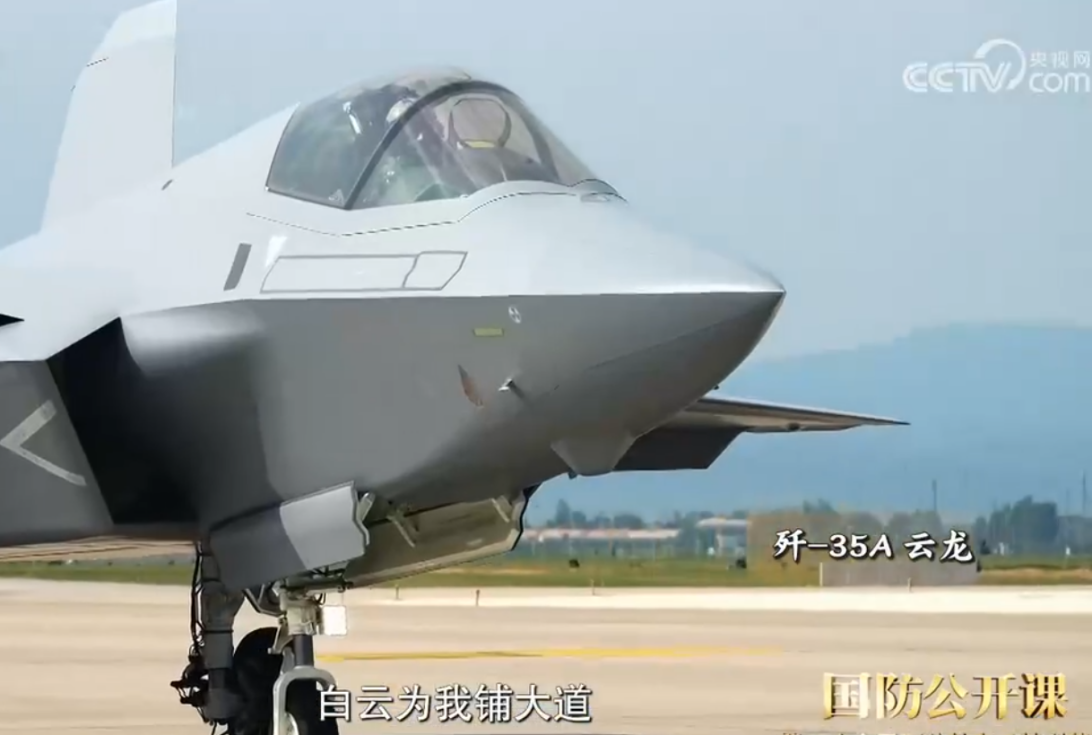
△ J-35A
So, what are the specific strengths of the J-35A? What are the similarities and differences between it and the J-35, which features “one aircraft, multiple variants, and air-sea synergy”?
Fu Qianshao: The J-35 is the naval carrier-based variant, while the J-35A is the Air Force's land-based variant. From an appearance perspective, they seem quite similar, but in reality, the wing area of the J-35A is much smaller, and its front landing gear has a single wheel, while the carrier-based variant has a double wheel. The manufacturing process can be said to be world-class, utilizing some new production techniques. For instance, its wings and fuselage are integrated, with minimal gaps, and the surface is very smooth, especially the belly of the fuselage, which is flat and even, reducing the overall weight. Additionally, it employs many advanced materials, which are very beneficial for structure and stealth. The radar and weapons also have their advantages. As a medium fighter, both the J-35 and J-35A have corresponding advantages in terms of combat radius, maneuverability, maximum flight speed, and weapon systems.
In November 2024, the J-35A will make its public debut at the Zhuhai Airshow and conduct its first flight demonstration. With the previous J-20, China has become the second country in the world to possess two types of stealth fighter jets. The J-35A is a medium stealth fighter, while the J-20 is a heavy stealth fighter. The J-20, known for its high stealth, high maneuverability, and high perception, is referred to as the “door-kicking artifact.” Fu Qianshao stated that the collaboration between the J-35A and the J-20 series will bring more possibilities.
Fu Qianshao: The collaboration between stealth aircraft has its divisions of labor. The heavy fighter (J-20S) primarily undertakes command and control functions, as its radar detection range is further, allowing it to command manned and even unmanned aircraft in coordinated operations. The J-35A can fully leverage its stealth performance advantages to execute some penetrating attack missions. In terms of these two stealth fighter jets, their collaboration can yield many different combinations and tactics.
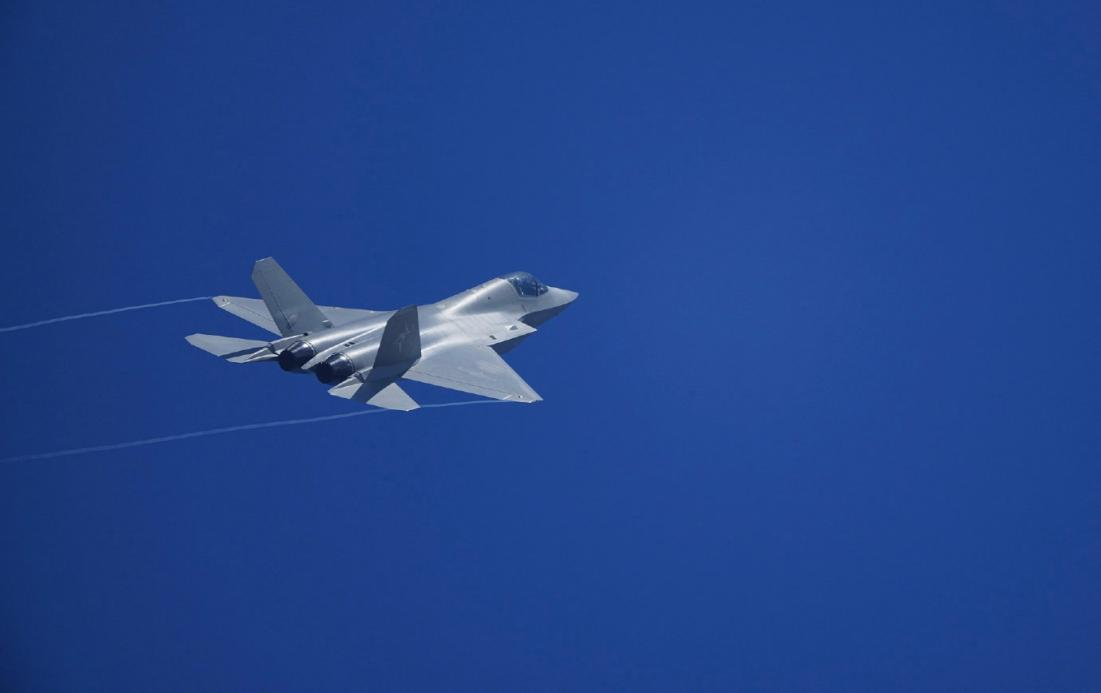
△ J-35A
From “Far Behind” to “Competing on the Same Stage”
From the J-10 “Mighty Dragon” to the J-35A “Cloud Dragon,” over the past twenty years, the Chinese Air Force has transitioned from catching up to running alongside, from fighting alone to system warfare, reflecting the continuous development of our aviation industry's research and manufacturing capabilities, achieving new breakthroughs.
Fu Qianshao: In recent years, especially after entering the 21st century, the speed of our country's fighter jet development has gradually accelerated. If we were to describe some of our early fighter jets compared to the world's advanced level in four words, it would be “far behind.” After the birth of the third-generation fighter jet J-10, the gap between us and the world's advanced level has significantly narrowed. With the induction of the J-20 and J-35A stealth fighters, we can say that we have leveled the playing field in fighter jet development with the world's advanced level, achieving competition on the same stage. However, Chinese aviation personnel have not stopped there; they are continuously innovating and developing to enhance the comprehensive combat capabilities of our military aircraft.
Supervisor丨Huang Xianwen Wu Zhehua
Reporters丨Yang Kai, Wu Zejing
Video丨Wei Ran
The Chinese Air Force introduced the J-35A fighter jet, designated 'Yunlong', which signifies its advanced capabilities and continues the 'Dragon' series naming tradition. This new medium stealth multi-role fighter is designed for air superiority and ground attack, showcasing China's advancements in military aviation. The J-35A is set to debut at the Zhuhai Airshow in November 2024, marking a significant milestone in China's military aviation development.
- The J-35A is a new generation medium stealth multi-role fighter developed by China.
- The designation 'Yunlong' continues the 'Dragon' series naming tradition of the Chinese Air Force.
- The J-35A is designed for air combat, ground attack, and naval operations.
- The aircraft features advanced materials and production techniques, enhancing its stealth capabilities.
- China is now the second country to possess two types of stealth fighters, the J-20 and J-35A.